THE ESSENCE OF IRANIAN CUISINE
Persian food is one of the oldest and most influential culinary traditions in the world. This article focuses on Persian cuisine, which makes up the bulk of what you’ll find across Iran. That said, Iran is home to sizable communities, each with their own distinct food culture worth a separate, deeper dive.
A few myths to clear up from the start. It is not Arab cuisine. That conflation is both geographically and historically wrong — Persian culinary tradition predates the Arab conquests by centuries and developed along entirely different lines.
It is also not interchangeable with Middle Eastern or Mediterranean cuisines. Hummus, falafel, and tabbouleh are Levantine, they are not part of Iranian food.
Iranian cuisine was one of the earliest and most influential culinary forces in history. Being at the center of the Silk Road, it pushed its ingredients, flavors, cooking methods into Indian, Turkish, Caucasian, and Arab kitchens. Much of what people today recognize as “Middle Eastern” or “Mughal Indian” food has Persian roots.
Its is also not a simple cuisine. Rather a sophisticated, layered, robust, and delicate, developed mostly in Royal courts. It’s full of time-consuming techniques that could rival French or Chinese haute cuisine in technical demand.
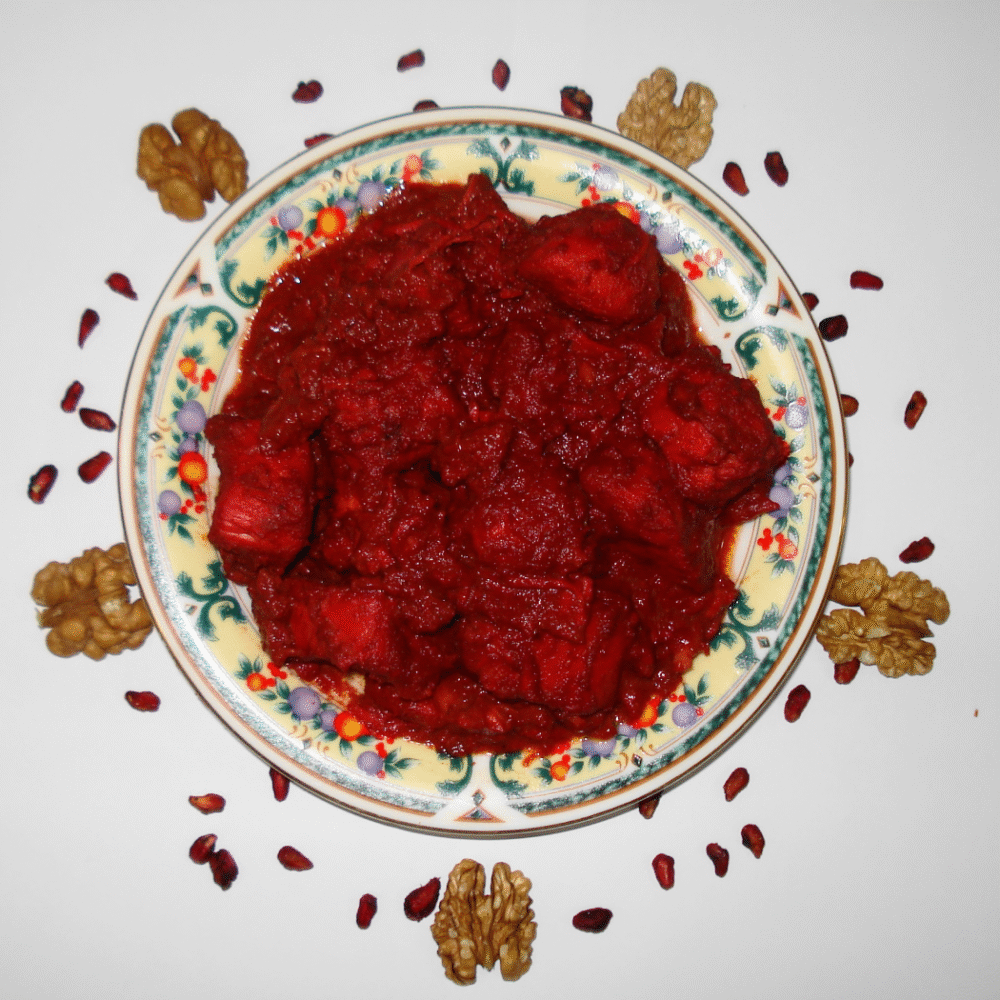
Persian cooking is built on a medicinal framework, stemming from ancient Iranian medicine. Every ingredient is classified garmi or sardi, meaning hot or cold in terms of its effect on the body (not temperature or spice level). A dish is constructed so that garmi and sardi offset each other. In practice, every edible has a specific temperament, and it is better to consume it with its corrector, the mosleh. For example, pomegranate is sardi (cooling) and walnut is garmi (warming). That is why fesenjan pairs those two exactly. Raw onion with kebabs also does the balancing – reduces the heaviness of the meat. The same instinct runs through everyday food without people consciously thinking about it.
GRAINS IN IRANIAN CUISINE
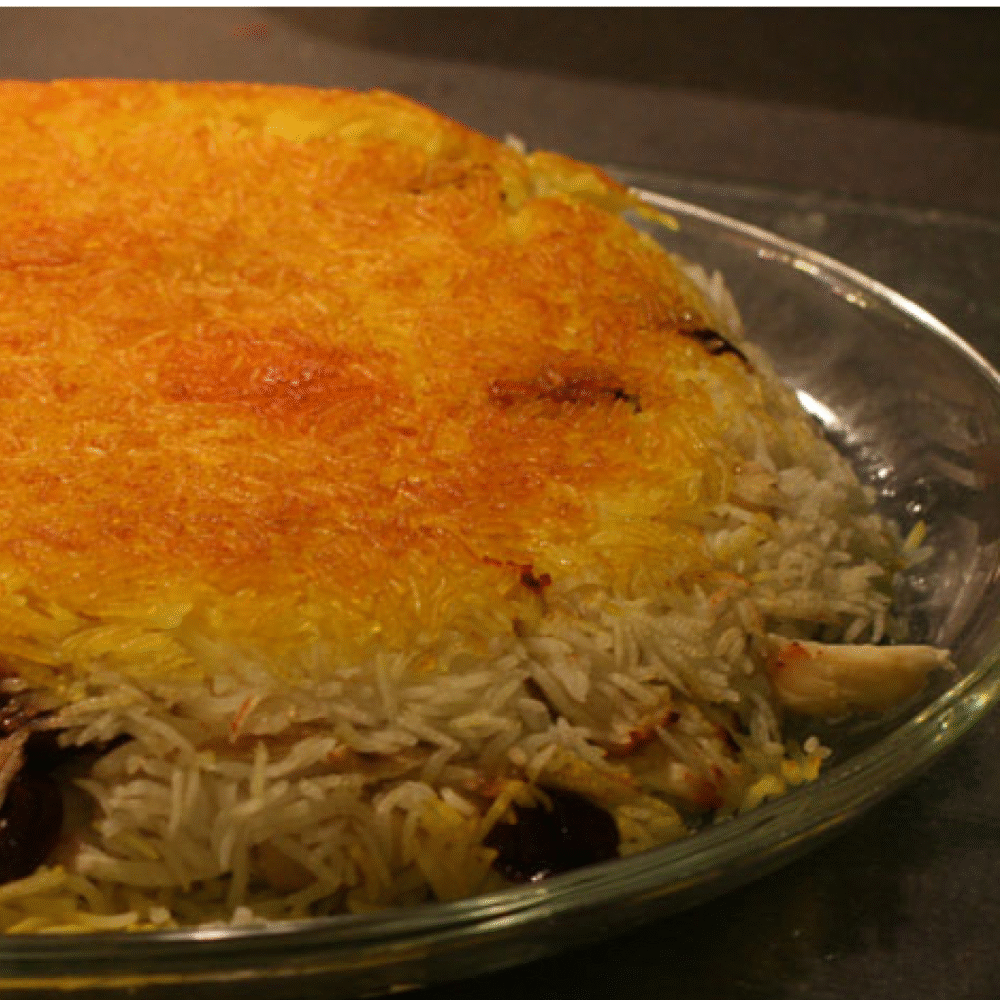
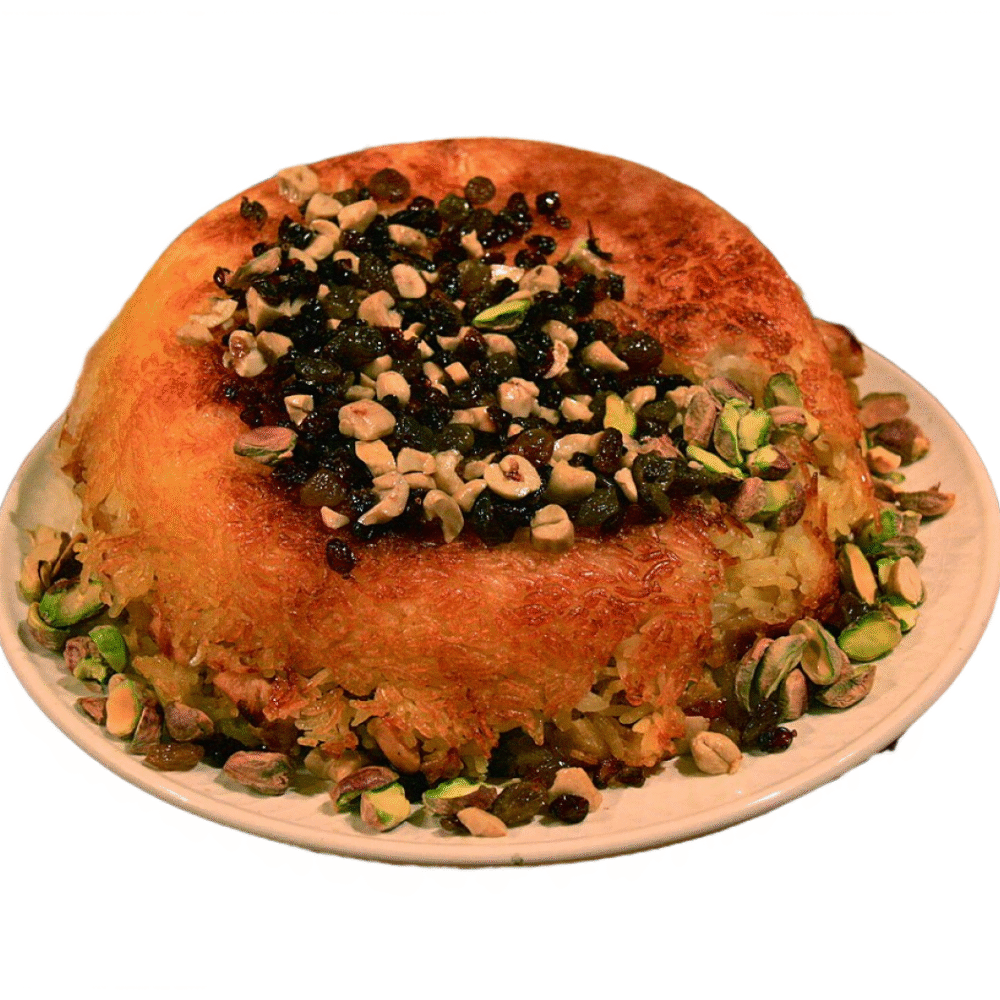
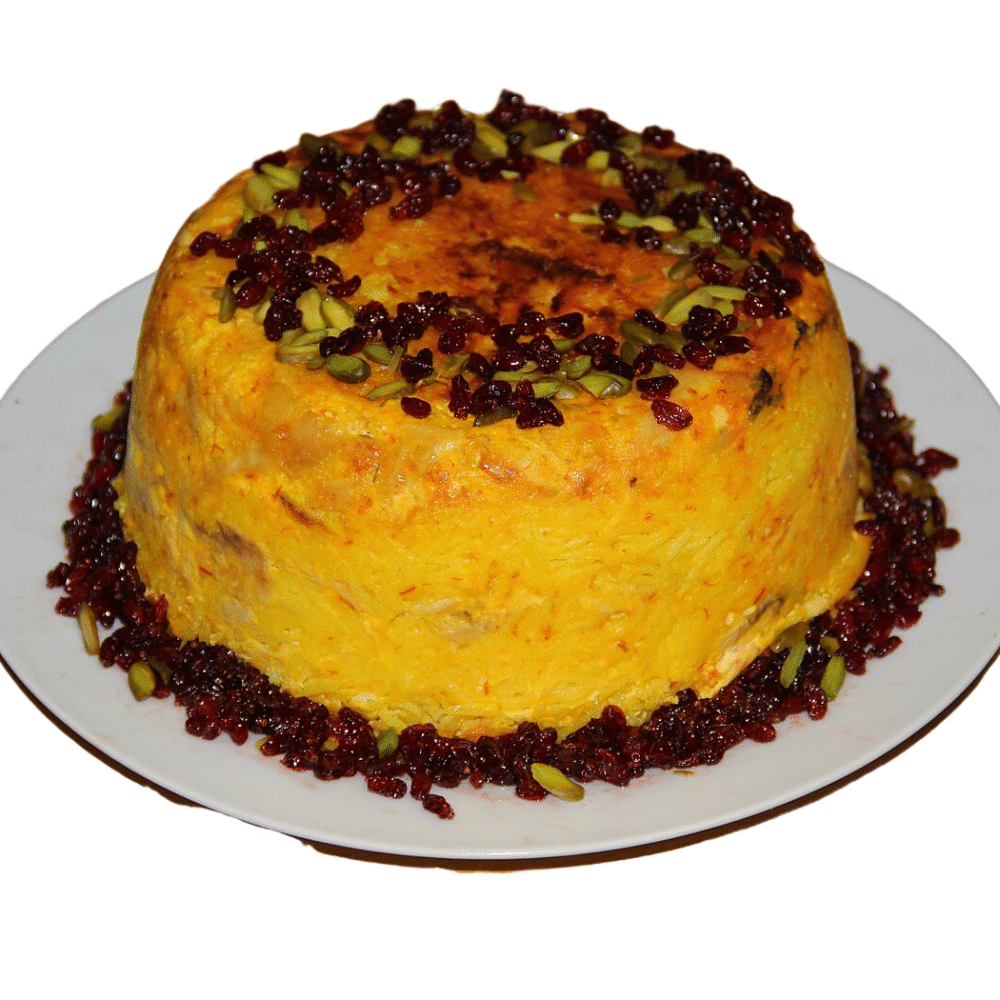
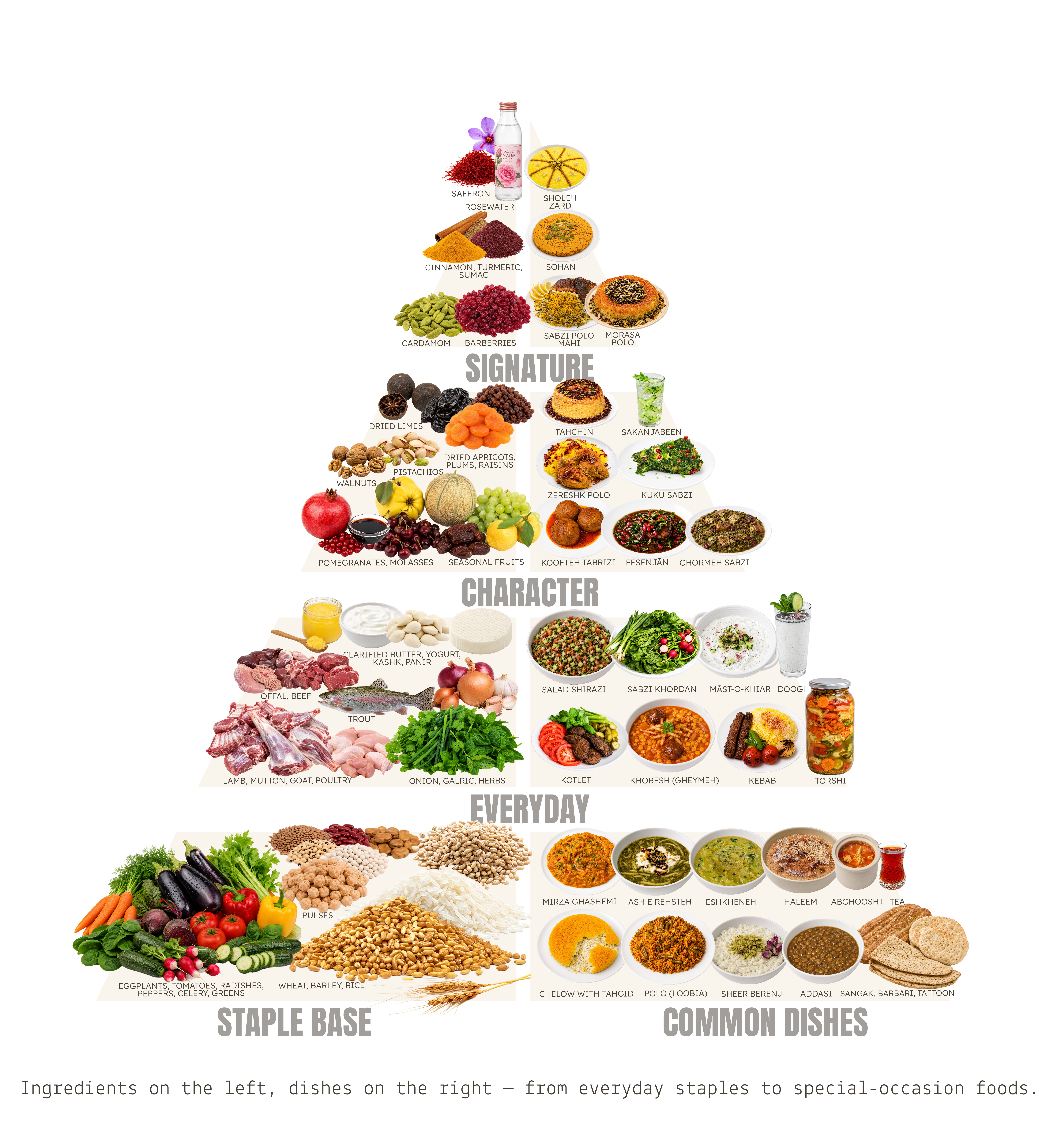
Staple-wise, a Persian table is organized around rice, herbs, fruits, nuts, and slow-cooked stews. Rice is a technically demanding craft here. A very important technique is the tahdig. Many world cuisines try to prevent rice from sticking to the bottom, but here it is deliberate. Golden, crispy crust requires quite a skill – controlled heat, controlled fat, a cloth-wrapped lid to manage steam. Every household has opinions on whose tahdig is better. Rice is also parboiled, drained, then steamed separately — a two-stage process called ab-kesh or kateh. This produces fully separate grains. It’s opposite to risotto, pilaf absorption methods, or East Asian sticky rice techniques.
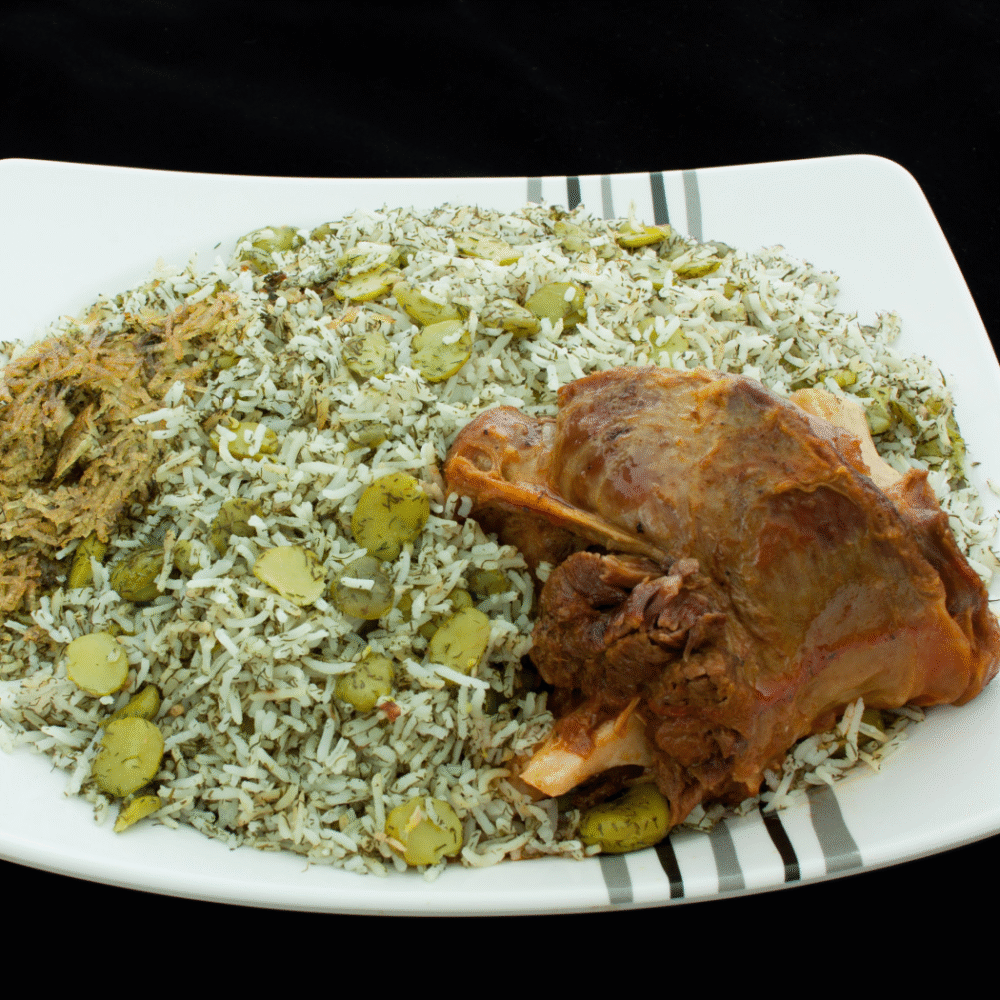
Persian rice dishes called polos mix the grain with legumes, herbs, dried fruit, and meat in separate layers, which aren’t stirred together, so the flavors remain adjacent. This is compositionally different from a pilaf or biryani, where mixing during cooking is the norm. Rice dishes are layered with ingredients, then inverted onto a platter so the tahdig sits on top as a crown.
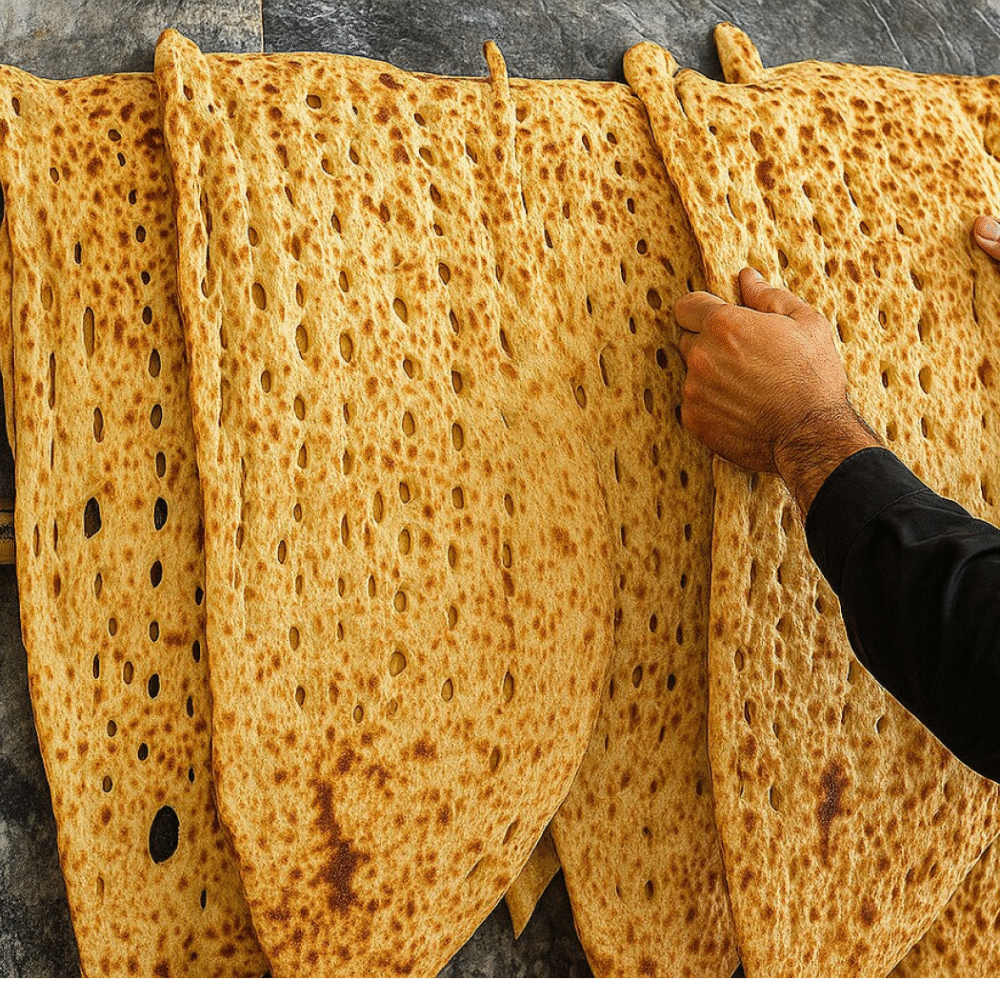
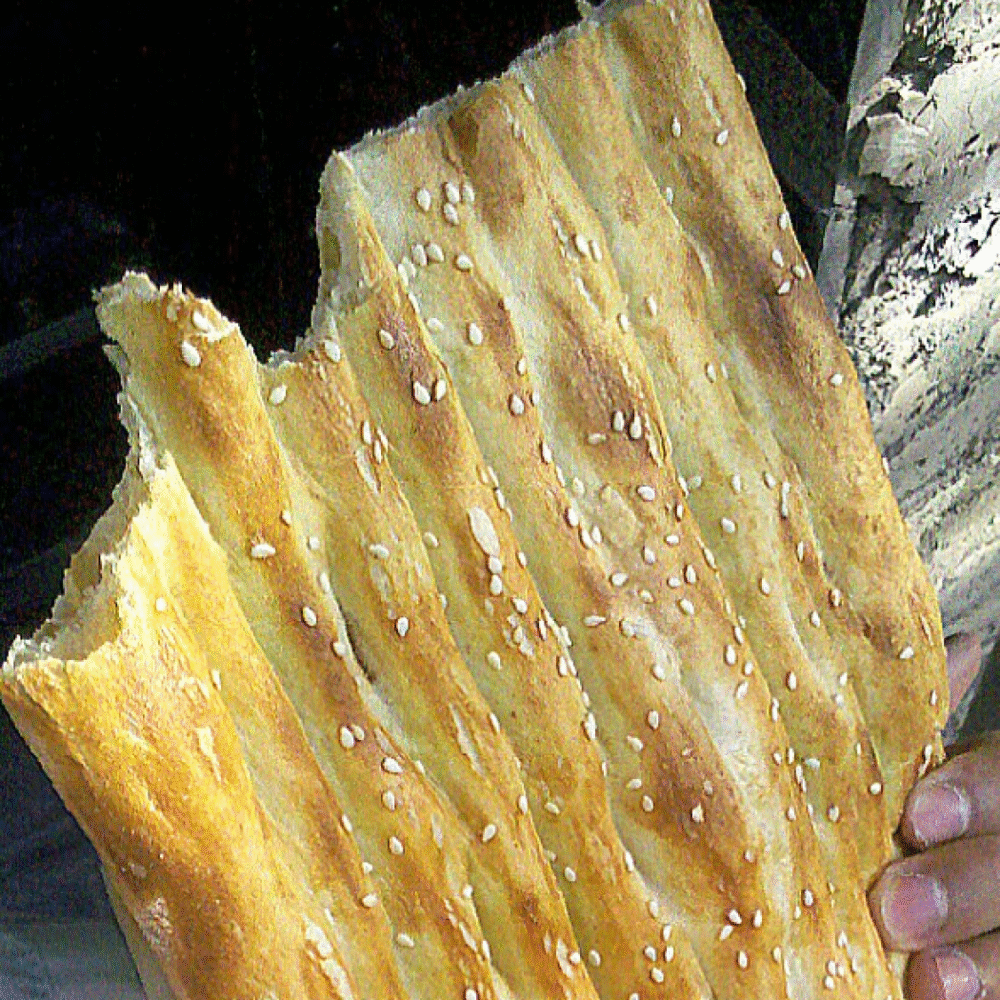
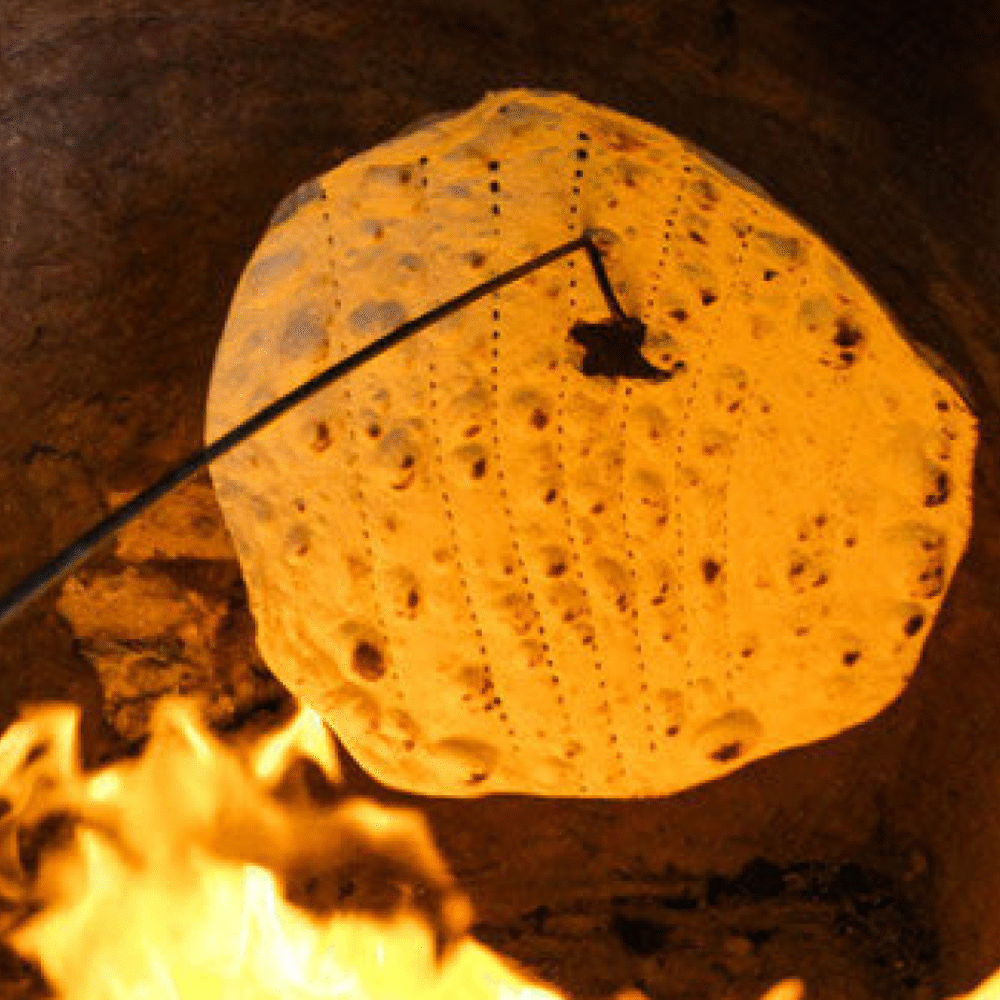
Persians like their bread hot and fresh. Traditional flatbreads are sangak, baked on hot river stones, and taftoon, that use natural leavening and are baked at extreme heat, producing blistered, uneven surfaces.
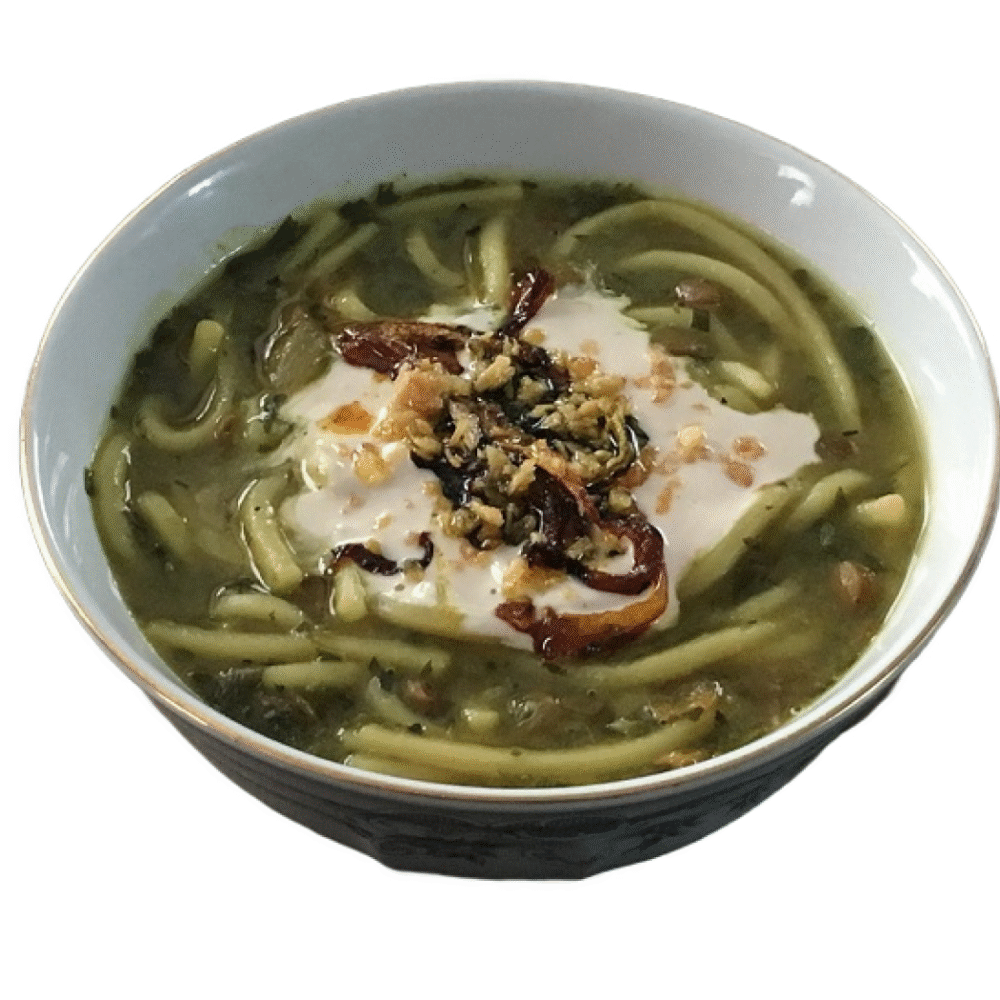
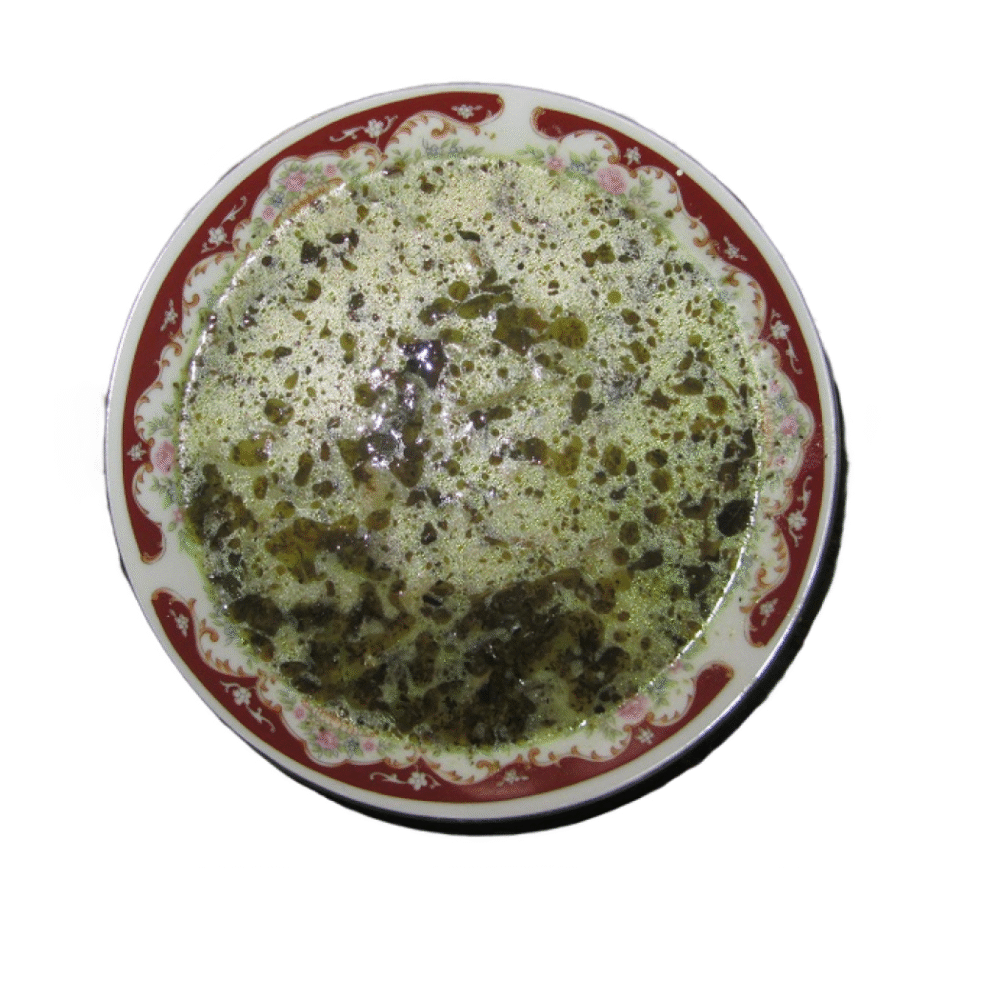
Aside from bread, wheat is used for ash. Ash is a category of thick grain soups, often with whole wheat grains, legumes, and kashk (fermented whey). Ash-e reshteh, a very popular version made with noodles, beans, and loads of herbs, is ritually significant and eaten at the Persian New Year.
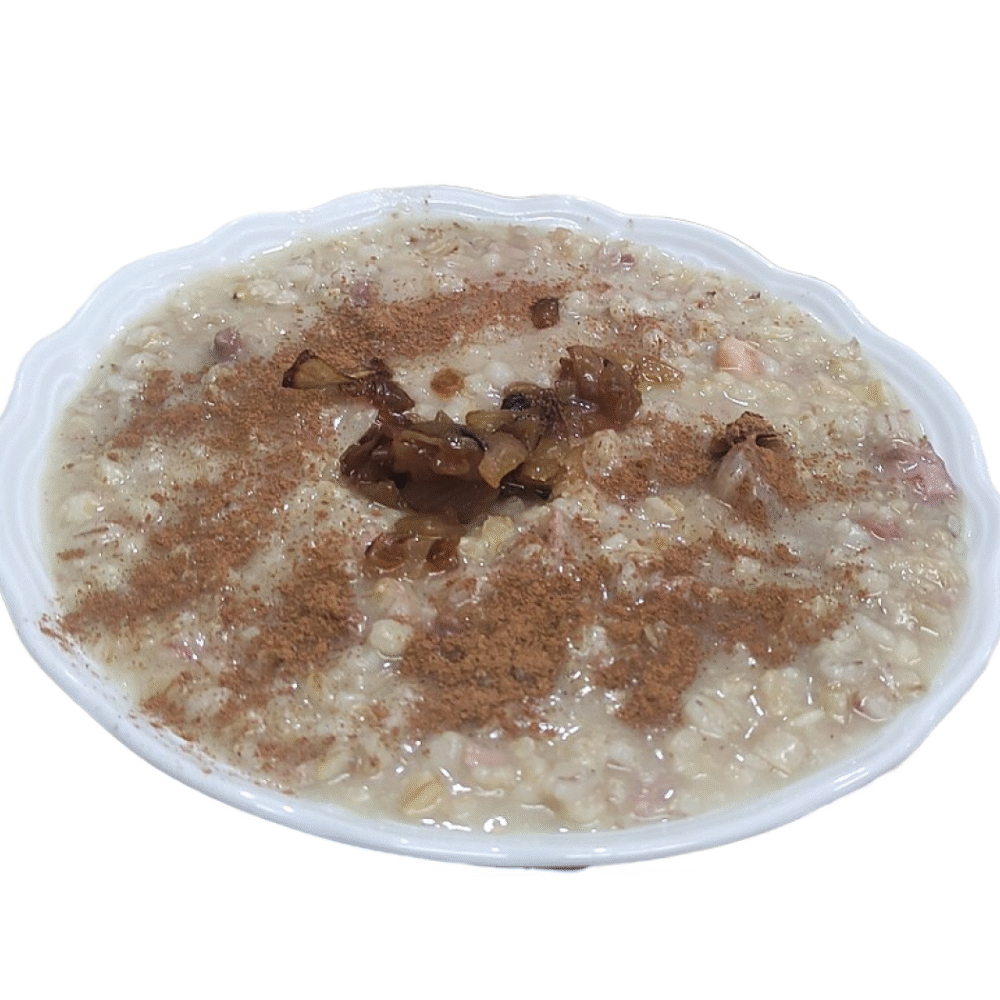
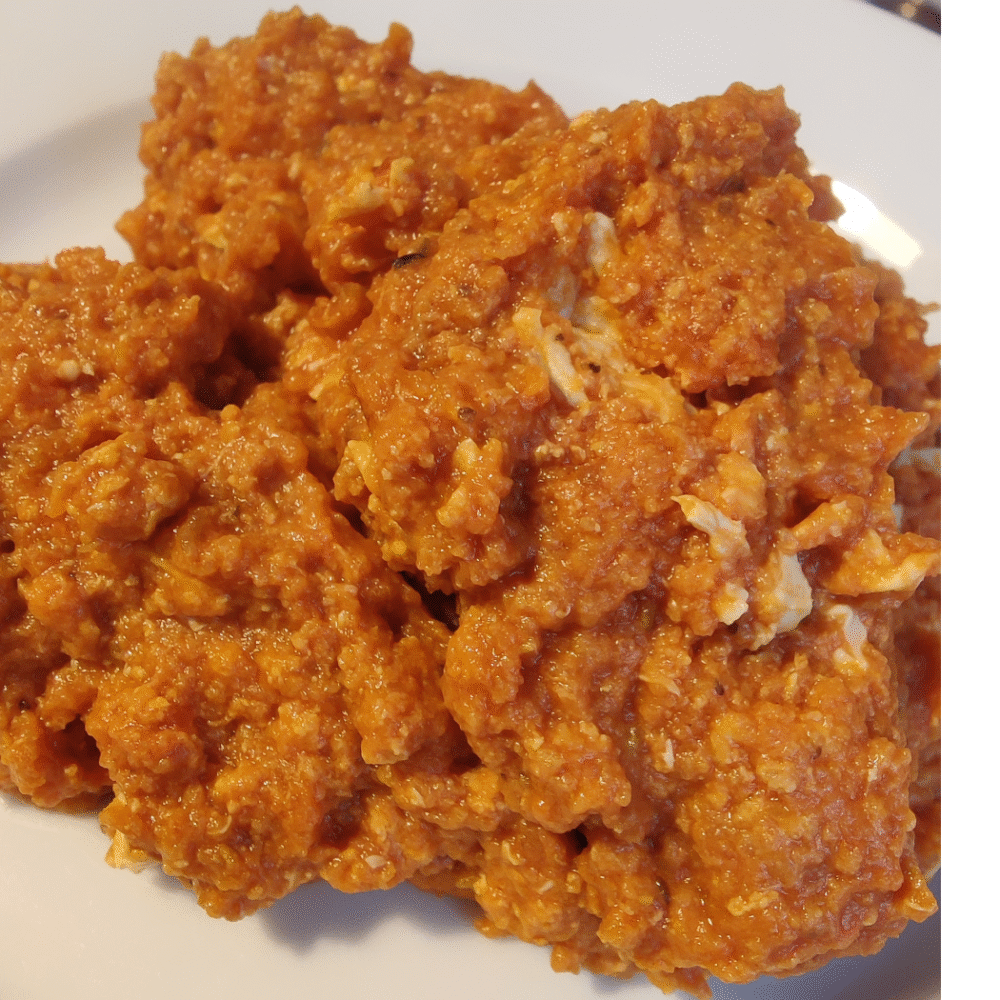
Haleem is another way to use wheat, but it is treated structurally very differently from rice here. It requires long, slow cooking, often prepared overnight to achieve a thick, porridge consistency. Wheat is beaten until the grain fully dissolves into the lamb meat, which is also slow-cooked and mashed to infuse flavor. The texture is intentionally homogeneous. Quite unexpectedly, the porridge with lamb is topped with sugar and cinnamon, served for Ramadan breakfast.
PRODUCE IN IRANIAN CUISINE
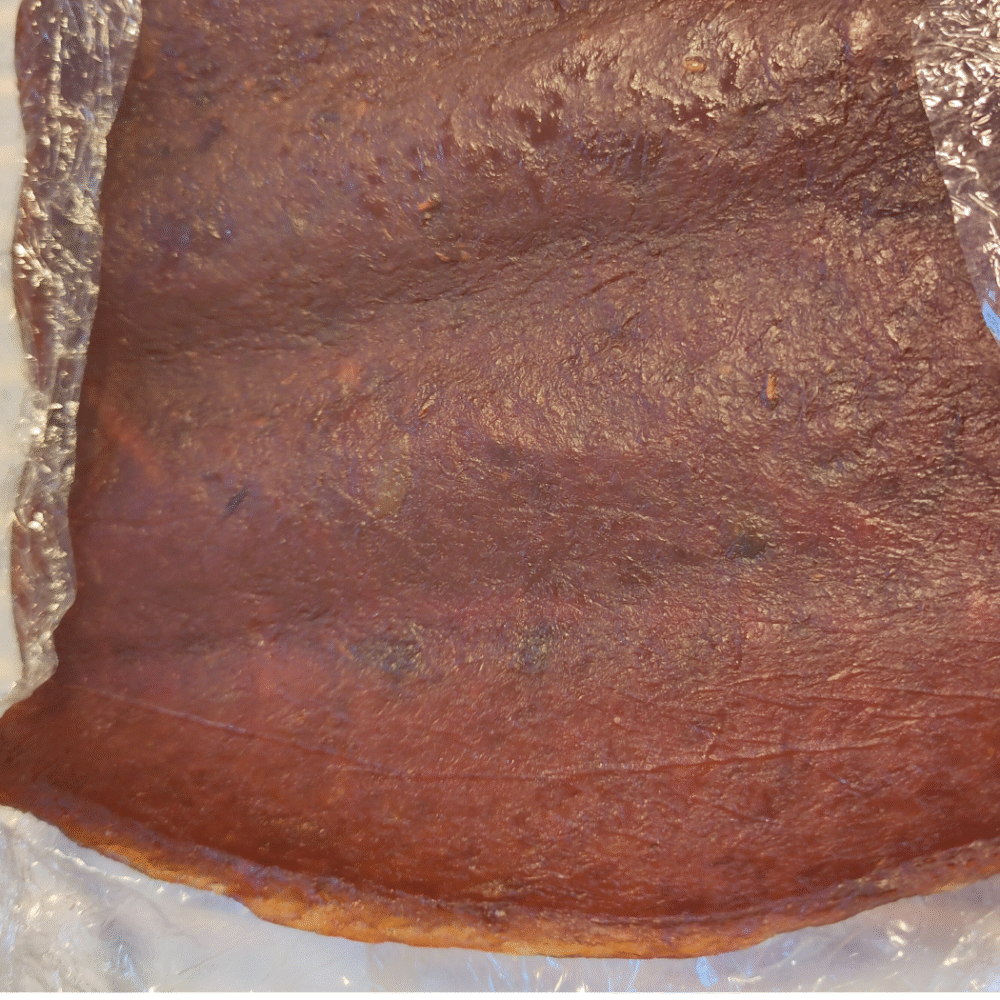
The very visible aspect for outsiders is the fruit used in savory cooking. Overall, it is not a distinct concept of sour and sweet fruits in savory dishes, but here, fruits may even be the dominant flavor of meat stews. Sour cherries, prunes, dried apricots, barberries, and quince are sometimes cooked down, so they lose visual identity, but still dominate the sweet, tart, sour notes, or are left less cooked for textural contrast. Pomegranate molasses thickens and sours fesenjan, a walnut-based stew served with duck or chicken. Dried, preserved, candied, and leathered fruits pile up in streets, and most of them are sour.
Unripe fruits are also a food category. Like gojeh sabz — small green plums, eaten raw with salt in spring and used to sour the stews; ab-ghooreh — the juice of unripe grapes, a souring liquid in cooking, somewhere between vinegar and citrus.
Dried black limes, limu omani, are also a frequent ingredient. Those are boiled limes, dried until they turn black and hollow, then added whole to stews where they slowly release a concentrated, fermented-sour flavor. Nothing else tastes like them.
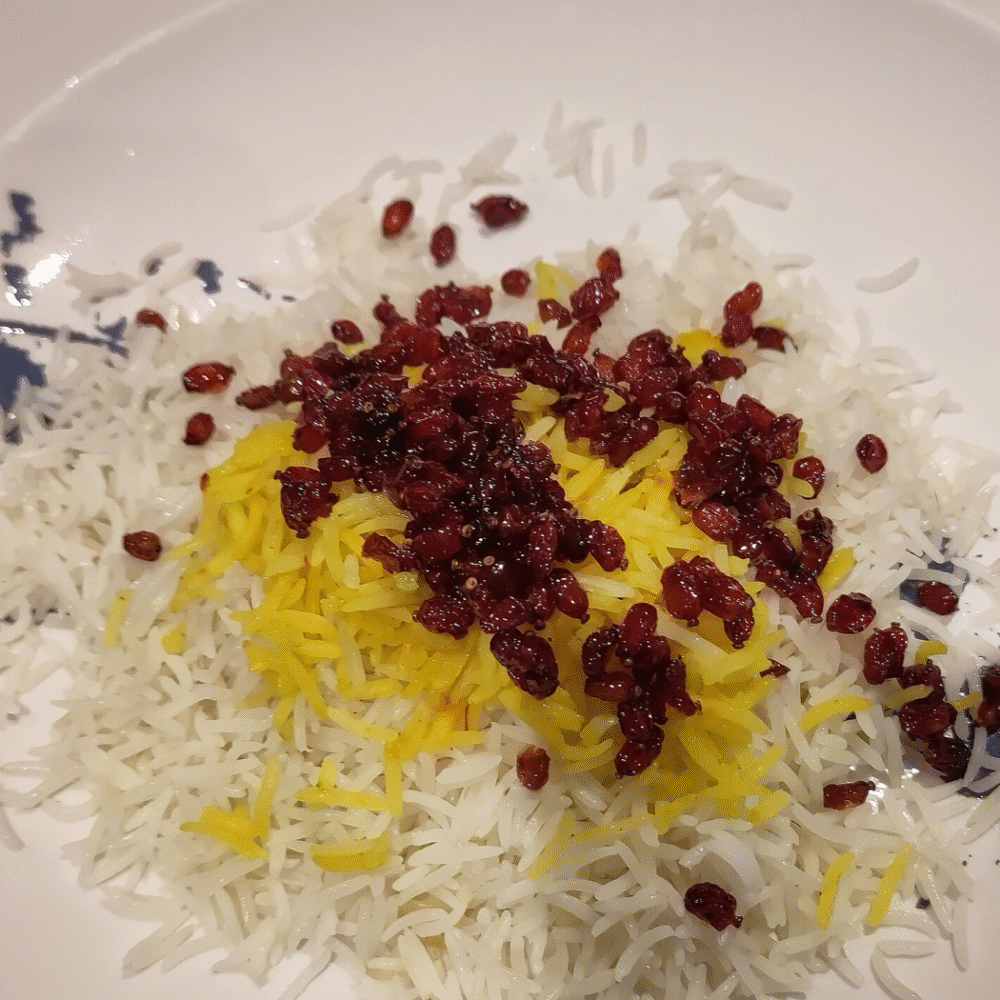
Barberries grow wild across North America, Europe, and Central Asia. In almost every place where they grow, they are treated as ornamental plants. In the United States, barberries were actually banned for decades in the early 20th century because the plant can host a wheat rust fungus. Iran is the world’s largest barberry producer by an enormous margin. Persian cuisine is essentially the only one that maintains intensive, central use of this berry. Why? Nobody has a fully convincing answer. The berry grows everywhere. It is tart, visually striking, and flavorful.
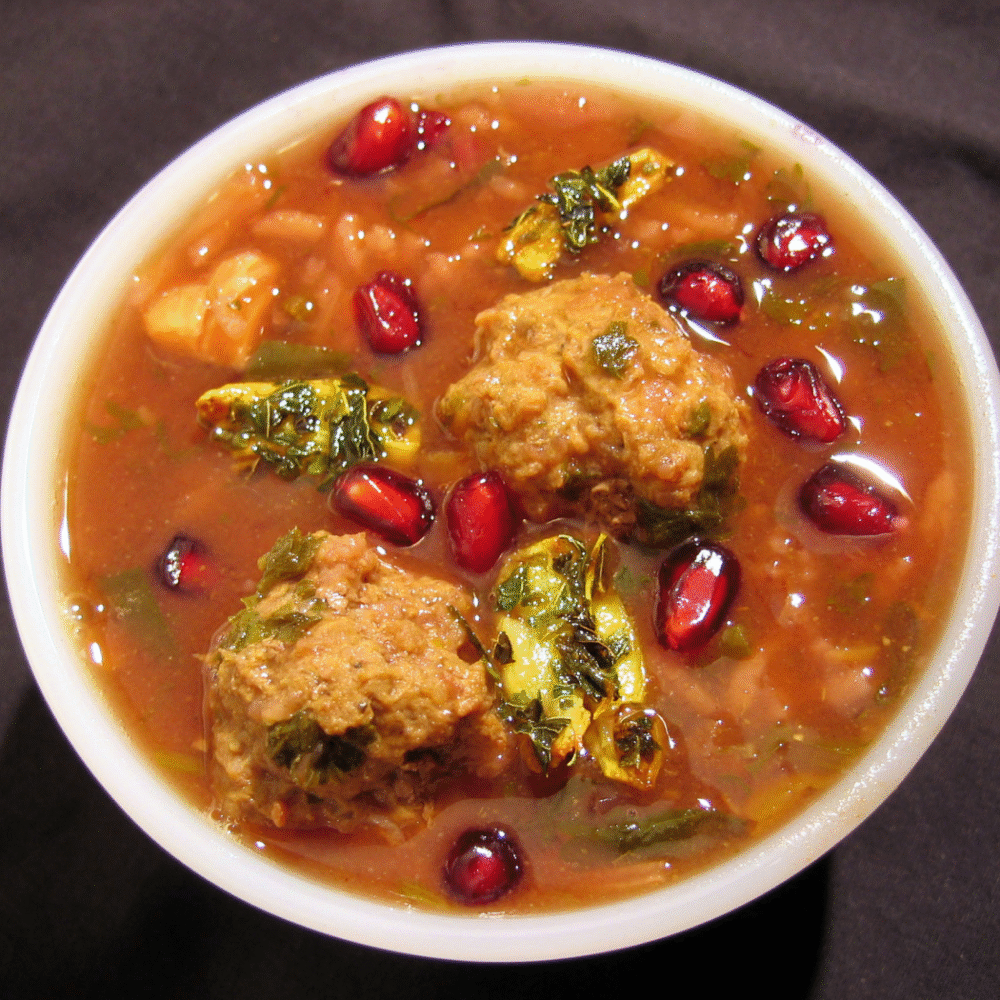
Pomegranates are very important, both in everyday and celebration. The most important form is pomegranate molasses rob-e anar, a thick, tart reduction. Fresh pomegranate seeds go into rice dishes, salads, and ash. Hot pomegranate juices, flavored with cinnamon, sugar or honey are served as a warming winter drink.
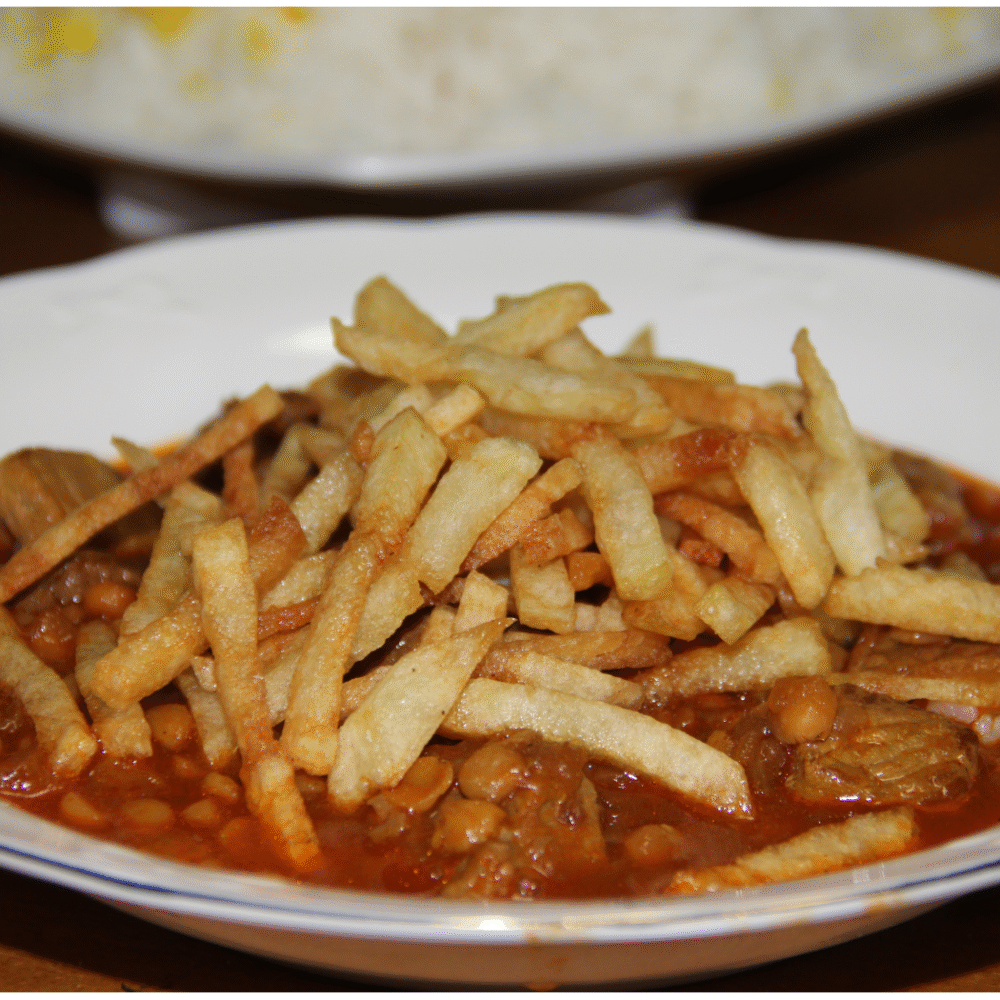
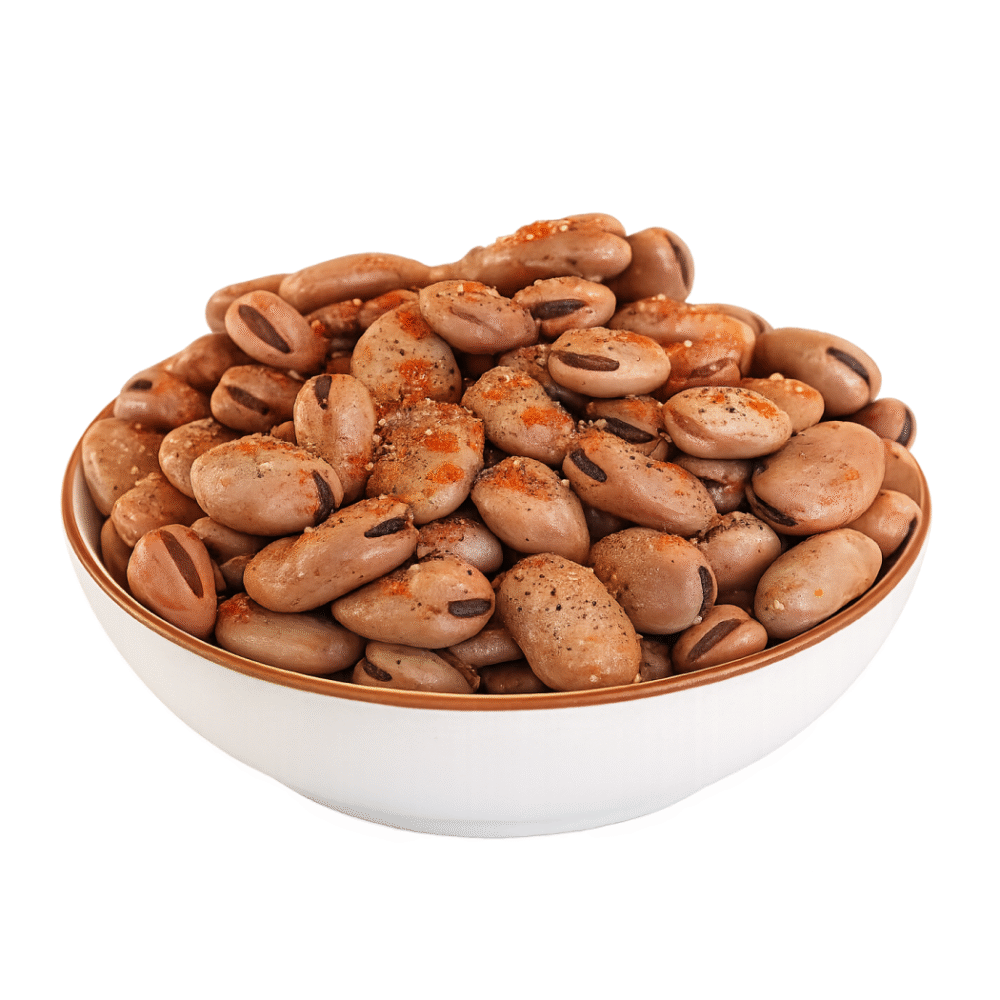
Legumes in Persian cooking often carry the dishes. Very frequently, dishes start with chickpeans or beans, or a mix of them. They are added at different points specifically to preserve individual textures.
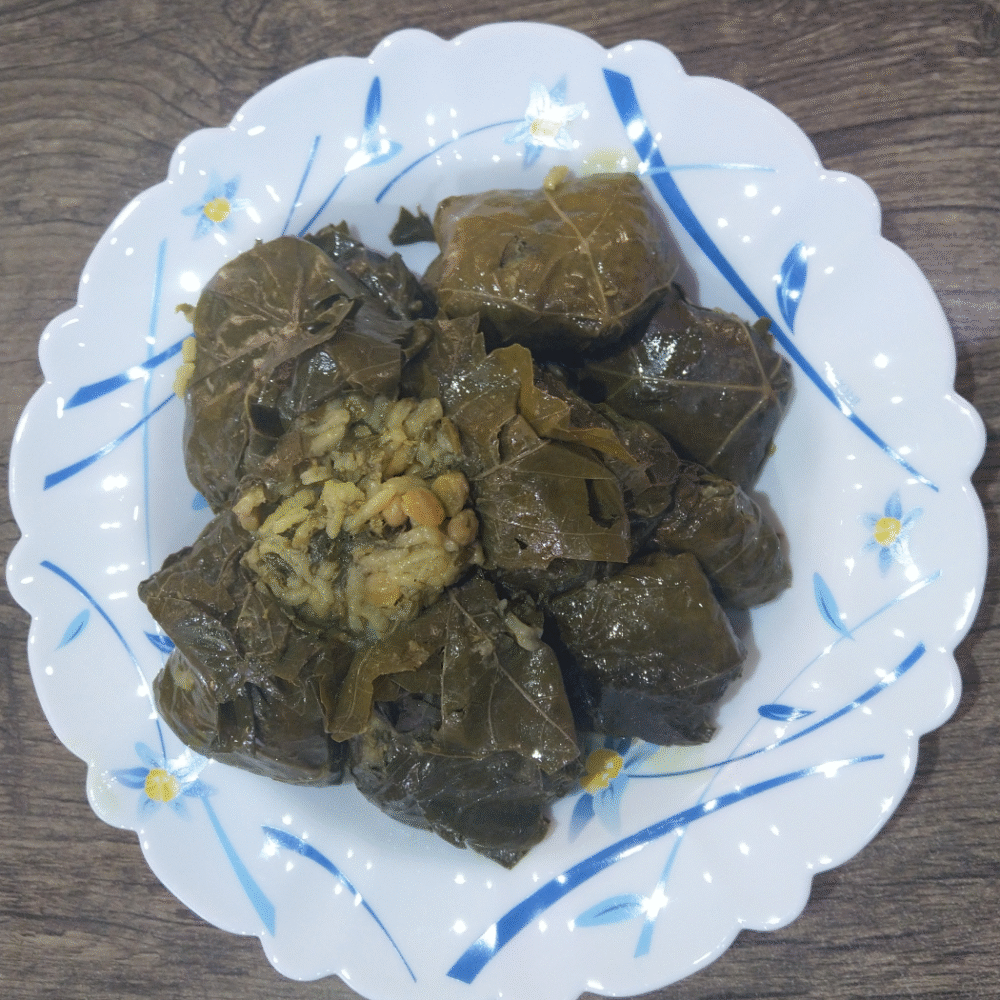
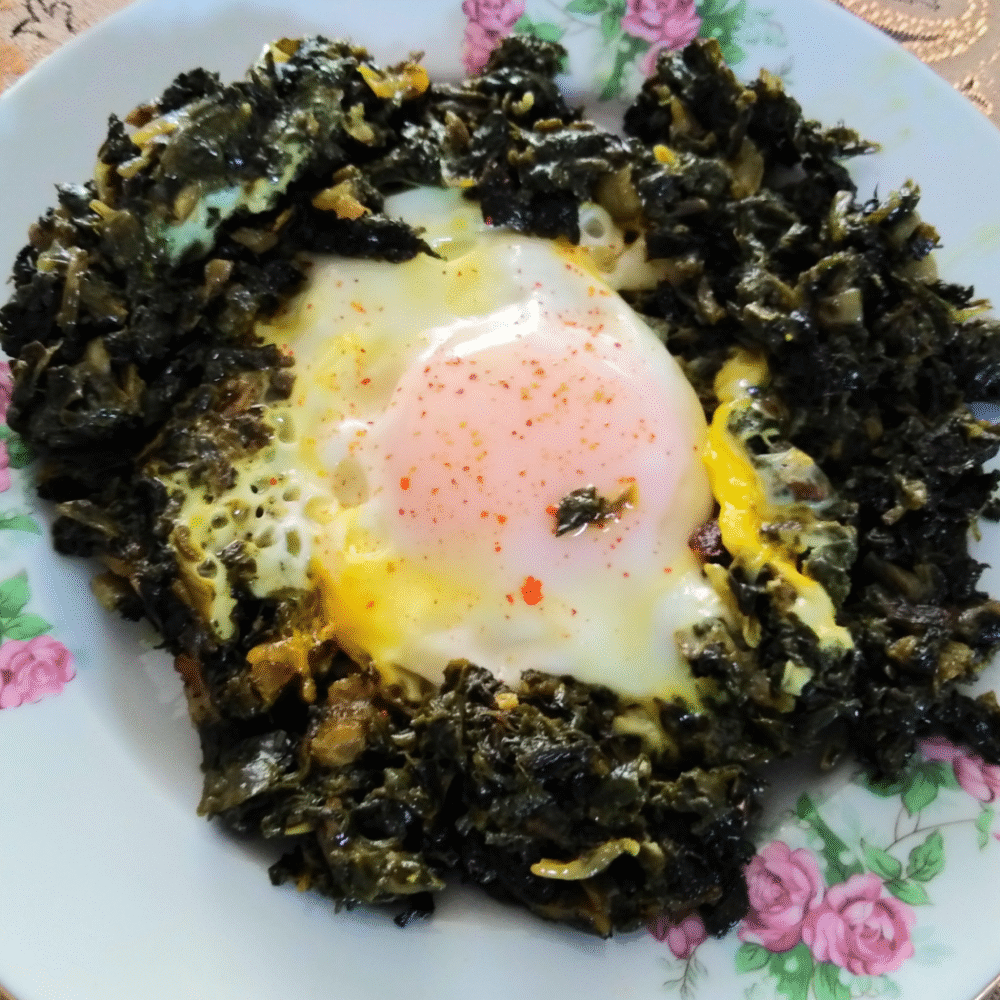
Vegetables are usually stewed into a main meal; rarely are they a separate side on a plate. Eggplant is extremely popular; spinach, green beans, and celery are loved. When vegetables are cooked separately, they are usually stuffed (dolmeh): grape leaves, bell peppers, and cabbage leaves are all used as vessels for filling. There is even fruit dolmeh, made with, for example, quince.
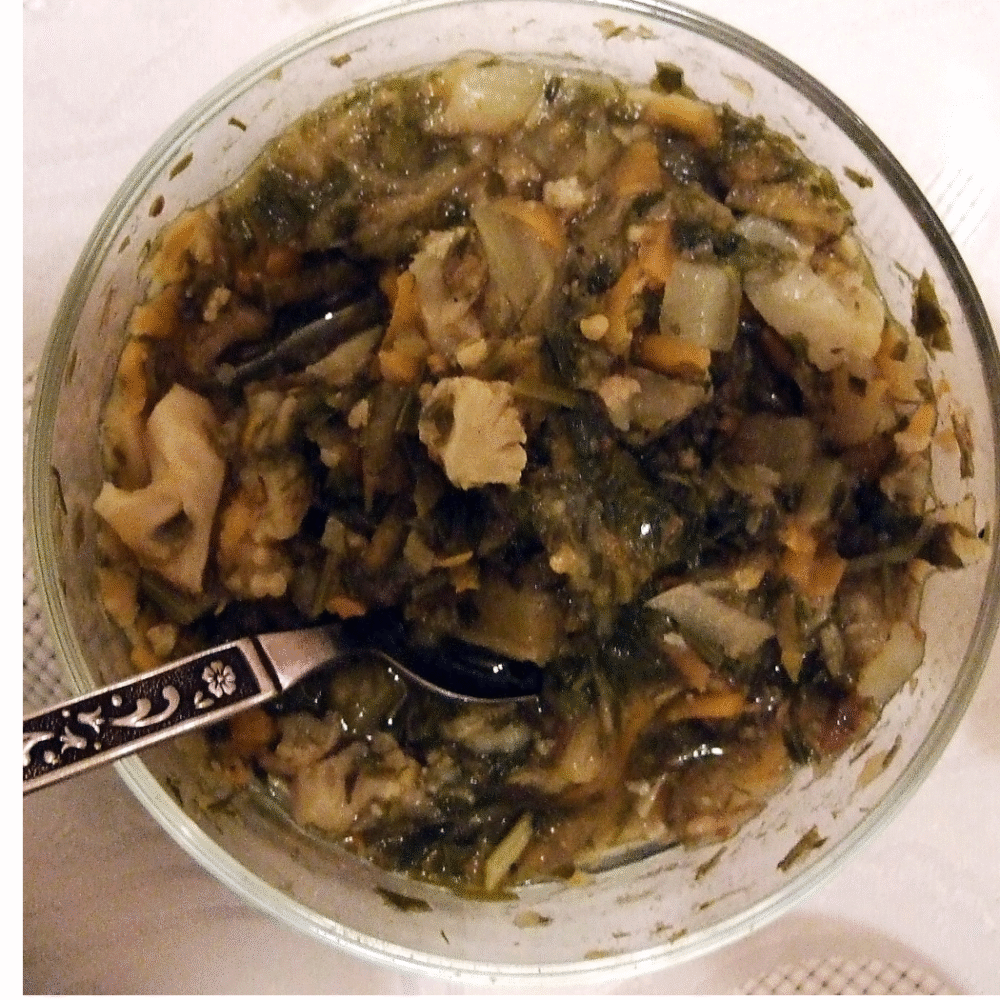
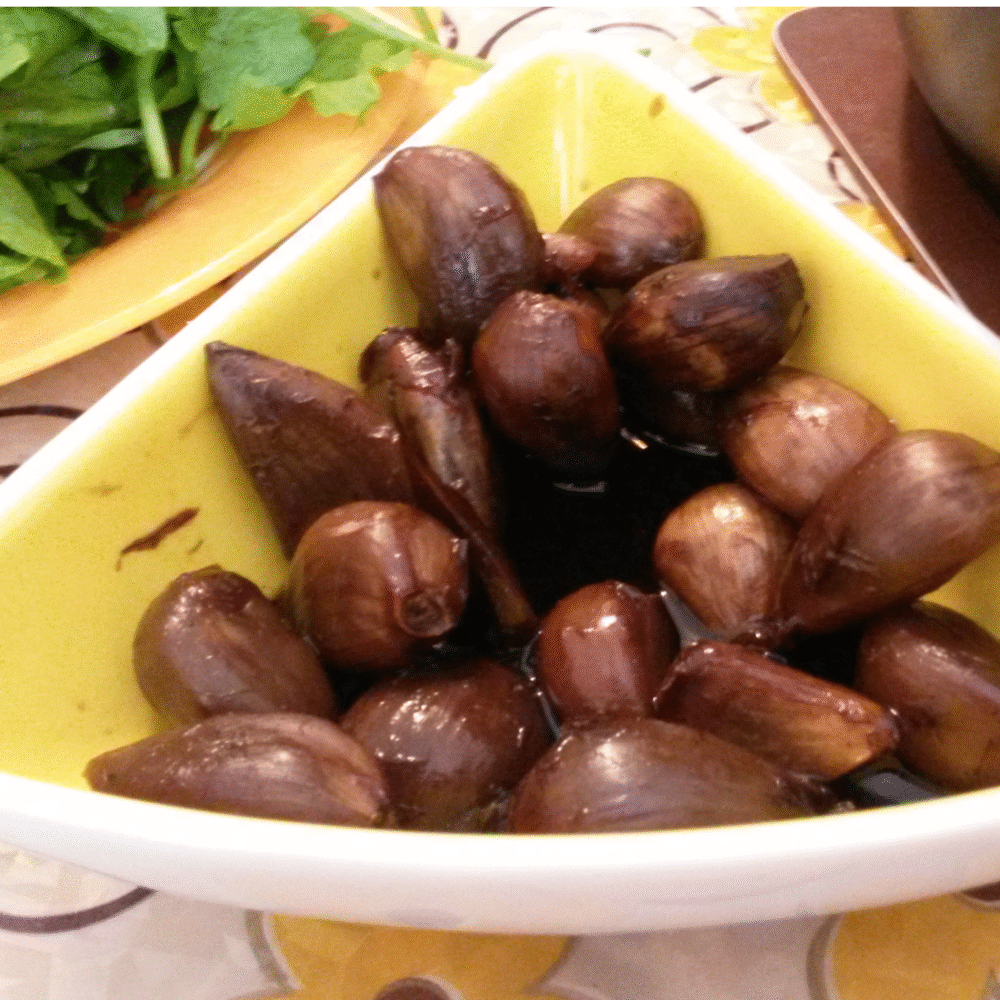
Persians have a long-lasting tradition of fermenting vegetables and fruits, sometimes for years. Torshi seer, a garlic pickle, is aged from one to seven years, turning black and developing a mellow intensity. Cauliflower, eggplant, mixed vegetables, and turnips are all pickled in vinegar with spices. These are served alongside meals as palate counterweights, to manage the richness of meat dishes the same way that the unripe fruit and dried limes do in the cooking.
MEAT IN IRANIAN CUISINE
Lamb. It is not only the favorite meat, historically it was the reference point against which other meats were judged and mostly lacking. Beef was not popular in Iran traditionally, but rather a peasant food, and became prevalent only by the mid-20th century. And it is modern, affordable, and less prestigious.
Among Persian preferred sheep breeds — fat-tailed animals like the Awassi sheep and Karakul are kept. The tail itself sits at the top of the hierarchy within the animal. The dombeh (fat tail) has a distinct fat composition: milder, with a particular melt quality that standard lamb fat and certainly beef fat cannot replicate. It is grilled alongside kebabs as a flavor element in its own, or added to abgoosht for depth.
Chicken is treated with respect. But it occupies a way lower rank than sheep meat. Partridge, pheasant, and duck are the prestigious birds.
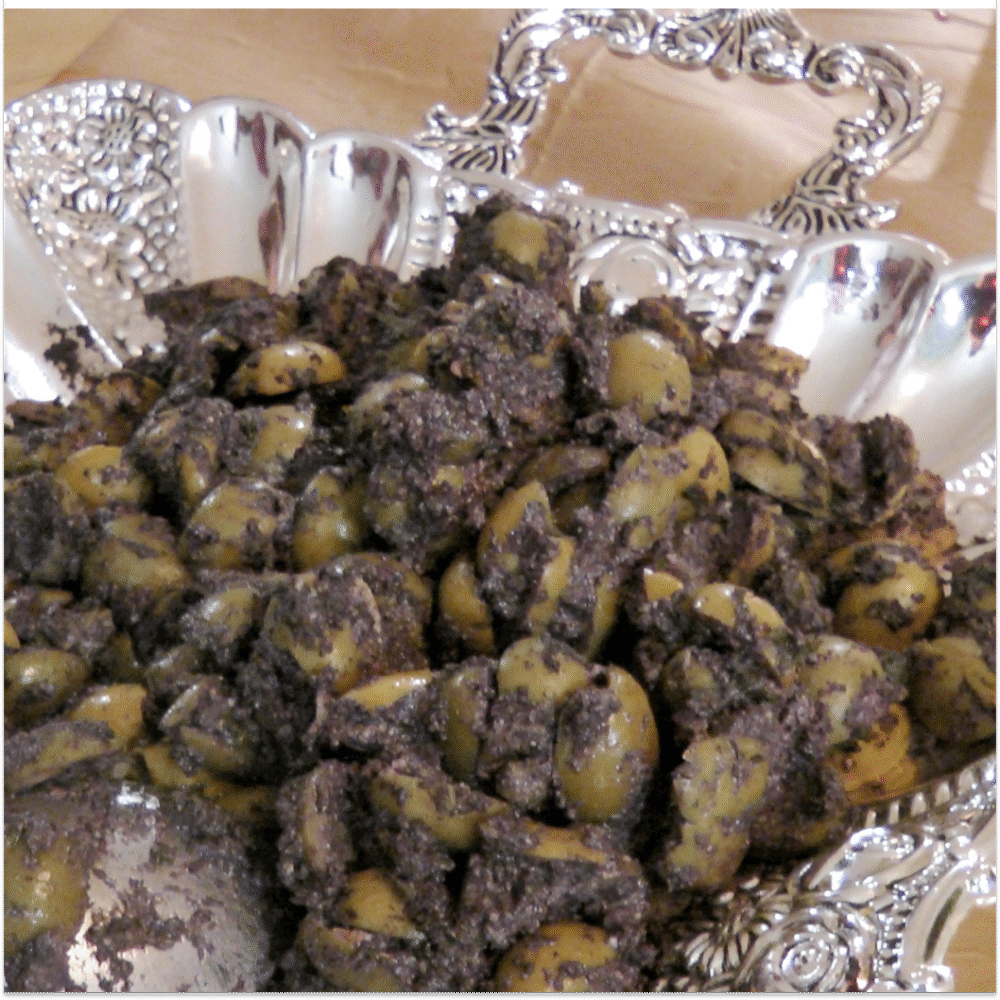
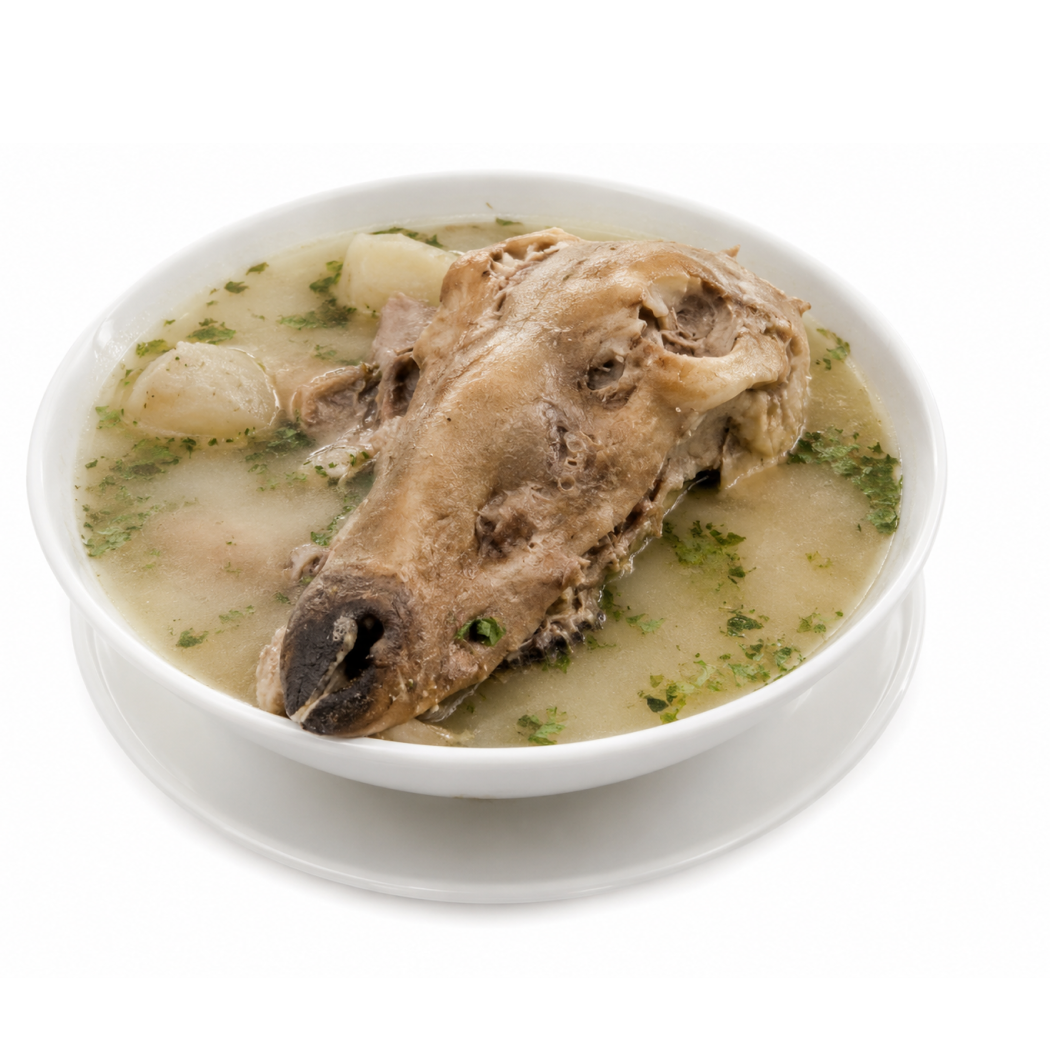
Offals are valued. There are restaurants that serve just the sheep’s stomach, and others that serve just the head and legs — the head and trotters cooked overnight in huge pots with turmeric, pepper, cinnamon, and salt, making a sticky stew. Liver is a beloved street food — grilled over charcoal and eaten with bread and raw onion.
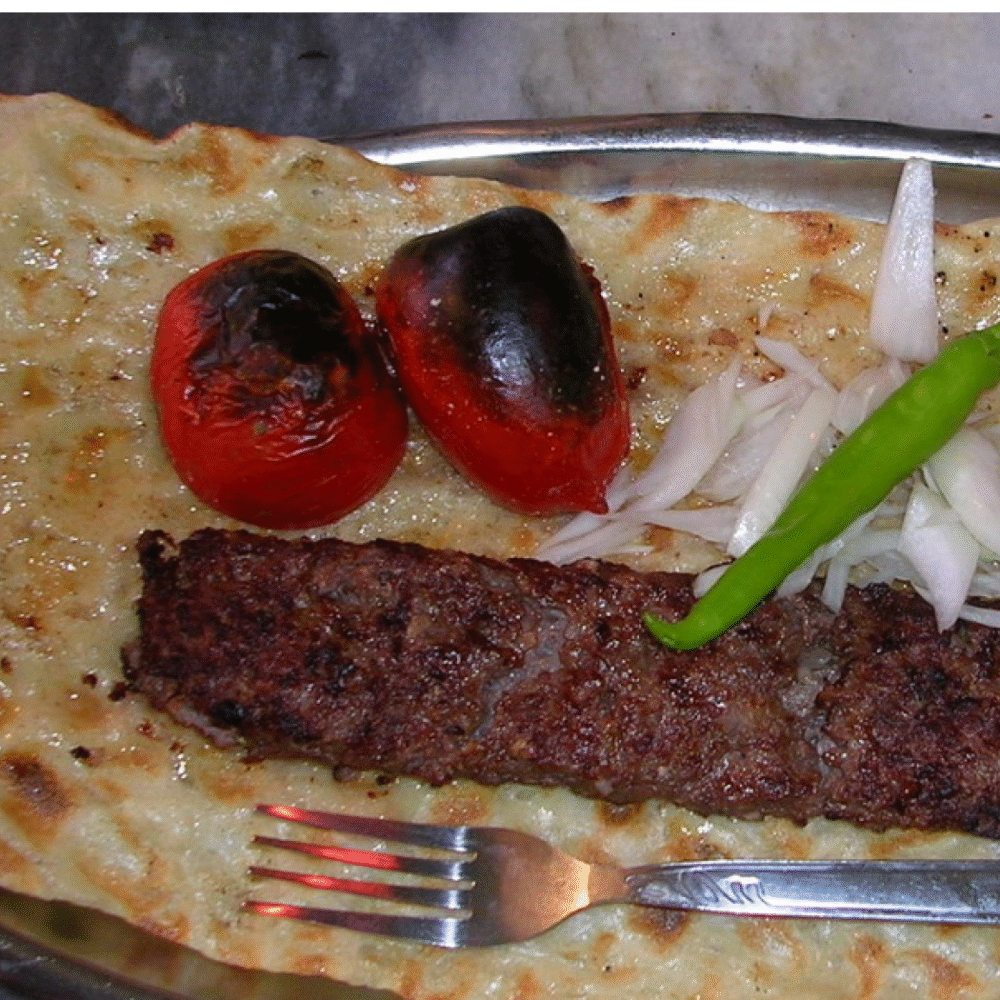
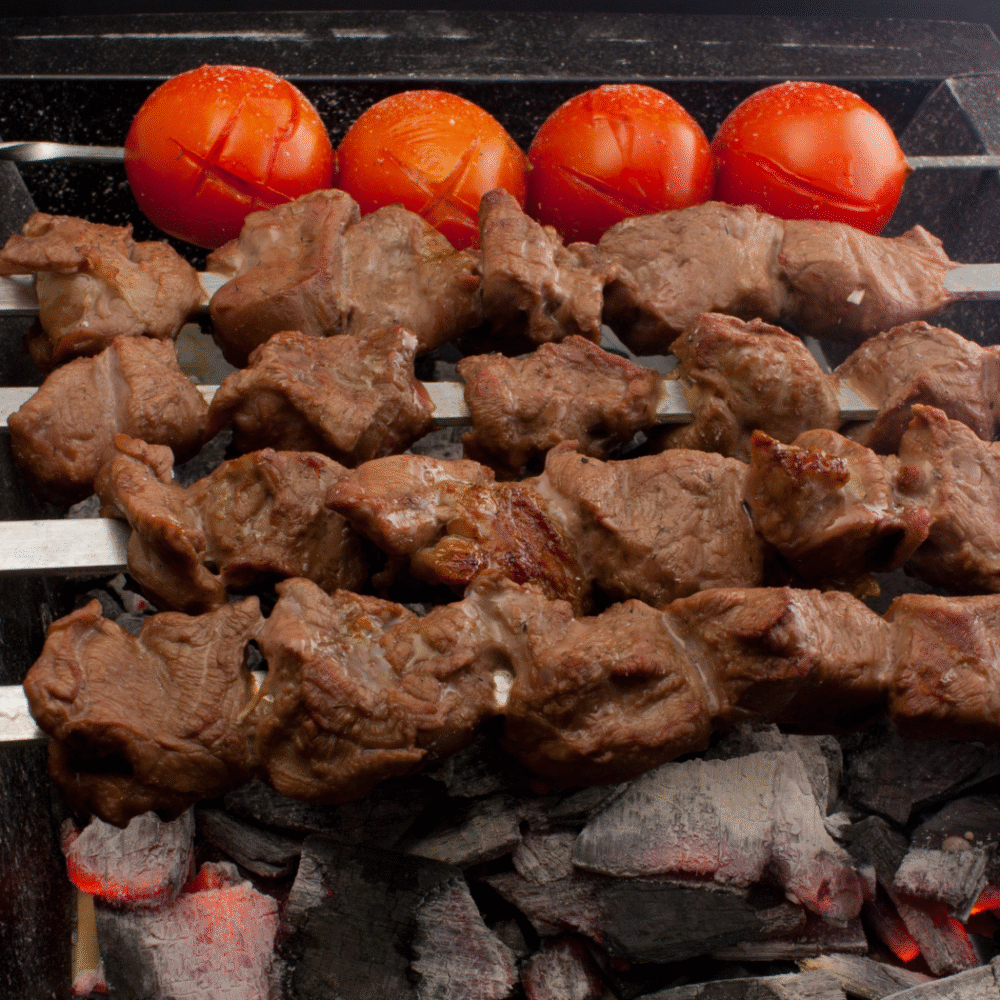
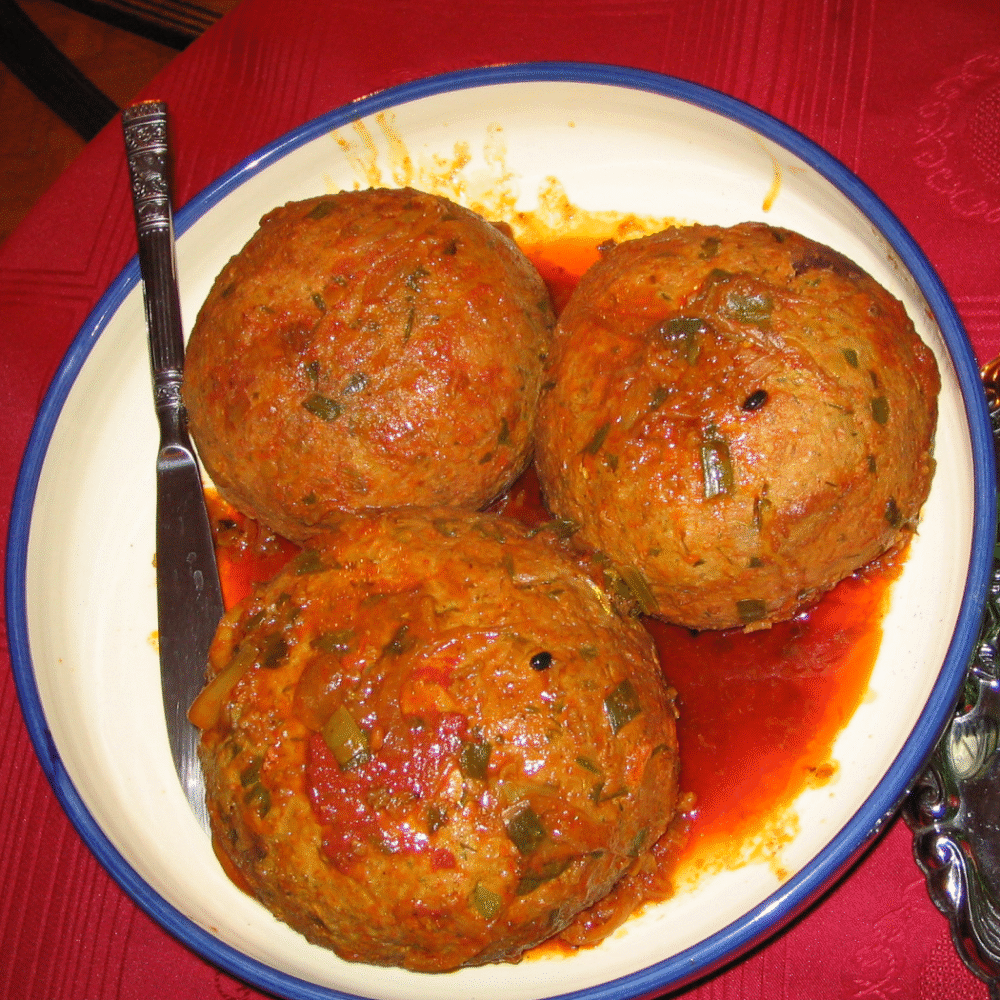
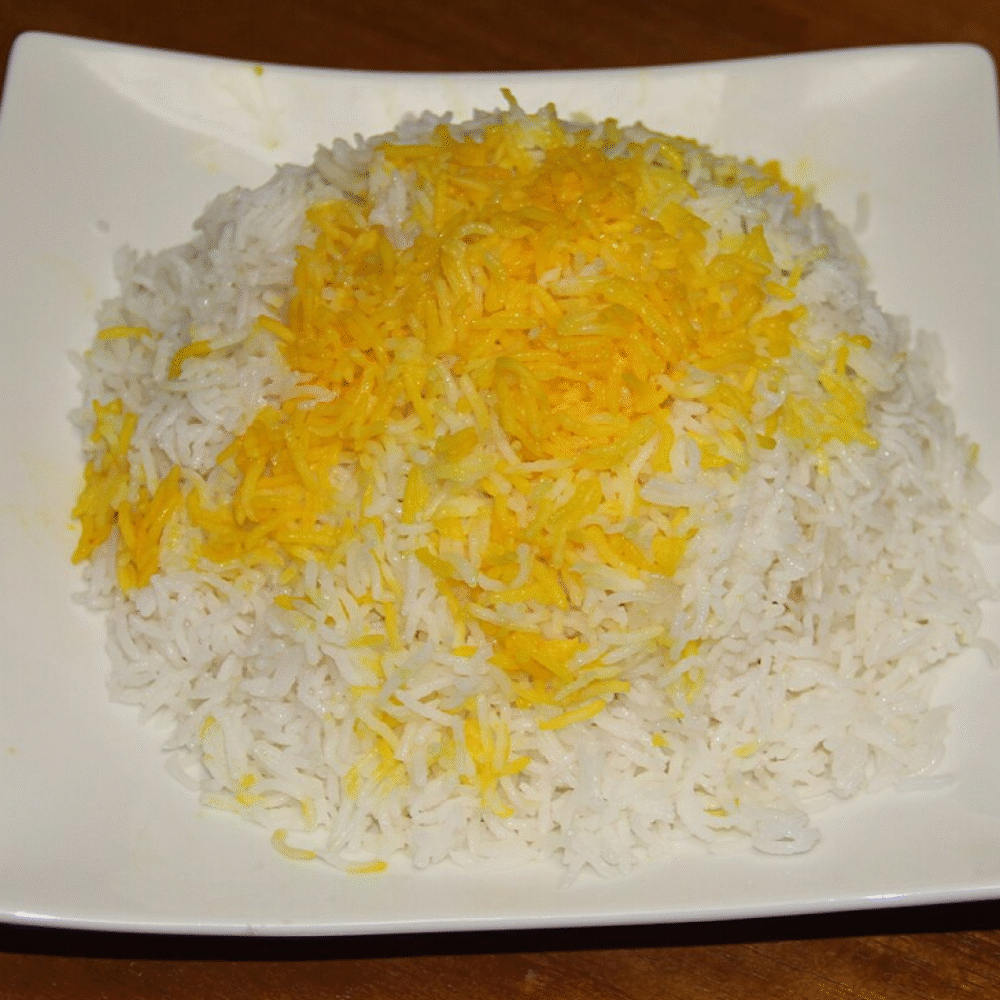
A proper kebab restaurant is as common as a burger joint in the US, except with more prestige attached. Very iconic is the koobideh type — fatty ground lamb mixed with grated onion and saffron, shaped around a flat skewer and grilled over charcoal. Technique matters a lot, and Iranians are opinionated about it. Persian kebab is distinct because of its minimal seasoning: grated onion, saffron, salt, sometimes lemon, sometimes yogurt, and that is the entire ingredient list. The flat skewer of kebab is a solution that prevents meat from spinning, heat goes from the center outward, and pinch marks on the meat ensure even cooking. Iranian kebab almost always comes with chelow — saffron-infused steamed rice. Persian court cuisine elevated kebabs to the level where there are both everyday and celebratory food. You eat koobideh on a Tuesday, but also at weddings.
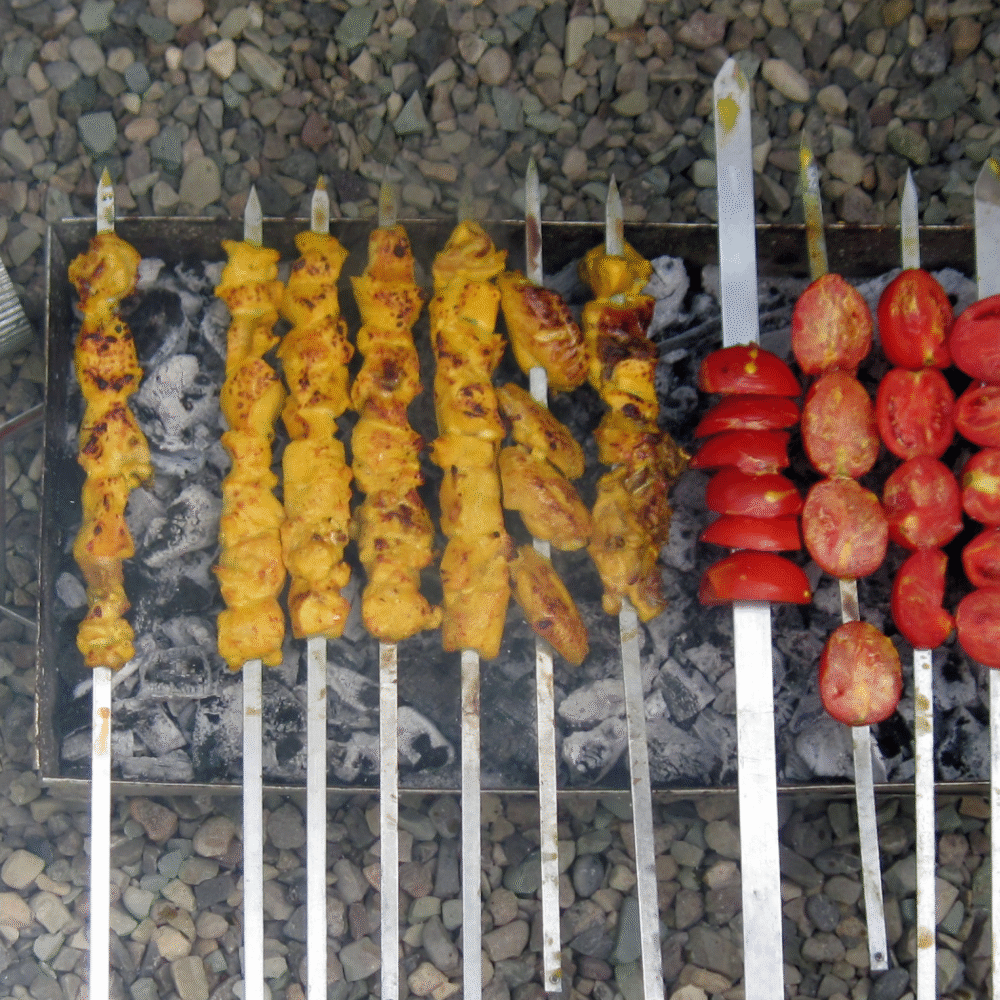
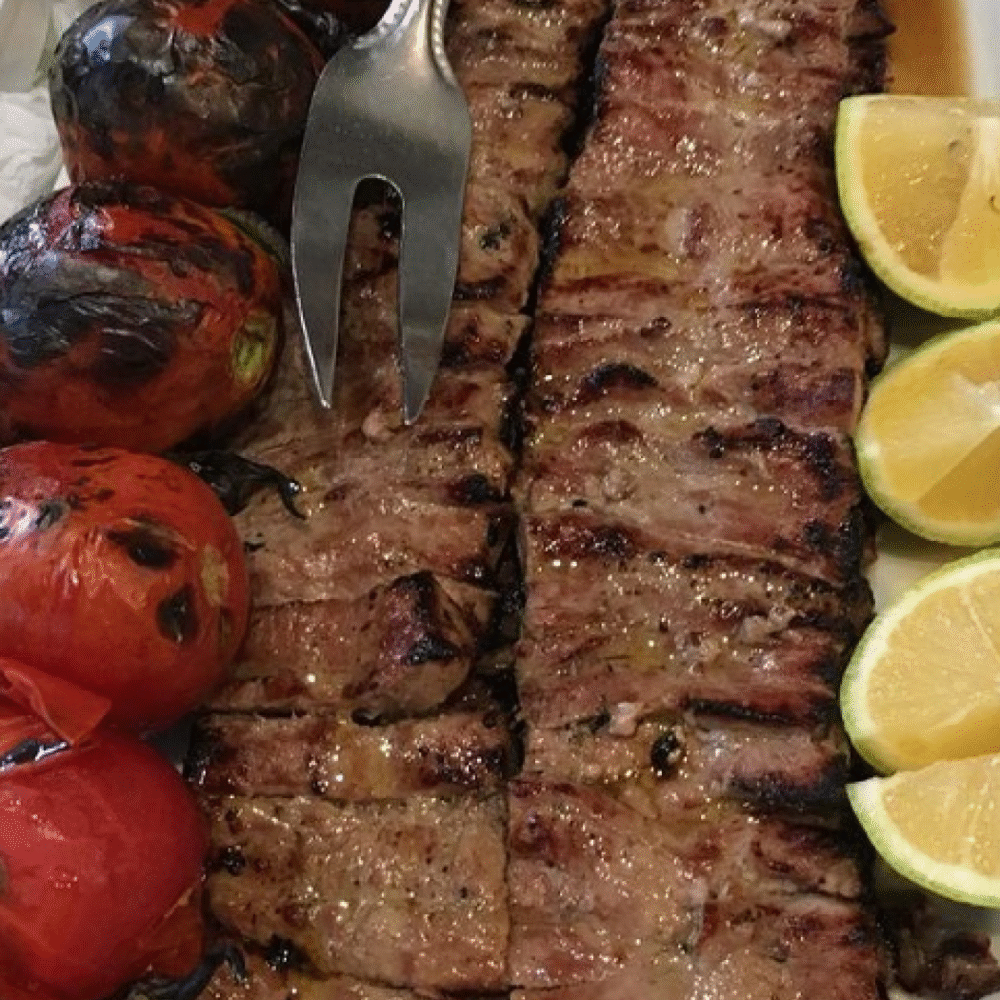
Then there’s joojeh kebab, meaning saffron chicken, barg, a premium kebab of thin-sliced lamb fillet, shishlik lamb ribs kebab, and others.
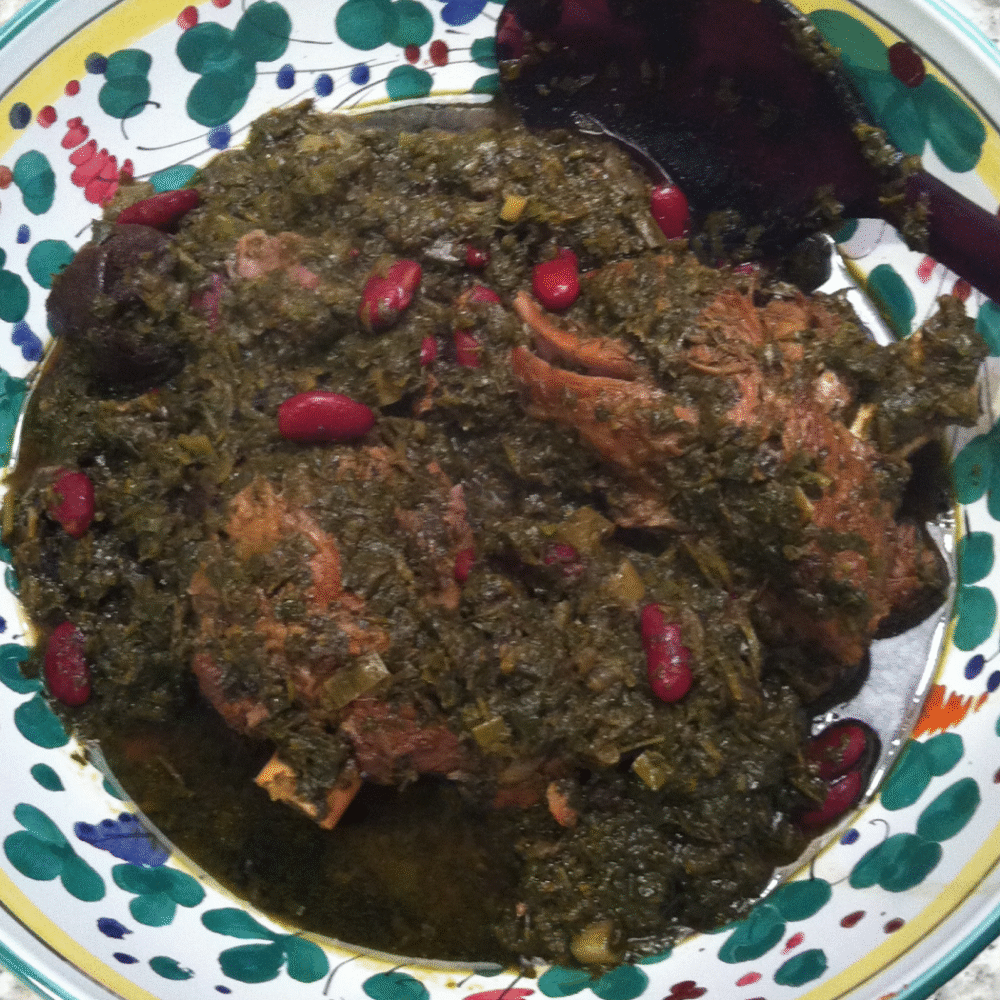
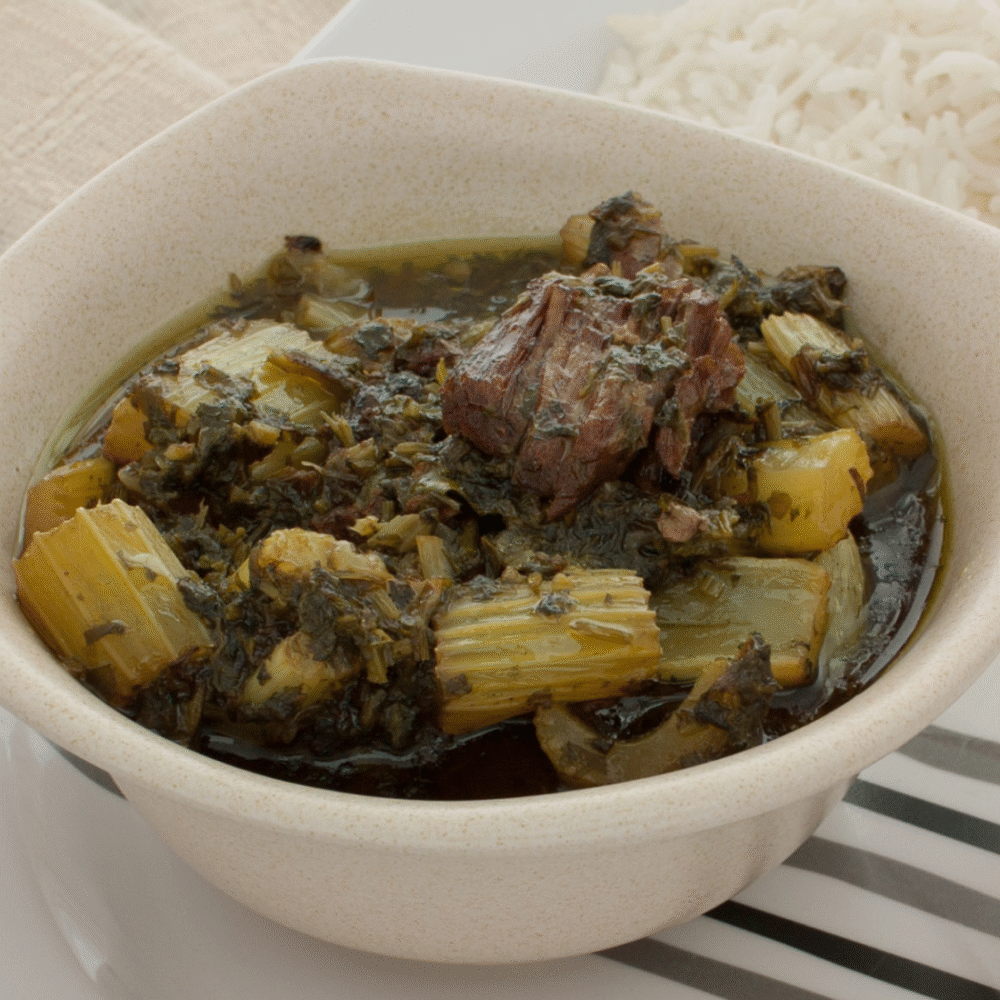
The opposite end of meat cooking from kebab is the pot. Khoresh is a category if slow-cooked stews, always served over rice, and they represent the most distinctly Persian flavor combination: fruit and nuts cooked with fatty meat for hours until the flavors merge. A great example is ghormeh sabzi – a national dish of many variations, yet in essence, a herb, bean, dried lime, and lamb stew. People say in Iran that if a woman can cook ghormeh sabzi, she can cook everything else.
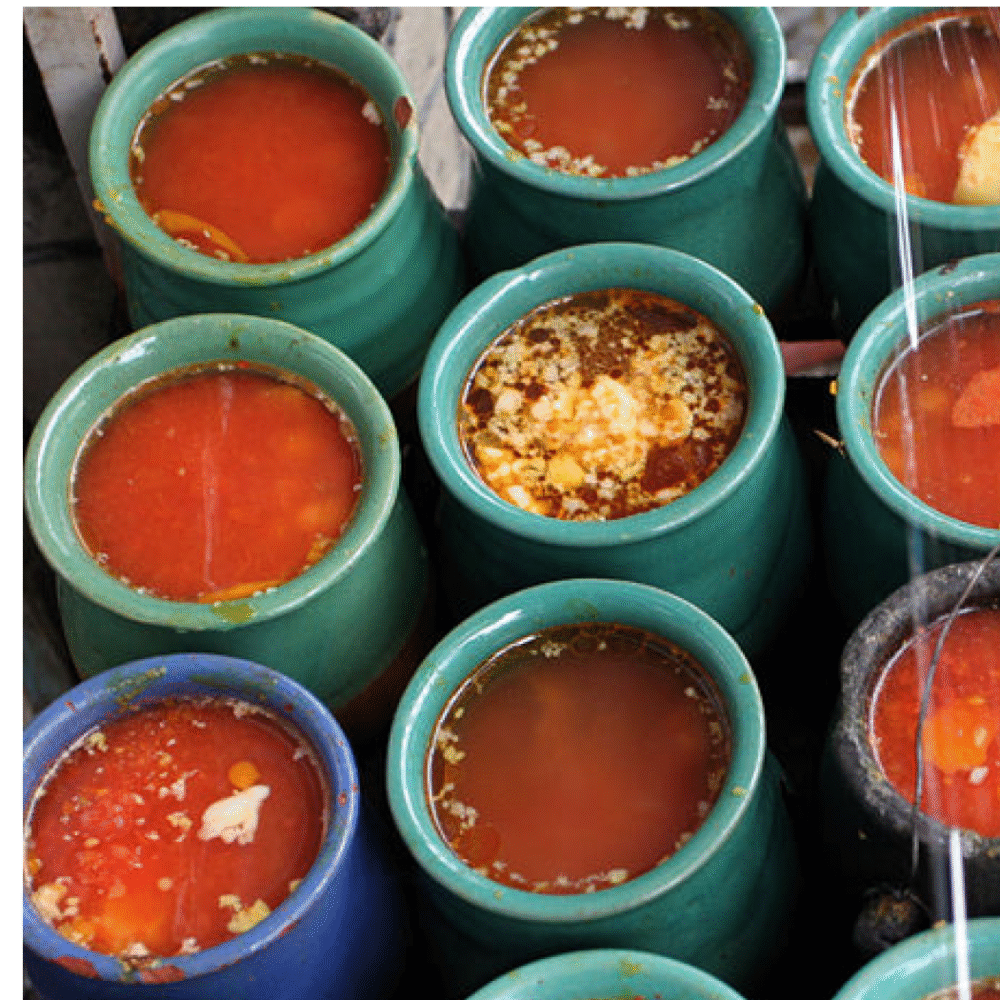
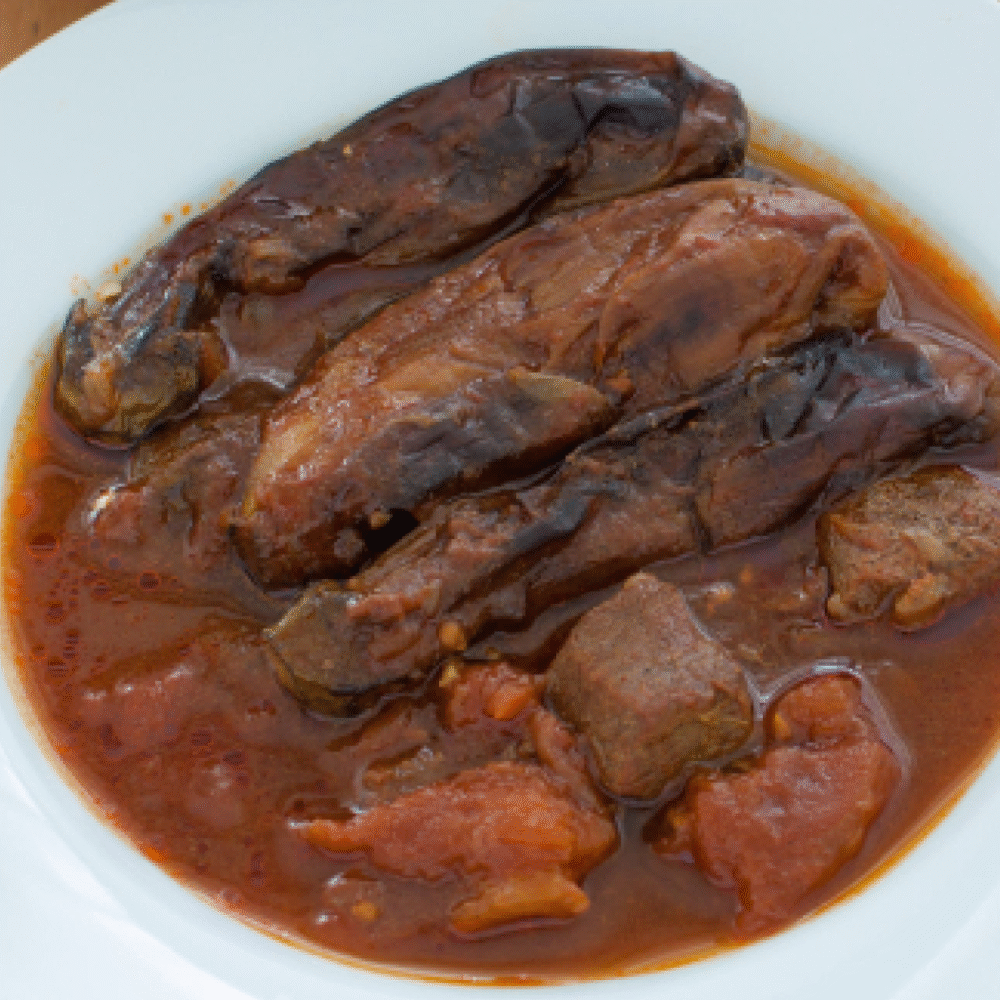
An extraordinary dish is abgoosht, also called dizi, after the stone or clay vessel it cooks in — it’s lamb, chickpeas, white beans, turmeric, and dried limes, cooked slowly until everything collapses. Dish name translates to “meat juice”. The ritual of eating it is unusual: the broth comes out first, poured over torn bread and eaten as a soup. Then the solids get mashed with a pestle into a rough paste and eaten separately. It reads as peasant food in origin, but it completely outgrew its class origins.
FISH AND SEAFOOD IN IRANIAN CUISINE
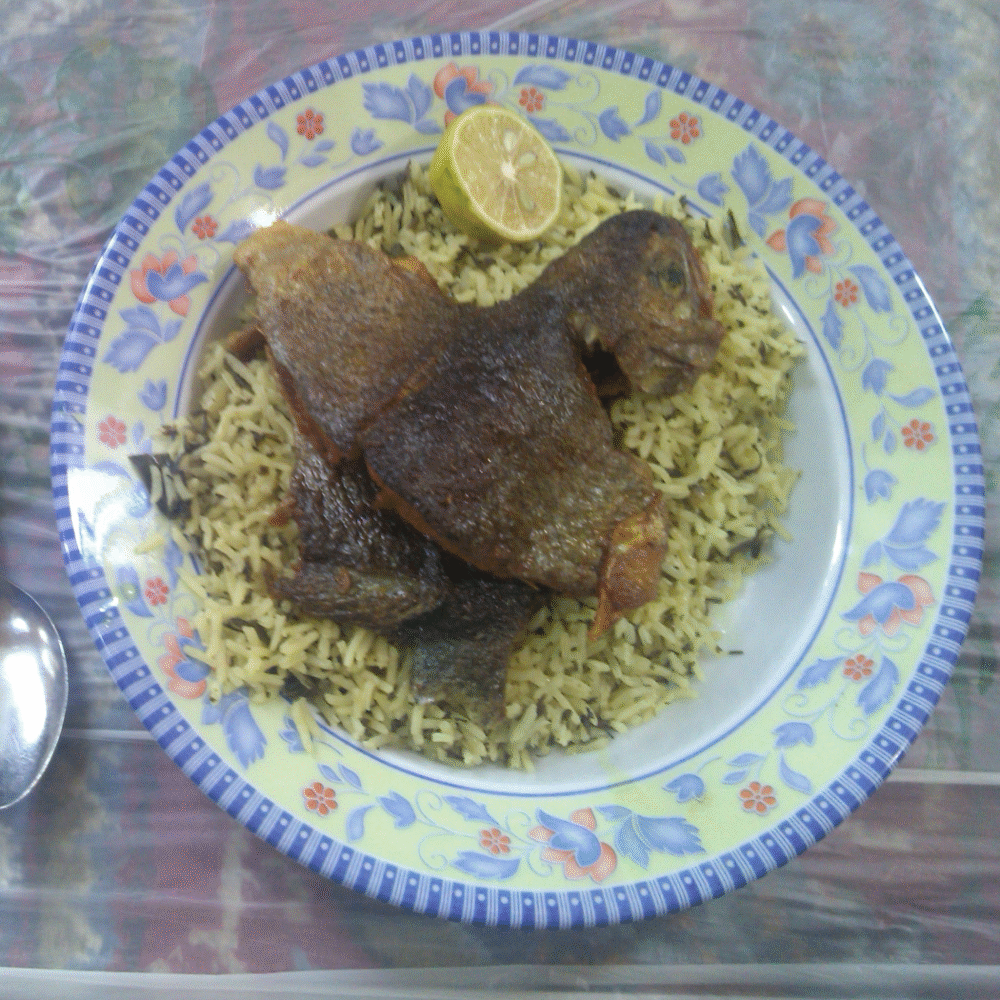
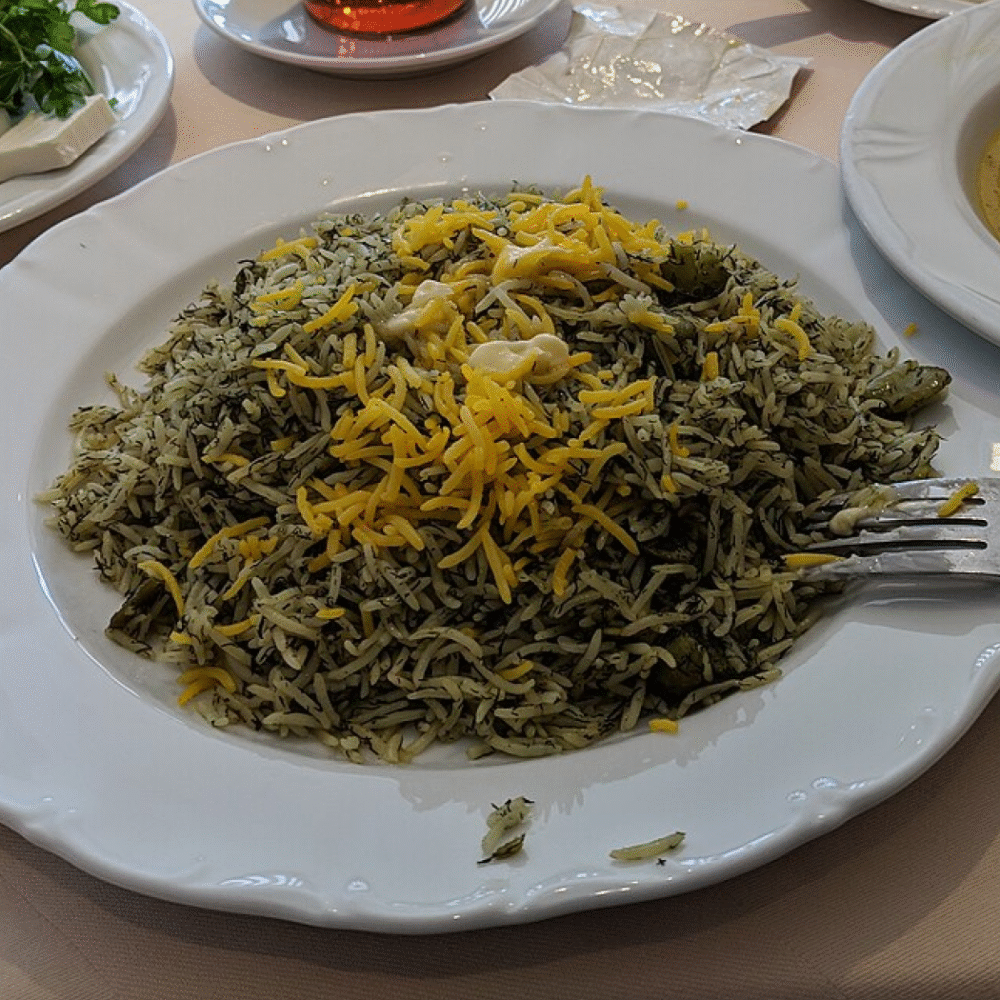
Not so many dishes are based on seafood, since only two small parts of the country, in the north and south, touch the sea. But it has one moment of ceremonial weight. For Nowruz, the Persian New Year, the required dish is sabzi polo ba mahi, a herb rice with fish. A food that plays almost no role in everyday cooking becomes obligatory once a year.
The north and south are essentially two different fish cuisines. The Caspian Sea to the north yields cold-water whitefish, kutum, and sturgeon, with milder flavors and cooking that tends toward baking or light frying with herbs. The southern Persian Gulf coastline runs on warm-water seafood — shrimp, bold spicing, and tamarind. Tamarind barely appears in the rest of Persian cooking, but in southern dishes like ghalieh mahi (tamarind and fish stew), it’s a defining ingredient.
The caviar paradox is interesting. Sturgeon fishing in the Iranian Caspian has been there for more than 2,500 years. Persians consumed sturgeon roe long before the concept of caviar reached Europe. Yet before the Islamic revolution of 1979, caviar was supposedly consumed mainly by non-Muslims and non-conformist Muslims — sturgeon, being scaleless, sits in a religious gray zone. Iran produced the world’s most valued caviar for export, and much of its own population didn’t eat it domestically.
EGGS AND DAIRY IN IRANIAN CUISINE
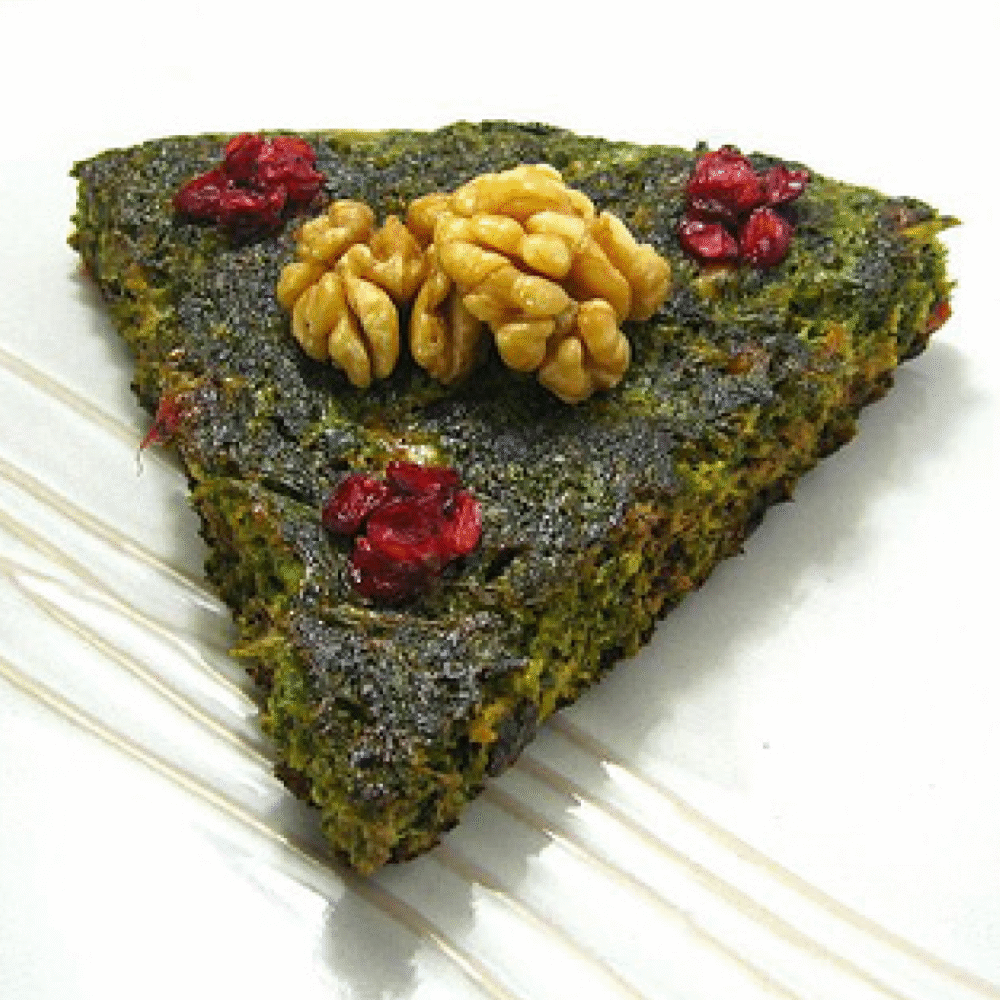
Eggs bind, stuff, and finish, but remain more of a secondary ingredient. The cuisine has no popular scrambled eggs variation focusing on eggs, but it does have a kuku sabzi. Western frittatas feature eggs as a base with vegetables stirred in, but kuku sabzi is a fritata of herbs, where eggs are mainly a binder. This dish, oozing with color and fragrance, is usually served during the new year.
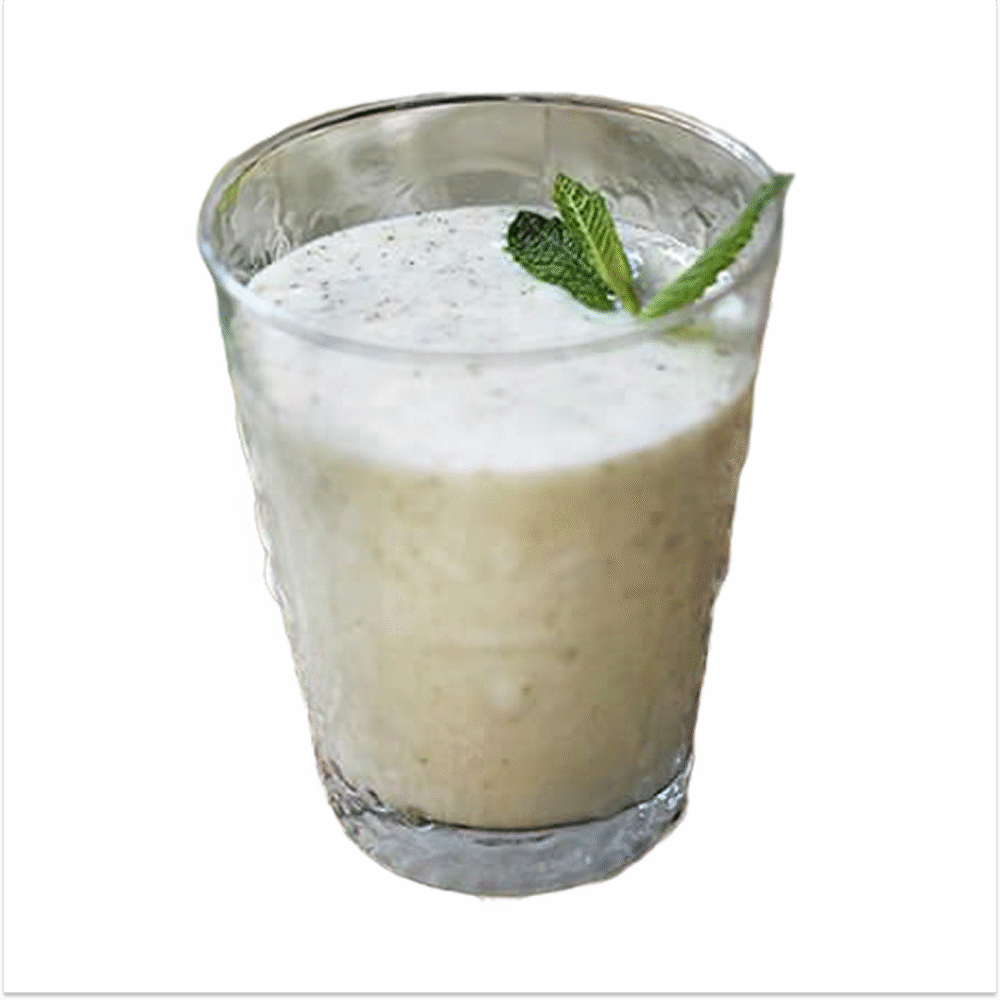
Iran is largely arid, with a significant pastoral, but not industrial, dairy tradition. Fresh milk spoils fast. How do you make milk last and travel? Preserve it: milk becomes mast (yogurt), which becomes either doogh (diluted and drunk) or kashk (concentrated, dried, preserved for months). Out of all the dairy products, yogurt is perhaps the most important. Doogh, tangy, flavored with dried mint, sometimes lightly carbonated, comes with food the way wine accompanies a European meal. Kashk is made by fermenting whey, the byproduct of cheese and butter production, concentrating it and shaping it into balls or discs, then drying it in the sun. Aged kashk develops a flavor between sour cream, aged parmesan, and blue cheese — salty, sharp, intensely sour, with an umami depth. It has no real Western equivalent. It goes on top of kashk-e bademjan eggplant dip, stirred into ash reshteh soup at the end.
OILS, NUTS, AND DESSERTS IN IRANIAN CUISINE
In many cuisines, cooking fat is intentionally neutral, something chosen not to interfere. In Iran, the cooking fat is part of the flavor: butter, clarified butter, or rendered lamb fat. Sesame oil appears in some regional cooking. None of it is neutral.
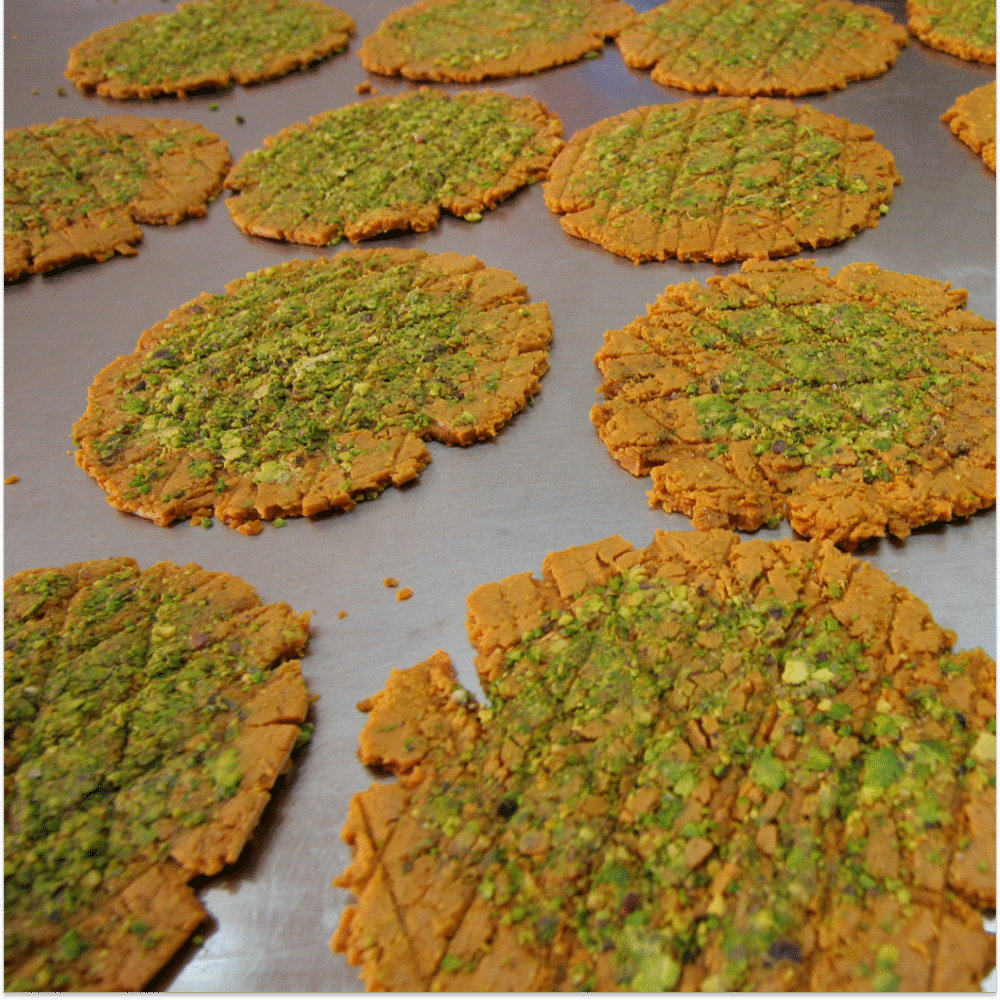
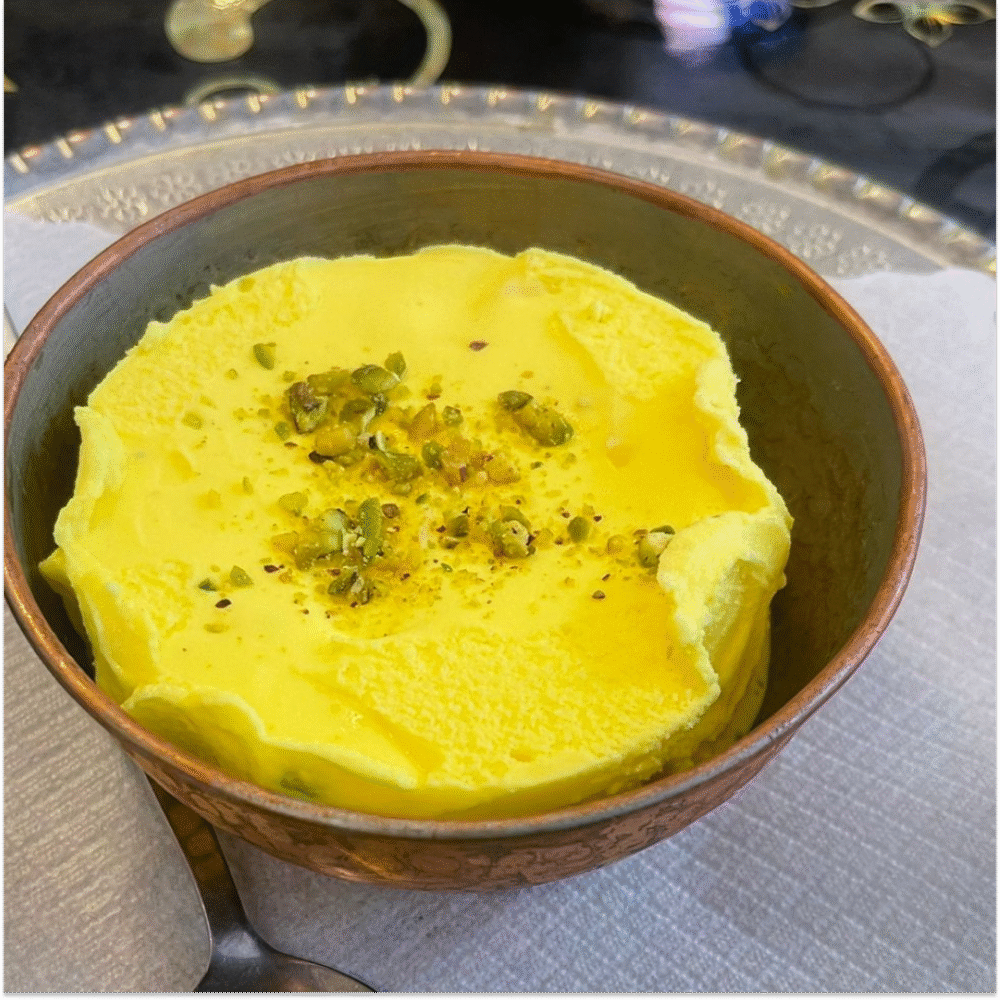
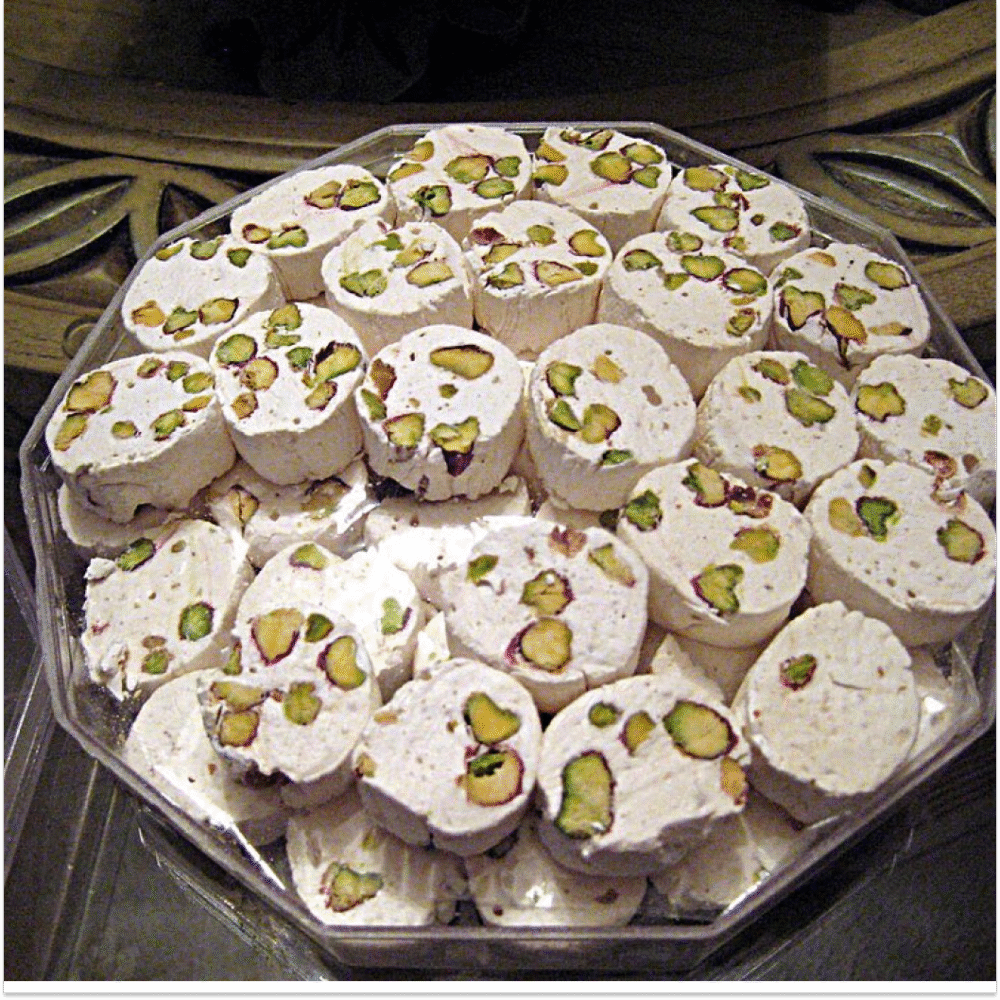
Pistachios, almonds, and walnuts cross freely between sweet and savory. Very few cuisines take something as dense and expensive as walnuts and grind them to make the body of a sauce. Yet in fesenjan, walnuts provide structure, fat, and texture. Iran produces roughly a third of the world’s pistachios, and uses them a lot locally – ground into ice cream bastani, folded into nougat gaz, scattered as garnish.
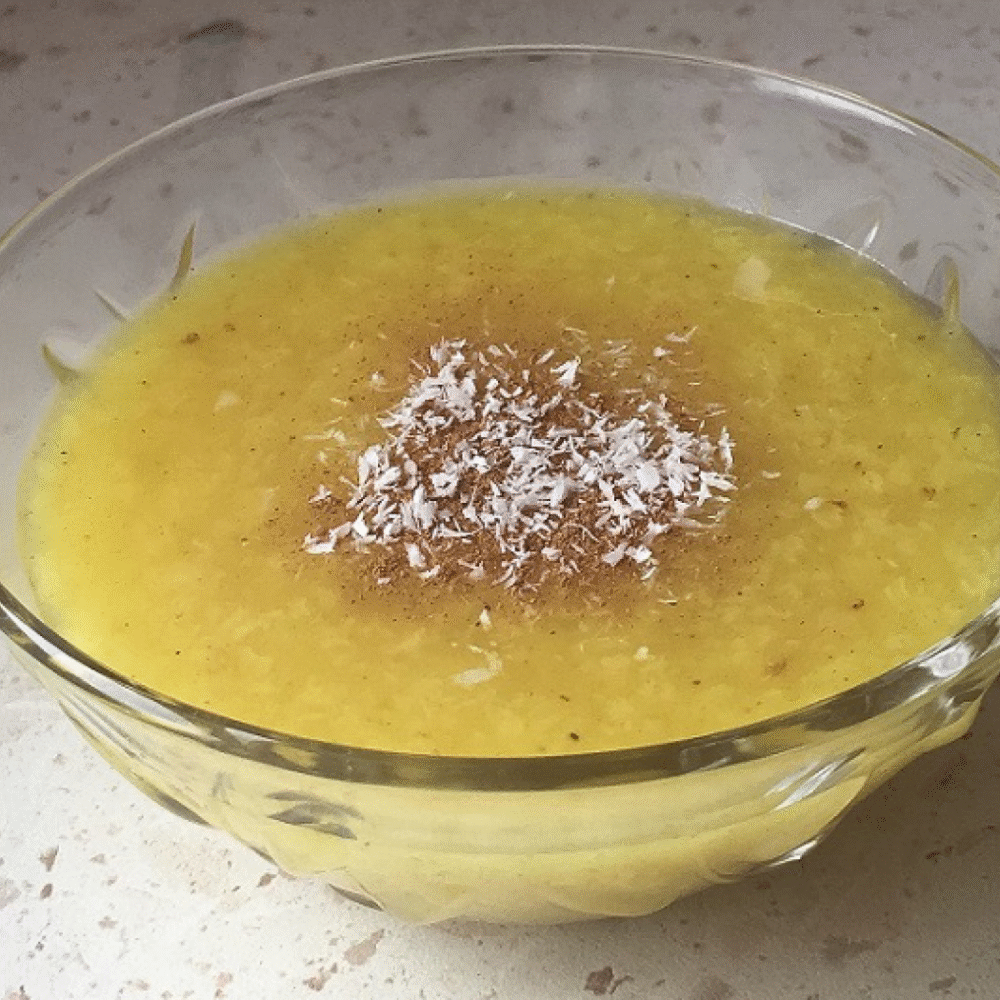
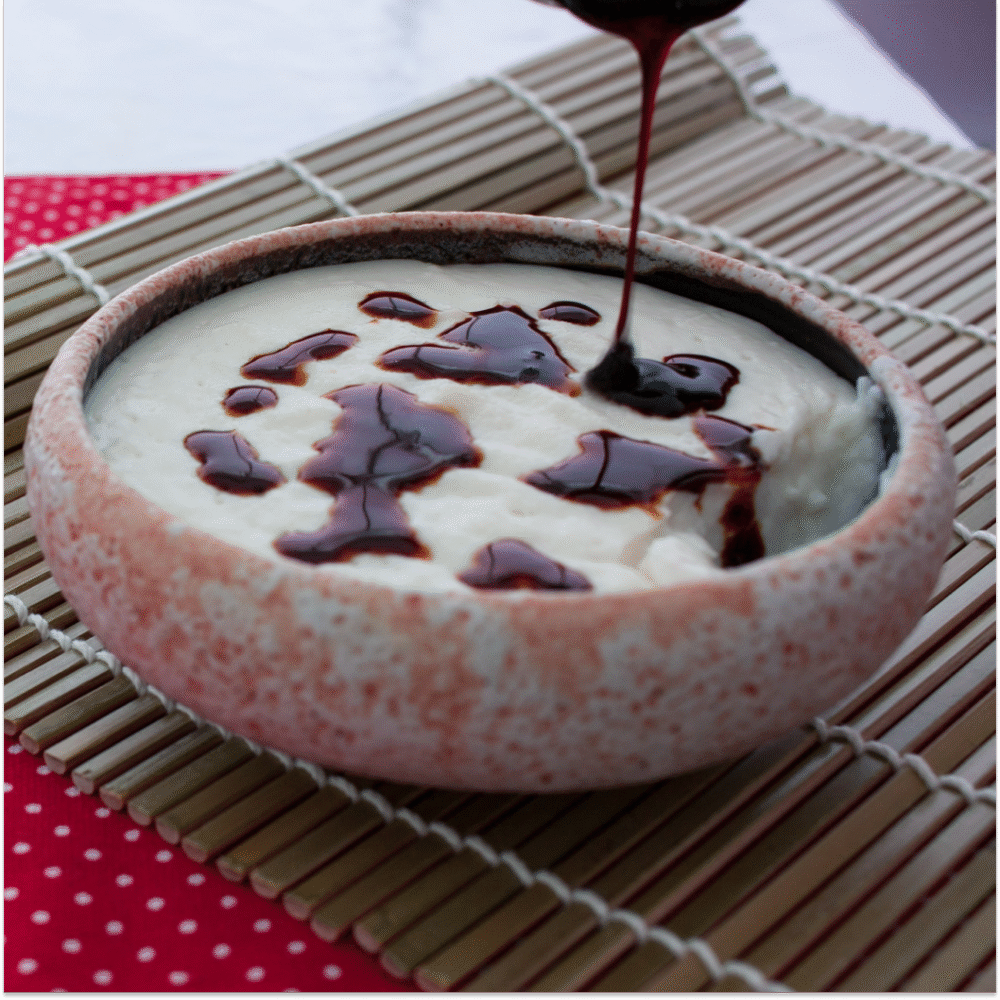
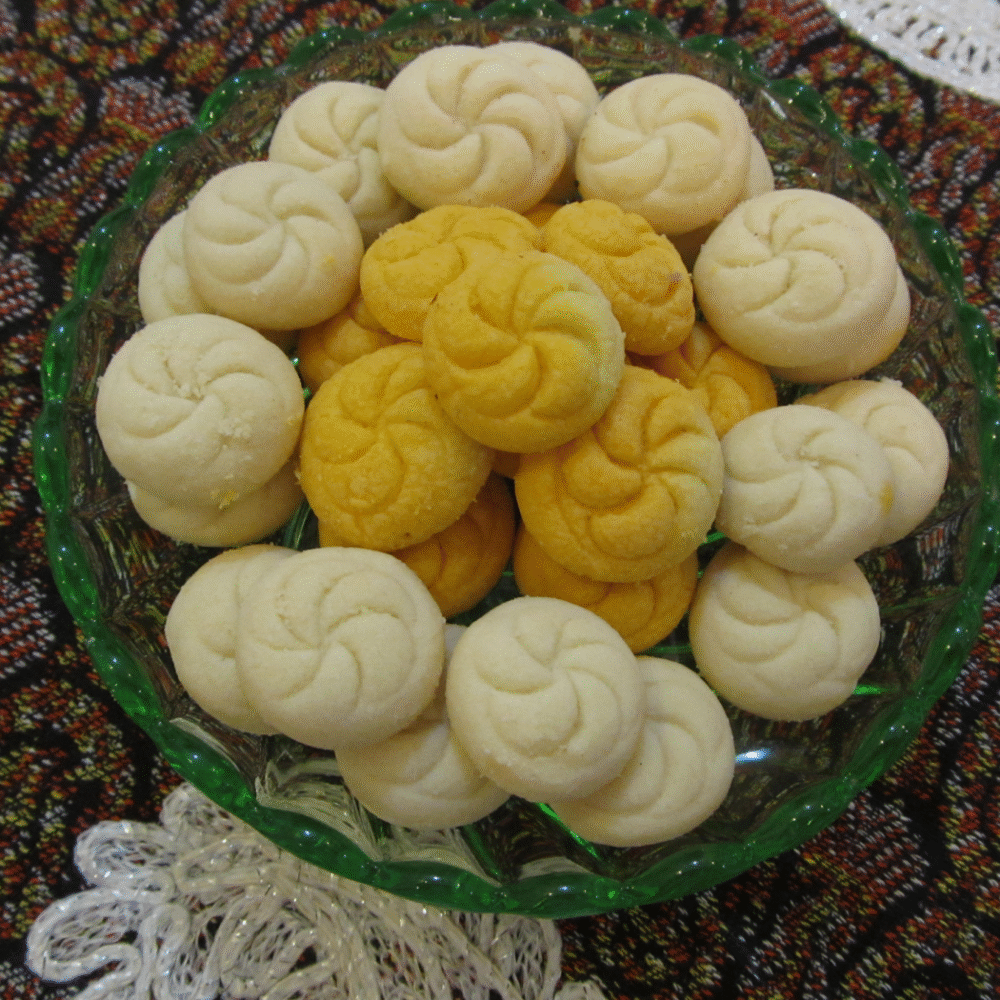
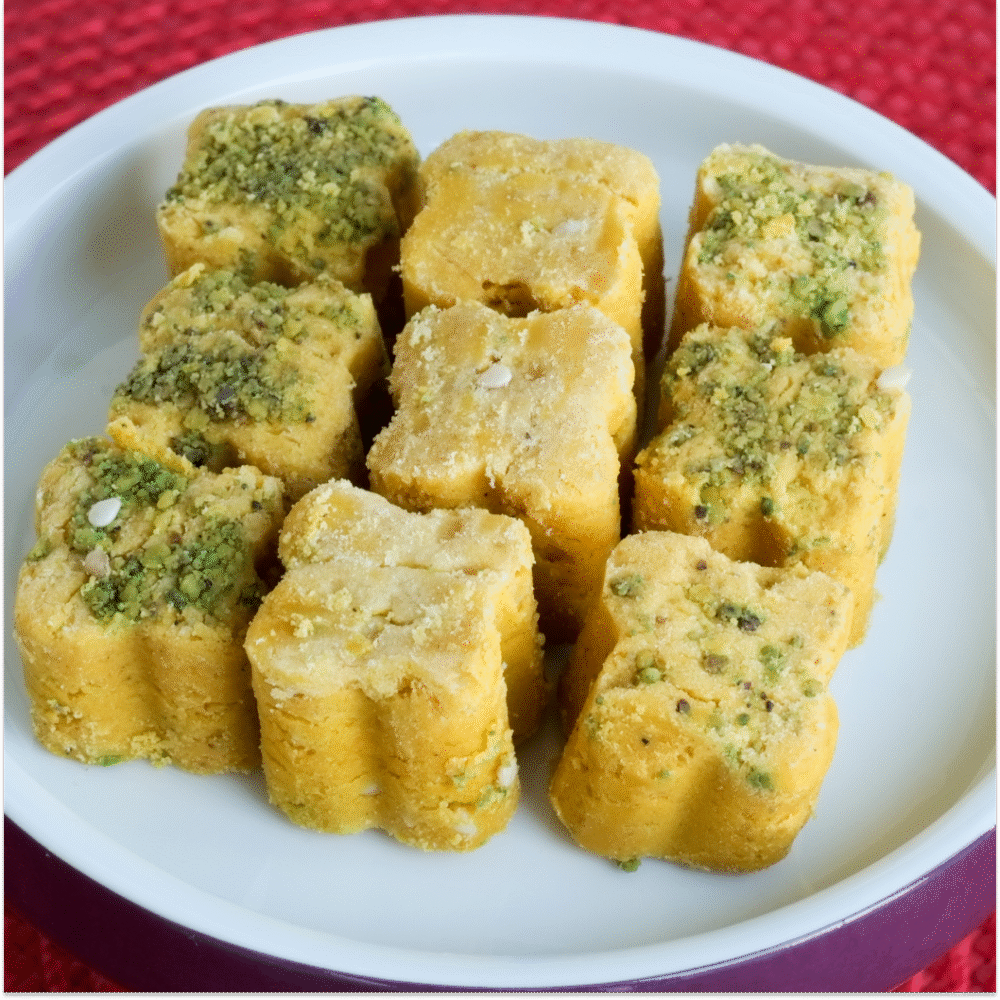
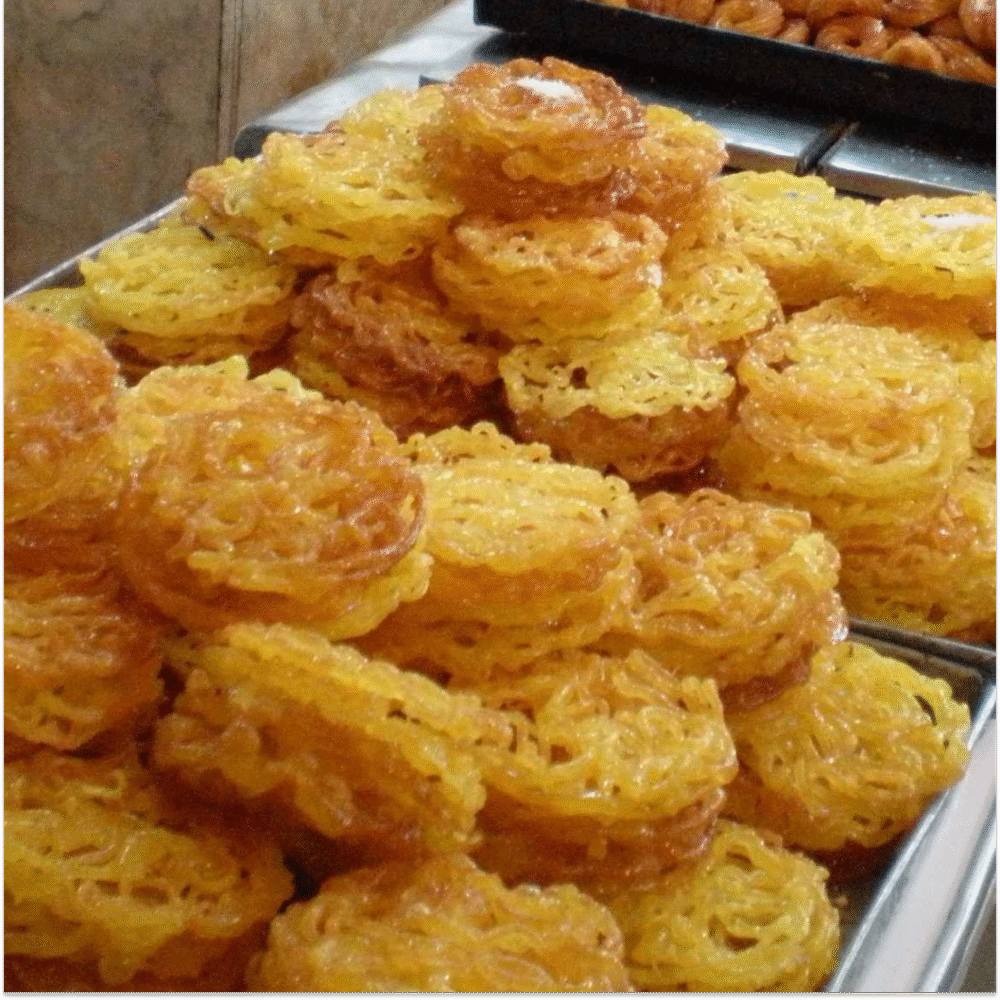
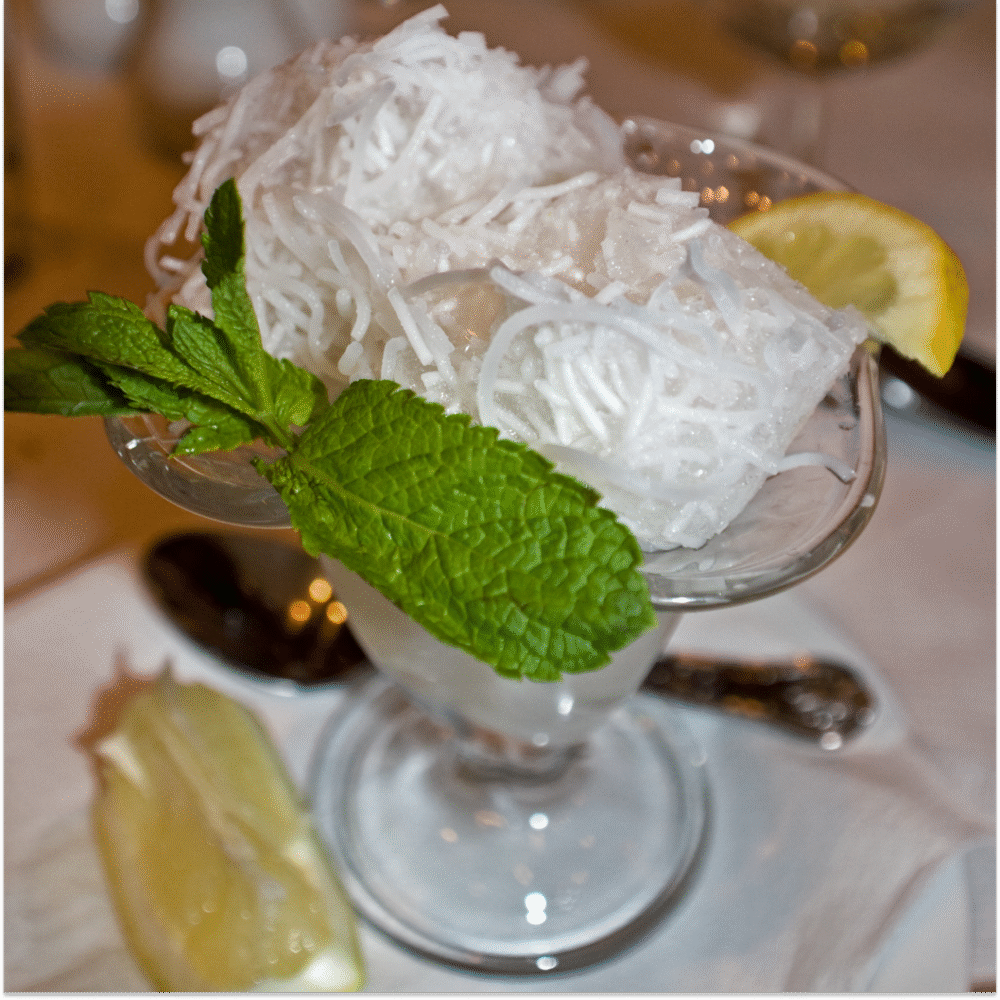
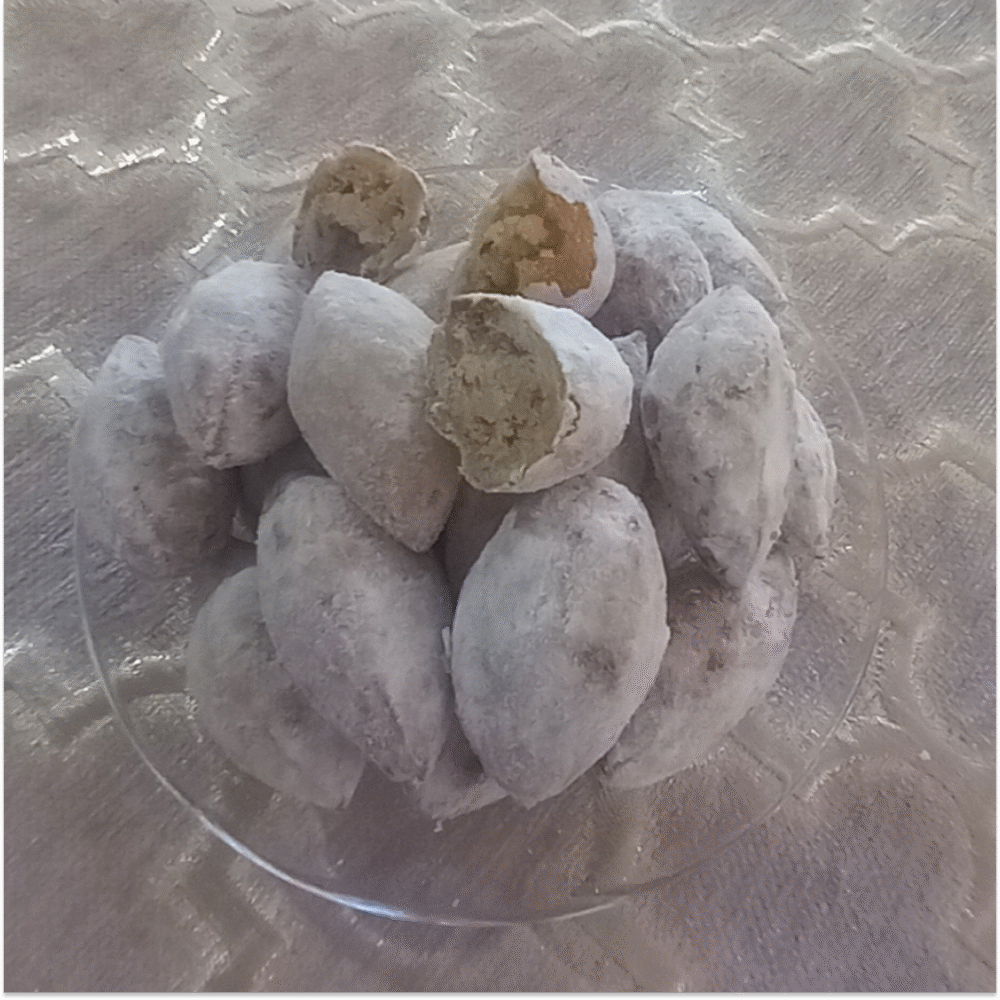
Almost every traditional Persian sweet features luxurious saffron, rosewater, or cardamom. The combination appears in bastani, halva, qottab, gaz, sohan, and dozens of others. Persian sweets aim for aromatic perfection. A bowl of sholeh zard rice pudding, bright yellow from saffron and carrying the scent of rosewater, feels closer to a spice market than to a bakery. Confectionery craft also lies in texture, ratio, and execution.