Quantifying culinary diversity across countries.

Azerbaijani food: discover traditional cuisine

About country

Culinary influences

Staple ingredients

Key flavorings

Iconic dishes

Azerbaijan is located at the crossroads of Europe and Asia, bordering the western shore of the Caspian Sea, with a population of approximately 10.2 million as of 2024. About 91.6% are ethnic Azerbaijanis, with smaller communities of Lezgians, Russians, and others making up the rest.

Religion-wise, roughly 96% identify as Muslim, split between Shia (around 65%) and Sunni (35%), though Azerbaijan ranks as one of the least religious countries on earth, with just 21% of people considering religion important in their lives. Christians make up about 3-4% of the population, mostly Russian and Georgian Orthodox, while a Jewish community of around 20,000 thrives in Baku.

Oil and gas dominate the economy, it’s about 90% of export revenues. The nation gained independence from the Soviet Union in 1991 and has since transformed itself into a major energy hub.

Culture runs deep here. Hospitality is treated as a core national trait, guests are welcomed through spreads of food, tea, and sweets.

5 most similar countries by ingredients

5 least similar countries by ingredients

Source: Country Food Similarity Index https://objectivelists.com/country-food-similarity-index/
Azerbaijani cuisine comparisons

Icon
GEOGRAPHY AND CLIMATE
GEOGRAPHY

– Sharp contrast between lowlands and mountains
– Mountains receive more rainfall
– Lowlands depend on irrigation
– Agriculture concentrates in irrigated lowlands
– Caspian Sea historically supplied sturgeon and caviar

CLIMATE

– Highly diverse climate supports varied crops
– Summer droughts constrain livestock growth
– Crop farming is significant alongside pastoralism

KEY AGRICULTURAL PRODUCTS

– Wheat, barley
– Sheep, cattle, poultry, milk
– Grapes, apples, pomegranates, persimmons, plums, pears, quinces
– Hazelnuts, walnuts, almonds
– Tea

Icon
FOUNDATIONAL INFLUENCES
NOMADIC AND SETTLED PEOPLE (-6c BCE)

– Indigenous Caucasian peoples practiced hunting, herding, early agriculture
– Wheat, barley, lamb, goat, dair were core foods
– Drying and fermentation for portability and storage

PERSIAN INFLUENCE (6c BCE – 7c, 16-18c)

– Early integration into Persian empires shaped food culture
– Irrigation agriculture expands
– Rice as a prestige grain
– Early pilafs, pairing rice with meat or stews
– Use of cumin, coriander
– Use of sour pomegranate, grape, verjuice to balance meat

SILK ROAD AND TURKIC INFLUENCE (9-13c)

– Reinforced pastoral food traditions
– Trade routes brought cinnamon, ginger, cloves
– Expanded flavor range toward warmth and sweetness
– Mutton and lamb strengthen their role as a central protein
– Spread of yogurt and fermented milk drinks
– Spread of doughs

Icon
EXTERNAL INFLUENCES
OTTOMAN INFLUENCE (16-19c)

– Continuous trade and cultural exchange
– Shared kebabs, dolma, stuffed vegetables
– Use of sumac, coffee culture, layered desserts

RUSSIAN / SOVIET PERIOD (19-20c)

– Introduction of potatoes, cabbage, sunflower oil
– Popularization of mayonnaise-based salads
– Standardization reduced the use of costly ingredients
– Traditional core ingredients persisted after independence

Icon
RELIGION AND CULTURE
ISLAMIC INFLUENCE (7c-onwards)

– Adoption of halal dietary rules
– Halal butchery became standard, but not alcohol prohibition
– Wine culture in Azerbaijan predates Islam by several millennia
– Local Islam developed in a flexible form
– Trade routes kept wine and spirits relevant
– Russian Imperial rule normalized alcohol

SOCIAL AND FAMILY CUSTOMS

– Meals are social rituals followed by toasts
– Host serves from large shared platters
– Bread and tea are always present
– Guests are treated generously
– Elders are served first
– Bringing small gifts (pastries, flowers) when visiting is customary

Icon

GEOGRAPHY AND CLIMATE

The geography and climate of Azerbaijan are extremely diverse. The elevation changes over a short distance from lowlands to highlands; nearly half the country is mountainous. Azerbaijan’s climate is varied; this small country has nine of the world’s eleven climate zones! A major challenge is water scarcity, with most precipitation occurring in the mountains. The lowlands, where agriculture takes place, suffer from drought and irrigation is vital. Agriculturefocuses more on crops than livestock, including cereals (wheat, barley), cotton, fruits (grapes, pomegranates, citrus fruits, quince, and apples), vegetables (tomatoes, potatoes), nuts (walnuts, hazelnuts), and tea.

The Caspian Sea was once a major source of caviar, particularly sturgeon roe –  a valuable delicacy. Overfishing and pollution significantly reduced sturgeon populations, and currently, a ban on commercial fishing of wild sturgeon is in place to protect remaining wild fish. The Caspian Sea fishery now focuses on kilka, sprat, and whitefish – commercially viable but not as high-value as sturgeon. Overfishing, pollution (from oil and industrial waste), and resource competition between bordering countries remain significant challenges.

Icon

FOUNDATIONAL INFLUENCES

Azerbaijan’s history weaves together nomadic and settled elements. While Turkic ancestors practiced nomadic herding for centuries, a long tradition of agriculture also thrived. This mix is reflected in the cuisine, focusing on wheat, barley and meat from herded lamb and goat. Drying and fermentation ensured food readiness for long travels.

The strong Persian influence on Azeri cuisine is old, dating back to the 6th-4th centuries BCE, when parts of present-day Azerbaijan were in the empire of Persia. During this period, many aspects of Azeri material culture have formed. In the 16th-18th, Azerbaijan once again fell under Iranian rule and came to share with Iran the Shi’a denomination of Islam. This commonality of religion allowed for the continued penetration of Persian cultural influences, like the inclusion of tart fruits in savory dishes, Persian-style frozen desserts, pilafs, and other rice dishes.

Silk Road ancient trade caravans and military roads passed through Azerbaijan. Silk Road moved saffron, cinnamon, cloves, and cardamom from their places of origin in Asia and the Middle East. These spices added a new dimension to Azerbaijani cuisine, introducing warmth, sweetness, and complexity.

The influence of Turkic people on Azerbaijani cuisine is significant and reflects centuries of interaction between nomadic Turkic groups and the settled populations of the Caucasus. Lamb was a staple food for those groups and central to Azerbaijani cuisine as well. Yogurt, cheeses, and fermented milk drinks likely spread into Azerbaijani cuisine during that time.

Icon

EXTERNAL INFLUENCES

The Ottoman Empire and Azerbaijan shared a long border and were part of the wider Islamic world. This naturally led to continuous trade and cultural exchange. Turkey and Azerbaijan share refined and sugary desserts, the popularity of coffee, extensive use of sumac, various types of kebabs, stuffed vegetables, and dolma.

During the rule of the Russian Empire and later the Soviet Union, Azerbaijani cuisine absorbed some of its elements, like wide use of potatoes, cabbage, sunflower oil, and dairy. Soviets also standardized and disseminated regional dishes across the country, put an emphasis on mass production, which all led to a decline in the use of expensive ingredients, like fresh lamb cuts or saffron. Olivier salad (potato salad with mayonnaise) and vinegret (beetroot salad) became popular. After gaining its independence, Azerbaijani cuisine retained its core identity, and traditional lamb, rice, eggplants, tomatoes, and fresh herbs remained central to the cuisine.

Icon

RELIGION AND CULTURE

The arrival of Islam in the 7th century brought a focus on halal dietary practices and a decline in alcohol and pork consumption, which used to be a staple meat in some pre-Islamic societies. Lamb, already a significant protein source for nomadic Turkic groups, became even more prominent.

Islam spread in Azerbaijan from the 7th century, but pre-Islamic Persian and Caucasian customs remained strong. Wine production already existed  and it continued alongside Islamic practice. Most Azerbaijanis followed Shia Islam, but enforcement of dietary rules was historically loose. Alcohol was discouraged in religious life, yet tolerated socially, especially outside strictly religious contexts. Grape wine, mulberry vodka, and later distilled spirits were consumed at meals and celebrations. Under the Russian Empire and later the Soviet Union, alcohol production and consumption were normalized and even promoted. This period reinforced drinking as part of daily cuisine rather than a religious issue.

The average Azerbaijani daily plate size is

2368 g.
Icon

Grains

Icon

Fish and seafood

Icon

Produce

Icon

Eggs and dairy

Icon

Meats

Icon

Sugar, fats and nuts

Core ingredients

THE ESSENCE OF AZERBAIJANI CUISINE

Azerbaijani cuisine sits at the crossroads of Europe and Asia, pulling flavors from Persian, Turkish, and Russian traditions into something distinctly its own. Rice is everything here, especially pilaf. They’ve perfected around 200 different versions of it. Walk into any Azerbaijani home and you’ll notice the sheer volume of fresh vegetables and herbs on the table: eggplants, tomatoes, peppers, and piles of fresh greens. Lavash flatbread comes with every meal, used to scoop and wrap whatever you’re eating. Soups matter deeply in this cuisine. More than 30 regional varieties exist, each one tied to a specific place and season. Lamb and mutton are the meats people crave most, often paired with yogurt or tangy fermented milk drinks that cool things down. Dried fruits and nuts show up in both savory dishes and desserts, adding sweetness and crunch where you least expect it. Every meal ends the same way: black tea in those distinctive pear shape glasses, sweetened with spoonfuls of candy-like fruits.

GRAINS IN AZERBAIJANI CUISINE

There’s a fascinating dichotomy in Azerbaijani cuisine! Rice is often mentioned as the staple grain, yet wheat is consumed tens of times more. A versatile and substantial wheat provides sustenance; rice is more for special occasions. Wheat appears in noodles, bulgur pilafs, flat and leavened breads.

Bread, a symbol of prosperity and respect, is never to be wasted. Traditional bread is cooked in large griddle pan saj or in a clay oven tandir, where charcoal at the bottom creates intense heat and the dough is kneaded into an oval and stuck to the side. When ready, a hook retrieves the bread from the tandir. Other breads range from delicate, paper-thin sheets of lavash to robust, round, whole-wheat Russian-style loaves such as karpij choral (brick bread), agh choral (white bread), gara choral (black bread), and yucca, made with dough and yogurt or buttermilk.

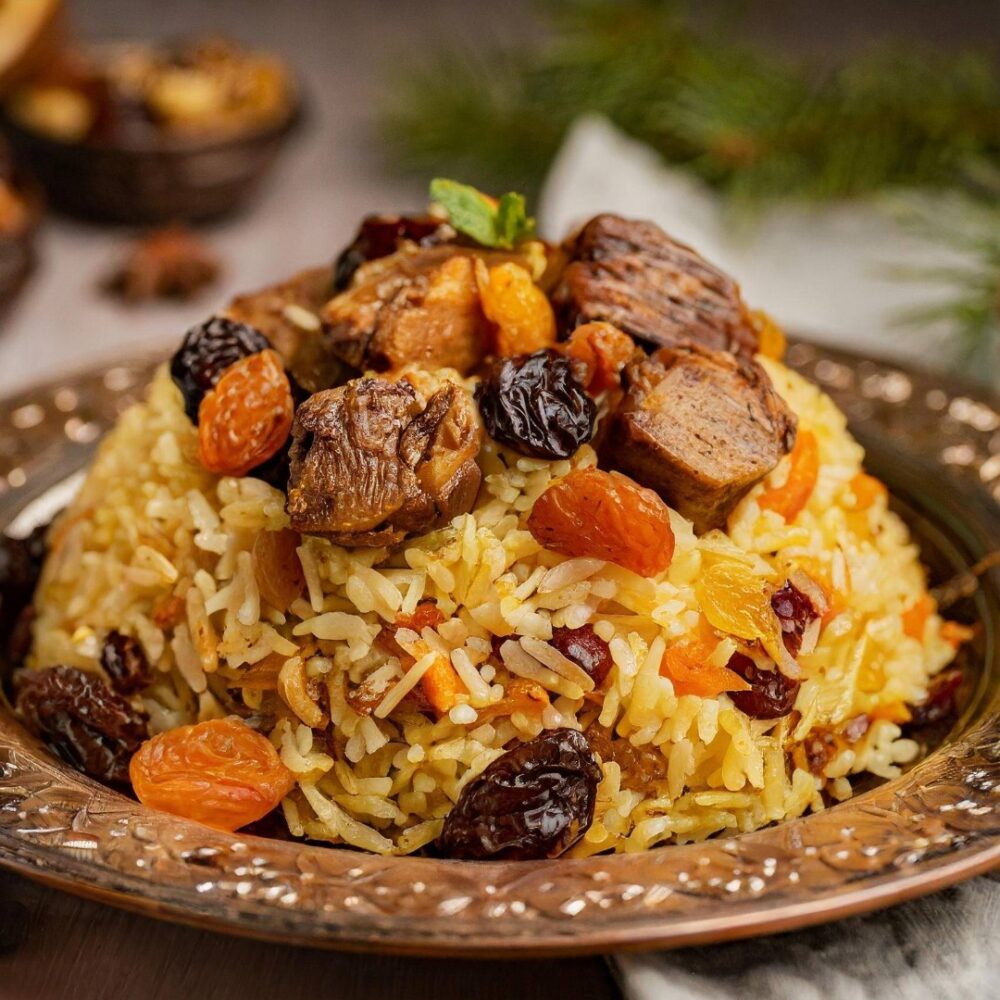
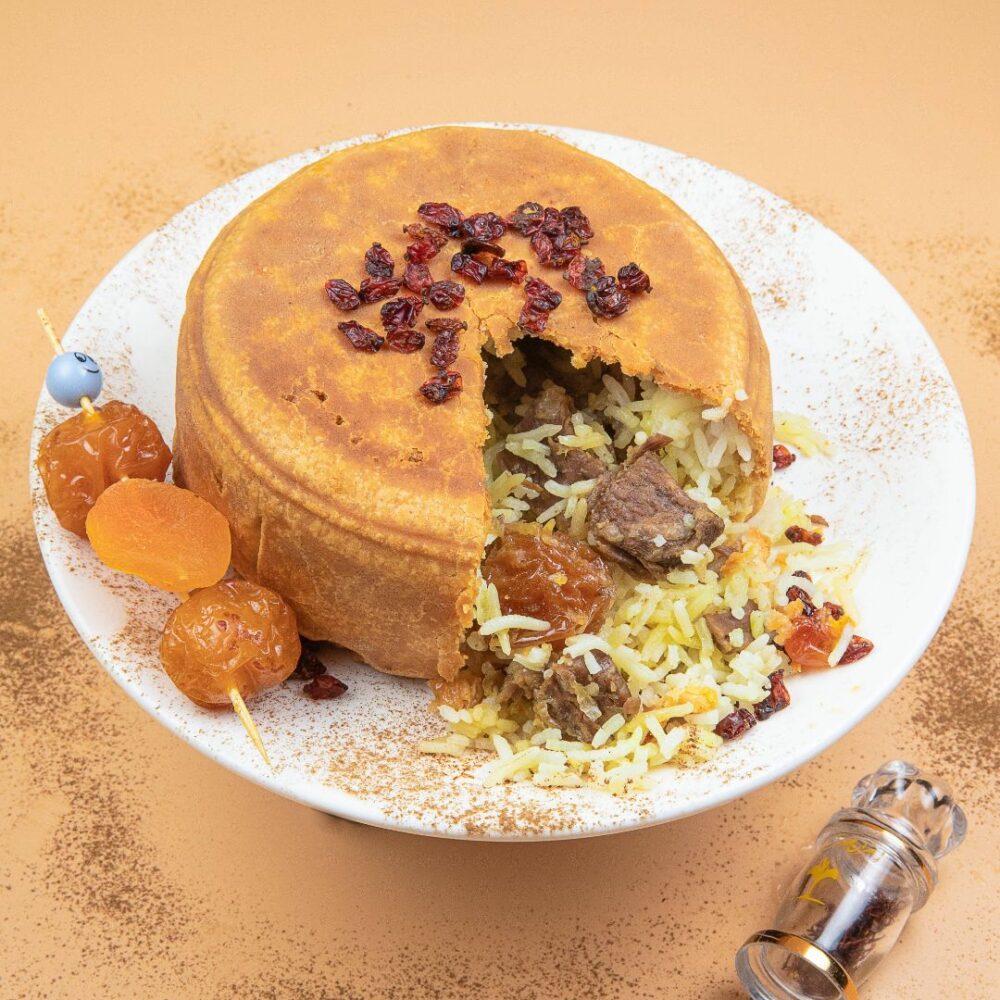
Azerbaijan’s national dish, pilaf or plov, has at least 40 documented recipes and countless undocumented variations. Plov consists of three components served simultaneously: rice, gara (fried meat, dried fruits, eggs, or fish), and aromatic herbs. The most lavish and luxurious is shah plov, encased in a baked flatbread cocoon, served at weddings and New Year’s. When you cut it open at the table, the rich, aromatic mix spills out — almost like a crown being revealed. Sour drinks usually accompany plov: ayran, black tea with lemon, or verjuice.

PRODUCE IN AZERBAIJANI CUISINE

Vegetables are visible, valued, and widely available in Azerbaijani home cooking. They are often stuffed with meat and rice to make dolmas, a typical dish across the Middle East. Azerbaijani dolmas are smaller and rounder than elongated dolmas in Turkey and Greece. They often prioritize lamb over other meats and incorporate beans, lentils, and bulgur.

Pickled vegetables turshu are very common and culturally important, served as appetizers and side. Turshu shows up with most meals, especially in winter: cucumbers, cabbage, eggplant, tomatoes, peppers, even fruits like plums and quince.

Azeris love grilling or pan-frying vegetables on their own. Eggplant, tomatoes, peppers, and mushrooms get charred until smoky or sautéed until soft, then served as sides or scattered across a spread. The whole approach depends on quality produce and light seasoning, nothing fancy. You’ll also find vegetables in gentle braises, cooked with herbs and a touch of sourness. Greens mixed with herbs get tucked into stuffed flatbreads, often with yogurt for dipping. But plenty of vegetables arrive completely raw and unadorned. Tomatoes, cucumbers, radishes, and fresh herbs land on the table sliced and visible, treated as essential parts of every meal.

When Azerbaijan was a part of the Soviet Union, rice – traditionally cultivated in the foothills of the Caucasus – gave way to potato in agriculture and in cuisine. Potatoes were popularized comparatively late, so only a few traditional dishes are centered around them.

Azerbaijanis creatively use pomegranates, peaches, apricots, figs, plums, cherries, and citrus fruits in savory dishes and desserts. Pomegranates are very special, used in a unique Azerbaijani sauce known as narsharab. Fruit preserves, known as murabba, are an accompaniment to tea.

MEAT IN AZERBAIJANI CUISINE

The sizzling of grilled skewered meat is common across the Caucasus. Like their neighbors, Azerbaijanis strongly prefer lamb and mutton, from which they make kebabs. Azerbaijani kebabs are usually simpler and less spiced than Turkish ones, with bigger chunks of meat threaded onto the skewer. The meat is marinated with onions and something sour, like vinegar or pomegranate juice. That approach overlaps with Armenian traditions, but in Azerbaijan, there’s a stronger focus on tart, fresh acidity.

Cities have increasingly preferred beef in recent decades. Pork consumption remains minimal due to Islamic traditions, contrasting with Georgia and Armenia, where pork is popular. The coastal regions incorporate more poultry and fish into their diet. Game, while present in traditional Azerbaijani cuisine, is less popular than in Georgia.

Azerbaijan still maintains traditional husbandry in rural areas, which affects how meat is produced: every part of the animal’s body is used, tail fat adds richness to dishes, and the casings are used for sausages.

Preservation of meat is unique. Historically, large chunks of lamb were strung up and dried for 24 hours, then salted, stewed, and fried in oil. Meat was then transferred into ceramic jars and covered in melted butter or mutton fat. After four to eight weeks, it was ready to eat. This method, known as govurma, is still used. govurma shorbas (lamb stew) uses this aged meat combined with beans and potatoes.

FISH AND SEAFOOD IN AZERBAIJANI CUISINE

Fish and seafood in the country are deficient, as historically, meat was more of a preferred protein source for nomads and herders. Of seafood species found in the Caspian Sea, sturgeon is valued, mostly for caviar. The black pearls have long been a symbol of luxury and opulence for their rich, buttery flavour and delicate texture. Sturgeon fishing was a vital part of the sea economy, but overfishing and habitat degradation have dramatically reduced these populations. Azerbaijan and other coastal nations are implementing stricter regulations and exploring sustainable practices, such as aquaculture, to preserve sturgeon. One innovative approach is the Baku Caviar brand, which, for every jar sold, releases 10 sturgeon fingerlings into the Caspian Sea to help restock the ecosystem.

Kutum, a Caspian whitefish, remains one of the most respected traditional fish. Carp from rivers and inland waters is also common, and smaller fish like kilka and sprat tend to be more affordable and everyday. Grilling is common, especially fish kebabs, often seasoned simply and served with herbs or something sour. Baking and pan-frying are also typical, with finishes that include pomegranate juice, sour plum paste, or fresh herbs to add acidity and balance. One of the most distinctive is fish lavangi; fish is stuffed with walnuts, onions, herbs, and then baked.

MILK AND DAIRY IN AZERBAIJANI CUISINE

Dairy products are essential and there is a notably wide range of fermented dairy products. Alongside raw, milk is consumed in form of butter, cream, sour cream, yogurt, cottage cheese, buttermilk, dovga (yogurt soup), ayran (fermented milk drink), qatiq (fermented milk product, more solid form of yogurt than ayran), and suzme (creamy, fatty dairy product made from filtered and thickened qatiq).

Cheese is not as spread in Azerbaijan as in other Caucasian cuisines, but the known varieties are truly unique. For instance, the motal pendiri cheese, made from unpasteurized sheep or goat milk, is curdled with rennet, salted, and packed into a sheepskin sack, sometimes with the hairy side in! They are then aged in a cool, damp place, resulting in tangy and sour delight.

DESSERTS IN AZERBAIJANI CUISINE

Azerbaijani desserts are often pastries, which extensively use butter and clotted cream, known as qaymaq. Pastries can also be layered with flaky dough, filled with chopped walnuts or almonds, and drenched in syrups or honey. This combination creates a textural contrast between the crisp layers and the gooey fillings. Cardamom, vanilla, and saffron frequently flavor local desserts. Many desserts require precision and skilled hands, particularly those involving delicate syrups or the handling of phyllo pastries.

SEASONINGS

Spicing in traditional cuisine is light, built on delicate saffron, cumin, cardamom, cinnamon, sumac, and coriander flavors, complemented by fresh or dried mint, dill, and parsley. Herbs are integral ingredients, not just garnishes.  An important element in Azeri cuisine is tartness and acidity, induced by apricots, peaches, pomegranates, sour plums, sumac, vinegars and narsharab sauce. Yogurt is frequently used in sauces. Unlike Georgian cuisine, which also uses fresh herbs and tangy elements, Azerbaijani cuisine doesn’t rely as heavily on walnuts or garlic as a base but instead incorporates the mild sweetness and subtle spice. Chili sauces are largely absent, as heat is not a defining flavor.

Azerbaijan is one of the world’s oldest centers of saffron, cultivated for more than a thousand years in some regions of the country. Saffron, grown in Azerbaijan, is not inferior to any world brand and, with proper storage, does not lose quality for long.  It is a central spice in many national dishes (pilafs, bozbash, pit, etc.), even desserts halva and baklava.

The above-mentioned narsharab is a bright and aromatic pomegranate juice reduction without added sugar, though it may be elevated with basil, coriander, black pepper, cinnamon, and bay leaves.  Meanwhile, pomegranate molasses, popular in other cuisines, may sometimes include added sugar and be slightly sweeter.

Originally from the Caucasus region, ajika, tkemali, and bazhe sauces (see Georgia for more info) are also found in Azerbaijani cuisine.

AJIKA – a spicy condiment made of hot peppers, garlic, coriander, tomato, fenugreek, marigold and salt.

TKEMALI – Pungently tart sauce made of cherry and red-leaf plums, cumin, coriander, dill, chili pepper, pennyroyal and salt.

BAZHE – rich and creamy sauce of ground walnuts, coriander, fenugreek, blue fenugreek, marigold petals, and sometimes onions and garlic.

Icon

Herbs

CILANTRO

DILL

MINT

TARRAGON

PARSLEY

THYME

ZIZIPHORA

BAY LEAVES

MARIGOLD

SUMMER SAVORY

Icon

Spices

SAFFRON

BLACK PEPPER

SUMAC

CUMIN

CORIANDER

FENUGREEK

CINNAMON

TURMERIC DRY

CLOVES

NIGELA SEED

Icon

Aromatics

ONION

GARLIC

TOMATO

ROSEWATER

Icon

Condiments

YOGURT

DRIED YOGURT

TOMATO PASTE

LAMB FAT

BUTTER

POMEGRANATE MOLASSES

FRUIT MOLASSES

VERJUICE

HONEY

Select to see authentic flavor combinations and what they go with

Icon

Meats

Kebab

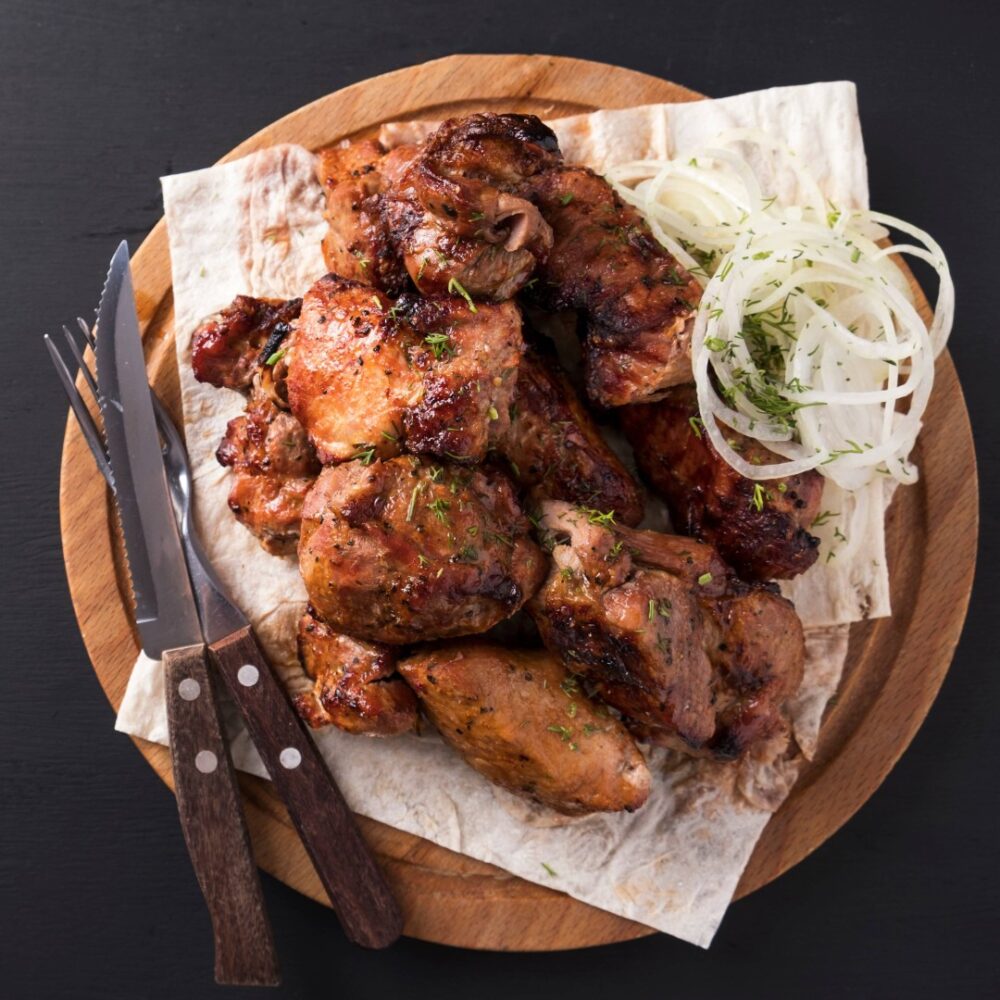
KEBAB – grilled skewered marinated chunks of lamb, beef, chicken, or liver.

Lyulia Kebab

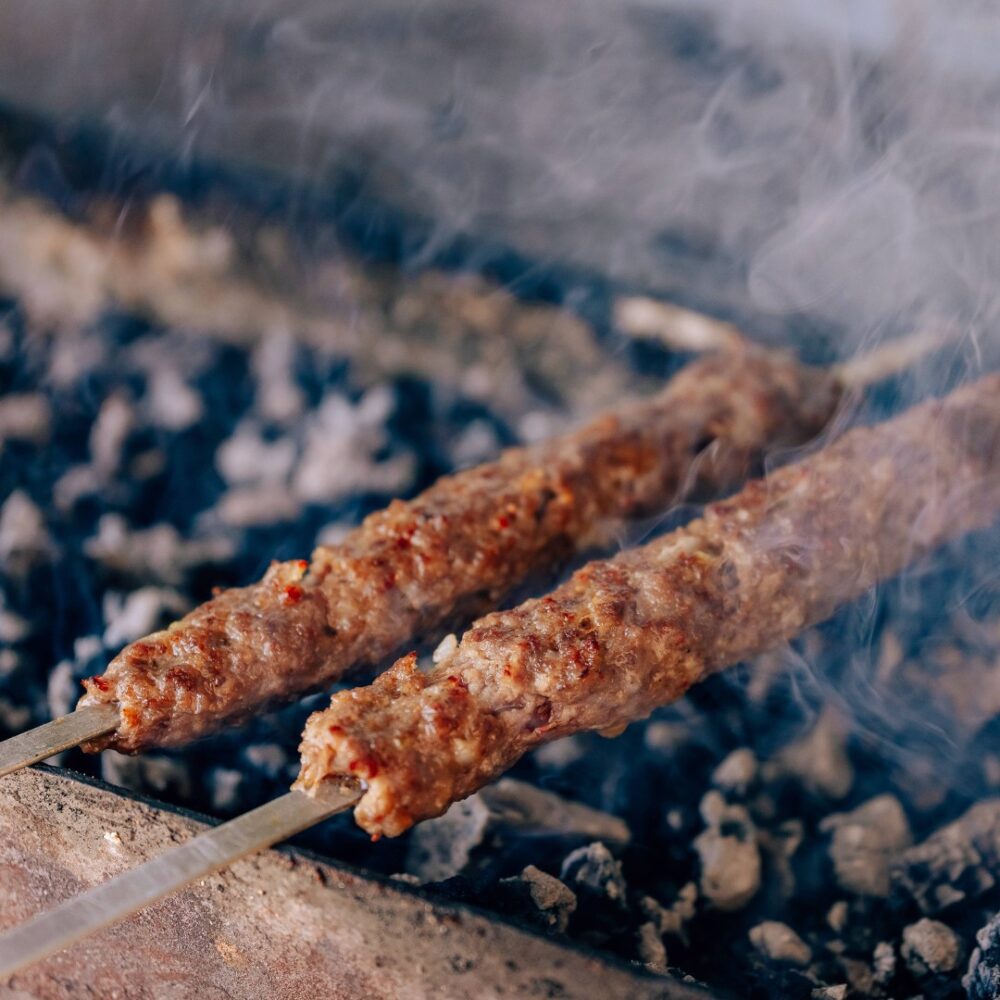
LYULIA KEBAB – minced, marinated, highly seasoned meat, squeezed around a skewer, grilled over charcoal, and served with lavash and veggies.
Khangal

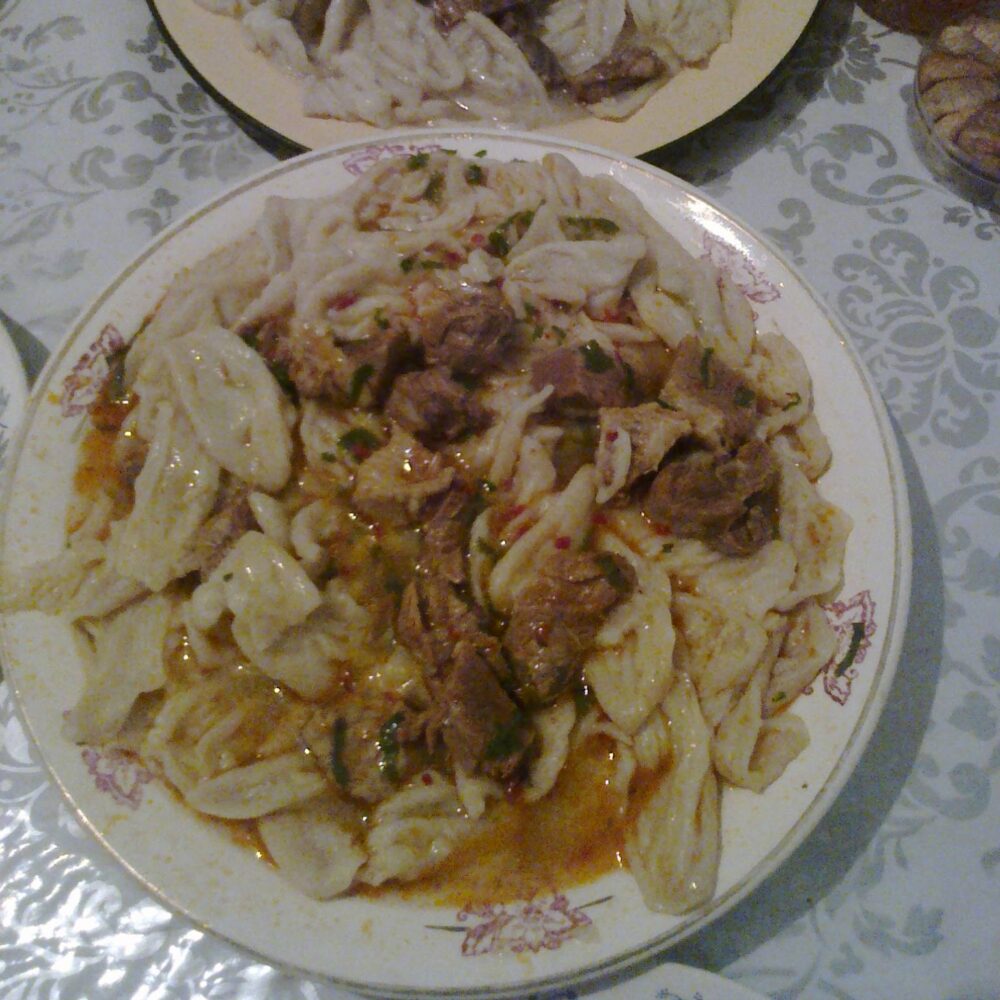
KHANGAL / XINGAL – is wide noodles with meat and yogurt. It should not be confused with khinkali (dumplings). Khangal is made by rolling and cutting the dough into thin, small squares and then boiling them in a meat broth, served hot and with lamb or chicken, and garlic yougurt sauce.

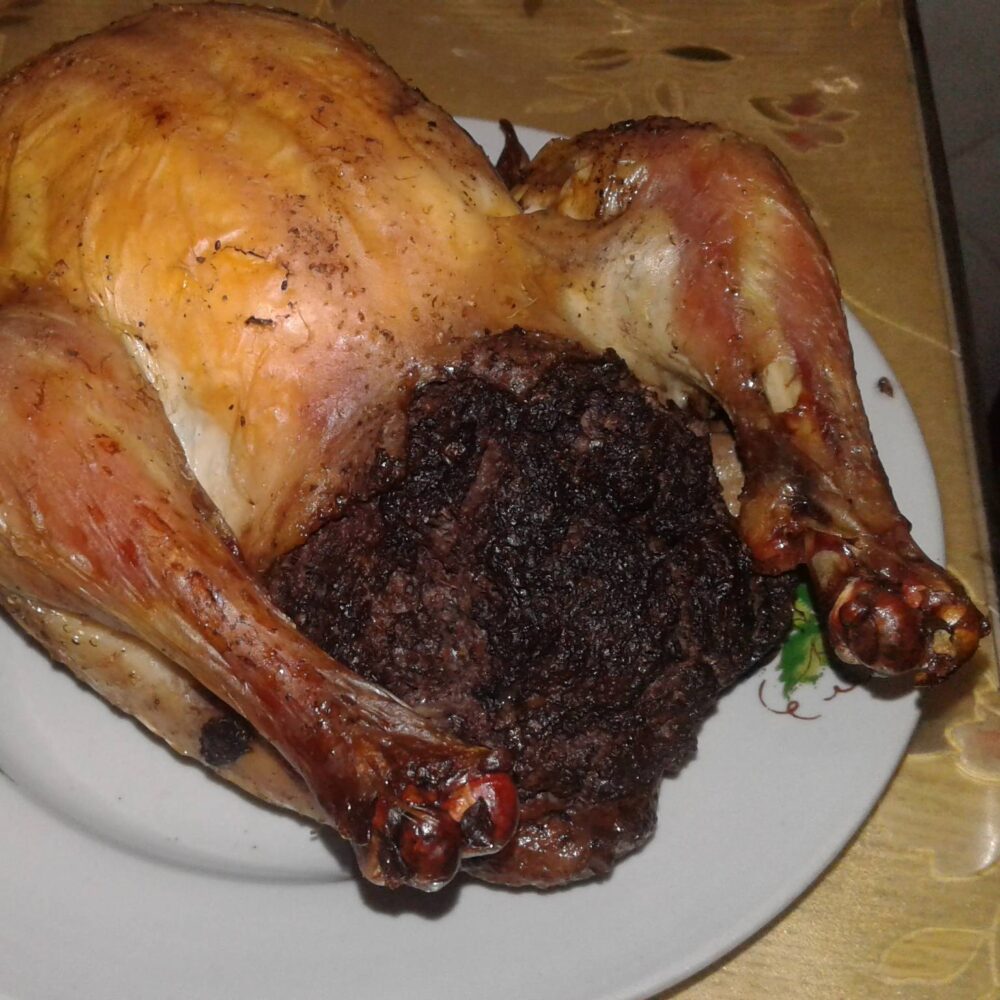
LAVANGI – chicken (or fish) stuffed with walnuts, raisins, sumac, onions, green cherry plums, and narsharab pomegranate sauce.

Piti

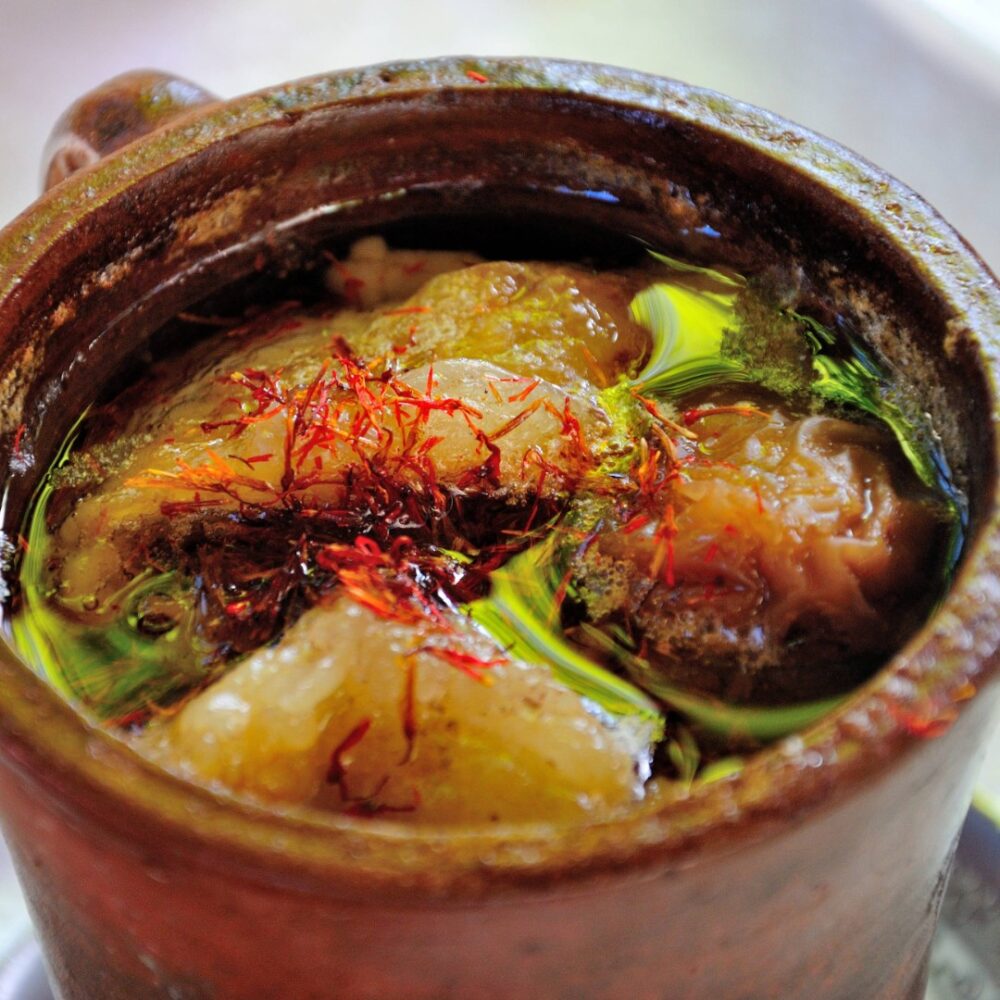
PITI / PUTUK – one pot stew from mutton, tomatoes, potatoes, and chickpeas infused with saffron water, all covered by a fat lump and cooked in a sealed crock.

Turshu govurma

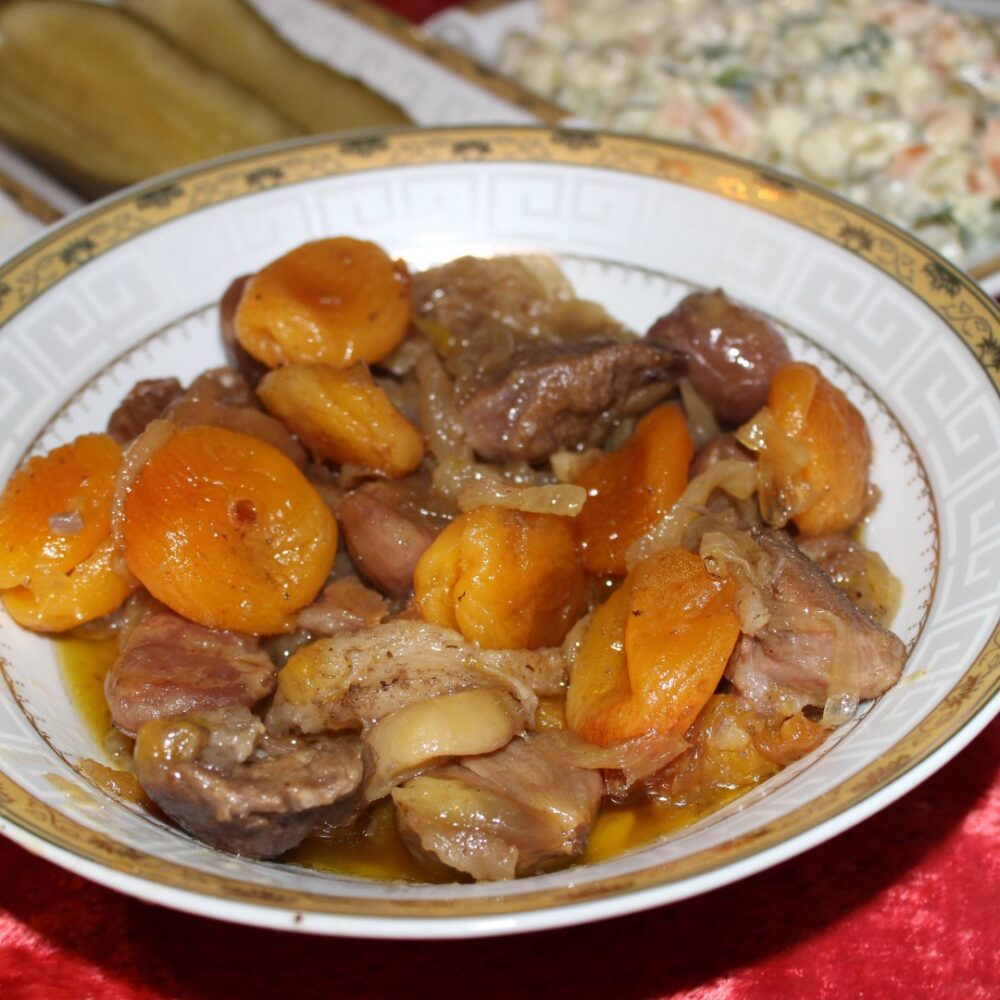
TURSHU GOVURMA / QOVURMA – dried, salted, stewed, and fried meat (usually lamb) preserve or a stew made from it with fried fruits and chestnuts.

Saj

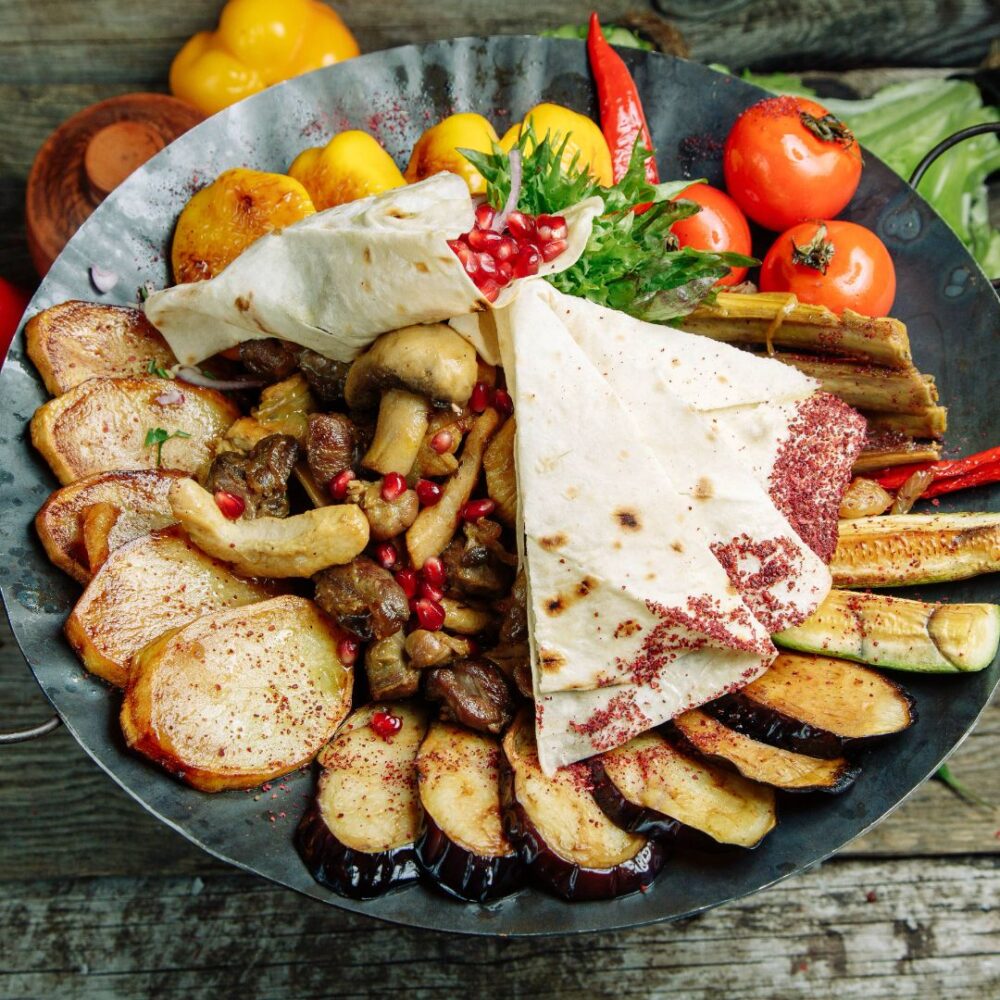
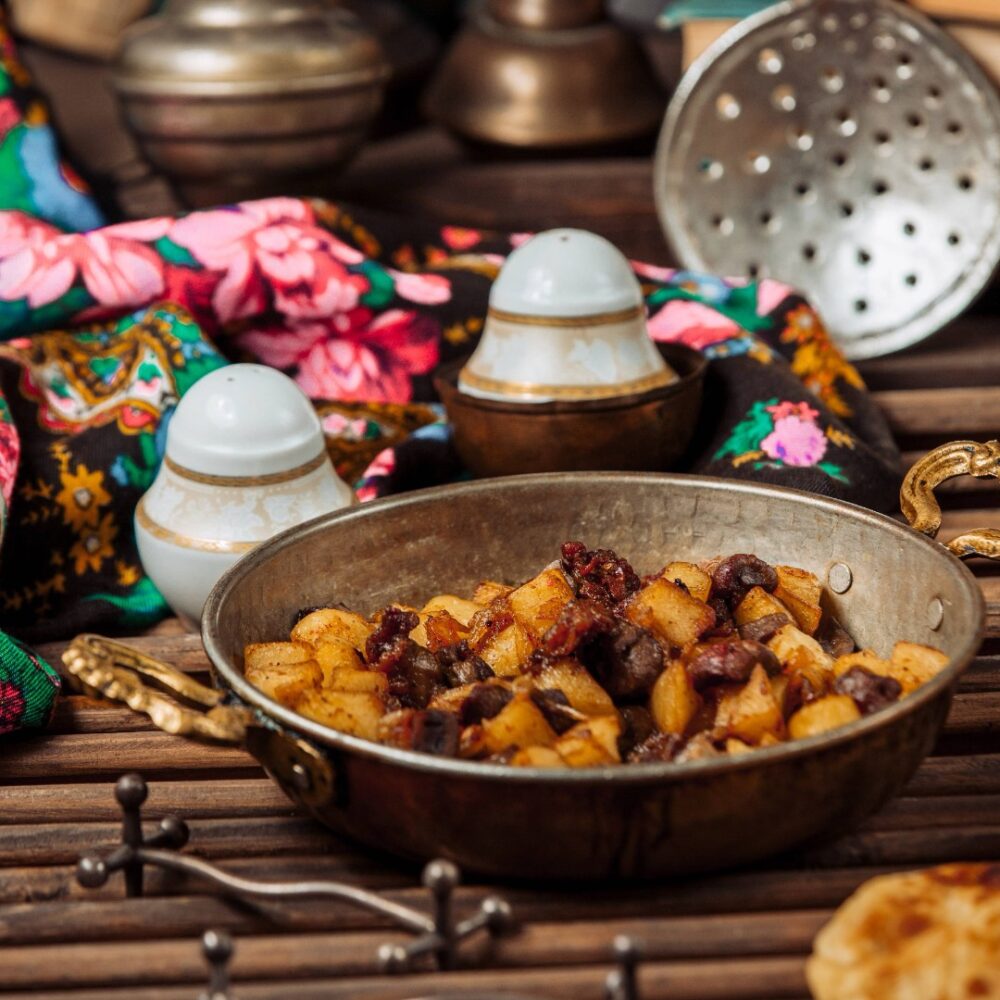
SAJ – grilled eggplant, potatoes, beef, chicken, lamb served on a griddle plan.

Parcha-bozbash

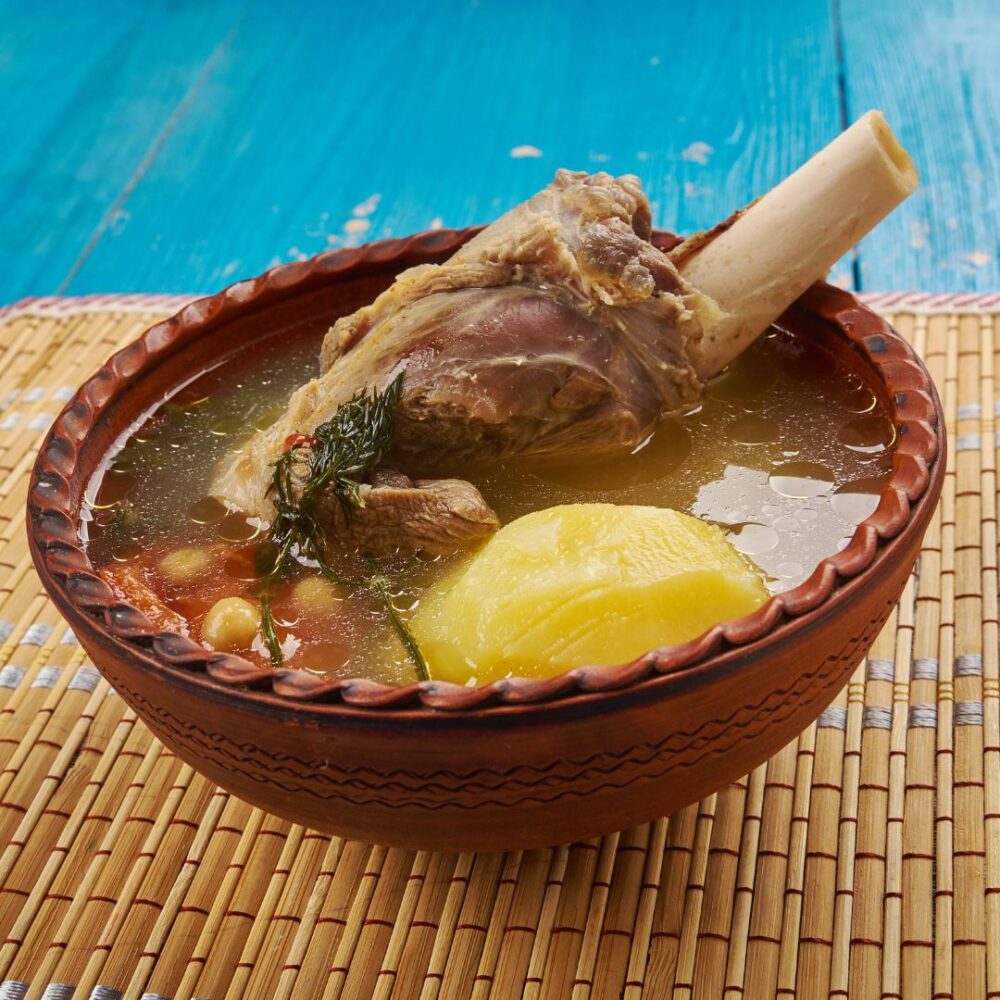
PARCHA-BOZBASH – soup and stew at the same time. Parcha means a piece of meat on the bone, boz means gray, and bash means head. Made from lamb, beans, green veggies, parsley, mint, fenugreek, onions, leeks, dried limes, salt, pepper, and turmeric – simmered for a few hours over low heat.

Kufte Bozbash

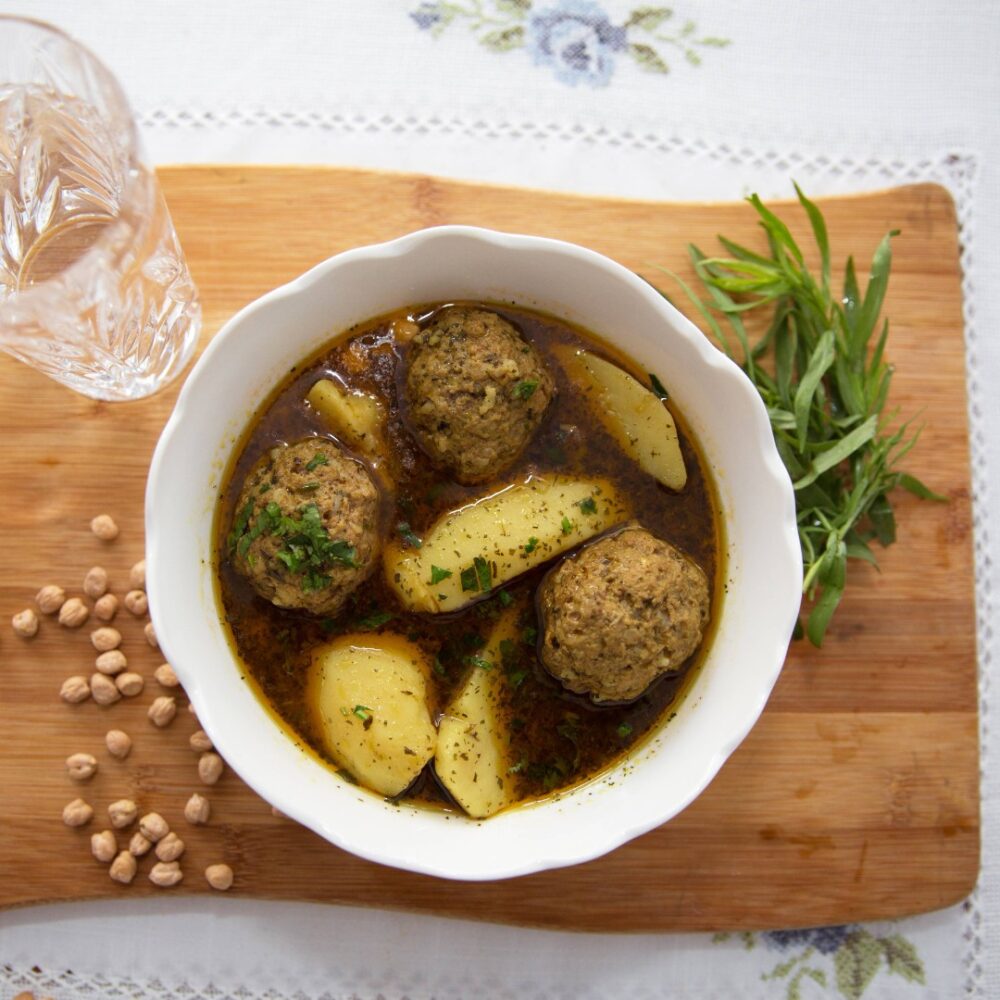
KUFTEBOZBASH – jumbo meatballs in a broth with chickpeas and potatoes.

Dushbara

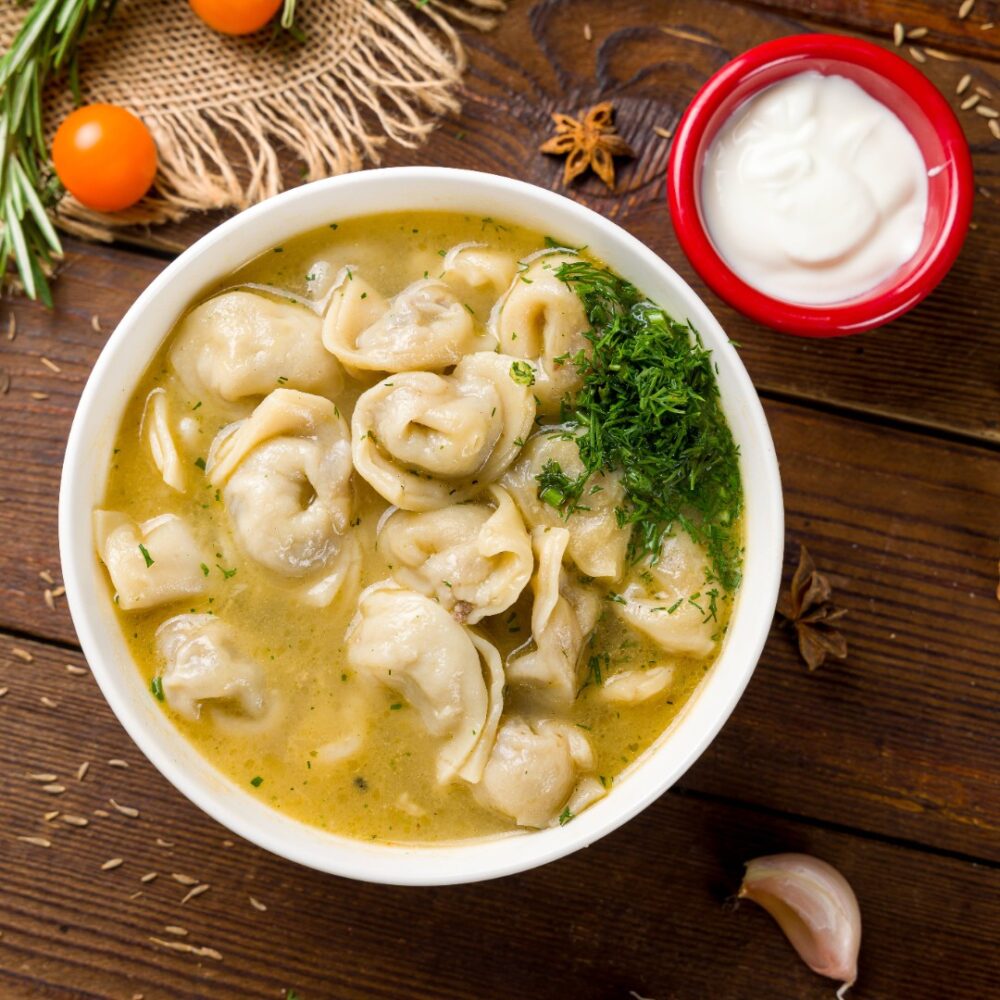
DUSHBARA – dumplings of Turkic origins. Mixture of ground lamb or mutton wrapped in paper thin dough, served in translucent broth with garlic, vinegar and yogurt on side.
Icon

Fish and seafood

Fish Lavangi

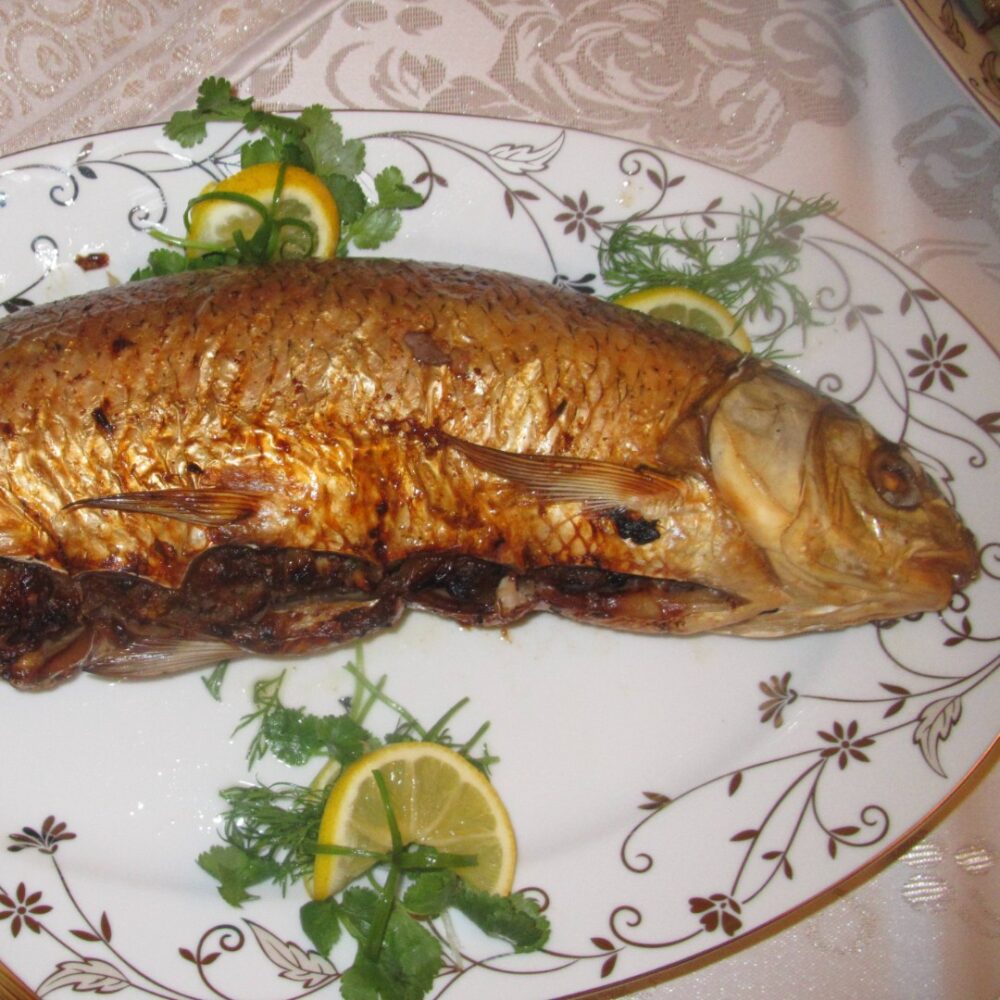
FISH LAVANGI – fish stuffed with walnuts, onions, cherries, and grapes and baked in the oven.

Sturgeon

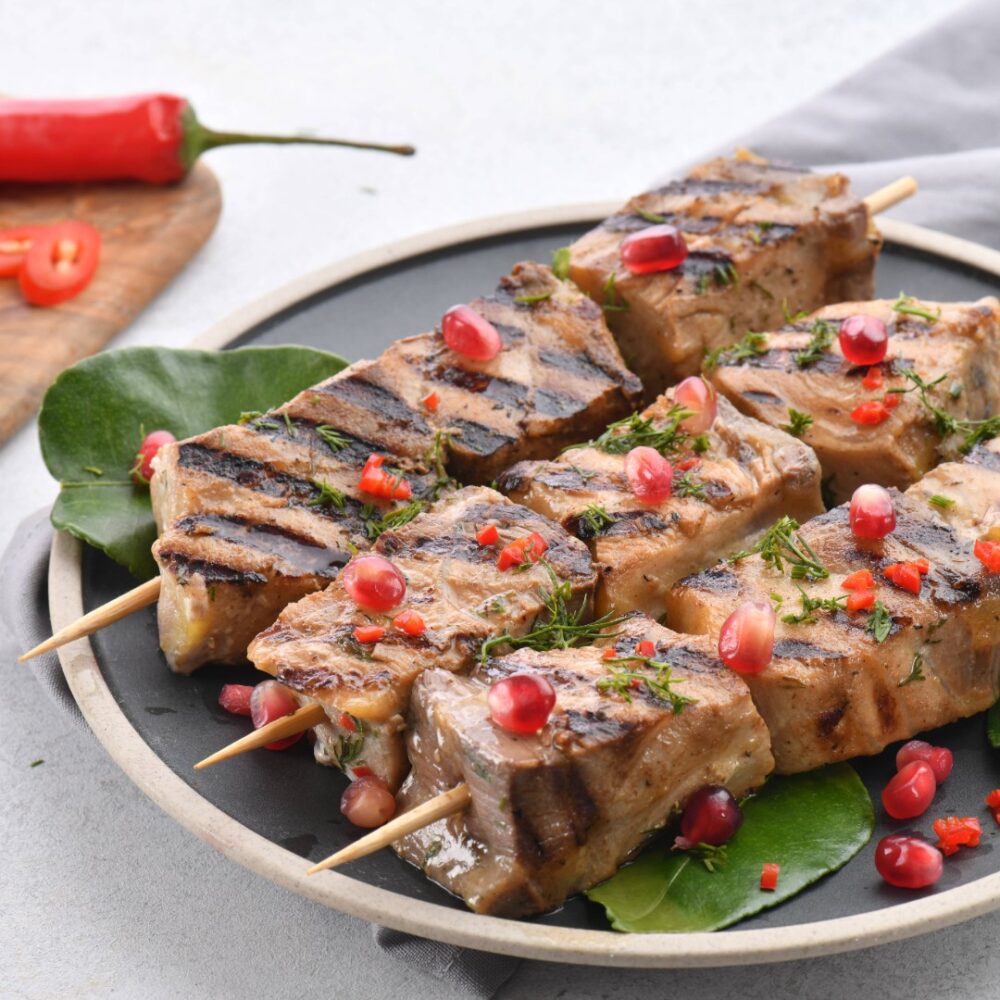
STURGEON KEBAB – grilled sturgeon chops and served with lavash, tomatoes, and onions.

Icon

Grains

Qutab

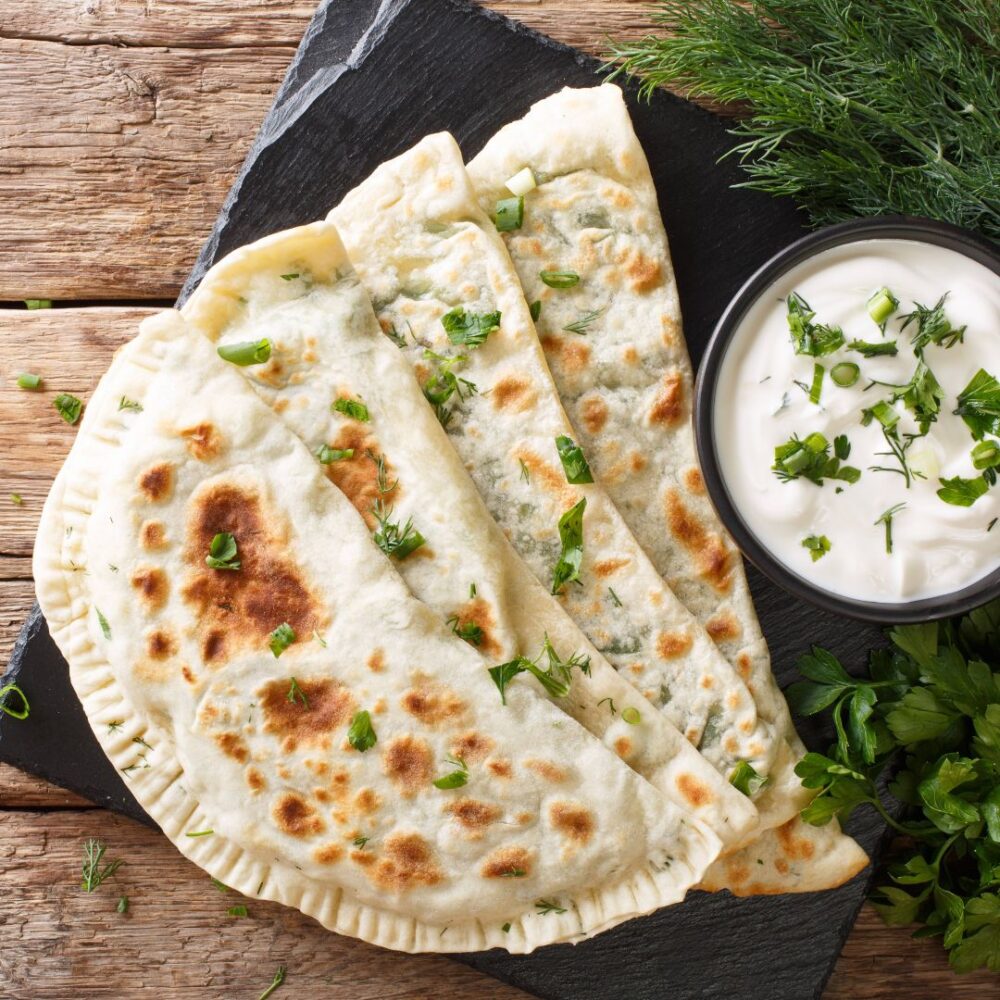
QUTAB – street food snack: flatbread filled with greens, chives, cheese, minced meat, or pumpkin. Typically served with butter on top, yogurt, sprinkle of cilantro, fennel, or sumac.

Plov

PLOV / PILAF – a layered steamed dish of rice, meat, spices (saffron, black pepper, cumin, turmeric, cloves), herbs (dill, mint, parsley).

Shah plov

SHAH PLOV / PILAF – is a dish of luxury – a bed of fragrant basmati rice layered with dried apricots, plums, chestnuts, raisins, lamb, or chicken; all encased in a thin, golden crust. The dish is further elevated by adding saffron, which infuses it with a rich, golden hue.

Surhullu

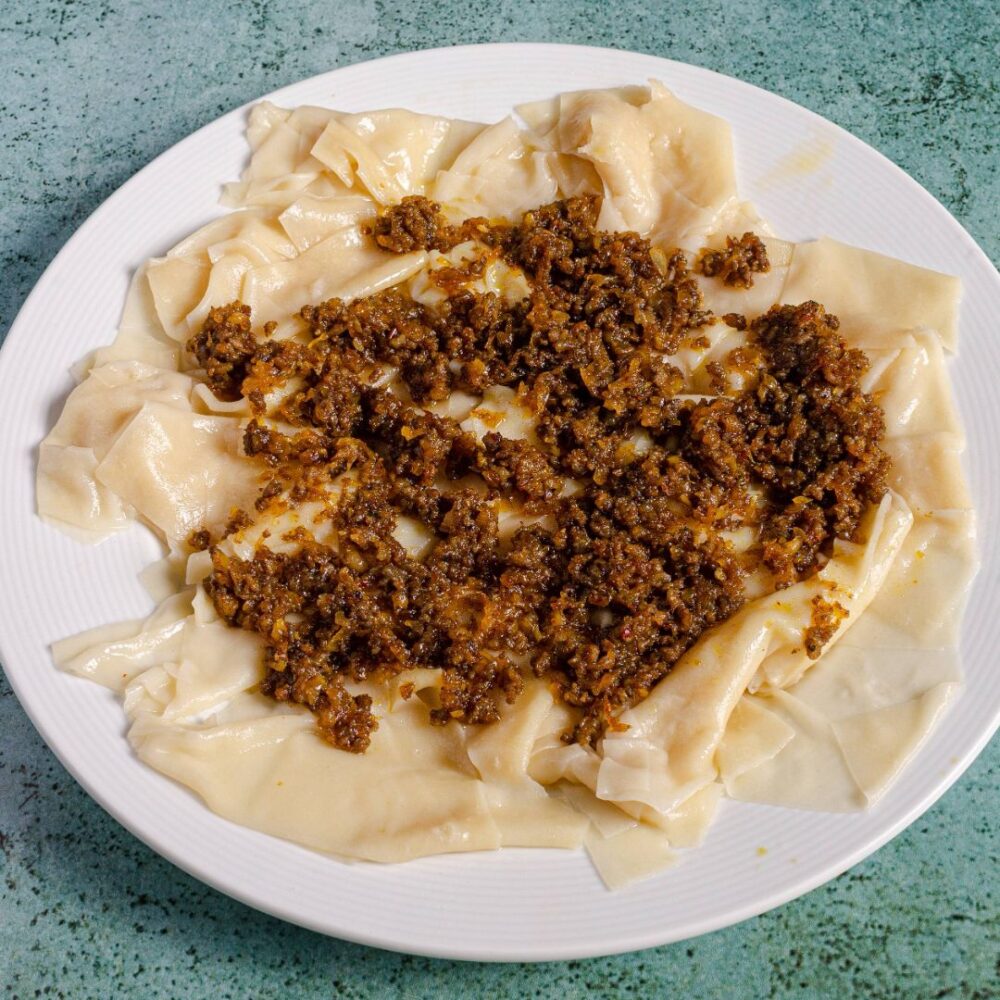
SURHULLU – small wheat pasta pieces, hand-cut in square shapes, served with a rich topping of shredded, slow-cooked lamb or beef.

Icon

Produce

Dolma

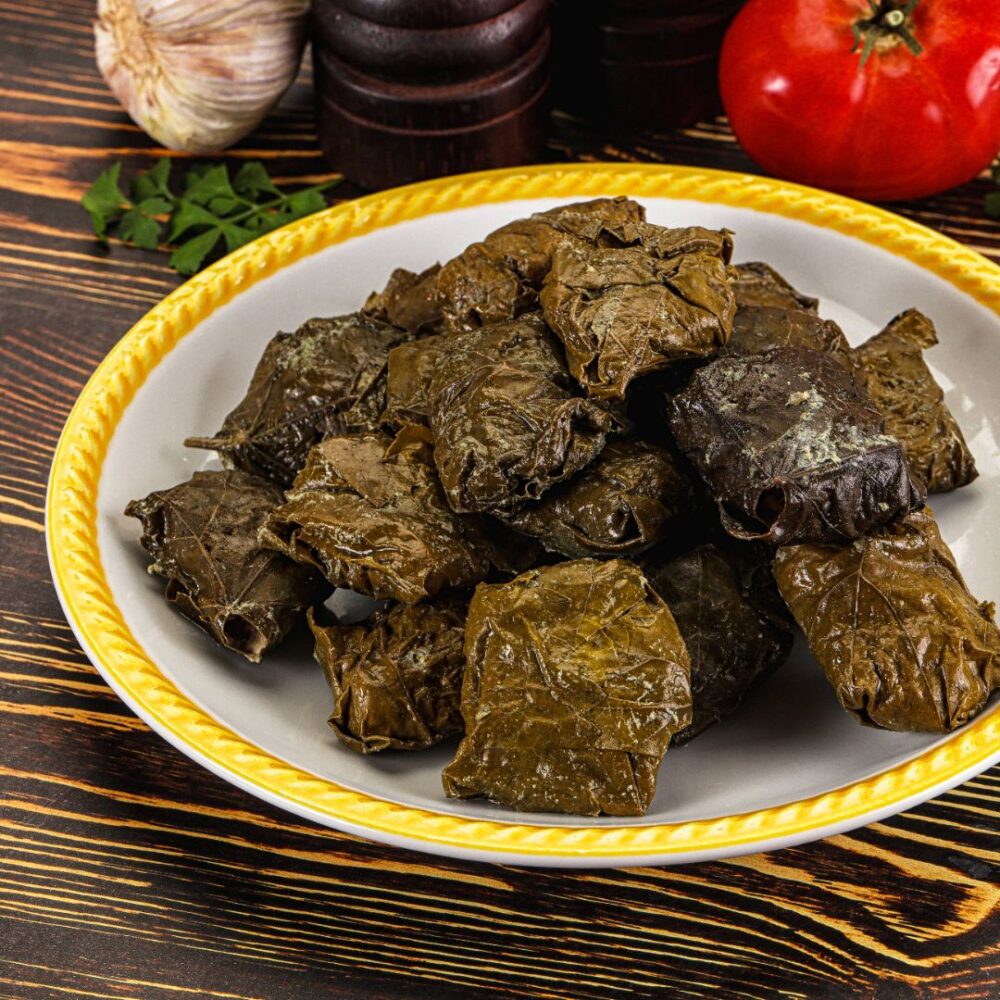
DOLMA – is a mix of rice and lamb stuffed into grape leaves (also peppers, eggplants, tomatoes), served with yogurt sauce. Azerbaijani dolmas are smaller and rounder than elongated versions in Turkey and Greece. They often prioritize lamb over other meats and might incorporate beans, lentils, and bulgur. Meatless dolmas are referred to as jalan dolmas.

MrArifnajafov, CC BY-SA 4.0 , via Wikimedia Commons

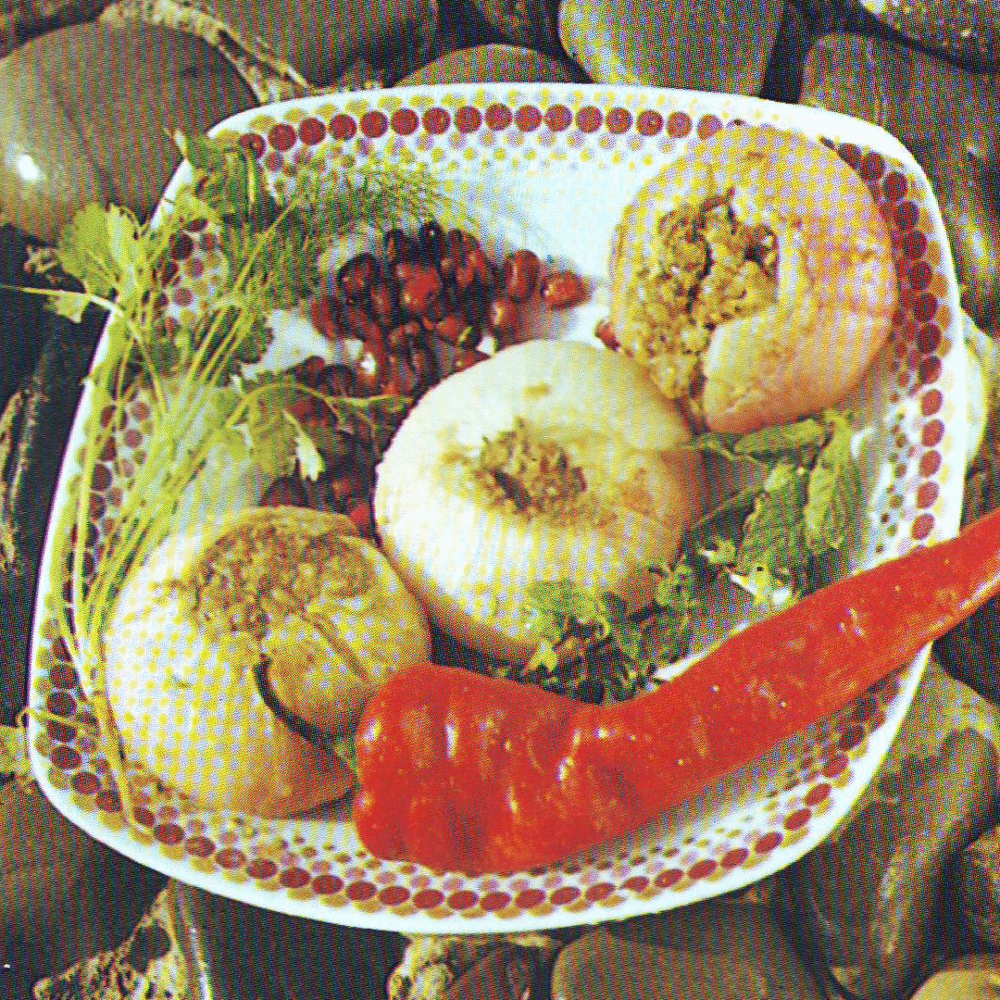
SOĞAN DOLMASI  is a traditional Azerbaijani stuffed onion dish. Whole onions are blanched, then carefully separated into layers and filled with a mixture of minced meat, rice, herbs, and spices, most often lamb. The stuffed onion layers are wrapped back into onion shapes, arranged tightly in a pot, and gently braised.

Irada, CC BY-SA 3.0 , via Wikimedia Commons

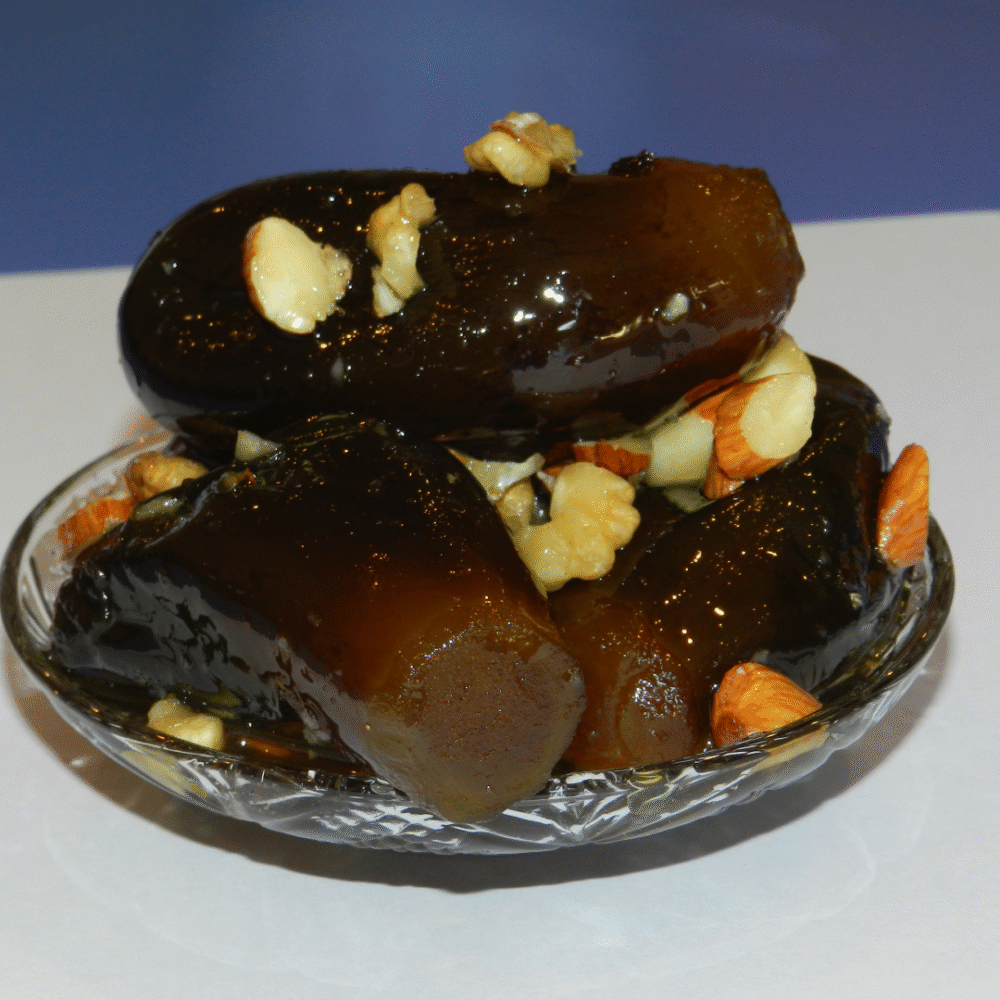
EGGPLAN JAM – is a sweet preserve made from eggplants cooked in sugar syrup. It’s part of a broader tradition where Azerbaijanis make jam from many fruits and vegetables and serve it with tea or bread.

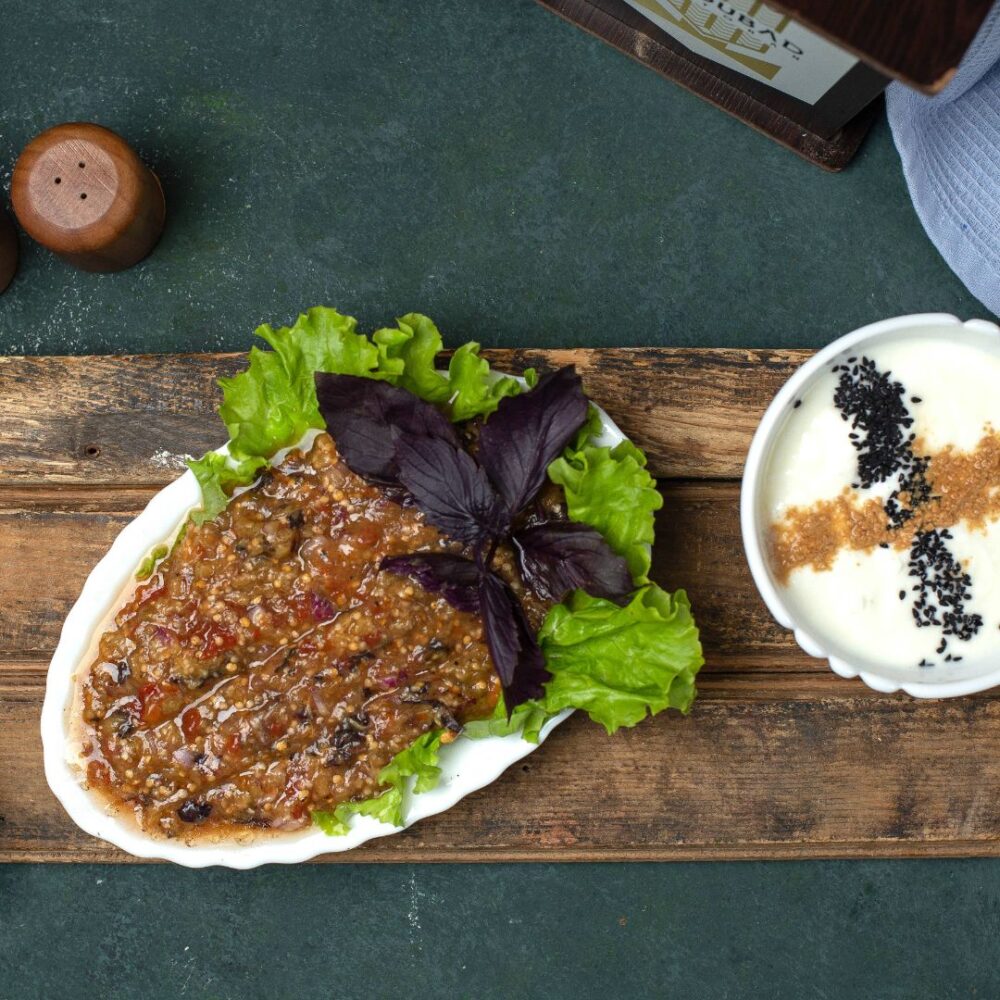
MANQAL SALATI – is a roasted vegetable salad served cold. Eggplants, tomatoes, onions, bell, and chili peppers are grilled and chopped with garlic, olive oil, cilantro, dill, and basil. It is an accompaniment to meat dishes or cheese.

Icon

Eggs and dairy

Dovga

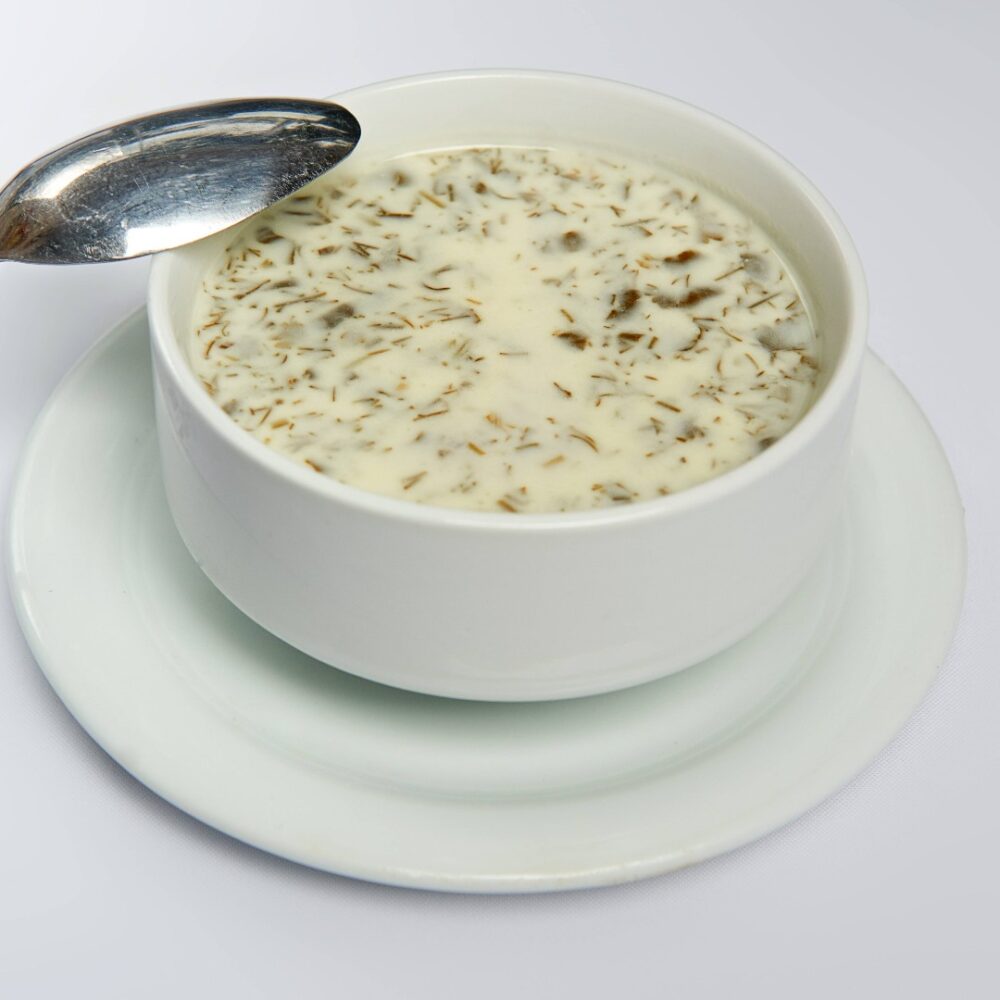
DOVGA – yogurt soup with diced cilantro and chickpeas, served both cold and hot.

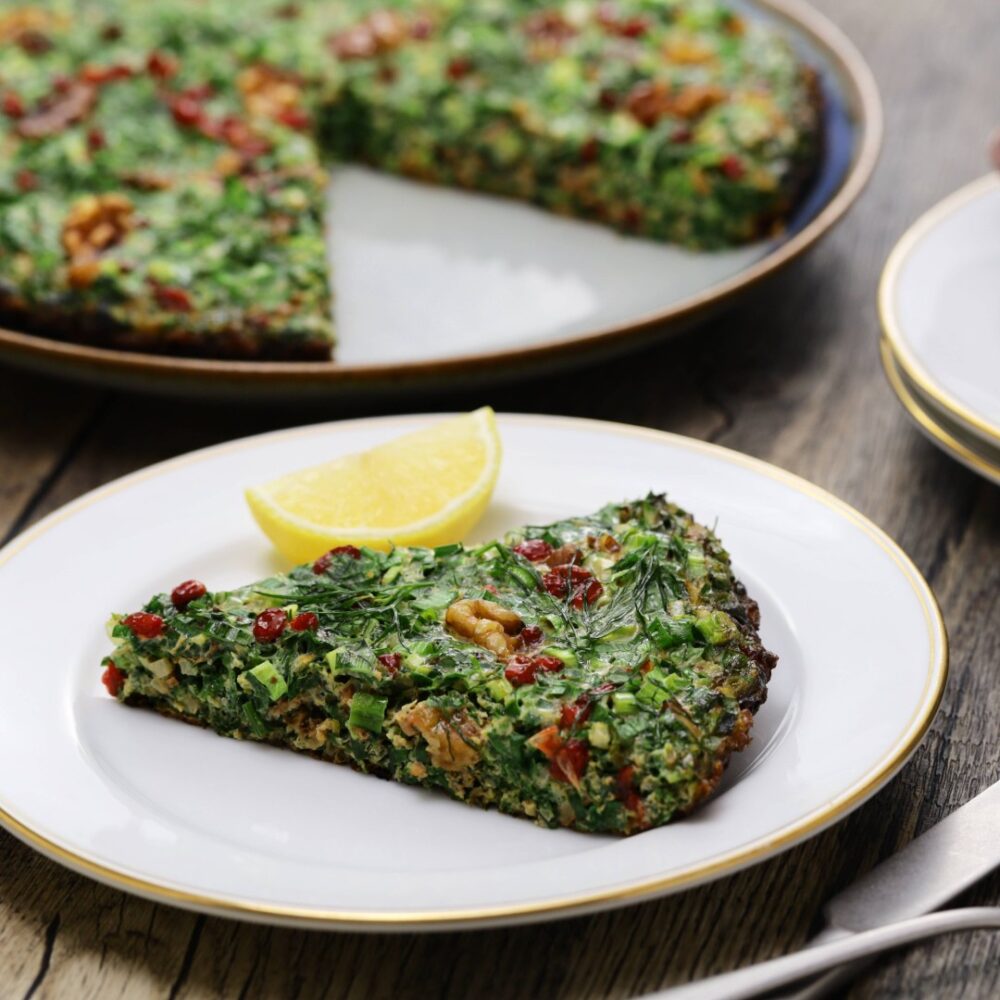
Kuku

KUKU – fresh green herbs and eggs omelet (similar to Italian frittata, or French quiche), served hot and cold with bread, yogurt, or salad.

Icon

Sugar, fats and nuts

Shekerbura

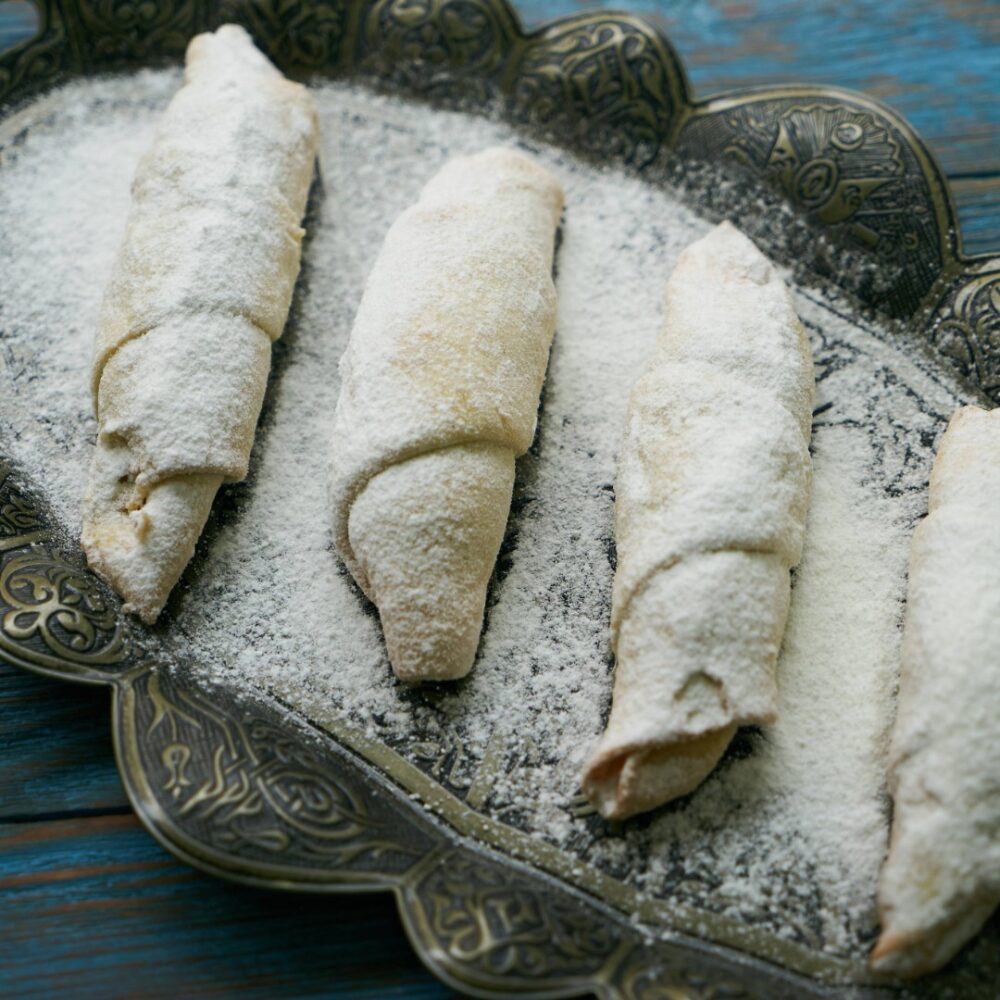
SHEKERBURA – are half-moon–shaped pastries filled with chopped nuts, sugar, and cardamom. The outer layer of the pastry is decorated with unique engravings.

Mutaki

MUTAKI – are sweet yeast bagels with an apricot jam filling; cut into triangles and rolled into tubes – light yellow, soft, and crumbly.

Shirin Goghal

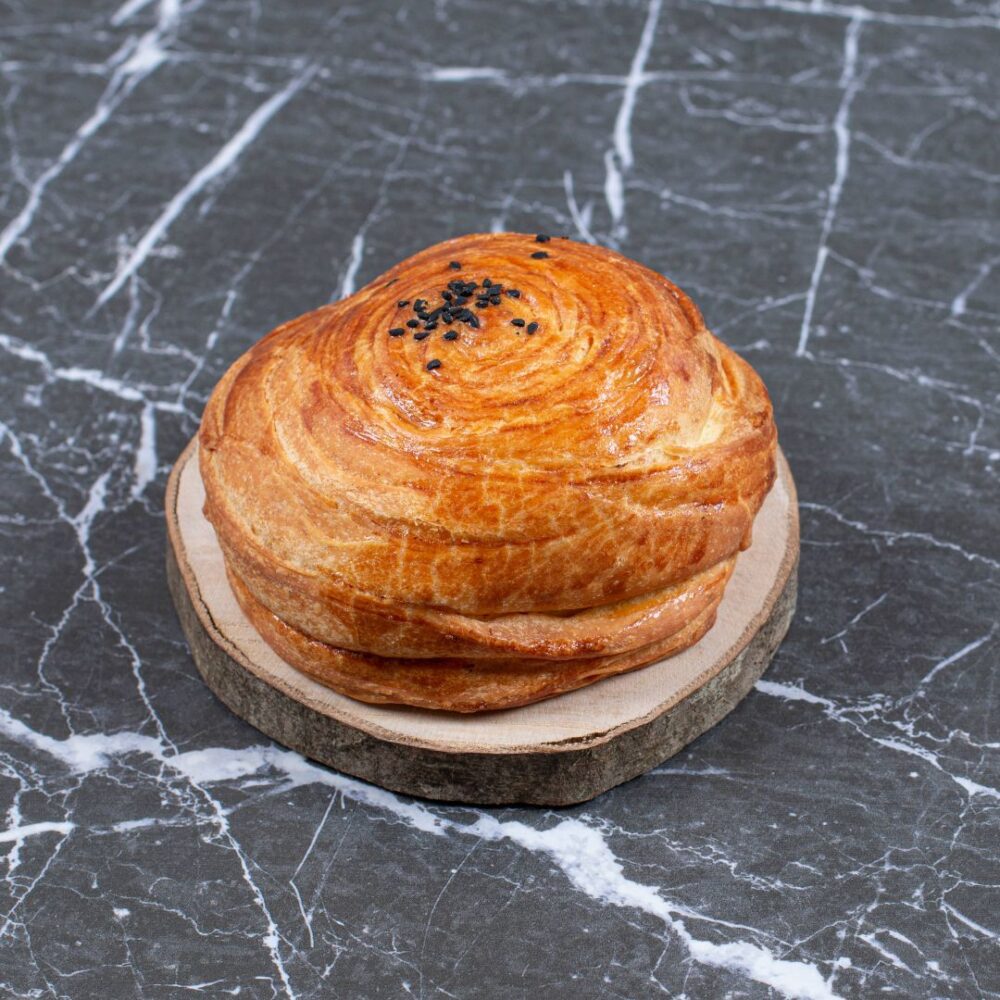
SHIRIN GOGHAL (sweet version) – round-shaped pastry filled with sugar and nuts.

Sedef94, CC BY-SA 4.0 , via Wikimedia Commons

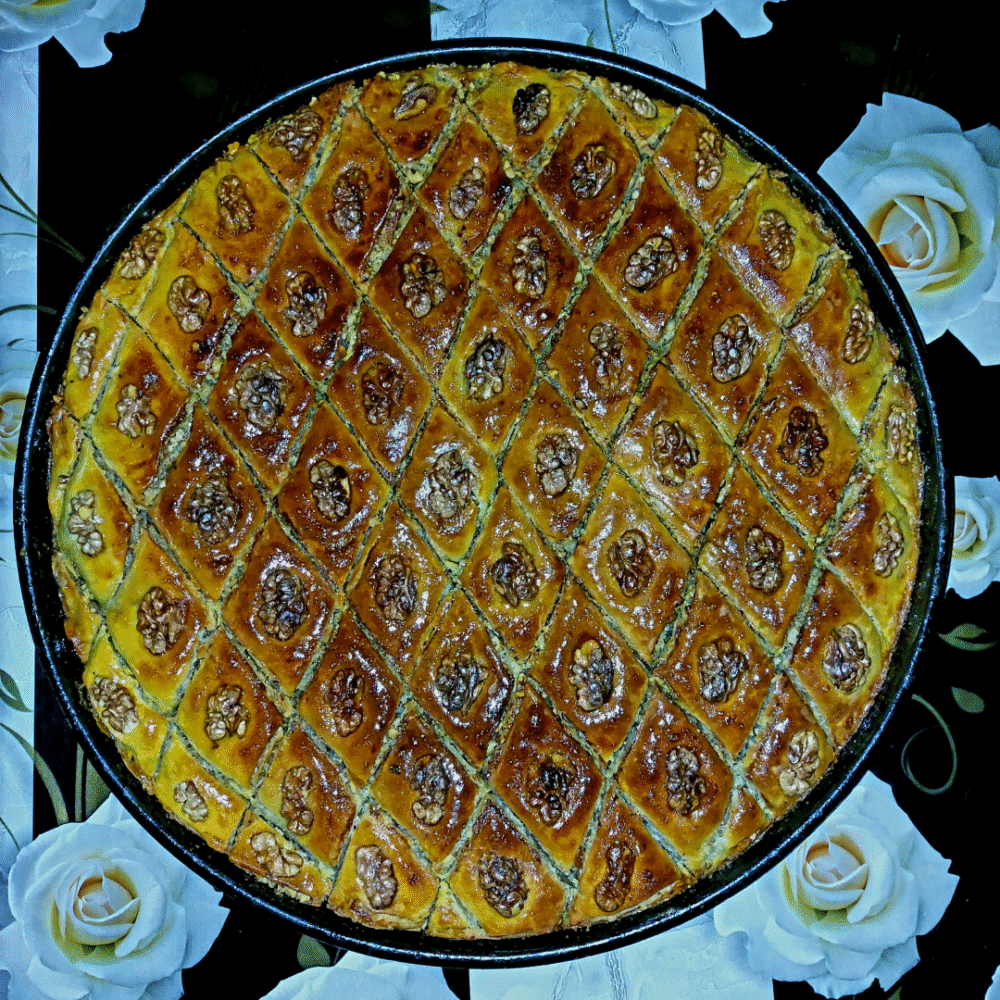
GANJA BAKLAVA — The city of Ganja is known for its baklava, a sweet pastry of nuts and honey. Traditional Ganja baklava has more layers of pastry than its Baku equivalent and rose water is added both to the pastry and the filling.

Walnut jam

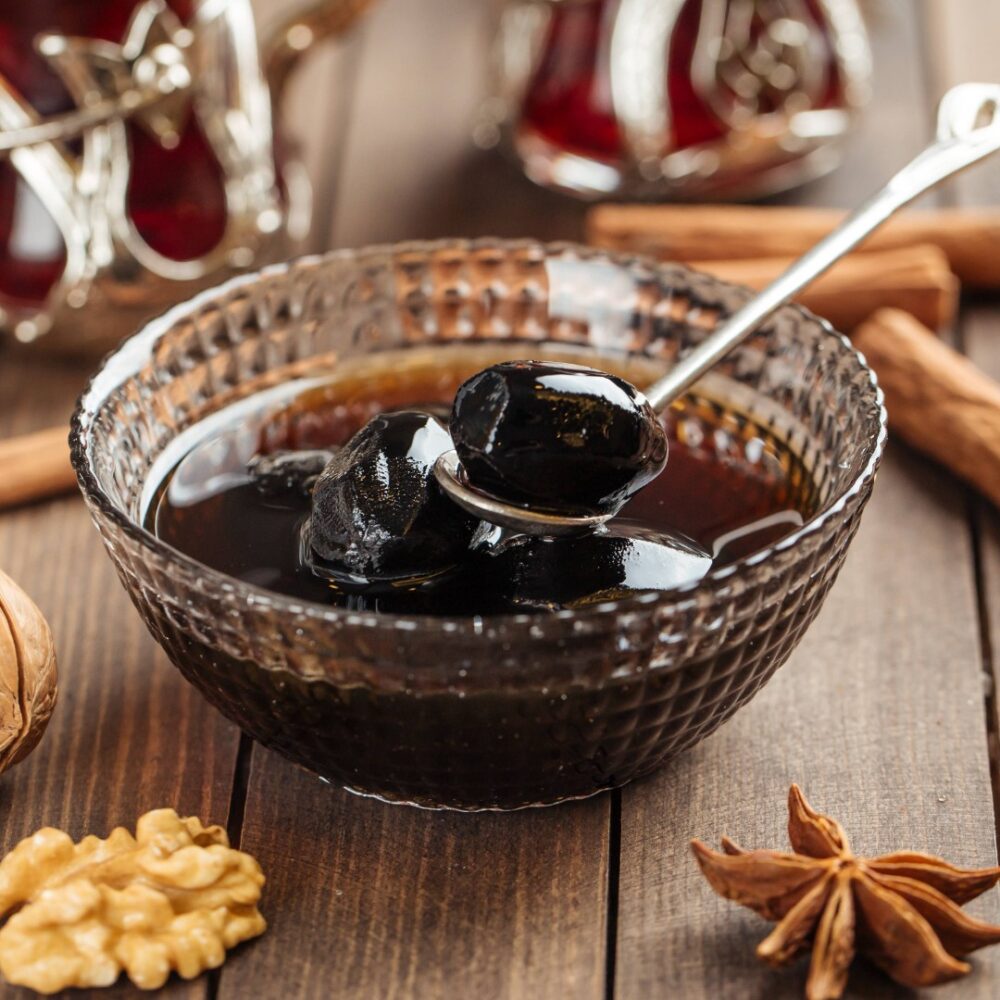
WALNUT JAM – a sweet spread made from young walnuts, sugar, natural spices like cinnamon, cardamom, cloves, and acid.

Back to Top