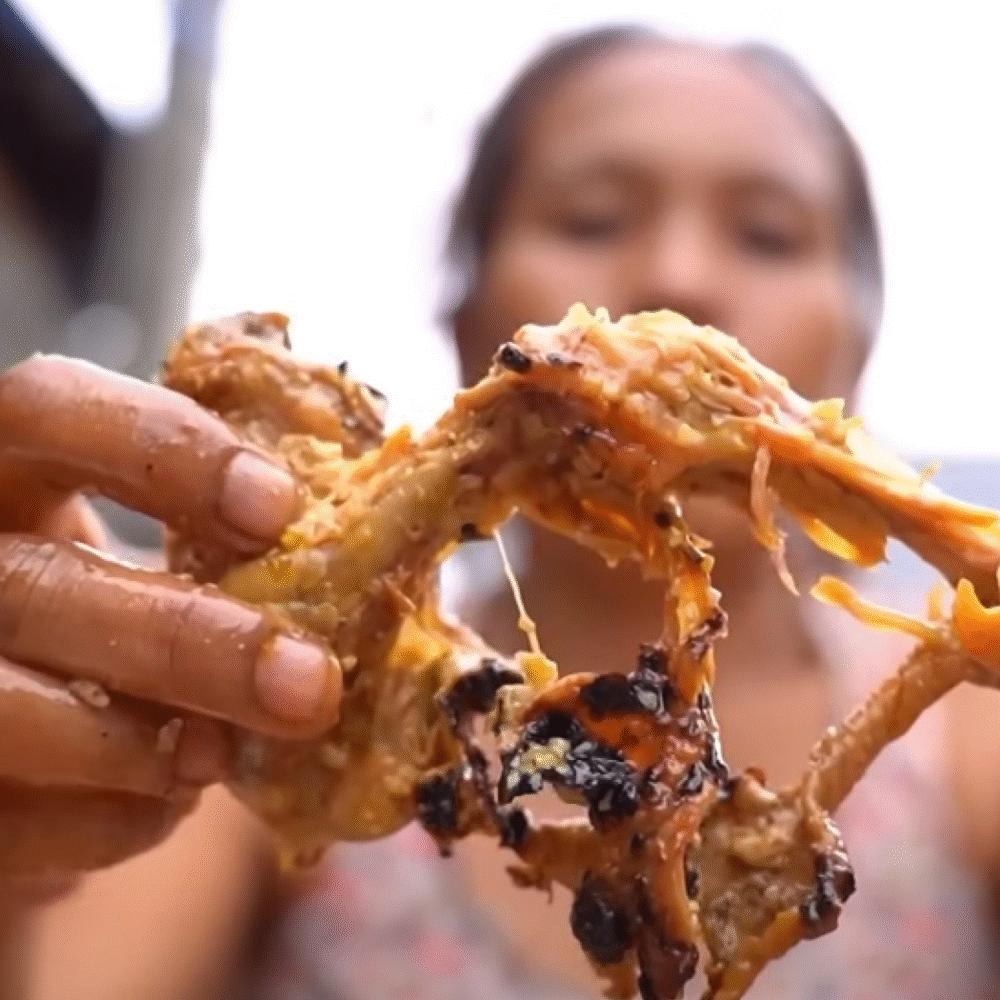
Quantifying culinary diversity across countries.

Filipino food: discover traditional cuisine

About country

Culinary influences

Staple ingredients

Key flavorings

Iconic dishes

The Philippines is an archipelago of over 7,600 islands in Southeast Asia, sitting between the South China Sea and the Pacific Ocean. Population is around 115 million, and it is one of the more densely populated countries in the region.

It’s a former Spanish colony, then briefly American-administered, which explains why it’s so Catholic and has English as an official language alongside Filipino (Tagalog-based).

The economy runs on overseas remittances from millions of Filipinos working abroad, a large BPO (call center/outsourcing) sector, and agriculture. It’s a lower-middle-income country with persistent inequality between urban centers like Manila and Cebu, and rural or island areas.

Geographically, it sits on the Pacific Ring of Fire, so typhoons, earthquakes, and volcanic activity are regular realities.

Culturally it’s a mix: Malay roots, Chinese merchant influence, Spanish Catholic overlay, and American pop culture. That combination produces something genuinely distinct.

5 most similar countries by ingredients

5 least similar countries by ingredients

Country Food Similarity Index https://objectivelists.com/country-food-similarity-index/
Filipino cuisine comparisons

Icon
GEOGRAPHY AND CLIMATE
ARCHIPELAGO OF 7,600+ ISLANDS

– One of the world’s longest coastlines (36,289 km)
– Seafood and salt structurally central to diet
– Island isolation created deep regional diversity
– No land borders filtered what ingredients entered local kitchens

PREDOMINANT MOUNTAINOUS TERRAIN (~70%)

– Narrow coastal plains; limited flat arable land
– Highland diet built around root taro, ube, sweet potato, cassava
– Rice terraces carved into steep slopes

LOWLAND PLAINS AND RIVER VALLEYS

– Central Luzon Plain, Cagayan Valley, Agusan Valley: rice and corn belts
– Fertile volcanic soils support intensive agriculture
– Rivers provide freshwater fish as interior protein

TROPICAL HEAT AND HUMIDITY

– Year-round heat accelerated spoilage
– Drove preservation culture: fermentation, sun-drying, pickling, salting
– Vinegar became a practical staple before refrigeration
– Sour, fermented flavor profile is a direct climate response
– Fermented flavors became core to Filipino taste

TYPHOONS AND RAINFALL

– One of the world’s most active typhoon belts
– Preserved foods became a survival necessity
– Rainfall shapes planting cycles, feeds rice paddies and freshwater fish systems

REGIONAL CLIMATE VARIATION

– Bicol: dense chili bushes and coconut palms and spicy, coconut-heavy cuisine
– Southern islands: equatorial proximity and wide spice-plant diversity
– Northern Luzon highlands: cooler temperatures and different crops, heartier dishes

KEY AGRICULTURAL PRODUCTS

– Rice, corn, cassava, sweet potato, taro
– Banana, mango, pineapple, papaya, calamansi, coconut
– Sugarcane, coffee, cacao,
– Eggplant, okra, bitter melon, string beans, water spinach, garlic, onion
– Seaweed, milkfish, tilapia, tuna, shrimp, shellfish
– Hog, chicken, duck, cattle, water buffalo

Icon
INDIGENOUS INFLUENCES
INDIGENOUS NEGRITO HUNTER-GATHERERS

– The oldest inhabitants: Aeta, Agta, Ati and related groups
– Ate wild yams, ferns, mushrooms, honey, fish, and game
– Cooked in bamboo over open fire
– Foraged and wasted nothing
– Knowledge of wild edible plants persists in Filipino cooking

EARLY AUSTRONESIAN SETTLERS (5000 years ago)

– Around 5,000 years ago, seafaring settlers arrived from Taiwan and China and settled
– Brought rice, pigs, and coconut farming
– Rice expanded but competed with root crops, which remained dominant in mountains
– Communities became geographically isolated across islands and terrain
– Hundreds of groups formed, each with its own language and food
– Established a base of rice, seafood, and coconut
– Cooking methods: boiling, grilling, steaming, fermentation
– Liked sour, salty, bitter, and umami flavors

Icon
EXTERNAL INFLUENCES
MALAY/AUSTRONESIAN MARITIME INFLUENCE (3,000 years ago)

Bagoong, patis fermented fish pastes
Kinilaw raw fish technique
Proto-sinigang sour-broth tradition

INDIAN INFLUENCE

– Indirect, via Malay trade networks and later Indian presence
– Indians established karihan (curry kiosks) evolved into carinderias (small, budget-friendly eatery)
– Curry inspired flavors appeared in Southern Philippines

CHINESE INFLUENCE (10-19c)

– Continuous contact through trade and migration
– Introduced soy sauce, tofu, noodles, dumplings, stir-frying, bean sprouts, steamed buns
– Merged with vinegar and rice into core dishes

SPANISH INFLUENCE (1565-1898)

– Among the longest European colonial periods in Southeast Asia
– Iberian influence layered onto local foods
– Deep cultural shift: widespread Catholic conversion
– New techniques: sautéing, braising, baking, slow stewing, stuffing whole animals and deboning, sofrito style, sausage making
– Dishes: pochero, caldereta, afritada, mechado, menudo, embutido, morcon, local paella versions
– Desserts: leche flan, ensaymada, pandesal, arroz con leche

MANILA GALLEON TRADE (1565–1815)

– Linked the Philippines with Mexico
– Brought New World crops: tomatoes, corn, chili, cacao, peanuts, pineapple, papaya, guava, squash, annatto
– Spread tomato-based stews, cacao drinks, leaf-wrapped foods

AMERICAN INFLUENCE (1898-1946)

– Inroduced mass food standardization and convenience eating
– Introduced canned and processed meat: corned beef, hot dogs, spam
– Expanded fast food habits: fried chicken, burgers, sweet spaghetti
– Reinforced sweetness: ketchup, desserts, condensed milk

JANANESE INFLUENCE (20c)

– Migration and short occupation (1942–1945)
– Added elements via modern dining: tempura, ramen, katsudon, miso paste
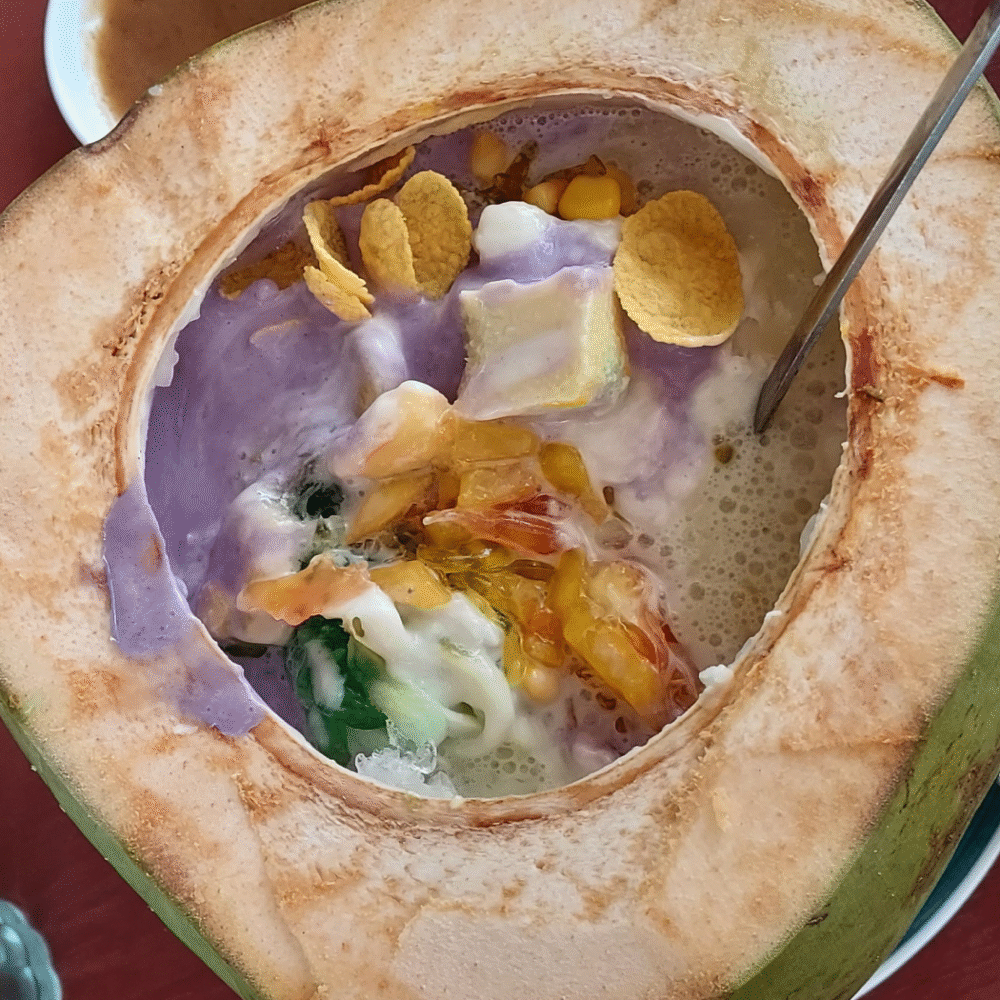
Halo-halo dessert derived from Japanese kakigōr

Icon
RELIGION AND CULTURE
ANIMISM

– Pre-colonial spiritual beliefs
– Food offering to ancestors, rice wine in rituals, harvest ceremonies
– Still alive in specific communities

ROMAN CATHOLICISM

– Came in 16 century with the Spanish, now 79% of population
– No dietary prohibitions
– Lent / Holy Week: no meat on Fridays
– Celebration of Christian holidays
– Celebration of Fiestas is extensive

ISLAM

– Came in 14 century, through trade, now 6% of population
– Muslims never absorbed Spanish or American influence
– Remains the most Malay-aligned cuisine in the country
– Halal food requirements, ritual slaughter
– Avoidance of pork and alcohol
– Celebration of Islamic holidays

SOCIAL PRACTICES

– Dishes served all at once, shared at the center (no courses)
– Elders served first
Kain tayo (let’s eat) — open invitation to anyone present
– Primary set: spoon and fork, chopsticks not traditional
– Five eating times: breakfast, snack, lunch, merienda (afternoon snack), dinner
–  Late dinners common (8–10 pm)
Kamayan/boodle fight — eating communally with hands on banana leaves
– Street food is social, but real food is at home, not in the street

The average Philippines daily plate size is

1593 g.
Icon

Grains

Icon

Fish and seafood

Icon

Produce

Icon

Eggs and dairy

Icon

Meats

Icon

Sugar, fats and nuts

Core ingredients

THE ESSENCE OF FILIPINO CUISINE

Filipino food is quite difficult to describe as whole. Its indigenous base is similar to Indonesian and Malaysian, but it has been transformed by centuries of migration and colonialism to become the cuisine that it is today. Over time it welcomed, internalized, and localized so many Eastern and Western influences that it effectively became a local Asian fusion long before that term even existed.

Once in Philippines, you are immediately surrounded by the street food. Street food is deeply social — eating standing up, from a stick, next to a vendor is a daily experience for most Filipinos. Street food is faster, cheaper, built for eating while moving. But, in the Filipino context, home cooking is the truest expression of cuisine. Indigenous Filipino food is found in home cooking and provincial eateries, carinderias — rarely in fine dining or tourist-attracting restaurants. Street food is no less authentic, but it is more compressed and commercial — optimized for speed and low cost.

At home, Filipino meals are served all at once — large dishes at the center of the table, with white rice always present and plentiful. Scattered between them are small bowls of sawsawan, dipping sauces. Each diner seasons their own plate to their own preference, usually choosing from dips made with vinegar, garlic, fish and soy sauces, calamansi (local citrus), shrimp paste, and tomatoes. At celebrations (fiestas) the table often gives way entirely to banana leaves laid flat, with food arranged directly on top for everyone to eat from by hand. This tradition is called kamayan.

Is Filipino food spicy? Actually, no, especially if compared to other Southeast Asian nations, and that happened with a few compounding reasons. Long before any colonial contact, flavor foundation was already set: sour, salty, and fermented. Vinegar, bagoong (fermented fish or shrimp paste), tamarind. There was no structural gap for chili to fill the way, as vinegary acidity already was the core flavor.  While in Thai or Indonesian cooking, where aromatic spice pastes were the backbone, chilies fit in well.

Then, there was the distribution problem. When chilies left the Americas, it was actually the Portuguese who spread them fastest across Asia. That wave hit Indonesia, Malaysia, and coastal India early. The Philippines was administered by Spain through Mexico, a completely separate colonial channel, and Spanish upper-class elite had no particular love for spicy food.

On top of that, Spain and the Dutch were bitter rivals. The Dutch controlled the Spice Islands (eastern Indonesia), and their dominance disrupted spice trade networks around the Philippines. So neighboring cuisines absorbed spice influences from Portuguese, Dutch, Indian, Arab, the Philippines was largely cut off from that circulation, locked into a single Spanish channel that didn’t prioritize heat.

The result is that the chili arrived but never got cooked in. Instead, it moved to the side of the plate, into dipping sauces and condiments, where it remains today. There is one exception of Bicol, Mindanao, Bangsamoro regions, where many dishes have a hot taste. Bicol had geographic and cultural exposure to southern trade routes and a local coconut milk tradition that paired naturally with heat.

GRAINS IN FILIPINO CUISINE

Root crops grew locally first because they were easy. They grow with little planning and work well for small, mobile communities. But rice changed everything. Rice produces more food per land, but needs organized farming like irrigation and coordinated labor. Once communities invested in that, they could support larger populations and generate surplus. Over time, rice became the preferred staple and a sign of stability, and root crops shifted into a secondary role.

In Filipino cuisine, rice is the meal. Everything else on the table, the meat, the fish, the vegetables, has a word: ulam, the thing you eat alongside rice. A meal is not a meal without rice, and this extends to breakfast, fast food, street food, and celebrations.

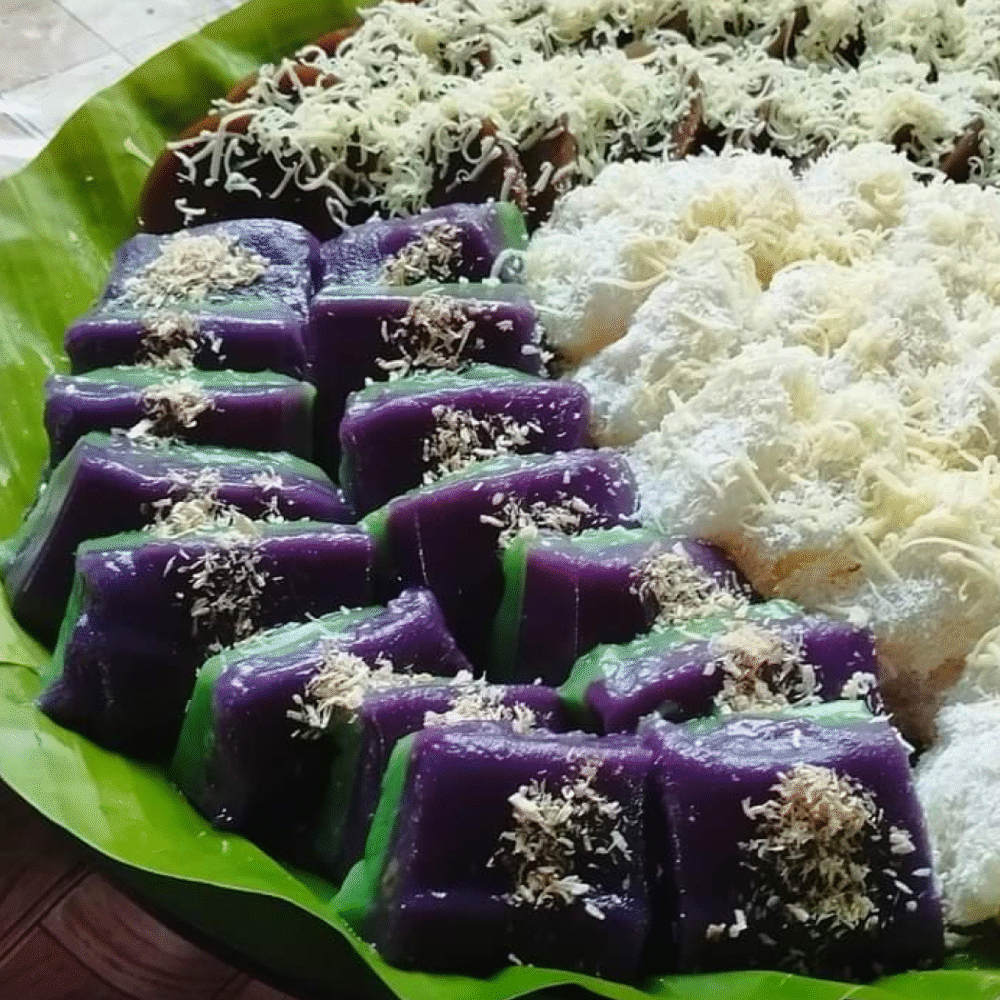
Many cultures prefer sticky rice as a variety, but Filipinos built an entire category around it: kakanin. This is an umbrella term for sweet, chewy, and savory rice cakes made from glutinous rice called malagkit, coconut milk, and sugar, cooked in banana leaves, bamboo tubes, clay pots, and earthen stoves. Kakanin shares roots with India, China, Maritime Southeast Asia, and the Pacific Islands, but the Filipino iteration is exceptionally diverse.

The range of rice dishes in Filipino cuisine is huge. Filipinos steam it plain (saing), fry it with garlic for breakfast (sinangag), ferment it with shrimp or fish (buro), wrap it in coconut leaves and boil it (puso), wrap it in banana leaves (suman), grind it into flour for cakes (bibingka, puto), cook it into chocolate porridge (champorado), make it into savory congee (arroz caldo), and brew it into ceremonial wine (tapuy). The champorado case is particularly interesting: Mexican traders introduced champurrado, a warm, thick drink made with corn flour, and Filipinos remade it entirely by replacing corn with their own staple rice. They didn’t adopt the foreign grain, but converted the foreign dish into a rice dish.

Corn is a staple food for 20% of the Filipino population, mostly in the Visayas and Mindanao regions. White corn is used as a substitute for rice. The logic is the same as the rice meal: corn grits as the base, ulam alongside it. Corn is widely considered to be a poverty food due to its relative cheapness. In many households, the shift back to rice when they can afford it is a social signal. This has suppressed corn’s cultural status despite its nutritional advantages.

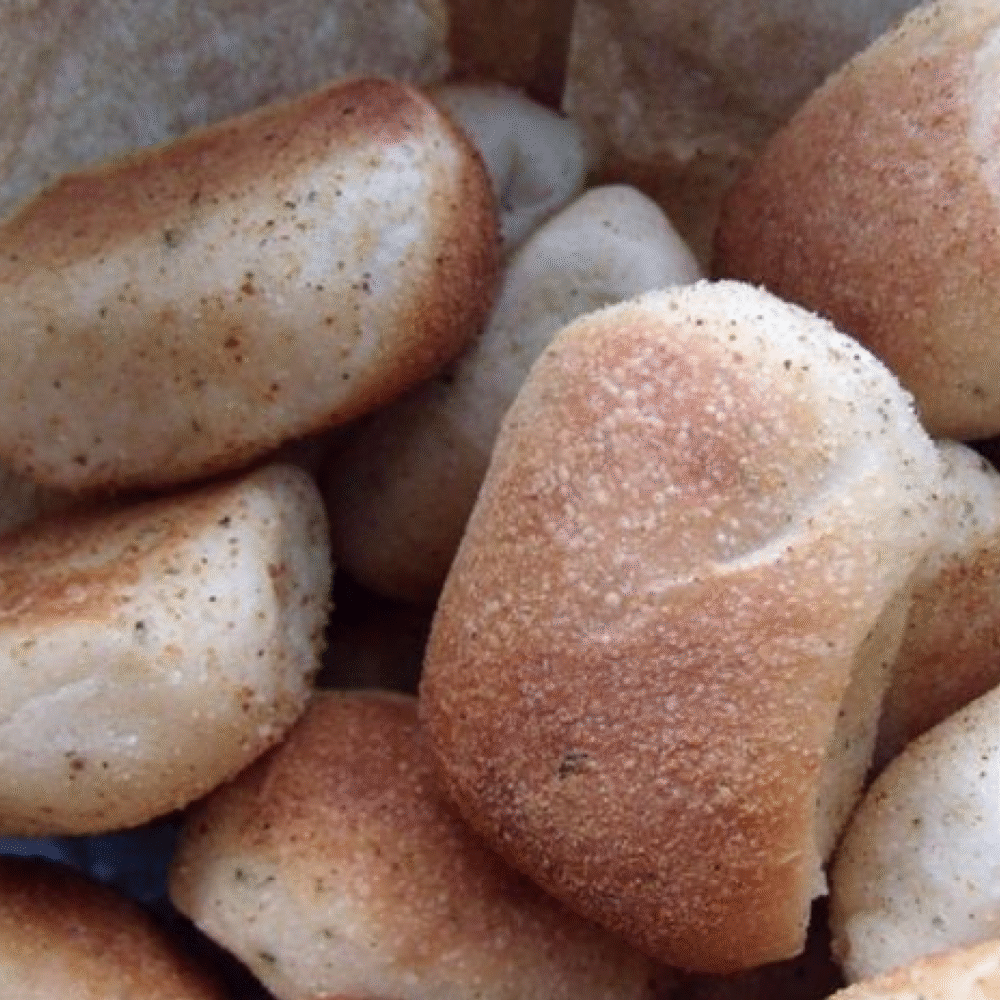
The Philippines produces no wheat, but wheat flour is increasing in the diets of its people as affluence grows, making the country a major importer. For the wheat, the climate is too hot and humid, the soil conditions are wrong, and Filipinos had no cultural motivation to adopt a grain they neither needed nor recognized. In 1954, the US had grown too much wheat and began distributing it to countries like the Philippines. For many rural Filipinos, it was their first encounter with the grain. The US then invested heavily in training Filipino bakers, millers, and food technologists. It created demand where none existed. The main thing Filipinos do with wheat is bake bread, and specifically one bread. While the Philippines doesn’t officially have a national bread, if it did, it would be pandesal. A soft and airy flour roll, pandesal is Spanish for “salt bread” and is a breakfast bread throughout the Philippines. However, contrary to its name, the bread is relatively sweet.

Wheat also goes into noodles, the pancit tradition. But unlike most of Southeast Asia, Filipinos consume relatively few noodles, which means wheat is used more for bread than anywhere else in the region. Vietnam, China, and Thailand have deep traditions in wheat noodles. The Philippines leans toward bread.

The US created a wheat market in the Philippines through food aid. That created a generation of Filipinos who grew up eating bread and wheat noodles. That demand supported the Jollibee fast food restaurant chain, which built an empire on burger buns and sweet spaghetti. Jollibee now operates globally, selling wheat-based Filipino comfort food to Filipino diaspora worldwide. The wheat went full circle.

PRODUCE IN FILIPINO CUISINE

Ampalaya, also known as bitter melon, is one of the healthiest vegetables in the world, and despite its distinctively bitter taste, it is a beloved staple in Filipino cooking. Thai, Vietnamese, and Indonesian cuisines generally work to offset or minimize bitterness. Filipinos lean into it. Ampalaya appears in pinakbet veggie stew, ginisang ampalaya with eggs, stuffed and fried, raw in salads.  The bitterness is the point. This cultural comfort with bitter flavors is pre-colonial and reflects an Austronesian palate.

The whole plant philosophy in Filipino cooking is exceptional. Stems, leaves, and even flowers find purpose here. Squash flowers go into soups like dinengdeng. Sweet potato leaves are eaten as greens or are sautéed with shrimp paste, even though most cuisines discard them. The banana blossom, known as banana heart or puso ng saging, is the flower of the banana plant. It has a meaty, fibrous texture that makes it a popular ingredient that easily absorbs the flavors of the ingredients it’s cooked with. It goes into kare-kare, kilawin, other stews. Even the banana trunk’s inner white core (ubad) ends up in soups in some regions.

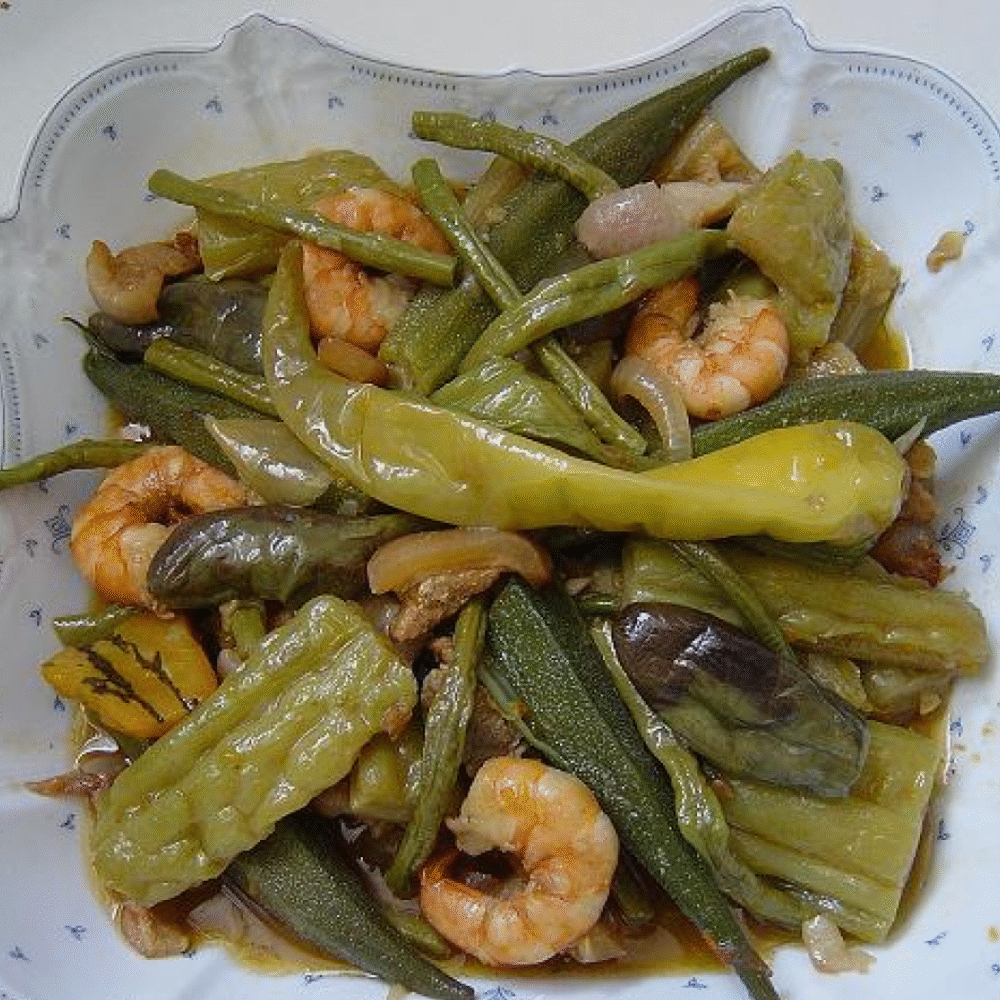
Is Filipino food vegetarian-friendly? The answer is most probably no, since even vegetable dishes typically include some animal products. Vegetables are often integrated into stews and soups, soaking up the broth, rather than being served as a lonely side dish. Pinakbet is a vegetable dish made from eggplant, okra, string beans, bitter melon, and squash, flavored with pungent, salty fermented fish sauce. Sweet kalabasa, bitter ampalaya, mucilaginous okra, mild eggplant, and earthy string beans all cook together. The bagoong (fermented shrimp or fish paste) ties them. This multi-vegetable pot approach is spread nationwide.

Unripe green jackfruit is one of the main “vegetables” in Filipino cooking. It has no flavor of its own, absorbs everything around it, and produces a meaty texture. Unripe papaya goes into sinigang as a souring-and-bulking ingredient and is grated raw for atchara. Unripe bananas cook in stews. Green mango sours fish dishes. The line between vegetable and fruit in Filipino cooking is almost meaningless. What matters is the ripeness stage and what role the ingredient plays structurally in the dish. Filipinos deliberately use fruit before it ripens.

Atchara or burong gulay are pickled vegetables widely served as side dishes. The most popular form is pickled green papaya, prepared with carrots, onions, ginger, and bell peppers, preserved in a solution of vinegar and water with added spices. Fermented vegetables appear as a balance to fatty and rich meats.

Most cuisines use coconut milk. Filipinos use the whole tree across every stage of processing. The young coconut water (buko) is a drink. The meat of young coconut is a dessert and cooking ingredient. Mature coconut yields gata (coconut milk) and kakang gata (first-press cream). Coconut ferments into tuba (palm wine) and then into sukang tuba (coconut vinegar), one of the oldest and most important souring agents in the cuisine.

Ube, also known as purple yam, originates from here. Purple yams have bright purple flesh, and their texture becomes soft like a potato when cooked. What makes ube exceptional is not the root itself but what Filipinos did with it. They made it into halaya (a jam cooked with coconut milk and condensed milk), used it to flavor ice cream, cakes, pastries, halo-halo, and kakanin. The color is vivid purple. The flavor is mild, nutty, and slightly floral. When ube exploded globally in the 2010s as a food trend, it was entirely because of the Filipino diaspora exporting it.

Taro was one of the main carbohydrates before rice became dominant. Sweet potato kamote has a complicated cultural status in the Philippines.  It has a somewhat lowly reputation, used in a derogatory sense such as magtanim ka na lang ng kamote – go plant sweet potatoes, referring to those who are hopeless in other trades, or as an insult when driving. And yet it feeds millions. Cassava runs deep in Filipino food culture, particularly in the south and in desserts. It becomes pichi-pichi (a gelatinous steamed cake), cassava cake, and cassava chips. It is also a famine food and resilience crop.

MEAT IN FILIPINO CUISINE

Most Southeast Asian cuisines treat pork as one protein among several. Filipino cuisine treats it as very important, the festive piece, the street snack, the last thing left on the plate. Pork sits in the tangy, salty, and sweet embrace of adobo, the sinigang, kare-kare. Chicken is secondary. Beef is occasional.

This is the most important thing to understand about Filipino meat cooking. Adobo is not a dish. It is a method. The cooking method for the Philippine adobo is indigenous to the Philippines. Ancient communities used native palm sap and coconut vinegars, combined with sea salt, to preserve their food for long sea voyages and extended periods between hunts. The Spanish arrived, recognized something familiar, and named it after their own marination word. But the Filipino and Spanish methods have nothing in common beyond vinegar and garlic. Unlike Spanish and Latin American adobo, Philippine adobo does not traditionally use chilis, paprika, oregano, or tomatoes. You can adobo pork, chicken, squid, jackfruit. The method is the national dish.

If a family is serving lechon, it means they are having a blowout celebration. Weddings, reunions, milestone birthdays, and debuts are all reasons to throw a pig on the fire. It is a communal event. The men tend the coals for hours. The whole neighborhood knows something important is happening. The pig rotates slowly over charcoal, basted until the skin turns into something between glass and crackling. Then the leftovers become their another dish. Paksiw na lechon is made from lechon meat with the addition of ground liver or liver spread, which adds flavor and thickens the sauce so that it starts to caramelize around the meat.  The pig continues to feed the household days after the feast.

When Western restaurants began marketing nose-to-tail cooking as a progressive movement, Filipinos had been doing it for centuries. Dinuguan is pork blood, entrails, and meat stewed with vinegar and garlic — dark, savory, polarizing. Papaitan uses bile deliberately to create bitterness in a goat or beef innards soup. Bopis is minced heart and lungs sautéed spicy. Isaw is cleaned, skewered, and grilled intestines eaten with vinegar on the street. These are everyday foods, especially among working-class Filipinos.

The origin story of modern sisig is genuinely remarkable. When US air bases in Pampanga would throw out whole pig’s heads, locals offered to buy the offal and started to mix it into a sour salad, starting its evolution. What American military waste management discarded, Filipino cooks took: the pig cheeks, grilled them, added vinegar, calamansi, onions, and liver, and created the dish that eventually made global food media pay attention to Filipino cuisine.

Filipino breakfast cured meats are unusual in global terms because they are sweet. Tocino is pork cured in sugar, salt, and sometimes annatto, then fried until caramelized and slightly sticky. Longganisa is a sausage that ranges from garlicky to intensely sweet depending on the region.

FISH AND SEAFOOD IN FILIPINO CUISINE

Coastal geography decides fish popularity in each region. Deep waters near Mindanao give tuna perfect for kinilaw. Shallow coasts around Pampanga bring in milkfish for grilling. Mangroves supply crabs and shellfish. Trade routes have always shaped regional cooking styles, so seafood recipes can be surprisingly different between islands that are just a short boat ride apart.

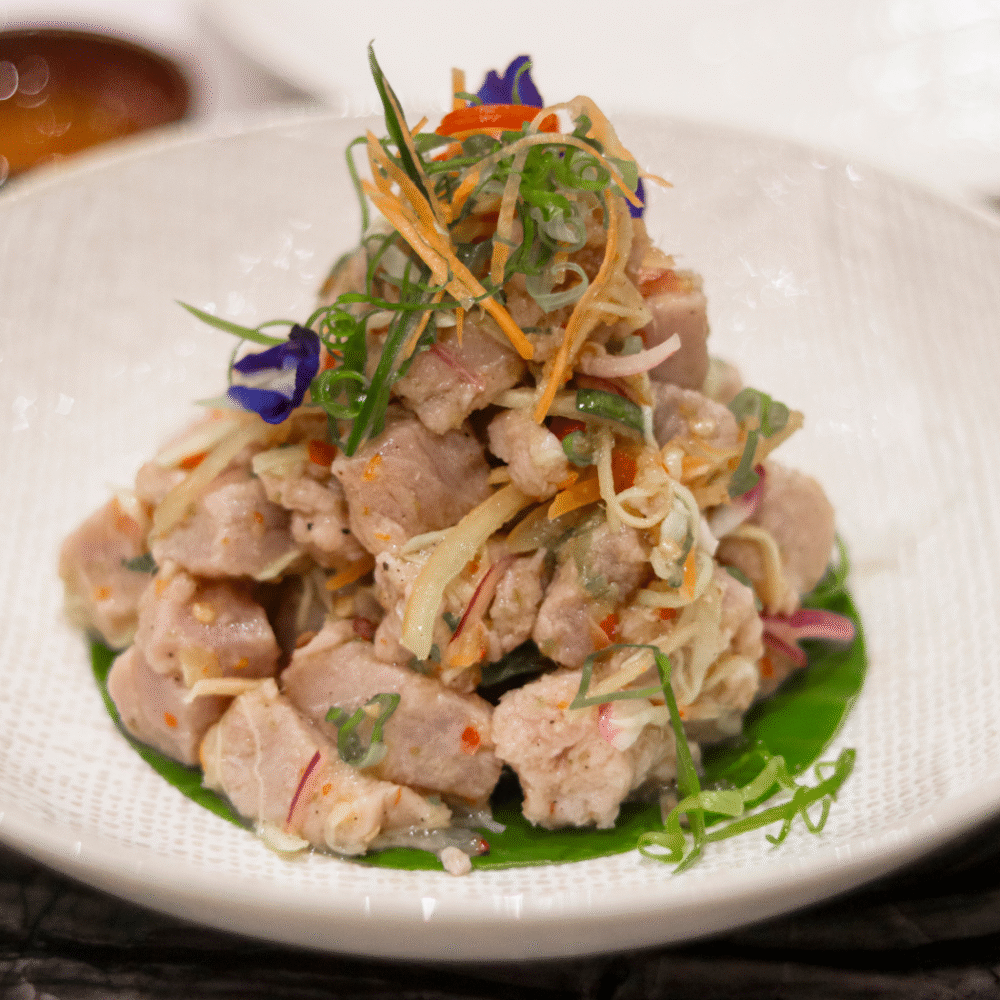
Kinilaw is a unique cooking method that uses citrus and sour fruit to cure raw seafood. The acid denatures the protein in the same way heat would. Pre-colonial Filipinos developed this before any colonial contact. For souring, they used coconut vinegar, palm vinegar, calamansi, and cucumber tree.

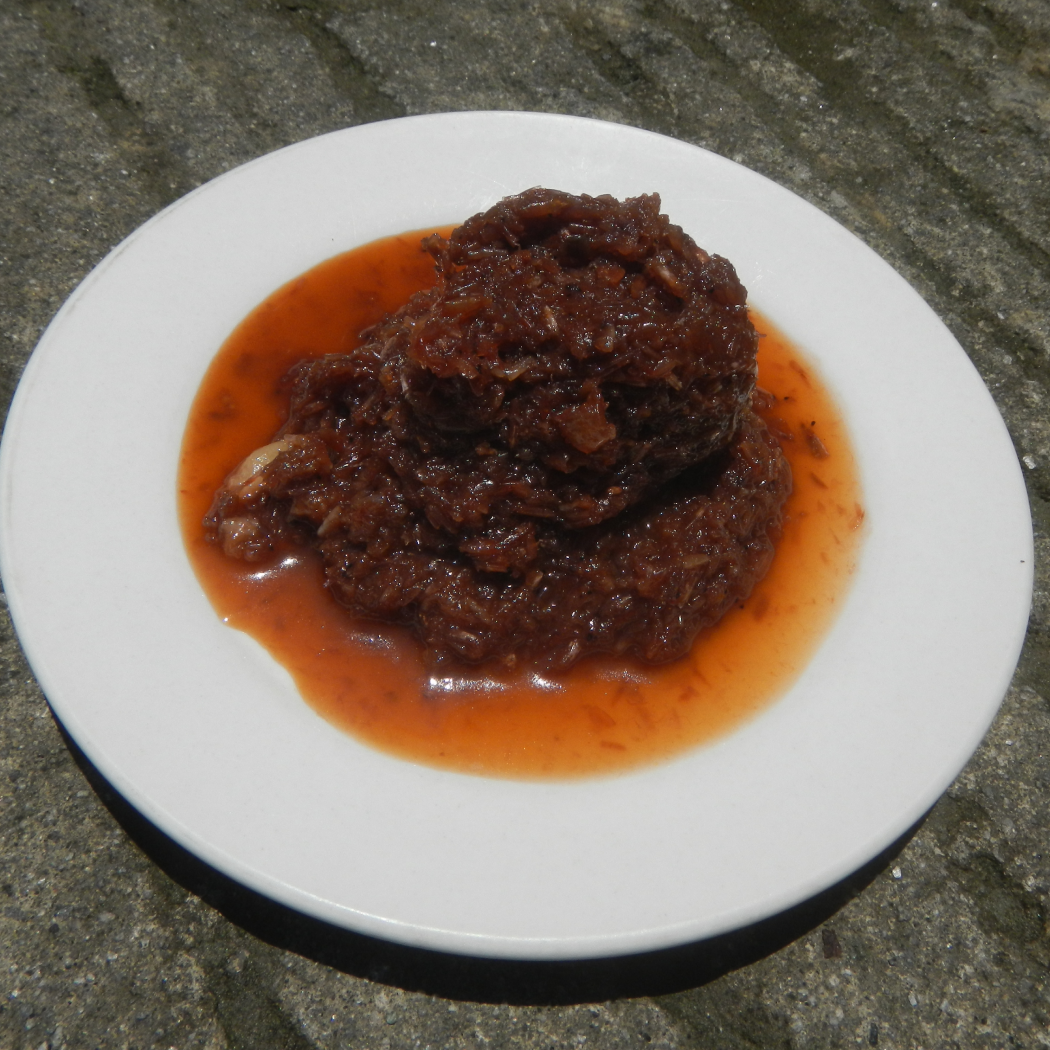
Bagoong is a condiment made from fermented fish, krill, or shrimp paste, with salt. It is so essential because it provides that desired umami. The many different kinds of bagoong are as varied as the hundreds of towns that produce them. The fermentation period ranges from 30 to 90 days, and so does the salinity, pungency, and texture. Bagoong is a finishing condiment and also a cooking ingredient, sautéed with aromatics. Vietnamese fish sauce, Thai shrimp paste, and Indonesian terasi are all regional equivalents.

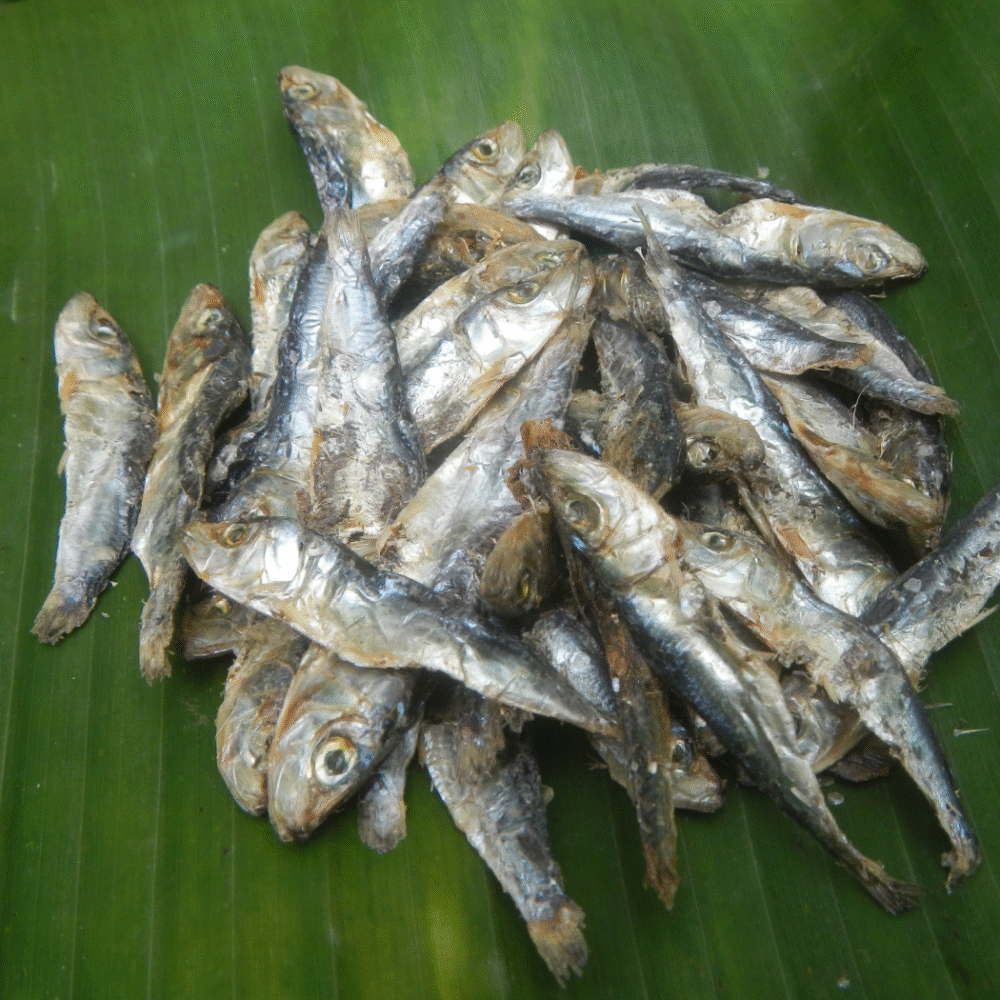
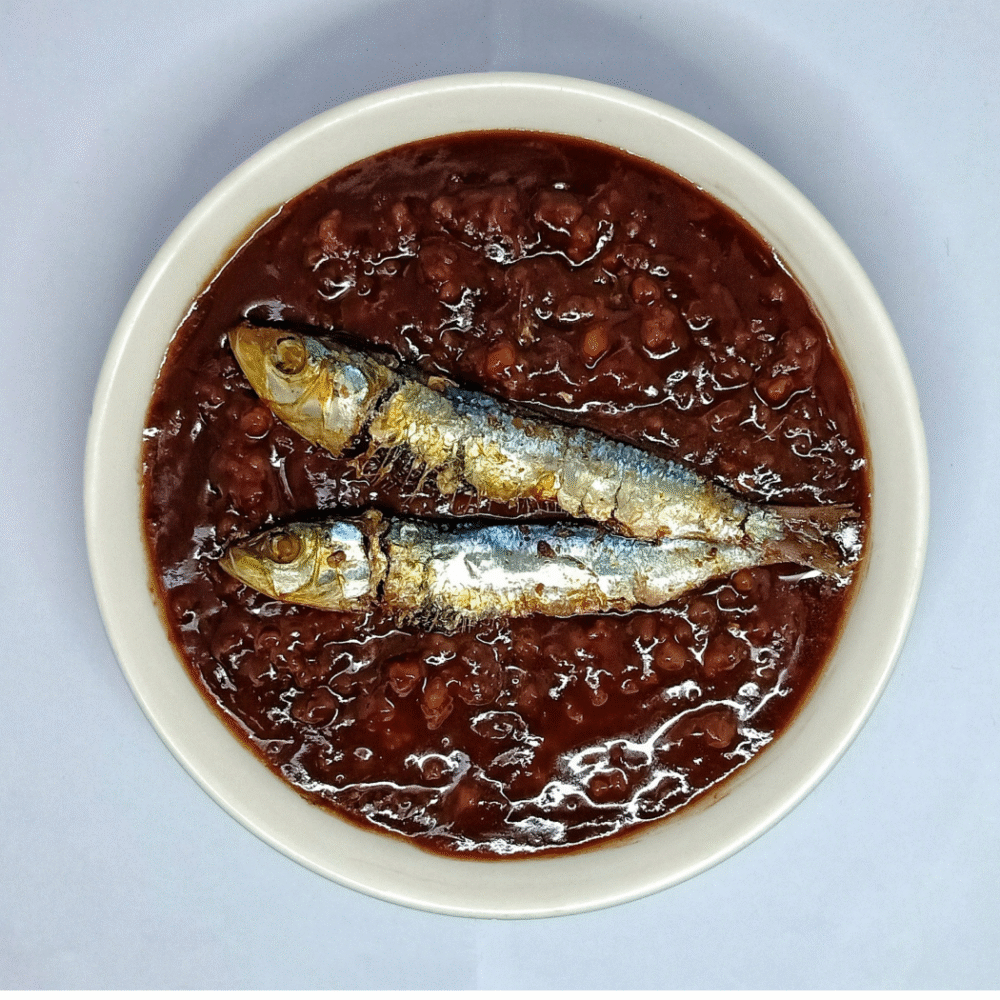
Dried fish – daing or tuyo is a traditional culinary staple, peasant food due to its relative cheapness, but is important as a comfort food. The most unexpected pairing of tuyo is with breakfast champorado, a sweet chocolate rice porridge! One is salty and pungent, the other is sweet, rich and chocolaty. Nobody can fully explain how this combination emerged and stuck.

Filipino fish pairings consistently exploit extreme contrast. Pungent bagoong with sweet green mango. Kinilaw’s sharp acid with the richness of fresh raw tuna. Vinegar-spiced dipping sauce against freshly fried fish.

EGGS AND DAIRY IN FILIPINO CUISINE

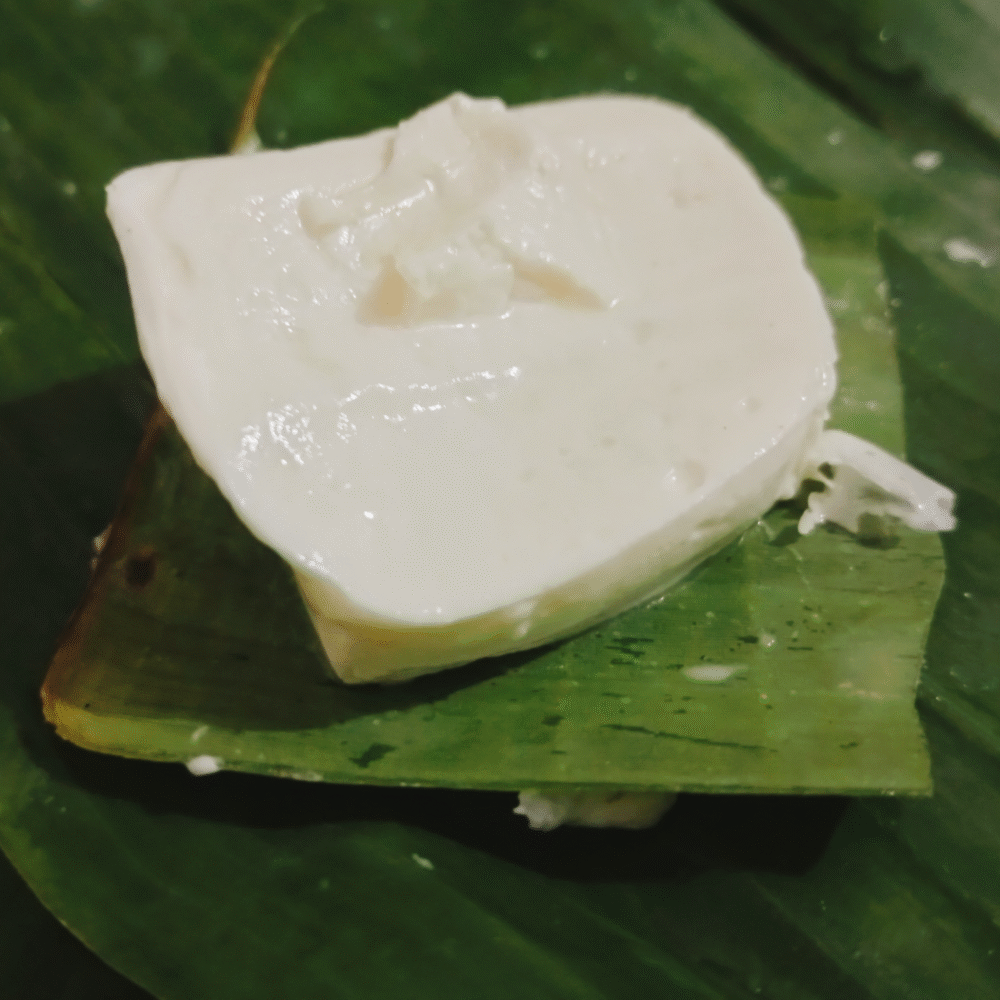
The Philippines has almost no indigenous dairy culture. Cows were not kept for milk; the carabao (water buffalo) was a working animal, not a dairy animal. This means the entire relationship between Filipinos and milk is either colonial in origin or built around the carabao as a narrow exception. A  few dairy traditions that exist are extremely local and artisanal, like kesong puti, an unaged white cheese made from unskimmed carabao’s milk. It’s curdled using vinegar or rennet and is creamy and slightly tangy with a texture resembling silken tofu.

The American military’s introduction of canned goods did not just feed wartime Filipinos — it permanently restructured how dairy appears in the cuisine. Fresh milk is occasional, but canned milk is daily. It goes into champorado, halo-halo crushed ice dessert, is drizzled on pandesal bread.

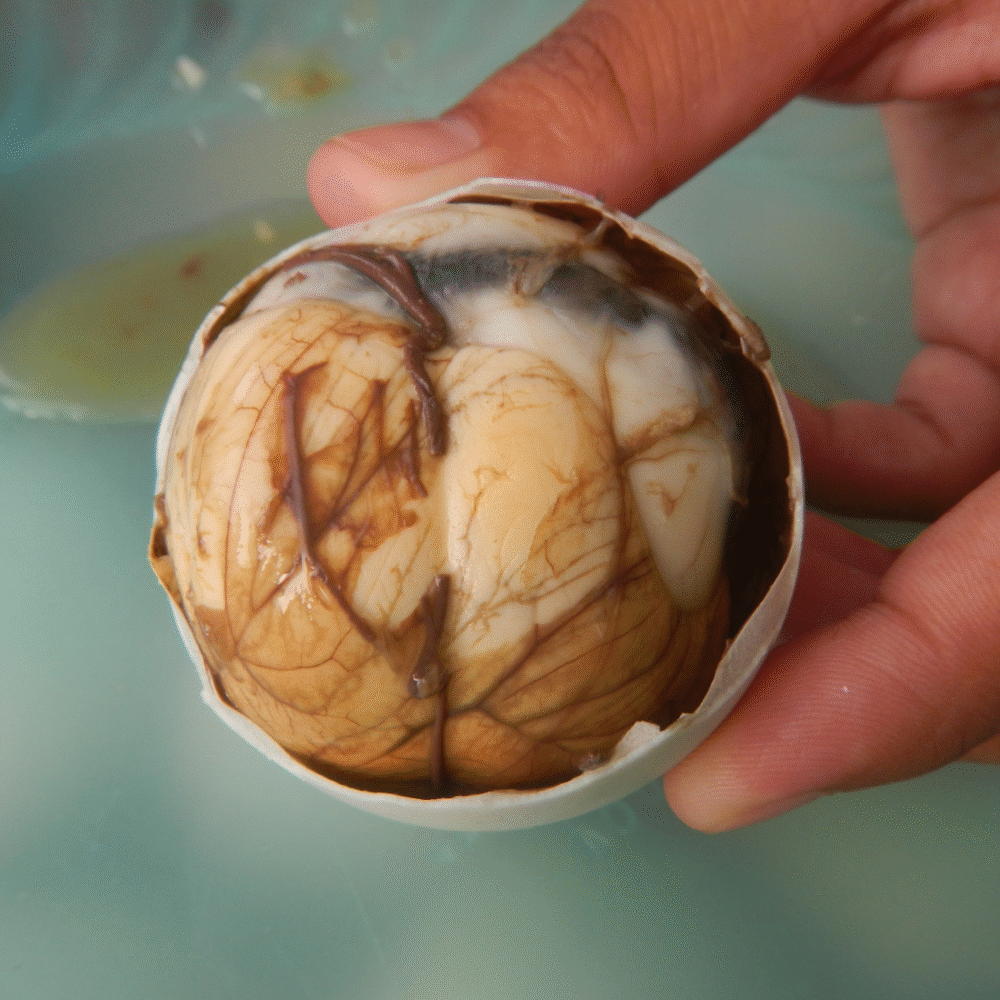
Eggs, though, have a big cultural weight. Balut is probably the most culturally loaded egg in the world. It is a fertilized duck egg incubated for 17 to 18 days, when the embryo is still wrapped in a whitish covering and has not yet fully developed. Vietnam and Cambodia have equivalents, but the ideal incubation length differs. Filipinos chose the stage where the embryo is still soft and mousse-like. Balut eggs are pulutan, the food you eat with beer at night. It is both a working-class protein and a social ritual. The ritual of eating it requires skill: crack a small opening, slurp the broth first, then work through the albumen, then the embryo, then the yolk. The overall taste is a culmination of its individual elements — the liquid tastes like watery chicken broth, the embryo has notes of vinegar, and the yolk is reminiscent of custard with a distinct piscine quality.

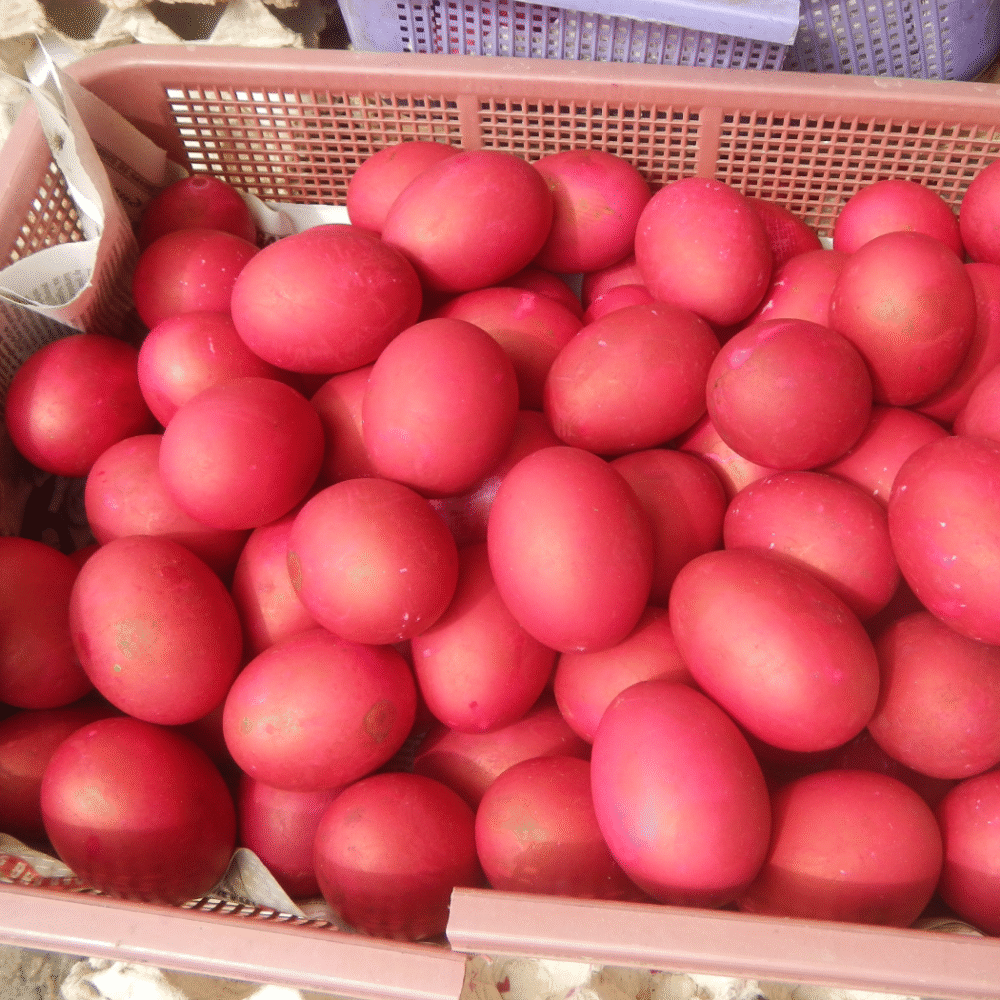
The duck industry in the Philippines primarily produces two egg products. Balut is the main, followed by salted duck eggs, locally known as itlog na maalat. Duck eggs are larger, with thicker shells and richer yolks. Salted eggs are traditionally buried in salty clay for several days, after which they absorb the salty taste through their porous shells. The egg whites are salty and creamy, and the yolks are firm, bright yellow, and rich tasting, with oil exuding from them after boiling. When sold, they’re dyed red in order not to mix with the fresh eggs.

FATS, SUGARS AND NUTS IN FILIPINO CUISINE

Filipino cooking runs on coconut oil and lard. Coconut oil is a traditional cooking fat with a tropical flavor, and lard is the deep-fry and pastry fat inherited from Spanish and Chinese influence. The Filipino diet is higher in total fat, saturated fat, and cholesterol than other Asian diets.

Peanuts and cashews are used widely. Kare-kare is the most peanut featuring dish, which uses ground roasted peanuts as the base of the stew. Kare-kare’s history traces back to Indians from southern India who settled in the Philippines during the British occupation. Homesick, they improvised their own cuisine with available materials. They called it kari-kaari, meaning curry.

Filipino muscovado is the country’s contribution to the sugar vocabulary. Muscovado is unrefined cane sugar — the molasses remains, and the result is a moist, dark, intensely flavored sugar with notes of toffee. It colors champorado, deepens kalamay. Beyond cane sugar, Filipinos have distinct sweeteners from different palm species.

The Philippines does not have a Western tradition where sweets appear at the end of a meal. Sweets run alongside meals, between meals, and instead of meals.

SEASONINGS

Filipino flavors are built in layers, then finished at the table. First, the cook builds the base in the pot, but the diner also cooperates and participates while choosing and adding sawsawans (dippings) entirely to his liking, and that transforms the whole taste and experience.

Filipino cooking is organized among the three dominant axes of sour, salty-umami, and sweet. The very core flavors are salty and sour, as sweetness appears, but rarely dominates. Heat is optional and very personal (except for Bicol region and Mindanao, where spice pastes and chilies are prominent). Filipino cooking also conspicuously skips fresh herbs as a finishing element, which Thai, Vietnamese, and Indonesian cuisines rely on heavily.
Salt is fundamentally important to preserve from spoilage, it comes through patis fish sauce, bagoong isda fermented fish paste, bagoong alamang fermented shrimp paste, and soy sauce. Salt as a bare mineral is the condiment of last resort.  Umami comes from those same fermented ingredients, from long-cooked meat broths, from dried and smoked fish added to stews, and from annatto-colored fat used to start dishes.

Then the saltiness is paired with sourness, which also helps preserve. The Philippines uses vinegar on a fundamentally different scale and in a structurally different way than its neighbors do. Neighboring cuisines use chili to wake up the senses, but Filipinos use vinegar, and this is the core distinction. Vinegars come from palm sap, coconuts, sugarcane, and sugarcane wine. Sourness extensively comes from fruits – tamarind (sour fruit pod), calamansi (tangy citrus), kamias (cucumber tree, acidic green fruit), guava, green mango, batuan (small green sour fruit).

Anato (achiotte) is a coloring spice. It consists of annatto seeds fried in oil, which turn dishes a bright orange-red color. Simmering ingredients in coconut milk — a technique called ginataan — appears often. Coconut milk gata absorbs and carries fat-soluble flavors, softens acidity, and adds richness.  Ginger deodorizes fish and meat, warms broths; bay leaves, a direct inheritance from Spanish cooking, feature braises — adobo, mechado, kaldereta. At the table, achara — green papaya pickled in vinegar and spices — sits apart from the sawsawan lineup to cleanse the palate.

Filipinos flavor building starts with gisa. The gisa is the base for adobo, kare-kare, mechado, afritada, monggo, pancit, many soups. From its contents, it has a lot of ties with Spanish sofrito.  Garlic goes first, browning until golden and fragrant. Onion follows, softening in the garlic-infused oil. Tomato goes last, its liquid is released to form the base liquid of the dish.

One of the most personal parts of a Filipino meal is  sawsawan, a fundamental Filipino dipping sauce, and ultimate flavor customization tool. Some common elements in the sawsawan lineup include:

Suka (vinegar) — usually cane or coconut, sometimes spiced with garlic and labuyo. Used with virtually everything fried or fatty. The vinegar cuts grease and provides the sour axis.

Toyo (soy sauce) — thinner and saltier than Japanese soy sauce, provides the salty-umami axis. Often combined with calamansi to make toyomansi, the most common everyday condiment.

Patis (fish sauce) — patis has many uses in the Filipino kitchen: as a dipping sauce, as a source of salt, and as a flavoring agent. Many Filipino cooks use it instead of salt. In sinigang, for example, there is no salt in the ingredients list; the dish is finished with patis, which adds salinity as well as its own distinctive flavor.

Calamansi — provides the bright, floral citrus note that lime and lemon cannot replicate. It is squeezed directly over anything that needs brightness.

Bagoong — Fermented fish or shrimp paste for deep, complex umami. It has specific pairings, most notably kare-kare and green mango.

Most sawsawan are assembled raw at the table. Lechon sauce is the major exception, and it is a genuinely unusual preparation as it includes water, sugar, breadcrumbs, vinegar, salt, liver, spices, and pepper. Ground roasted liver is the most important ingredient.

BANANA KETCHUP— condiment made from banana, sugar, vinegar, and spices. Its natural color is brownish-yellow, but it is often dyed red to resemble tomato ketchup. Uniquely Filipino, paired with fried chicken, hot dogs, and fast food

PALAPA —  a traditional condiment from the Maranao people of Mindanao, consisting of a spicy and aromatic blend from chopped scallion bulbs, ginger, turmeric, chilies, and often toasted coconut.

Icon

Herbs

BAY LEAVES

LEMONGRASS

Icon

Spices

BLACK PEPPER

ANNATTO/ACHIOTE

TURMERIC DRY

DRY CHILI

Icon

Aromatics

GARLIC

ONION

SHALLOT

GINGER

TURMERIC

CHILI PEPPERS

TOMATO

CALAMANSI

PANDANUS LEAVES

Icon

Condiments

CANE VINEGAR

COCONUT VINEGAR

PALM VINEGAR

TAMARIND

SOY SAUCE

FISH SAUCE

FERMENTED FISH/SEAFOOD

COCONUT MILK

PORK FAT

Select to see authentic flavor combinations and what they go with

Icon

Meats

梅津拓哉, CC BY-SA 4.0 , via Wikimedia Commons

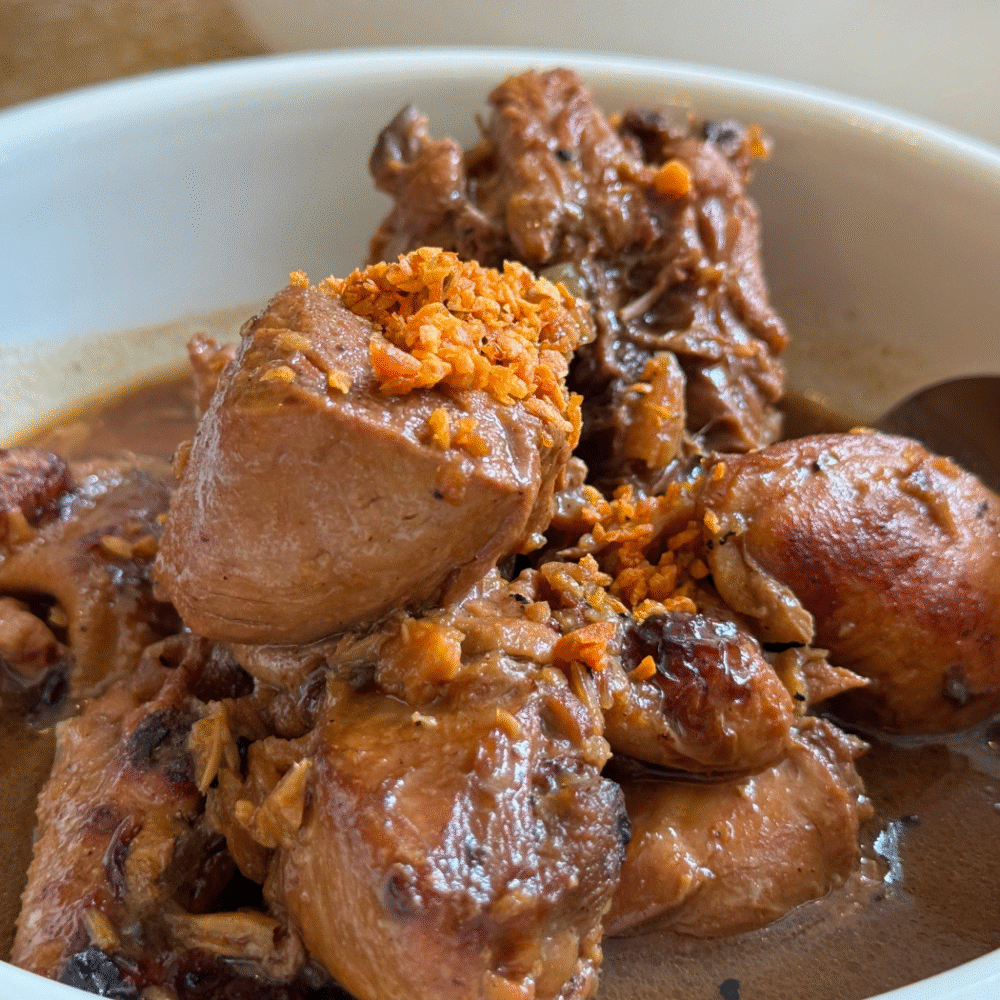
ADOBO – Pork, chicken, or any other protein braised in vinegar, soy sauce, garlic, bay leaves, and black pepper until tender. Often called the unofficial national dish of the Philippines, every household has its own version, and its vinegar base gives it natural preservation qualities well-suited to the tropical climate.

MarvinBikolano, CC BY-SA 4.0 , via Wikimedia Commons

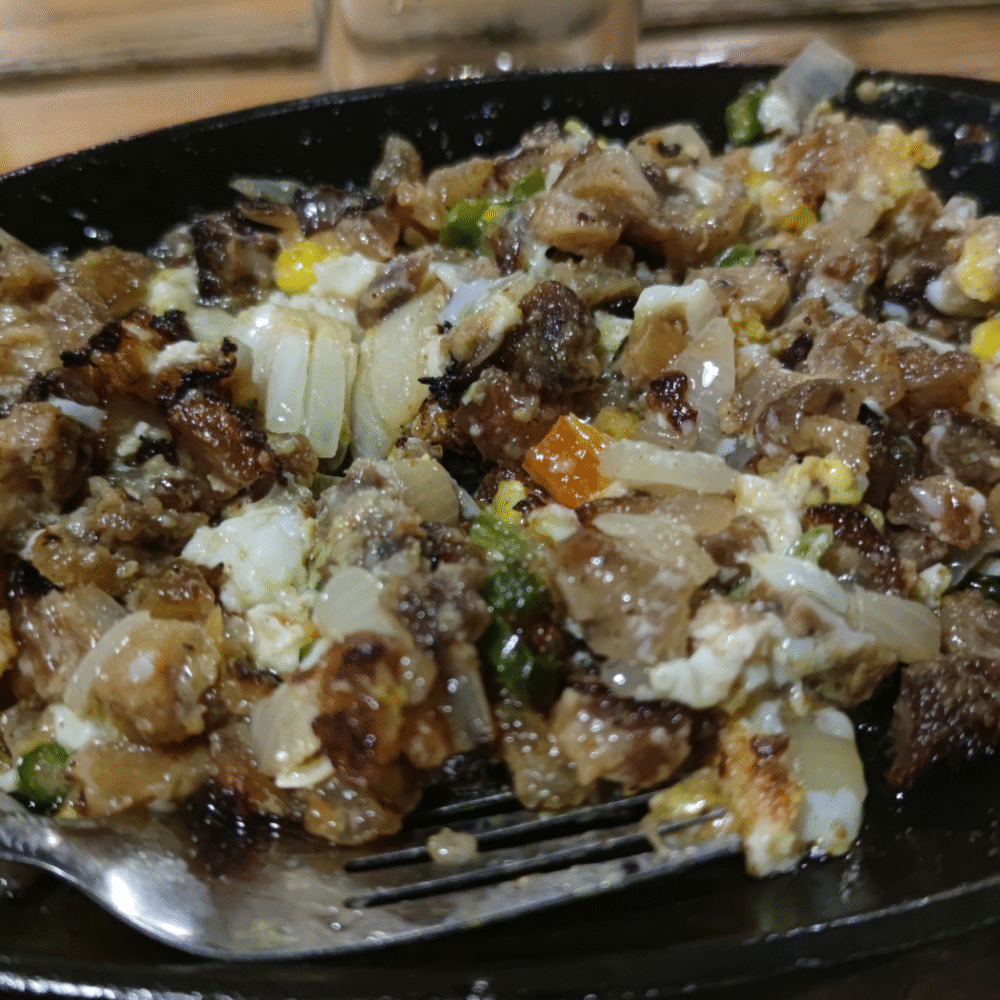
SISIG – Chopped pork face and ears with chicken liver, served sizzling on a cast-iron plate and seasoned with calamansi and chili. A beloved dish from Pampanga province, it is one of the most widely recognized Filipino dishes internationally.

whologwhy, CC BY 2.0 , via Wikimedia Commons

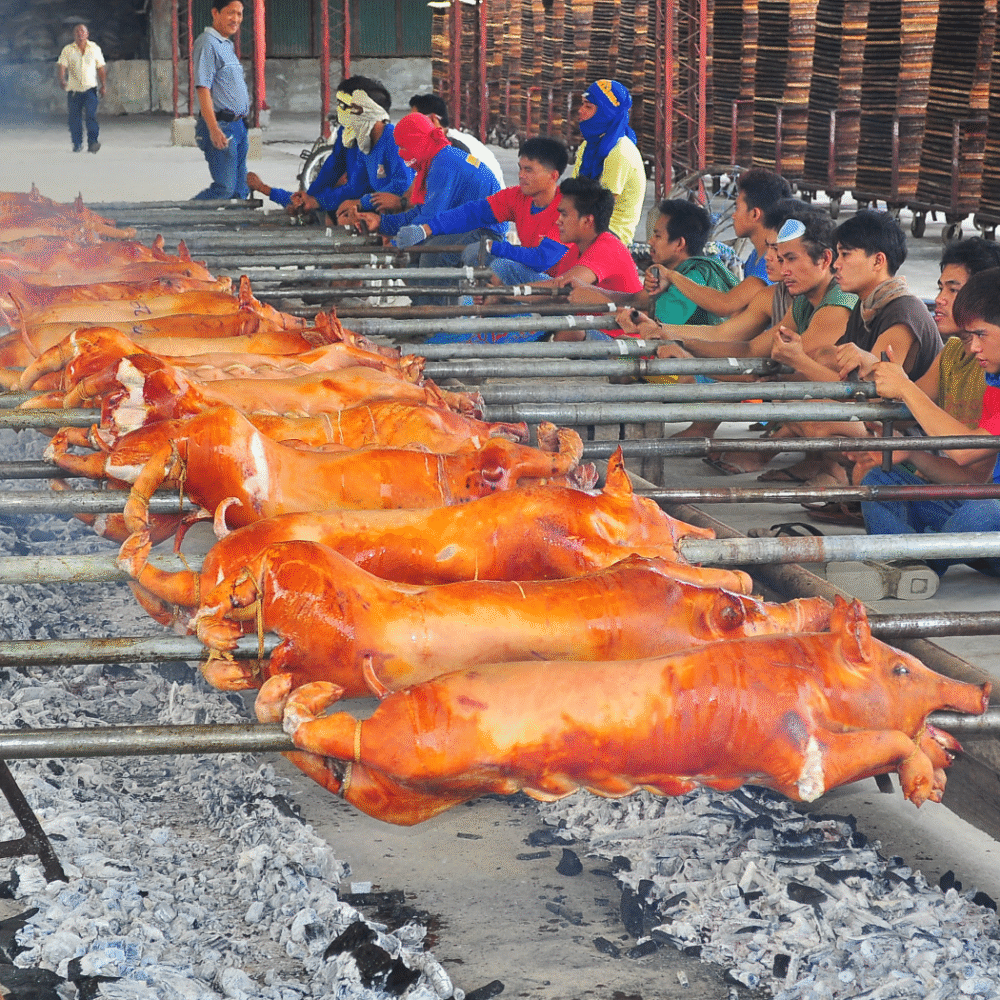
LECHON – A whole suckling pig slow-roasted over charcoal until the skin is shatteringly crisp and the meat tender and juicy. The center of Filipino fiestas and major celebrations, it is considered one of the finest preparations of roast pig in the world.

Arnold Gatilao, CC BY 2.0 , via Wikimedia Commons

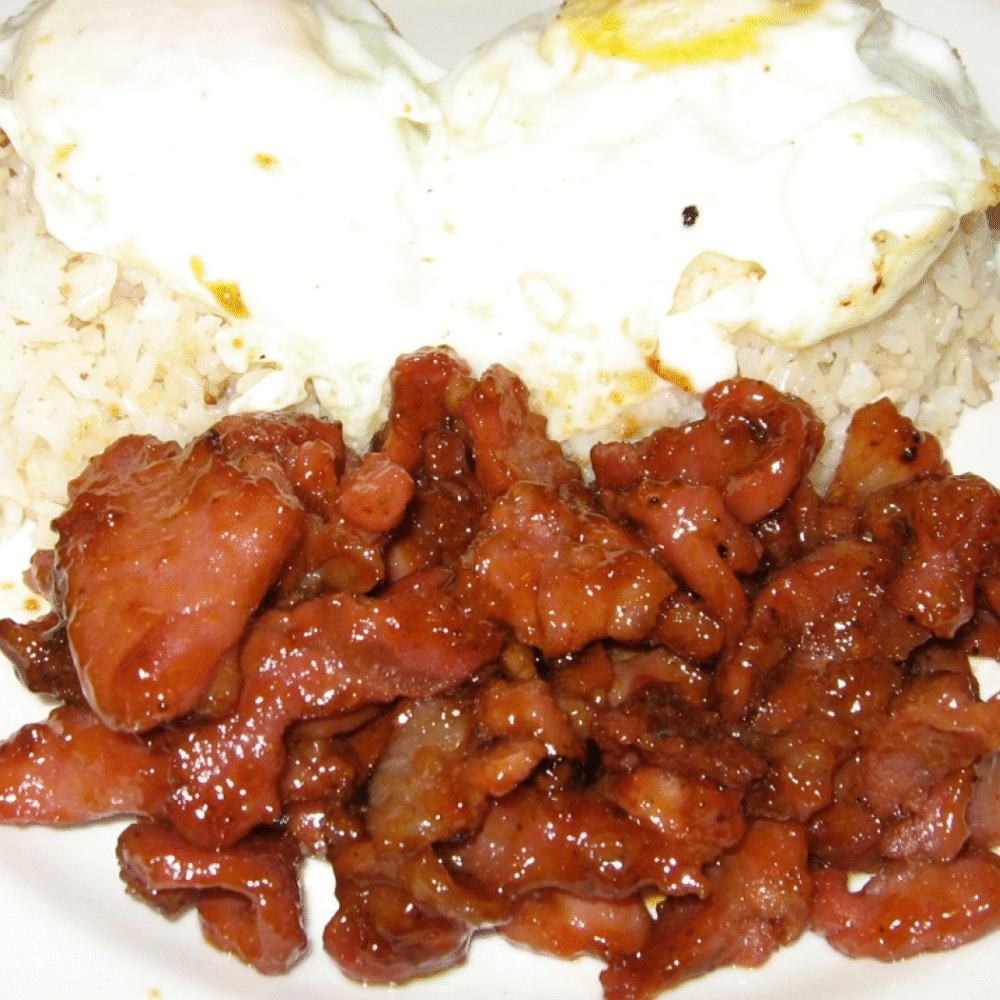
TOCINO – Pork cured in sugar, salt, and sometimes annatto, then pan-fried until caramelized and slightly sticky. A classic Filipino breakfast meat, it is most commonly served with garlic rice and fried egg as the tosilog combination.

MarvinBikolano, CC BY-SA 4.0 , via Wikimedia Commons

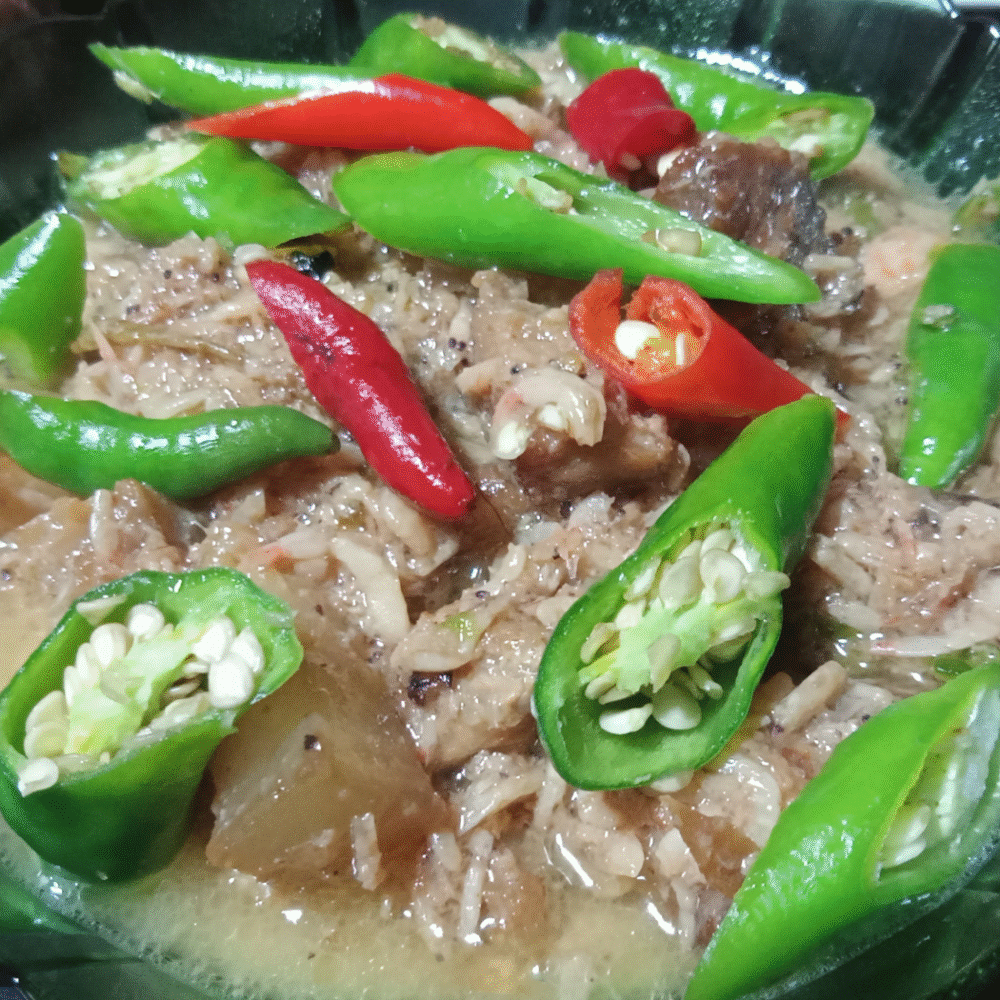
BICOL EXPRESS – A spicy pork stew cooked in coconut milk with shrimp paste and generous amounts of chili peppers. It originates from the Bicol region and captures the area’s signature flavor: rich, coconuty, and genuinely hot.

Kunokuno, CC BY-SA 4.0 , via Wikimedia Commons

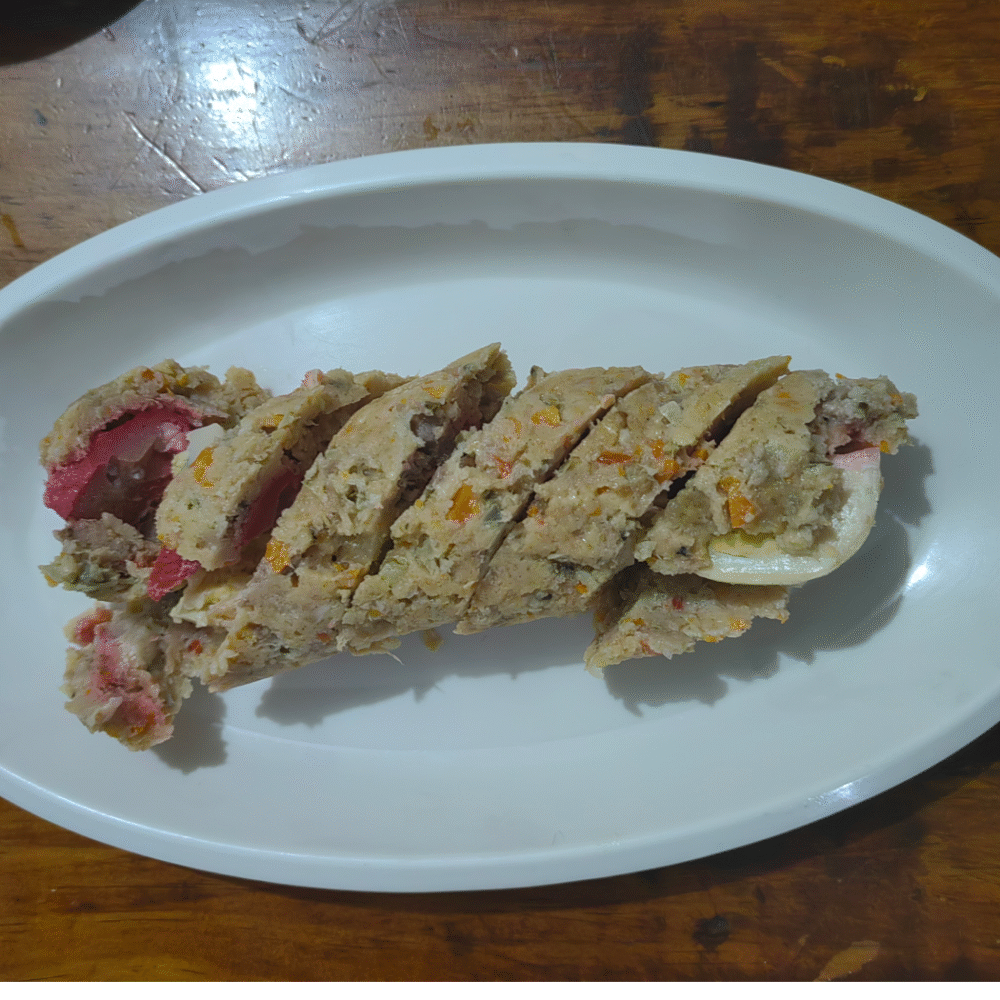
EMBUTIDO – A steamed Filipino-style meatloaf made from ground pork, stuffed with hard-boiled eggs and sliced ham. Popular at parties and special occasions, it reflects Spanish influence on Filipino meat preparation and is often served sliced cold or pan-fried.

CNEcija12345, CC BY-SA 4.0 , via Wikimedia Commons

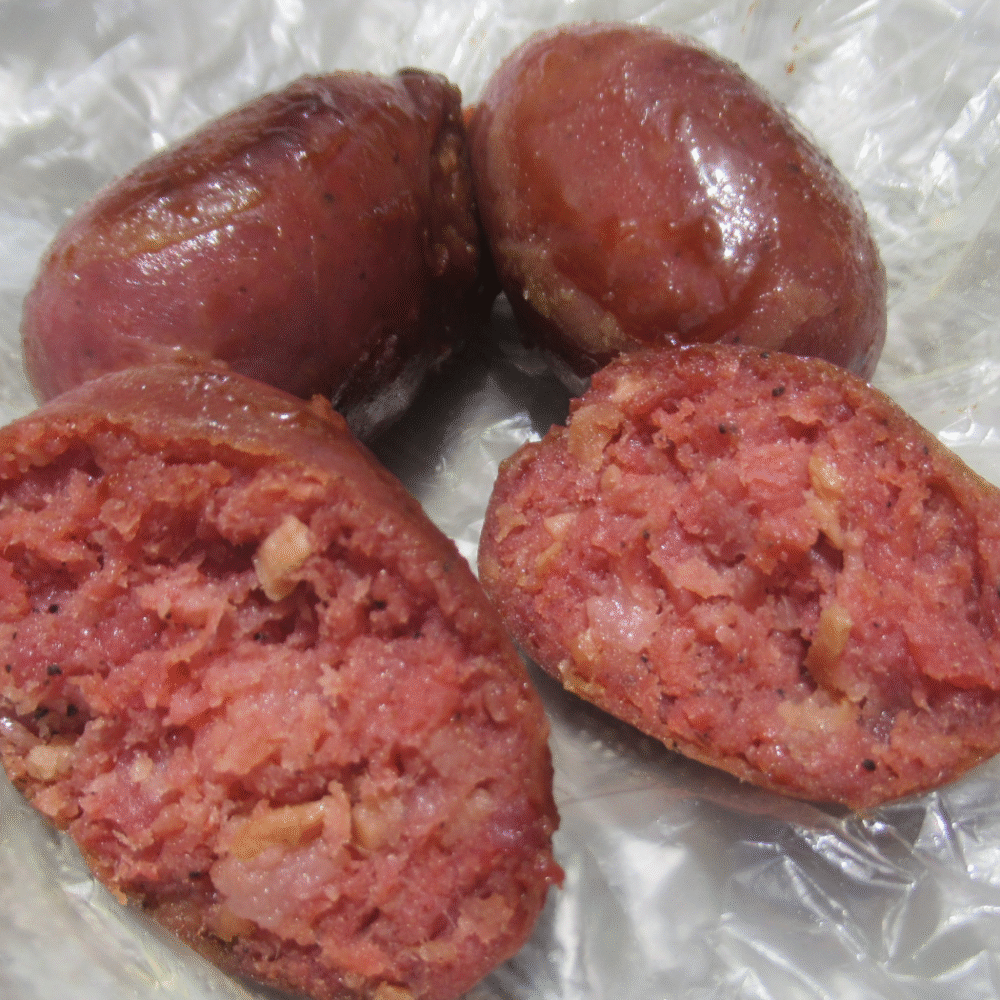
LONGGANISA – A Filipino sausage ranging from deeply garlicky to intensely sweet, depending on the region. A breakfast staple served with garlic rice and fried egg, its regional variety reveals how differently Filipino provinces approach the same base ingredient.

Obsidian Soul, CC0, via Wikimedia Commons

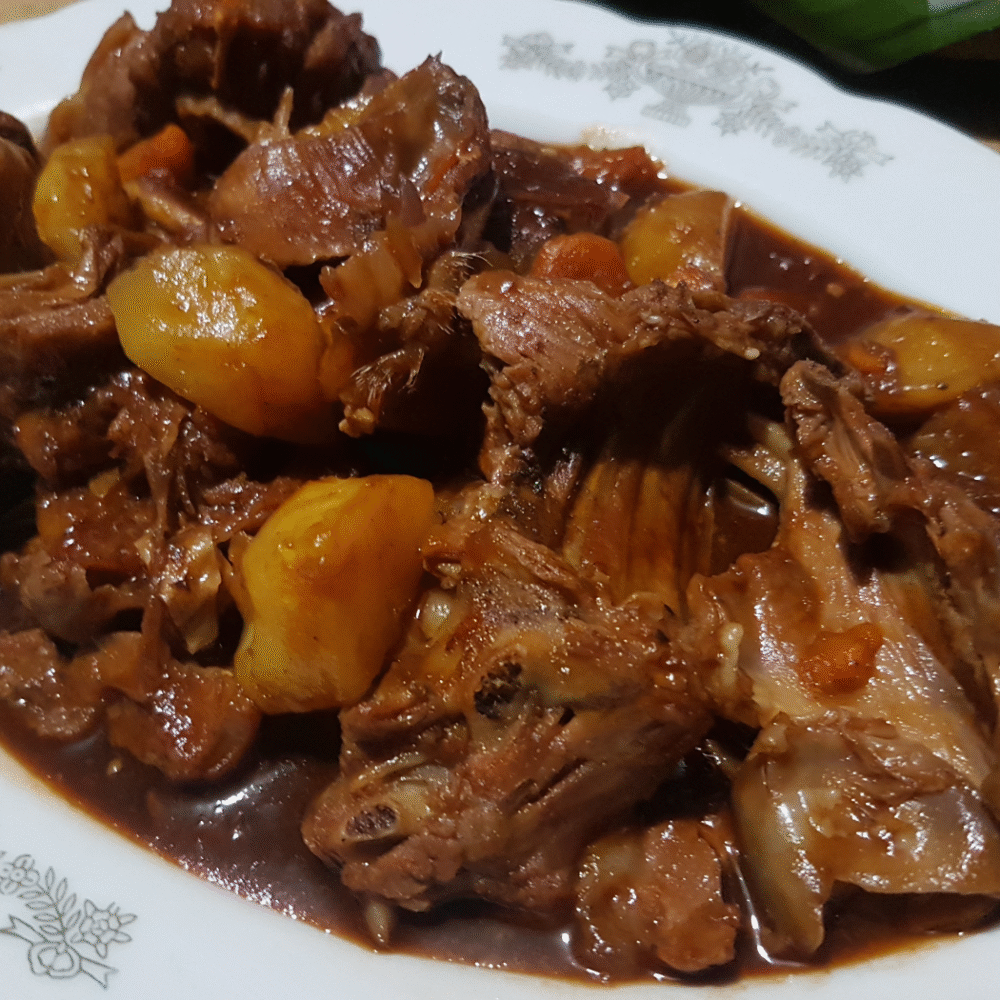
CALDERETA – A rich tomato-based stew, here made with goat, cooked with potatoes, carrots, and liver paste. A festive dish with strong Spanish colonial roots.

BrokenSphere, CC BY 3.0 , via Wikimedia Commons

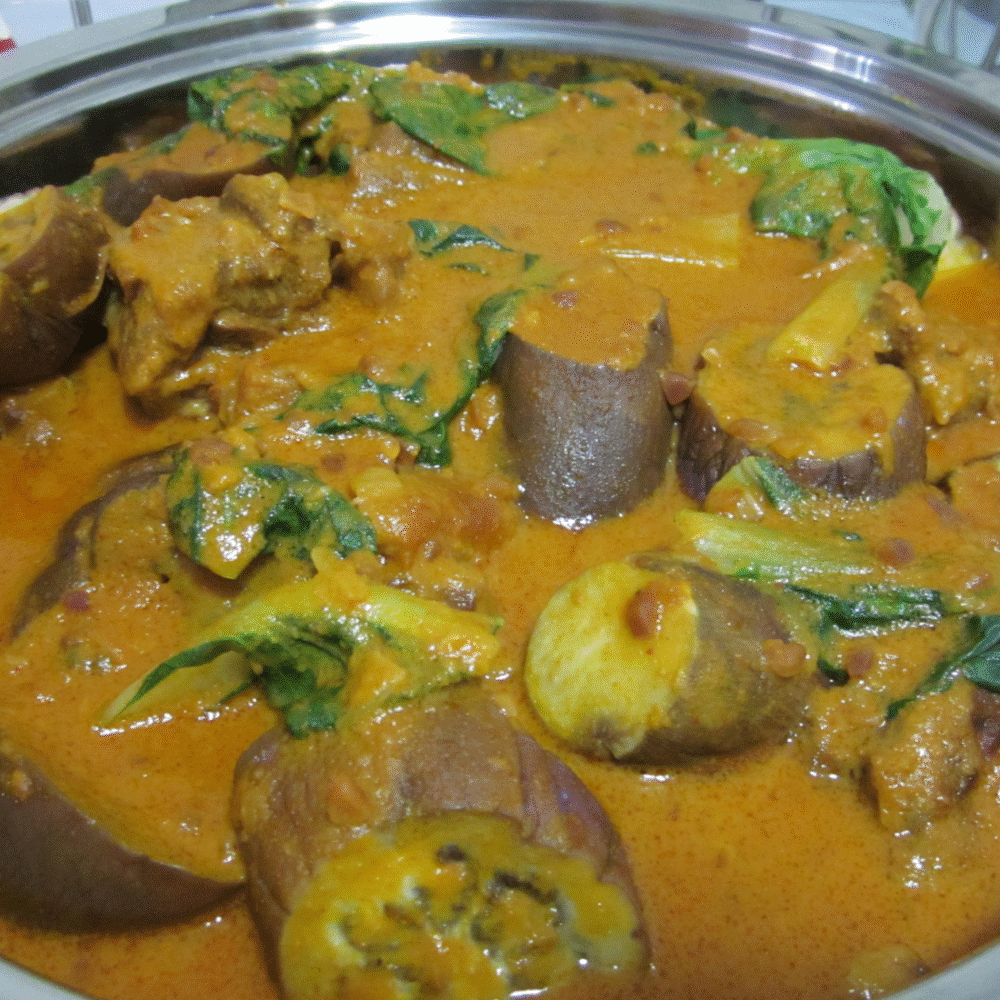
KARE KARE – Oxtail slow-cooked in a thick, mildly flavored peanut sauce with eggplants and banana blossom. Traditionally unsalted and always paired with bagoong (fermented shrimp paste) to balance its richness, it is considered a celebratory and festive dish.

Joy D. Ganaden, CC BY-SA 4.0 , via Wikimedia Commons

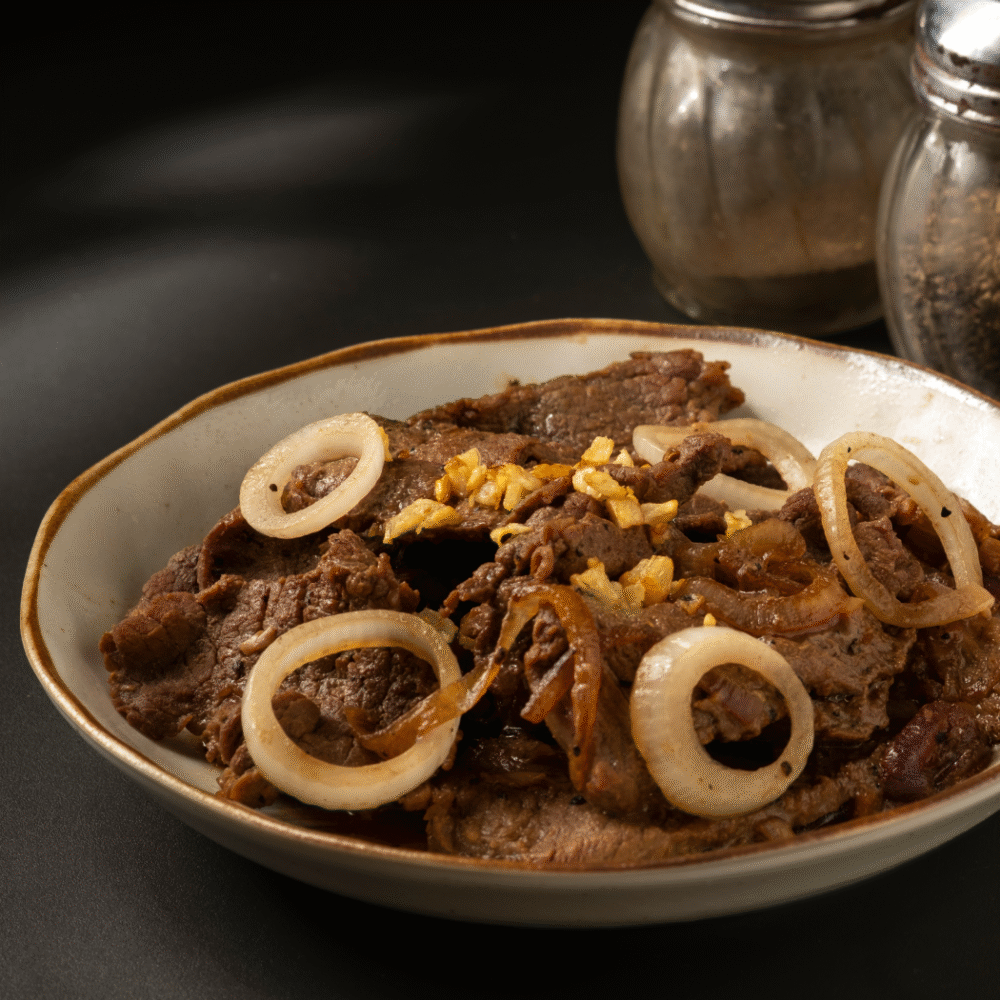
BISTEK TAGALOG – Beef sirloin marinated in soy sauce and calamansi, pan-fried and served topped with soft-cooked onion rings. The Filipino interpretation of a Western steak, it produces a result that is tangy, umami-rich, and unlike any European beef preparation.

MarvinBikolano, CC BY-SA 4.0 , via Wikimedia Commons

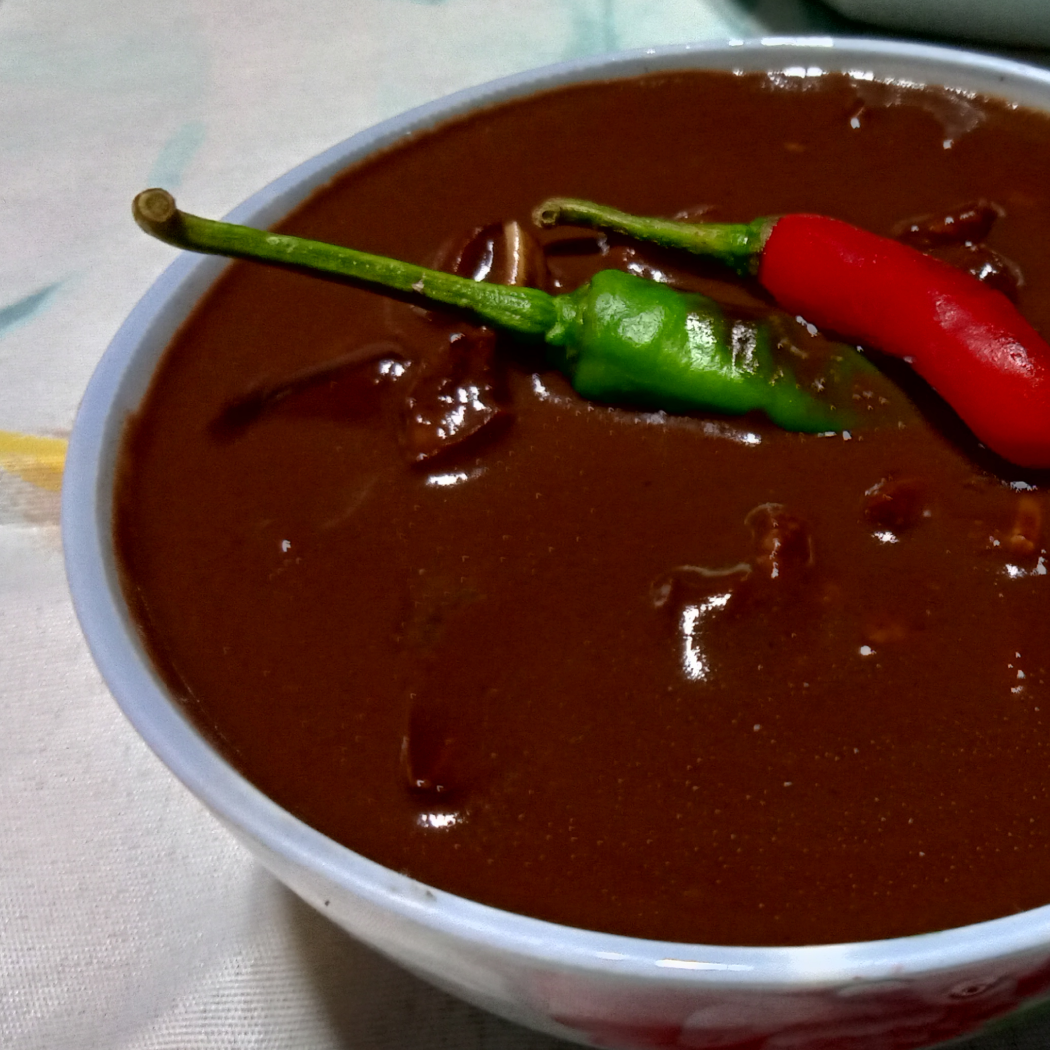
DINUGUAN – A dark, savory stew of pork offal and meat simmered in pig’s blood, vinegar, garlic, and chili, sometimes called chocolate meat. A distinctly Filipino dish.

Judgefloro, CC0, via Wikimedia Commons

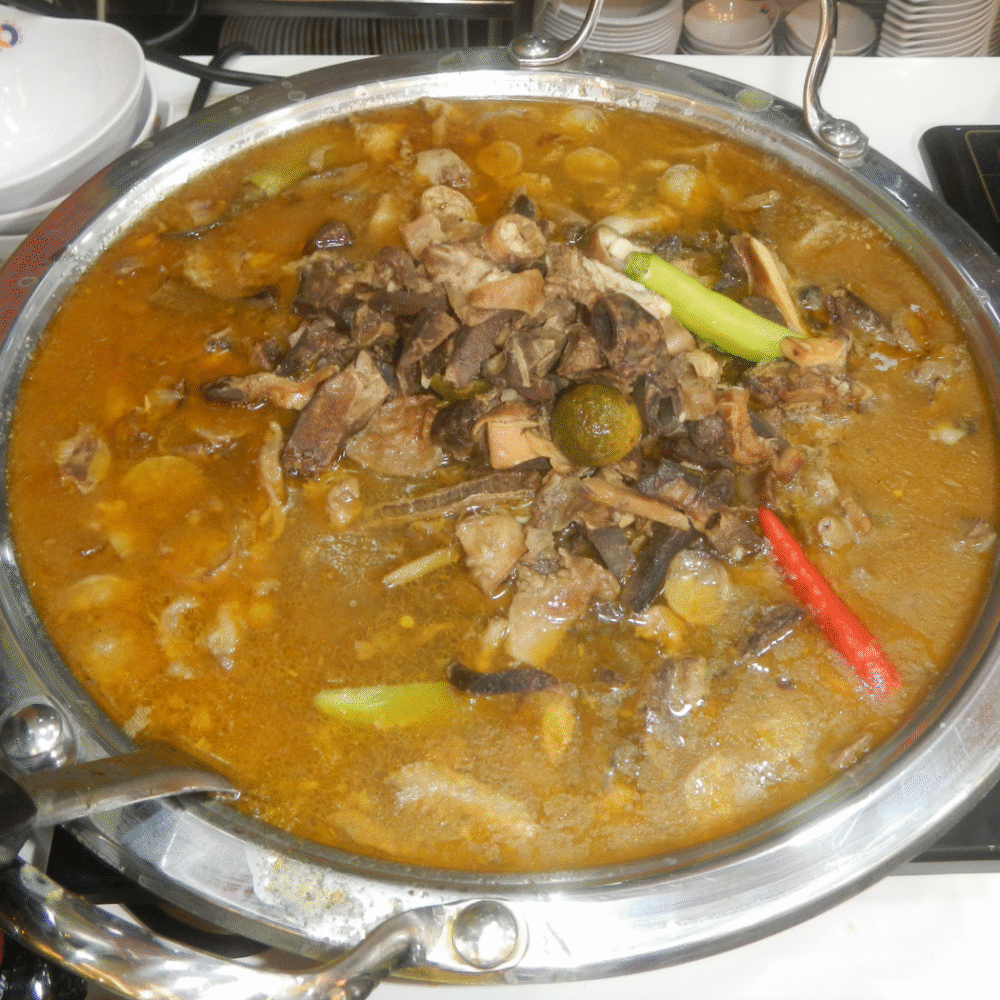
PAPAITAN – A bitter, savory stew made from goat, cow, or carabao offal, with ginger and bile giving it a distinctive, sharp, earthy flavor. Popular in the Ilocos region of northern Luzon.

RaywollesenFortes, CC BY-SA 4.0 , via Wikimedia Commons

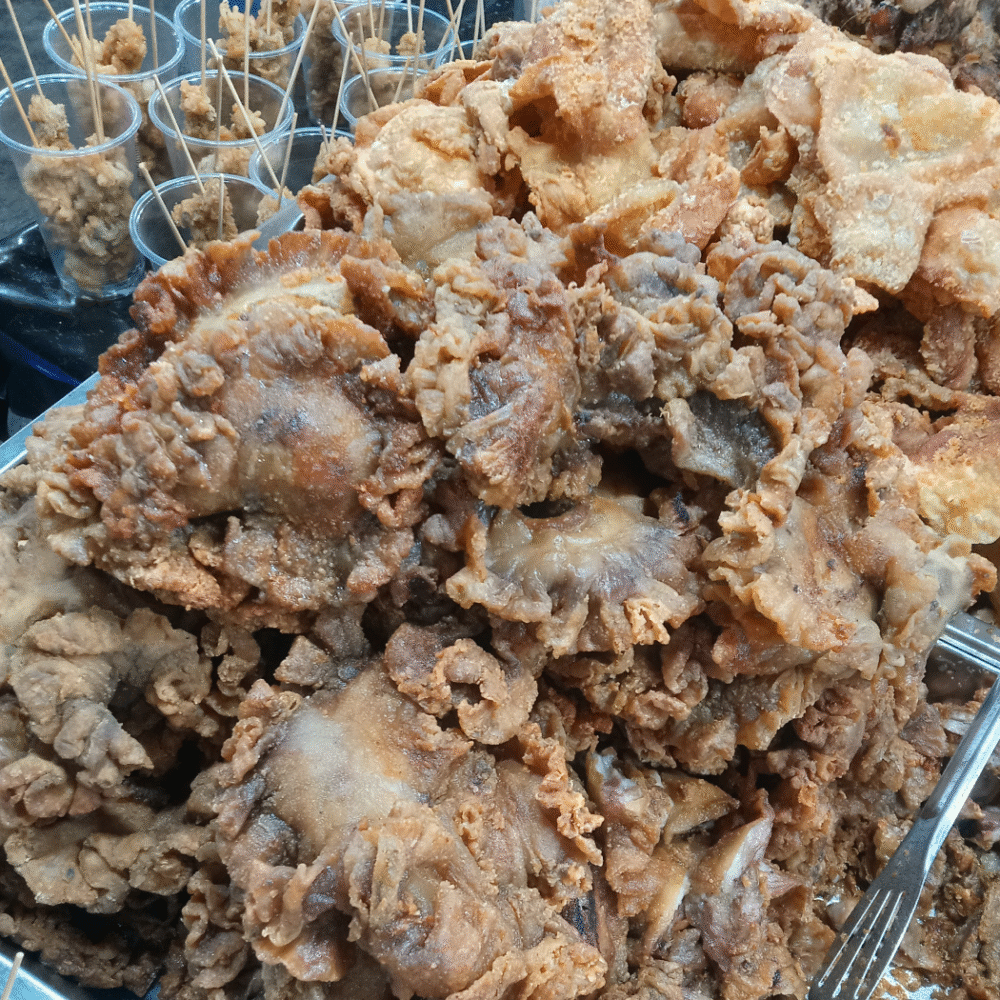
CHICHARON BULAKLAK – Deep-fried pork mesentery (intestinal fat lining), boiled first, then fried until crunchy and golden. A popular street food and pulutan, it is notorious for being simultaneously addictive and intensely indulgent.

Roderick Suñaz Sumalinog, CC BY-SA 4.0 , via Wikimedia Commons

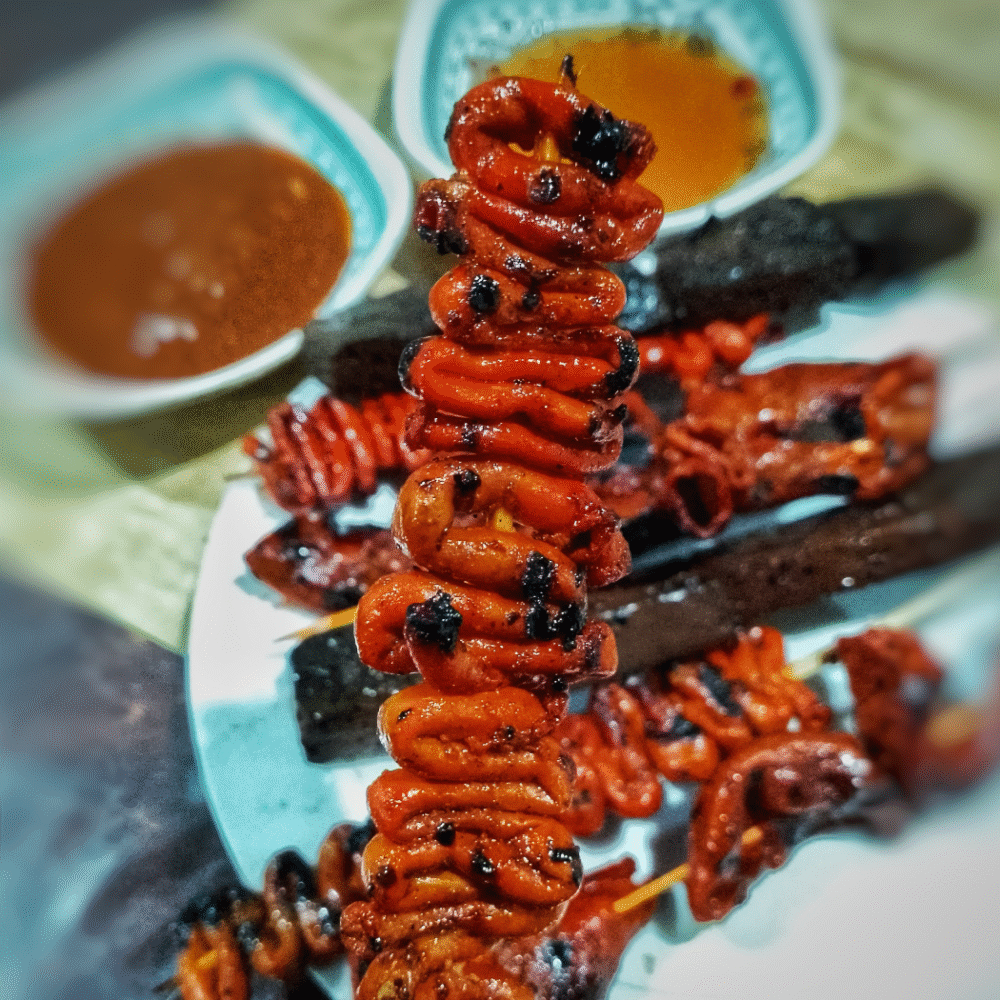
ISAW – Pig or chicken intestines skewered on sticks and grilled over charcoal, sold by street vendors in the late afternoons. A quintessential Filipino street food, eaten with a sweet-spicy or vinegar dipping sauce, it reflects the culture’s ease with grilled offal.

Yvette Tan, CC BY 2.0 , via Wikimedia Commons

KILAWIN – Chopped raw, grilled, or boiled meat or fish marinated in vinegar or citrus juice. A traditional dish from the Visayas and Mindanao regions, commonly served as a first course or pulutan snack

Icon

Fish and seafood

Joaquin008, CC BY-SA 4.0 , via Wikimedia Commons

FISH BALLS – Processed fish paste formed into balls, deep-fried, and sold on skewers by street vendors with sweet-spicy or vinegar dipping sauces. One of the most iconic, cheap and widely eaten across all social classes.

Judgefloro, CC0, via Wikimedia Commons

BAGOONG – A fermented condiment made from salted shrimp or fish paste, ranging from mild to intensely pungent. A foundational Filipino flavor base.

Judgefloro, CC0, via Wikimedia Commons

TUYO – Sun-dried, heavily salted fish, usually herring or sardines. Known for its strong smell and deeply salty flavor.

Judgefloro, CC0, via Wikimedia Commons

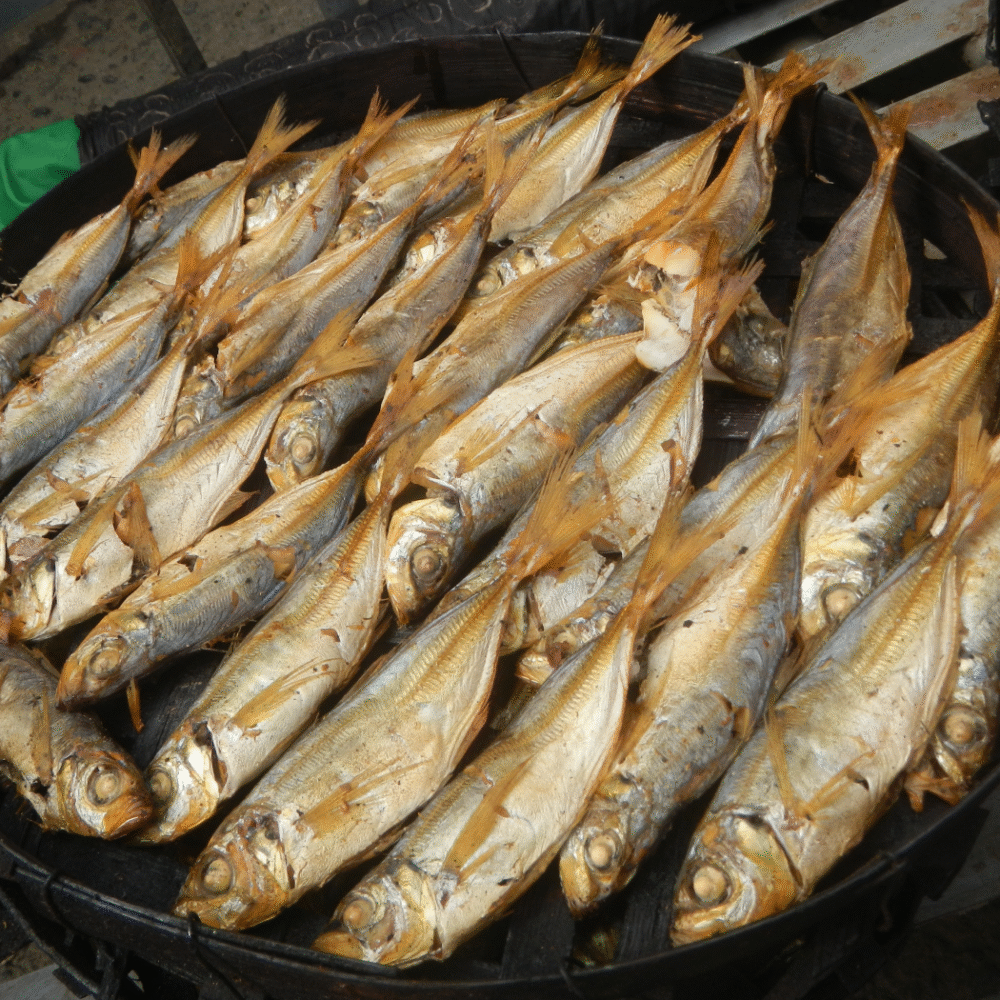
TINAPA – Fish cured and hot-smoked until firm and deeply flavored, most commonly made with milkfish or mackerel. A preserved fish staple of the Filipino diet.

Herbertkikoy, CC BY-SA 4.0 , via Wikimedia Commons

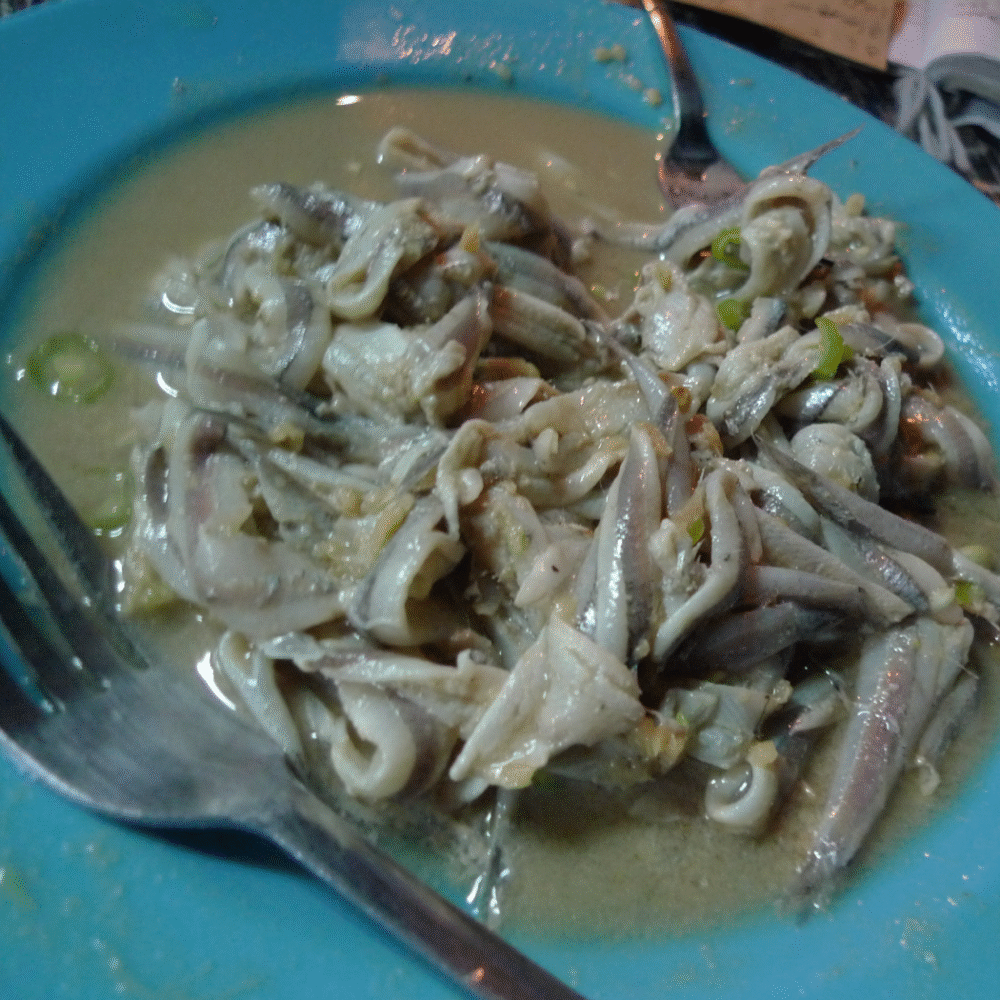
KINILAW – raw fish cured in coconut vinegar and citrus, with a souring profile distinct from Latin American ceviche. A traditional dish from the Visayas and Mindanao, often served as a first course or pulutan, and one of the oldest preparations in Philippine food history.

Icon

Grains

Obsidian Soul, CC0, via Wikimedia Commons

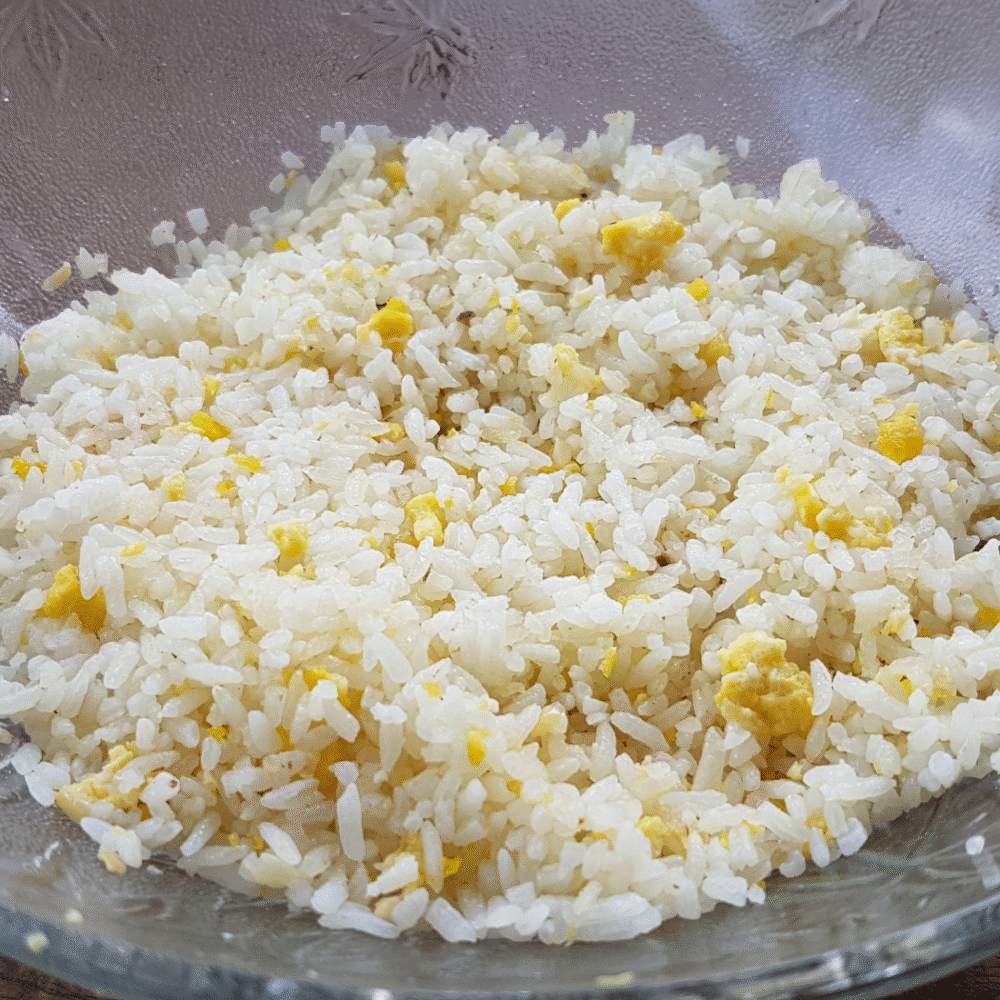
SINANGAN – Garlic rice cooked with egg, fragrant and satisfying, typically made from leftover rice. It forms the base of the classic Filipino breakfast known as “silog,” paired with fried meats or fish.

Gibough, CC BY-SA 4.0 , via Wikimedia Commons

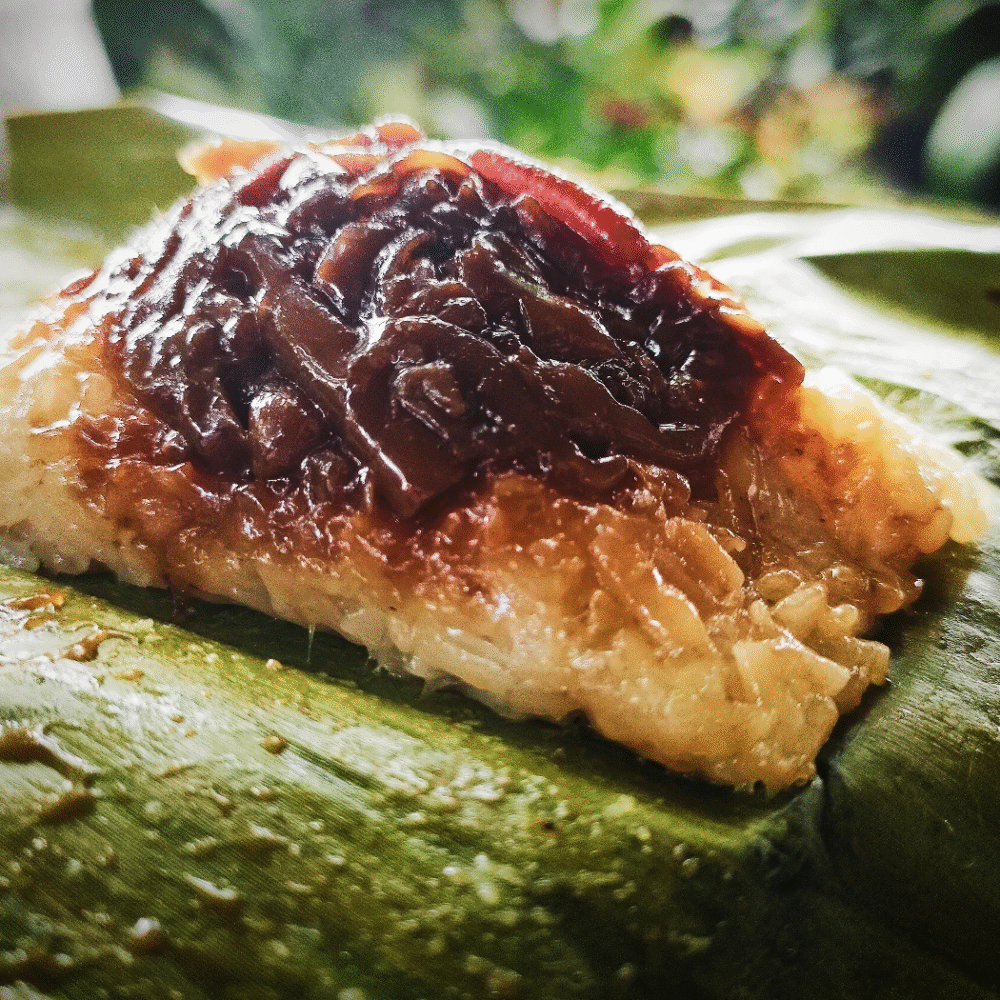
SUMAN LATIK – An elongated rice cake made from glutinous rice cooked in coconut milk, wrapped and steamed in banana leaves, topped with coconut caramel. One of the most recognized kakanin (traditional rice cakes), it is a common snack and merienda (mid-day snack) staple across the Philippines.

John Ong from Chicago, U.S.A., CC BY 2.0 , via Wikimedia Commons

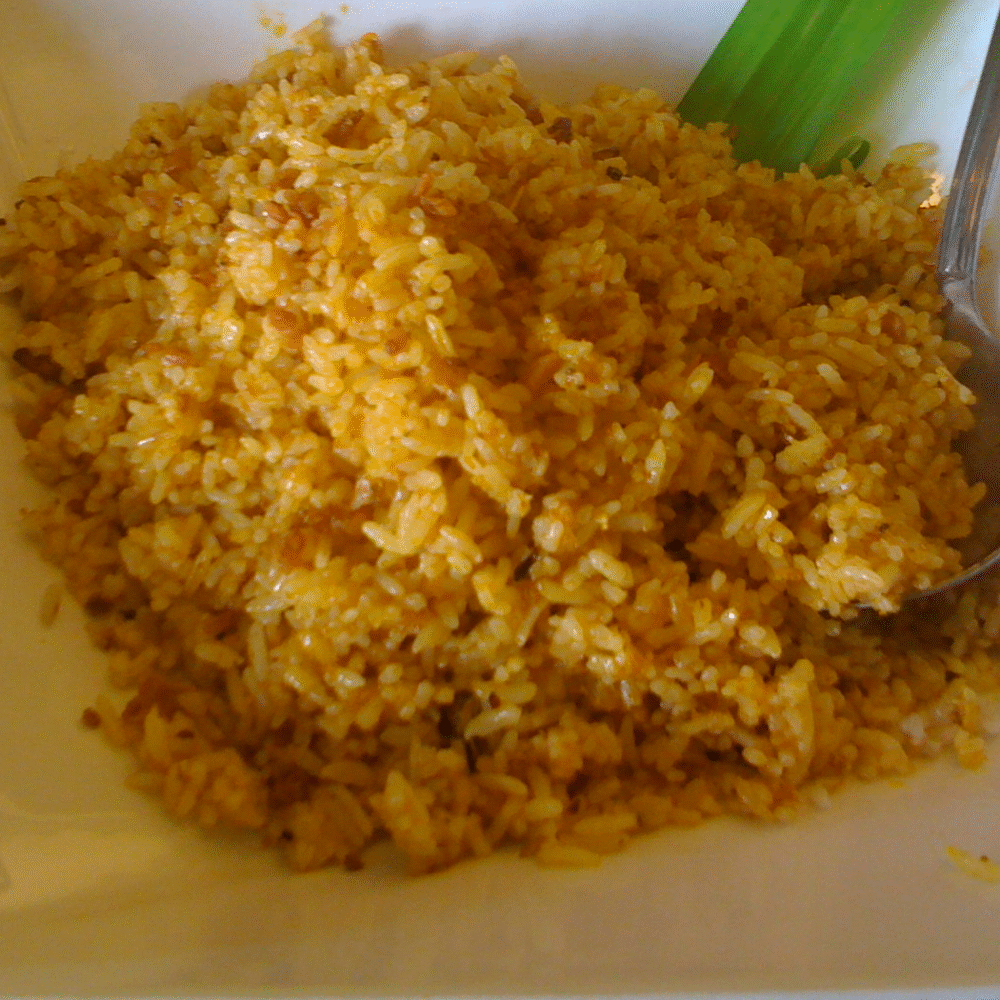
ALIGUE FRIED RICE – Fried rice stir-cooked with crab fat, toasted garlic, spring onions, and black pepper. The briny richness of crab fat elevates a simple dish into something considered a local delicacy, distinctly Filipino in flavor.

Obsidian Soul, CC0, via Wikimedia Commons

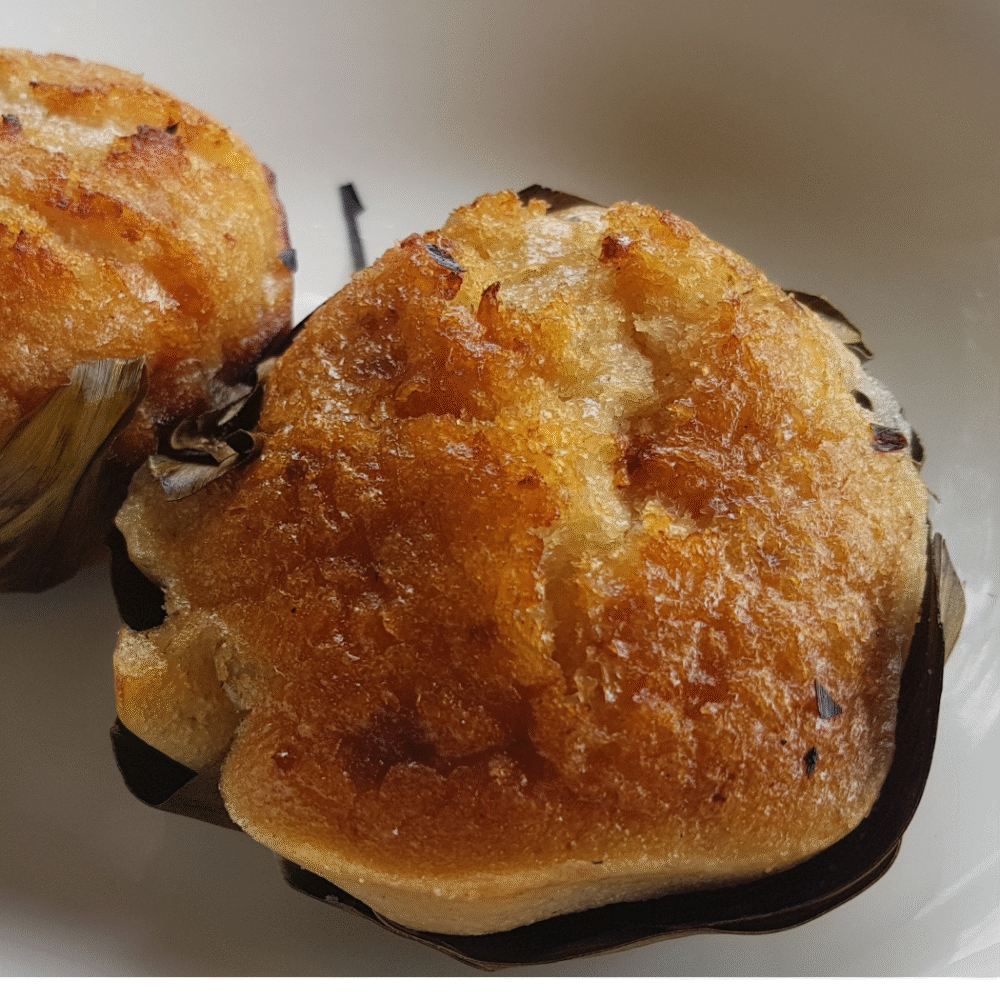
BIBINGKA – A baked rice flour cake traditionally cooked in clay pots lined with banana leaves.

Ramon FVelasquez, CC BY-SA 3.0 , via Wikimedia Commons

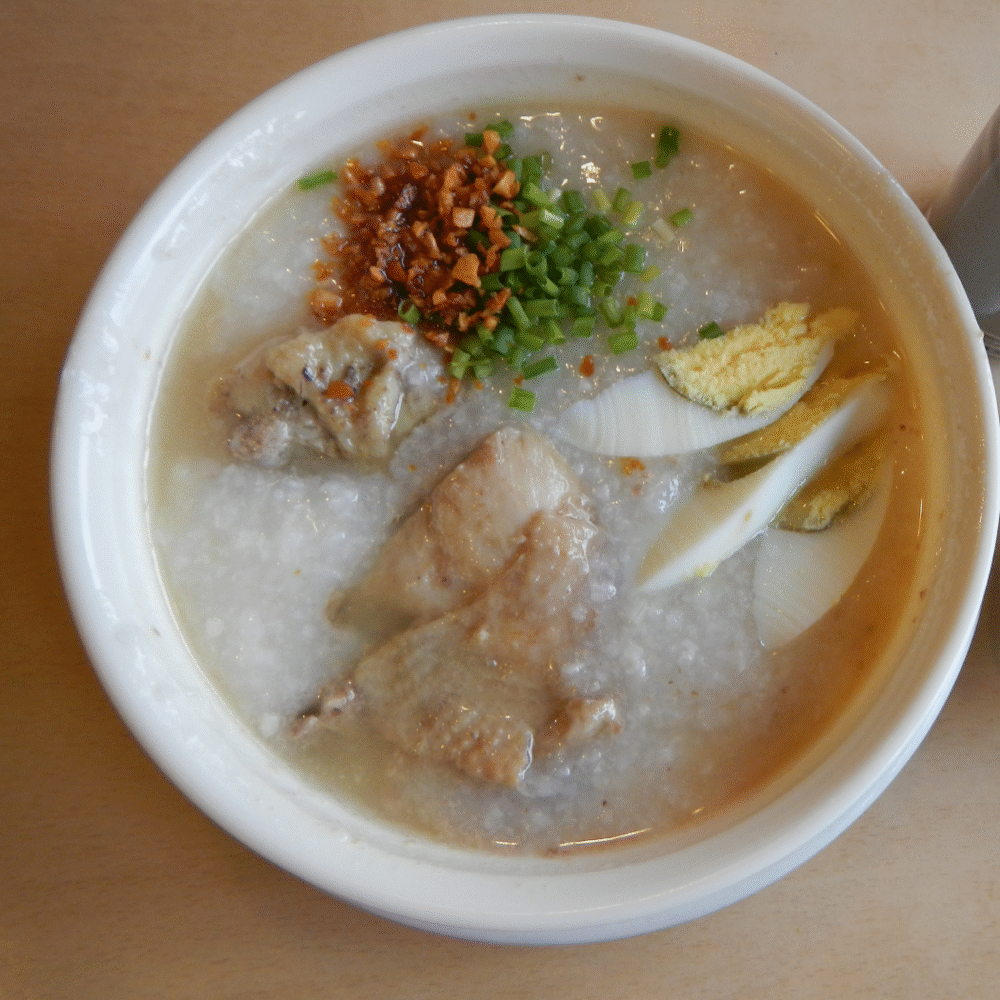
ARROZ CALDO – A thick rice porridge cooked with ginger, garlic, and fish sauce, topped with boiled egg, fried garlic, and spring onions. Widely regarded as comfort food, it is a popular breakfast and a go-to meal when someone is ill.

Jean Claudine Panel, CC0, via Wikimedia Commons

CHAMPORADO – A sweet chocolate rice porridge made with glutinous rice and cocoa or tablea (native chocolate). A beloved Filipino breakfast comfort food, often paired with dried salted fish for a sharp sweet-salty contrast.

Glenda226, CC BY-SA 4.0 , via Wikimedia Commons

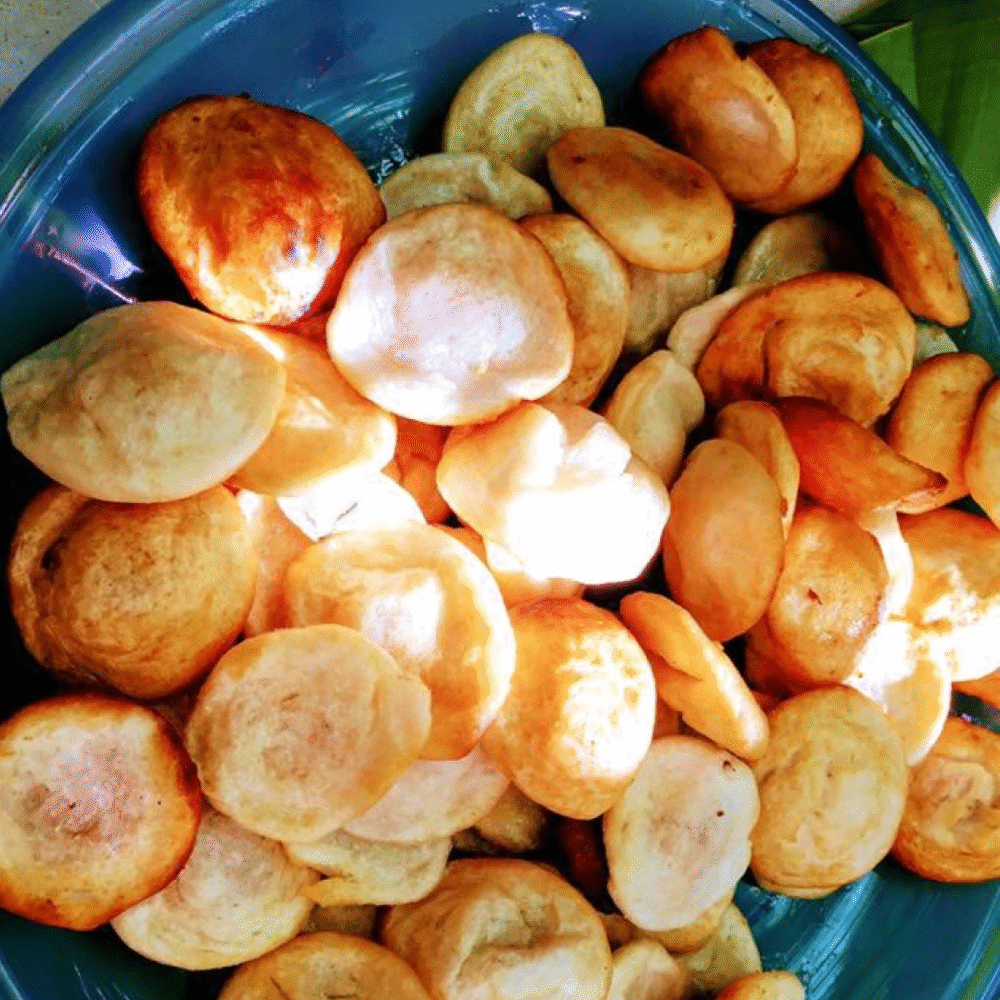
KAKANIN – A collective term for traditional Filipino sweets made from glutinous rice, rice flour, or cassava, usually sweetened with coconut milk or sugar. These bite-sized treats are central to fiestas, celebrations, and everyday snack culture across the Philippines.

RNJ Maluggay Pandesal, CC BY-SA 4.0 , via Wikimedia Commons

PANDESAL – A soft, slightly sweet bread roll with a thin breadcrumb crust, the most common breakfast bread in the country. Despite its name meaning “salt bread” in Spanish, it leans sweet, and is eaten by Filipinos of every social class, warm from the bakery every morning.

Arnold Gatilao from Oakland, CA, USA, CC BY 2.0 , via Wikimedia Commons

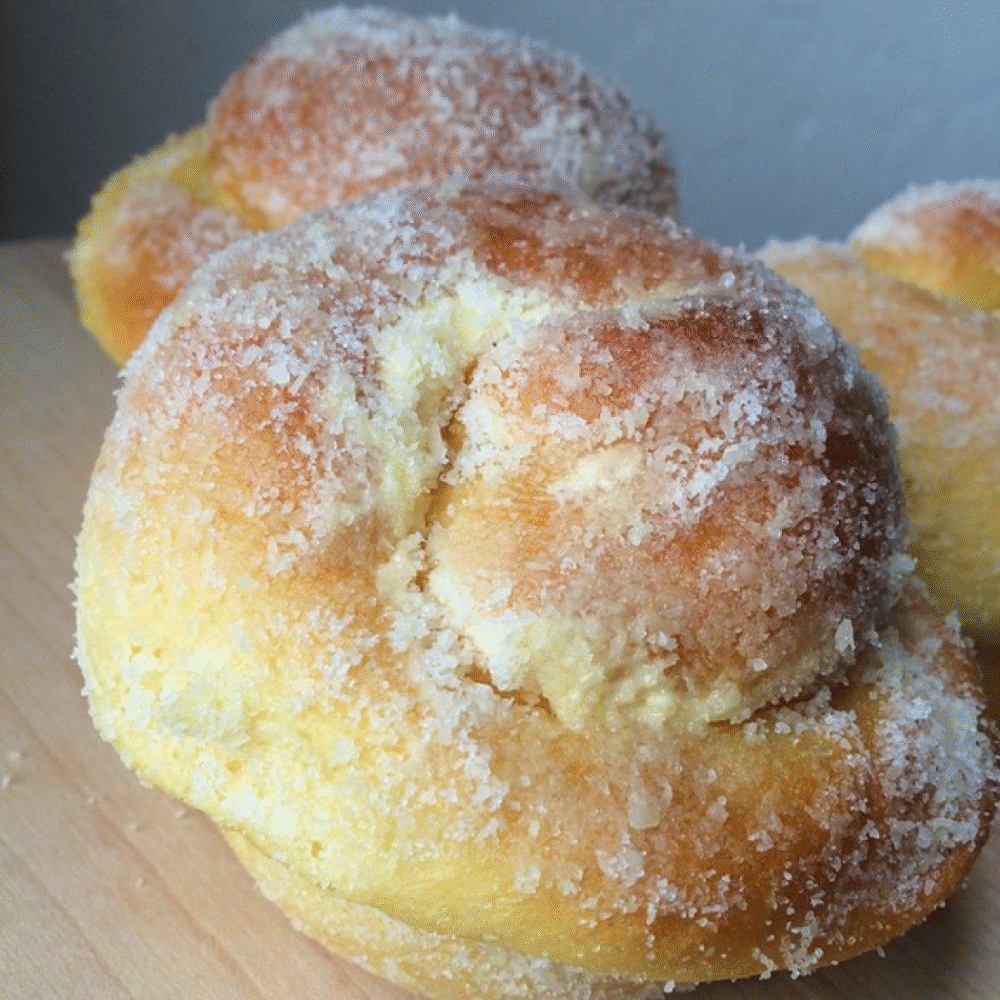
ENSAYMADA – A soft, buttery coiled pastry adapted from the Spanish Mallorcan original, topped with butter, sugar, and grated cheese. In the Philippines, it evolved into a sweeter, cheesier version and is a well-loved holiday treat and everyday snack.

pulaw, CC BY 2.0 , via Wikimedia Commons

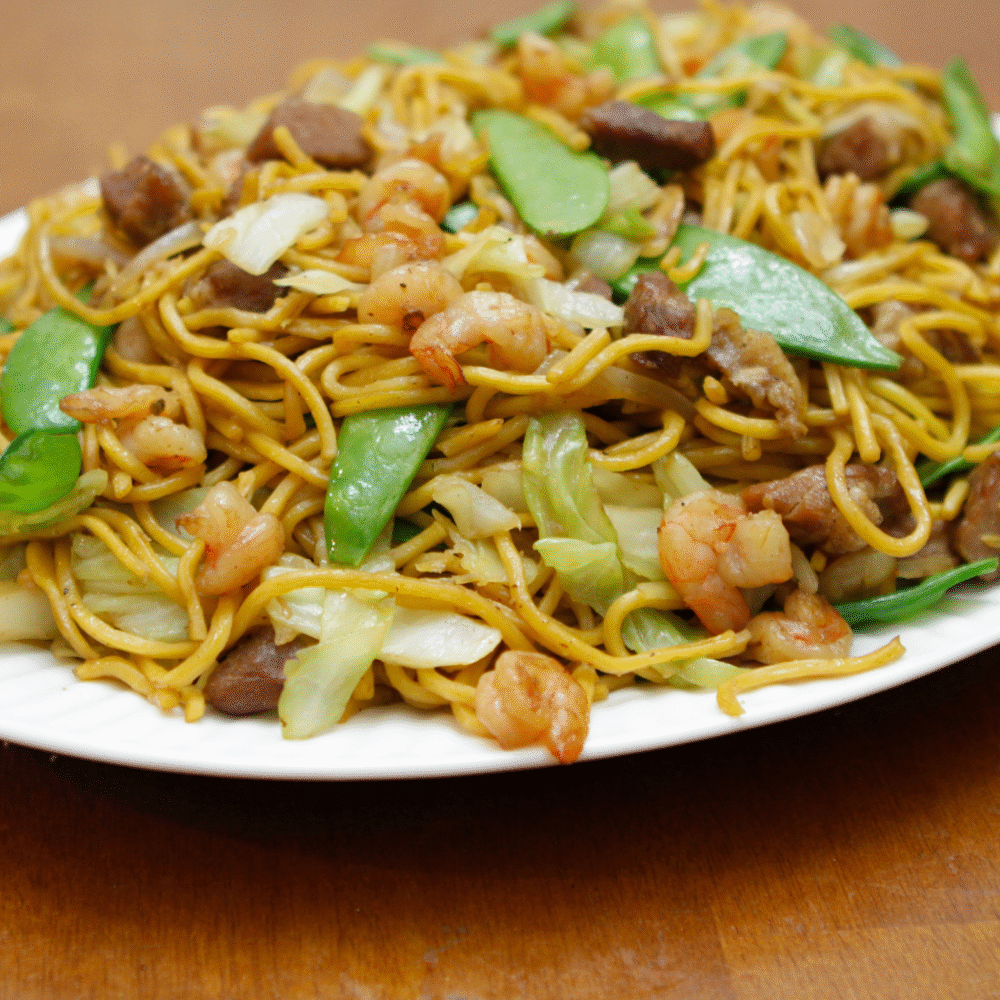
PANCIT – A broad category of Filipino noodle dishes; the Ilonggo style from Western Visayas is a regional stir-fried version made from wheat noodles with soy sauce, pork, chicken, shrimp, or vegetables.

Judgefloro, CC0, via Wikimedia Commons

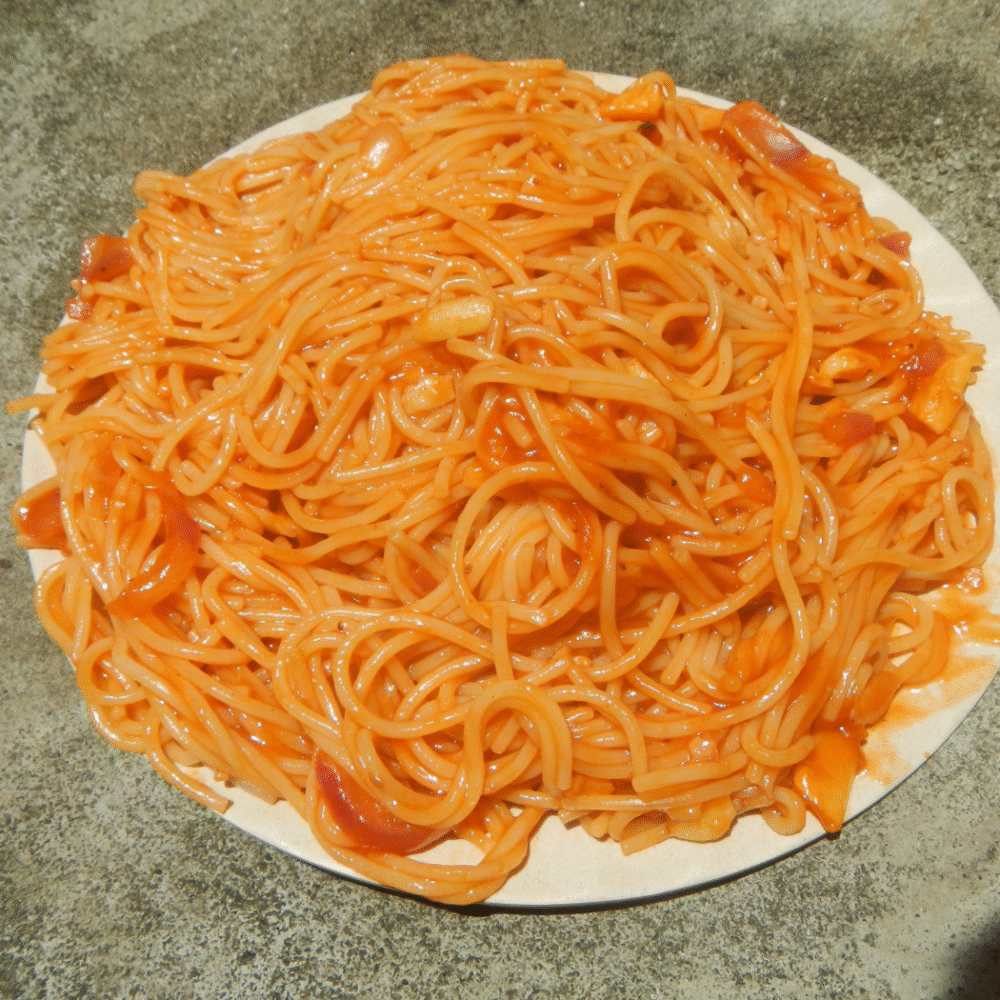
FILIPINO SPAGHETTI – A distinctly sweet-savory pasta dish made with banana ketchup-based sauce, sliced hot dogs, and topped with grated cheese. It represents how Filipino cuisine absorbs foreign influences and transforms them into something entirely its own.

Icon

Produce

Obsidian Soul, CC0, via Wikimedia Commons

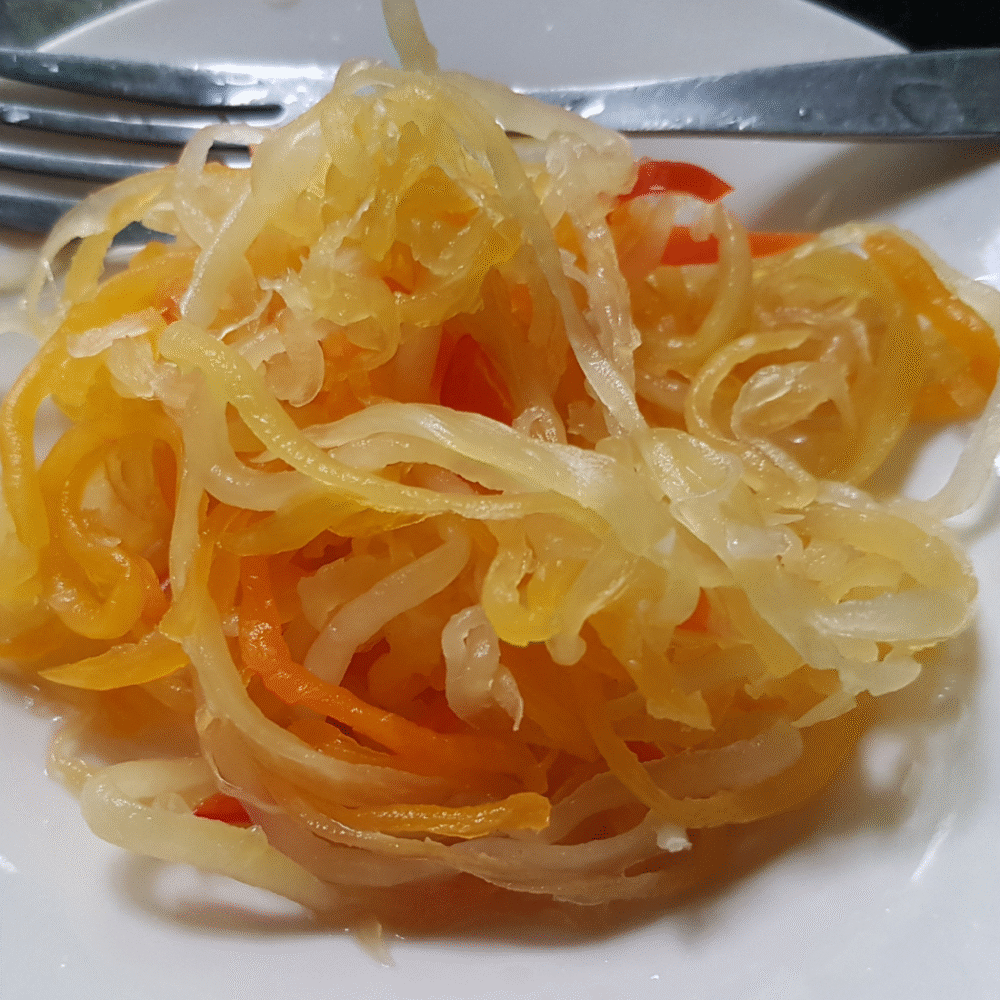
ATCHARA – A tangy condiment of grated unripe papaya pickled with carrots, bell peppers, and spices in vinegar and sugar. Served as a side dish alongside grilled or fried meats, it acts as a palate cleanser.

Judgefloro, CC0, via Wikimedia Commons

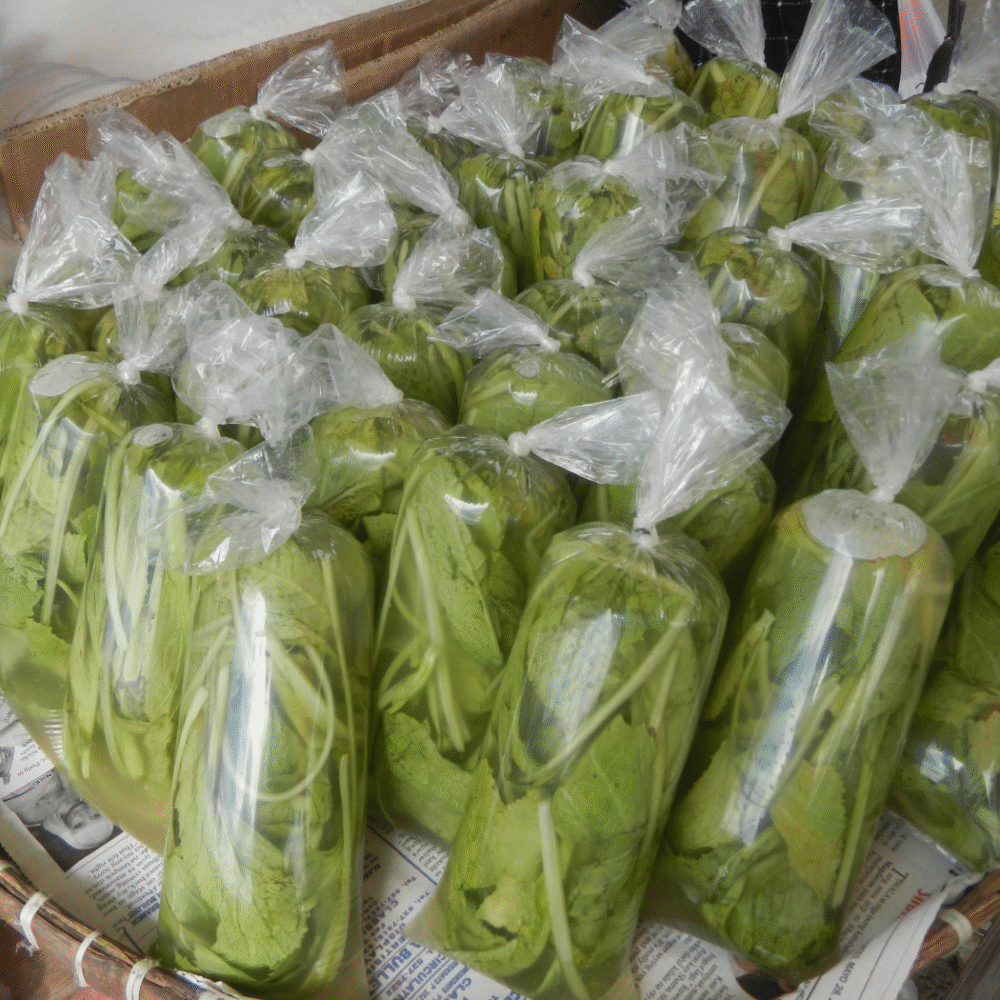
BURONG MUSTASA – Fermented flat-leaf mustard greens soaked in a saltwater brine, resulting in a sour, tangy flavor. A traditional Filipino fermented side dish.

ChristianCelestial, CC BY-SA 4.0 , via Wikimedia Commons

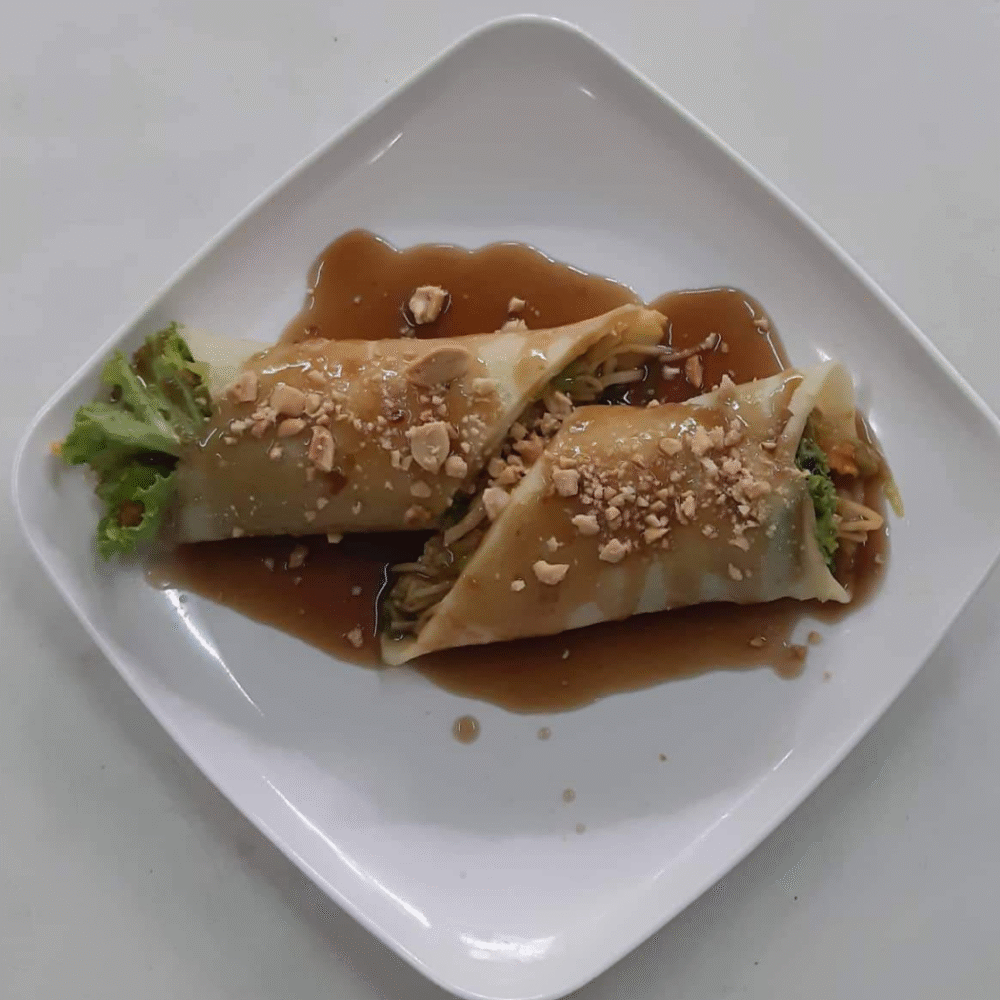
LUMPIANG SARIWA – Fresh, unfried spring rolls filled with heart of palm, mixed vegetables, and sometimes meat, wrapped in a soft crepe-like wrapper. It is served with a sweet garlic peanut sauce and is a popular Filipino appetizer or light meal.

Lokalpedia, CC BY-SA 4.0 , via Wikimedia Commons

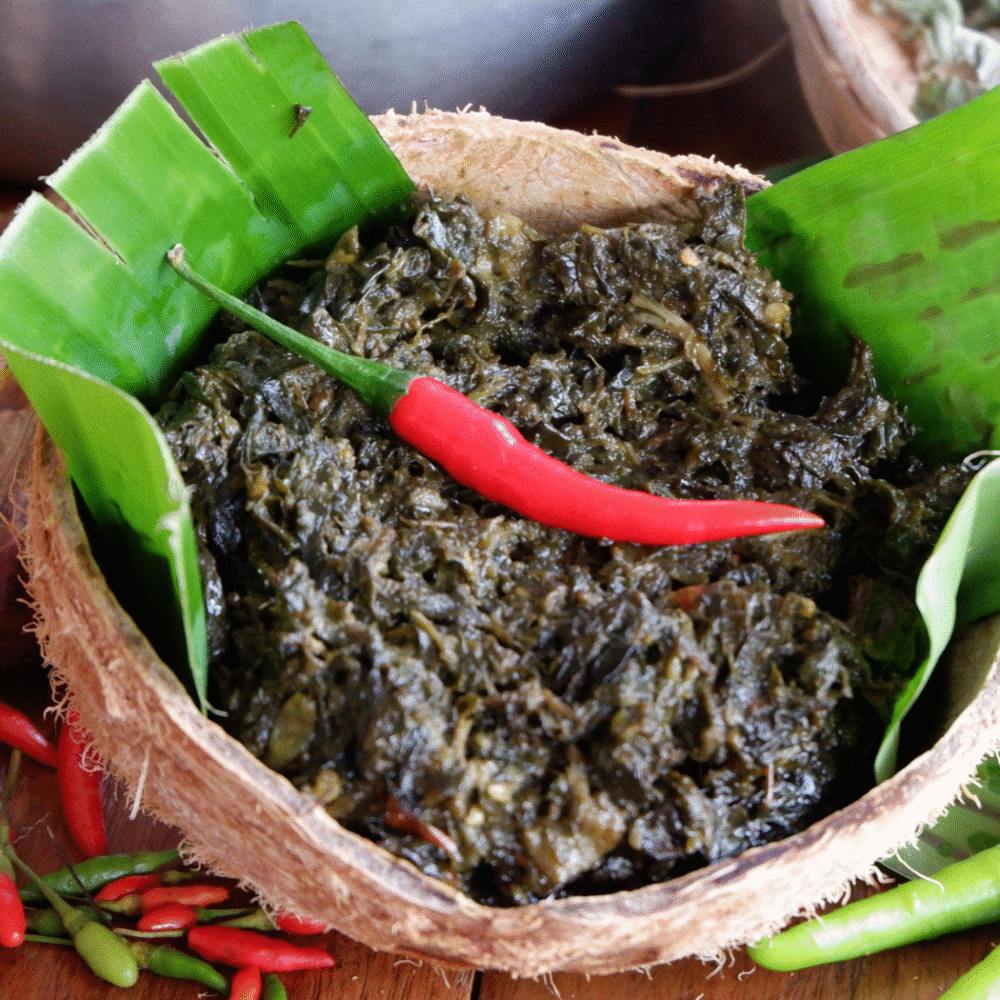
LAING – Dried taro leaves slow-cooked in thick coconut milk with pork or seafood, chili, lemongrass, and garlic. A defining dish of Bicol cuisine in southern Luzon, it showcases the region’s bold coconut-and-chili flavor profile.

Thepacificconoisseur at English Wikipedia, CC BY-SA 3.0 , via Wikimedia Commons

PINAKBET – A vegetable stew of squash, bitter melon, okra, and beans, seasoned with bagoong (fermented shrimp paste). A staple of Ilocano cooking from northern Luzon, it is one of the most recognized Filipino vegetable dishes and a practical, deeply flavorful use of local produce.

Judgefloro, CC0, via Wikimedia Commons

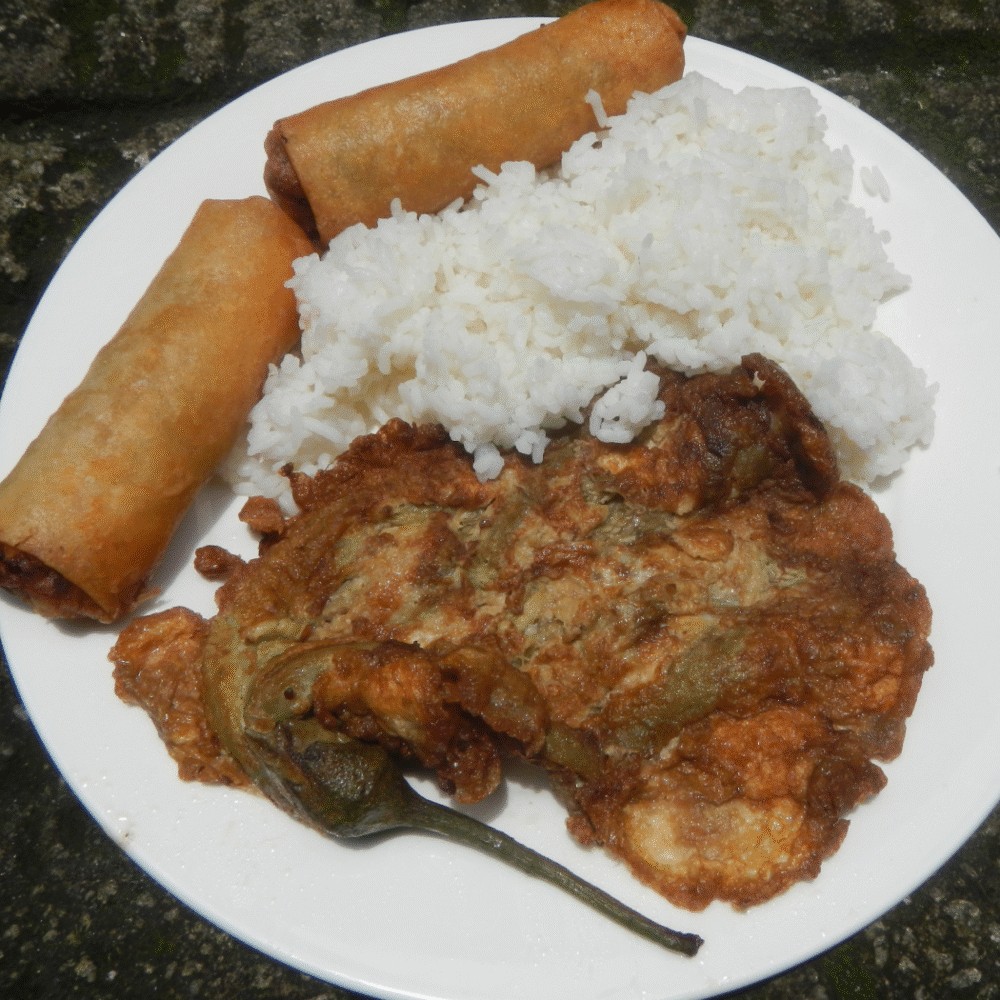
TORTANG TALONG – A charcoal-grilled eggplant, peeled and pan-fried inside beaten egg to form an omelet. Simple, inexpensive, and flavorful, it is an everyday Filipino dish that appears regularly at the breakfast and lunch table.

Icon

Eggs and dairy

Judgefloro, CC0, via Wikimedia Commons

BALUT – A boiled fertilized duck egg at various stages of embryo development, typically 17 to 21 days, eaten straight from the shell. A big part of Filipino street food culture, it is simultaneously a source of national identity and a test of adventurousness for visitors.

Judgefloro, CC0, via Wikimedia Commons

ITLOG NA MAALAT – Salted duck eggs cured in clay or brine until the yolk turns bright orange and firm. A common Filipino condiment and side dish, often sold dyed red.

Ralff Nestor Nacor, CC BY-SA 4.0 , via Wikimedia Commons

KESONG PUTI – A soft, fresh white cheese made from carabao’s milk, mild and slightly salty. A traditional Filipino dairy product most associated with Laguna province, it is commonly eaten with pandesal for breakfast and is one of the few native cheese traditions in the country.

Icon

Sugar, fats and nuts

Theoylmaid, CC BY-SA 4.0 , via Wikimedia Commons

HALO HALO – A layered shaved ice dessert piled with sweet beans, coconut, jackfruit, jelly, tapioca pearls, and sweet potato, drenched in evaporated milk and often topped with leche flan or ube ice cream. A Filipino summer icon with pre-war Japanese roots, and one of the country’s most recognized desserts abroad.

Joost Nusselder (www.bitemybun.com), CC BY 2.0 , via Wikimedia Commons

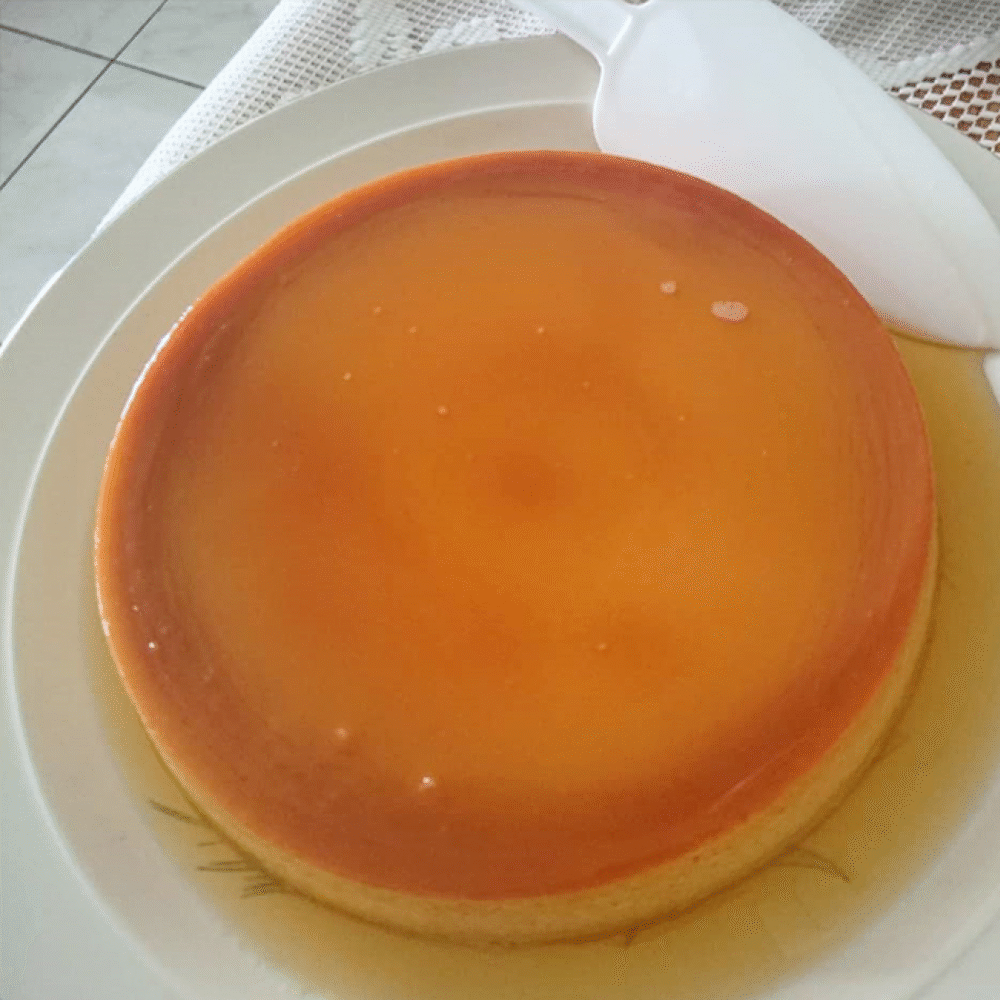
LECHE FLAN – A rich, dense steamed caramel custard made from egg yolks and condensed milk, heavier and more indulgent than its Spanish ancestor. It appears often at celebration, regardless of class, from neighborhood fiestas to Christmas tables.

Lokalpedia, CC BY-SA 4.0 , via Wikimedia Commons

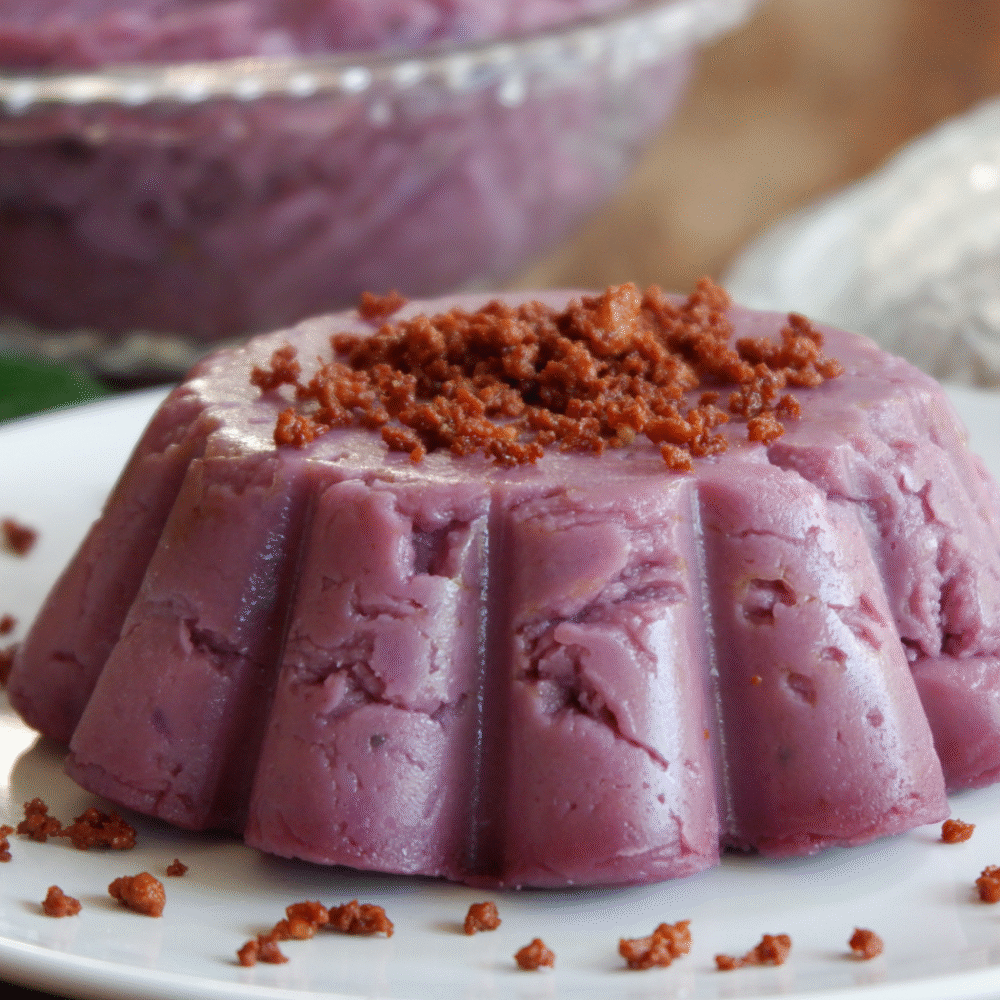
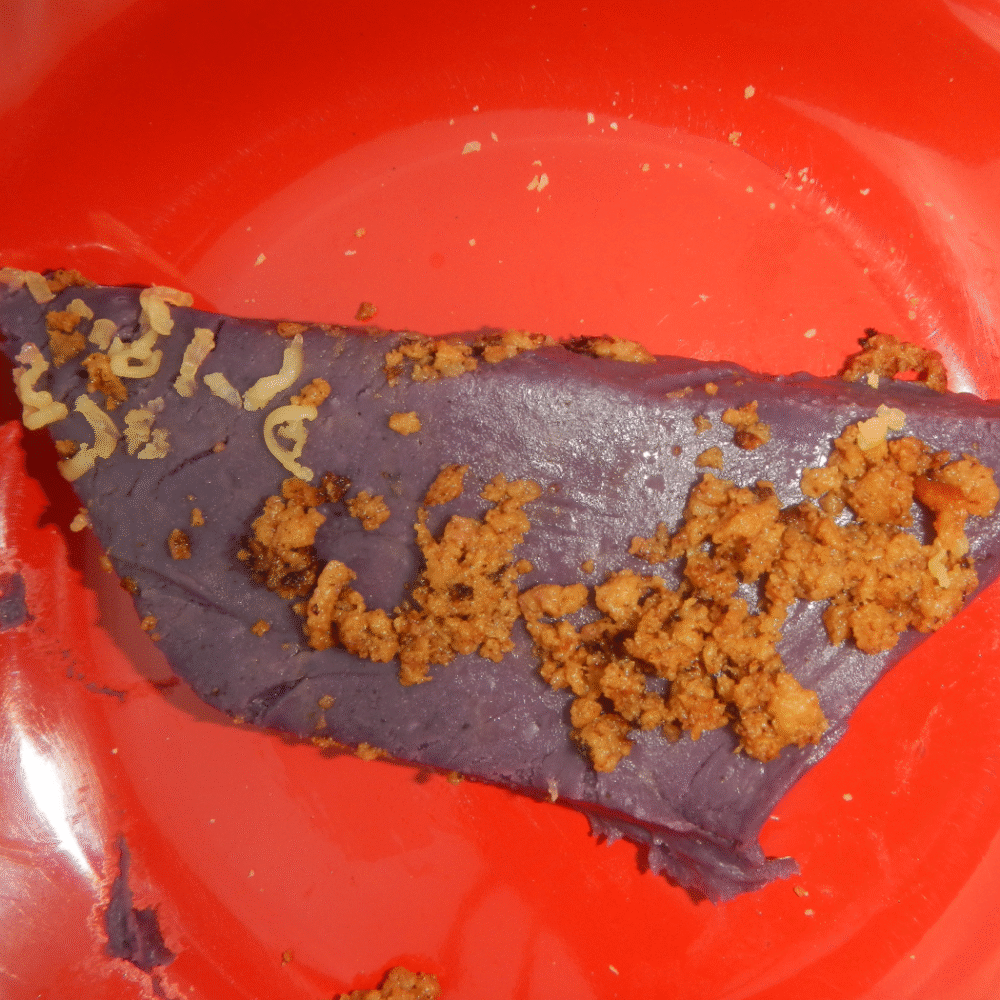
UBE – A native Philippine purple yam, traditionally cooked into ube halaya, a jam made with coconut milk and condensed milk. A Filipino dessert staple for generations that became a global food trend driven by the diaspora, appreciated as much for its vivid natural purple color as for its mild, subtly sweet flavor.

Ralff Nestor Nacor, CC BY-SA 4.0 , via Wikimedia Commons

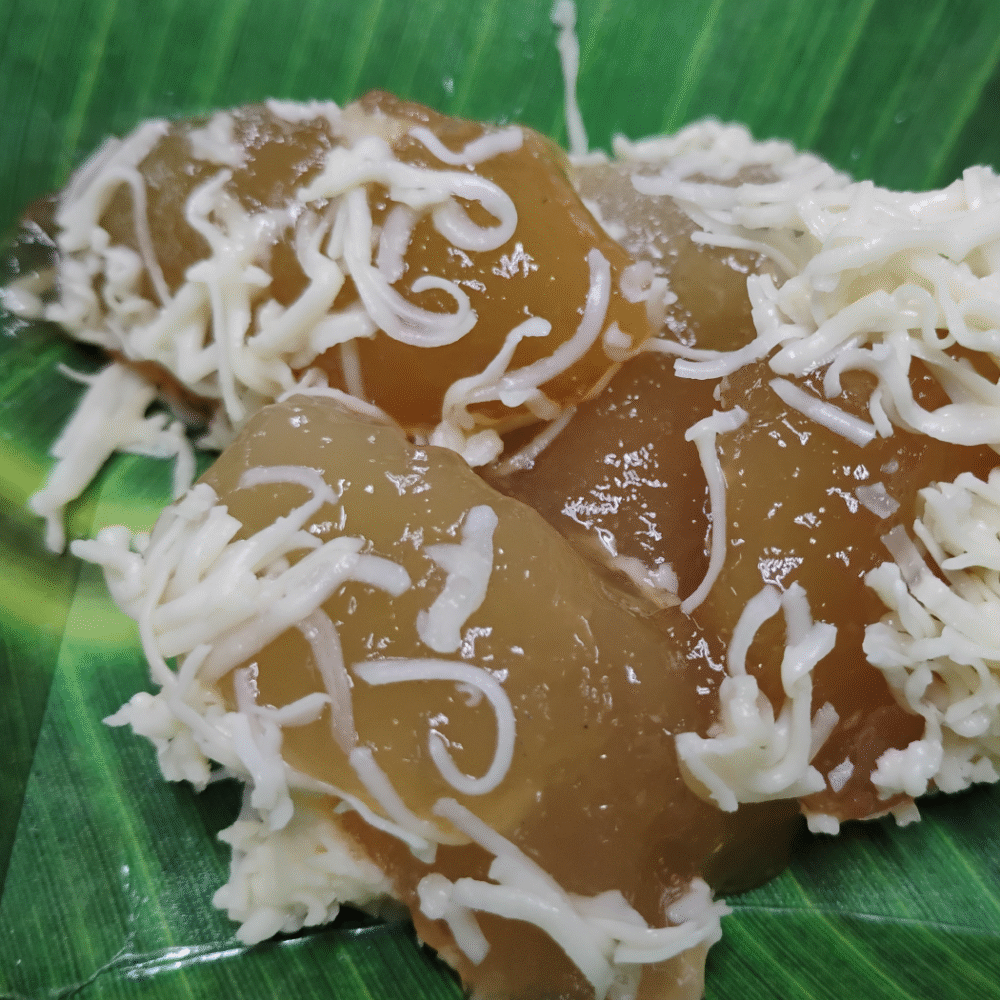
PICHI PICHI – Steamed cassava balls mixed with sugar and lye water, giving them a translucent, jelly-like texture, coated in grated coconut or cheese. A traditional Filipino kakanin eaten as a snack or dessert, unpretentious and widely enjoyed.

Judgefloro, CC0, via Wikimedia Commons

KALAMAY is a sticky Filipino sweet made from coconut milk, brown sugar, and ground glutinous rice. It can also be flavored with peanut butter, vanilla, or margarine.

Ralff Nestor Nacor, CC BY-SA 4.0 , via Wikimedia Commons

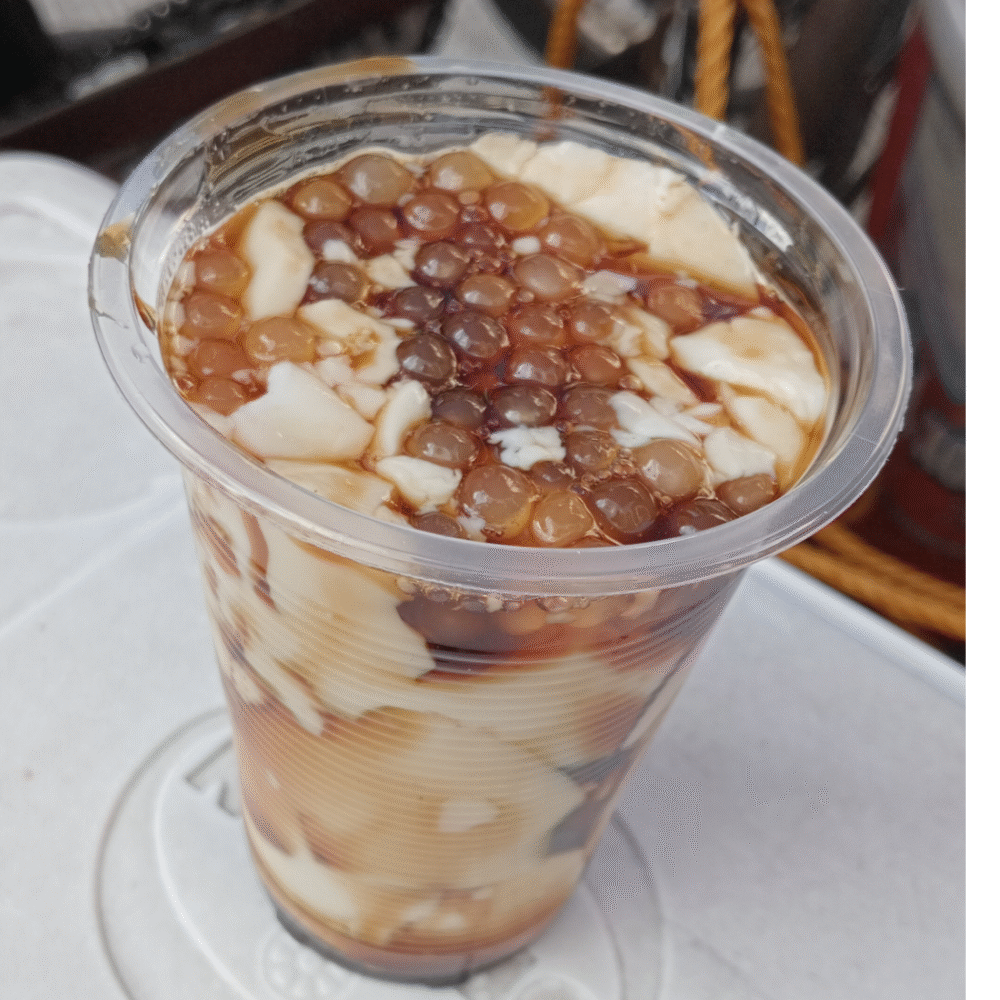
TAHO – Fresh silken tofu served warm with arnibal (brown sugar and vanilla syrup) and sago tapioca pearls, sold by roaming vendors each morning.

Back to Top