THE ESSENCE OF LIBYAN CUISINE
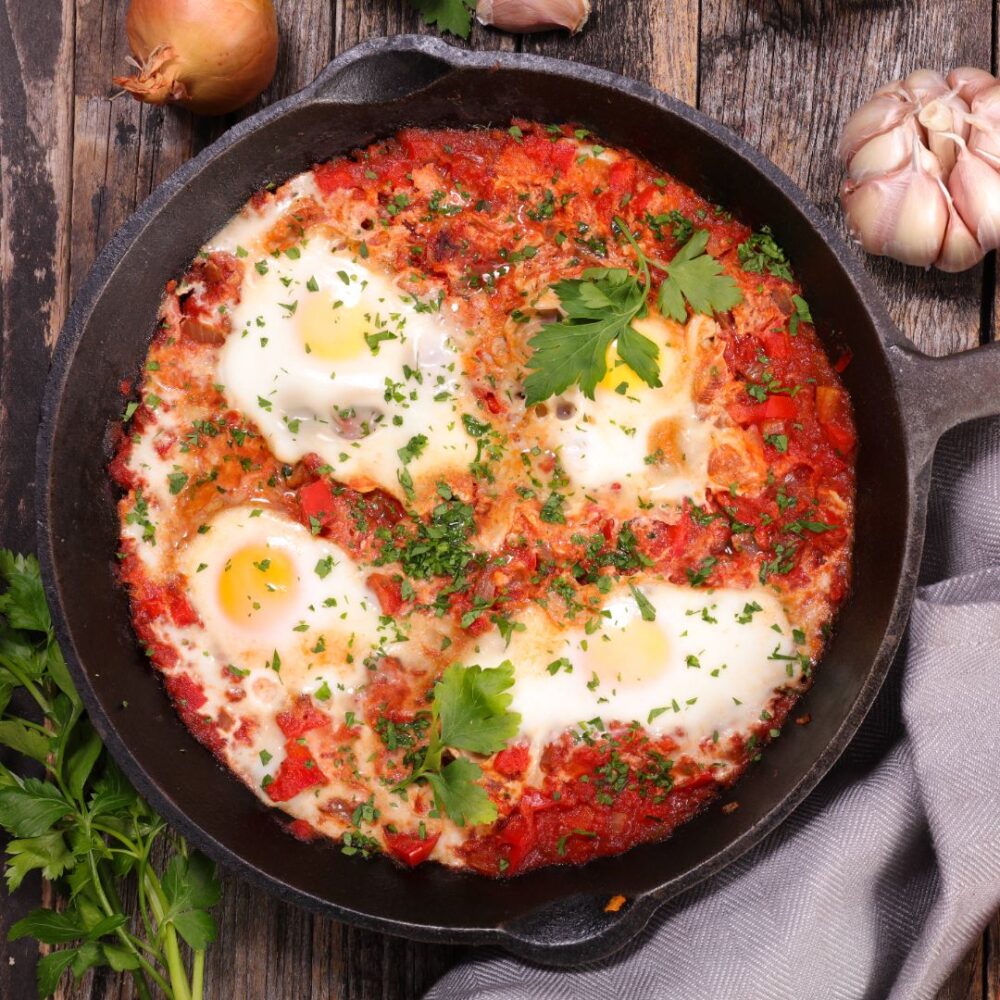
Libyan cuisine shares many staples with Morocco, Algeria, and Tunisia: olives, olive oil, dates, lamb, beef, beans, nuts, and dishes like couscous, tagine, shakshouka. Compared to other Maghreb countries, Libya has the lowest cereal intake but the highest fat and meat consumption in the region. Libya’s diet has more fish and seafood; overall consumption of foods of animal origin is 33% – significantly higher than its neighbours.
In Libya, one of the social customs is the daily tea-drinking. The tea is very strong, thick, and syrup-like. It’s prepared when chatting, when family members gather to socialize for about an hour before going their separate ways. During this time, each person drinks two rounds of tea, each lasting about half an hour. The third round is served with roasted almonds mixed with the tea in the same glass.
All alcoholic drinks have been banned in Libya by Sharia, the religious laws of Islam. However, illegally imported alcohol is available on the black market alongside a homemade spirit called bokha.
GRAINS IN LIBYAN CUISINE
Most Libyan dishes start with a starchy base: wheat couscous, pasta, rice, or barley. The major staple wheat mainly comes in the form of bread, couscous, pasta, porridges, or ancient breads: aseeda, zumita, and bazeen. Libyans continue to use ancient methods of preparing dough from ground grains, either by cooking it or using it raw, this practice has been passed down for thousands of years.
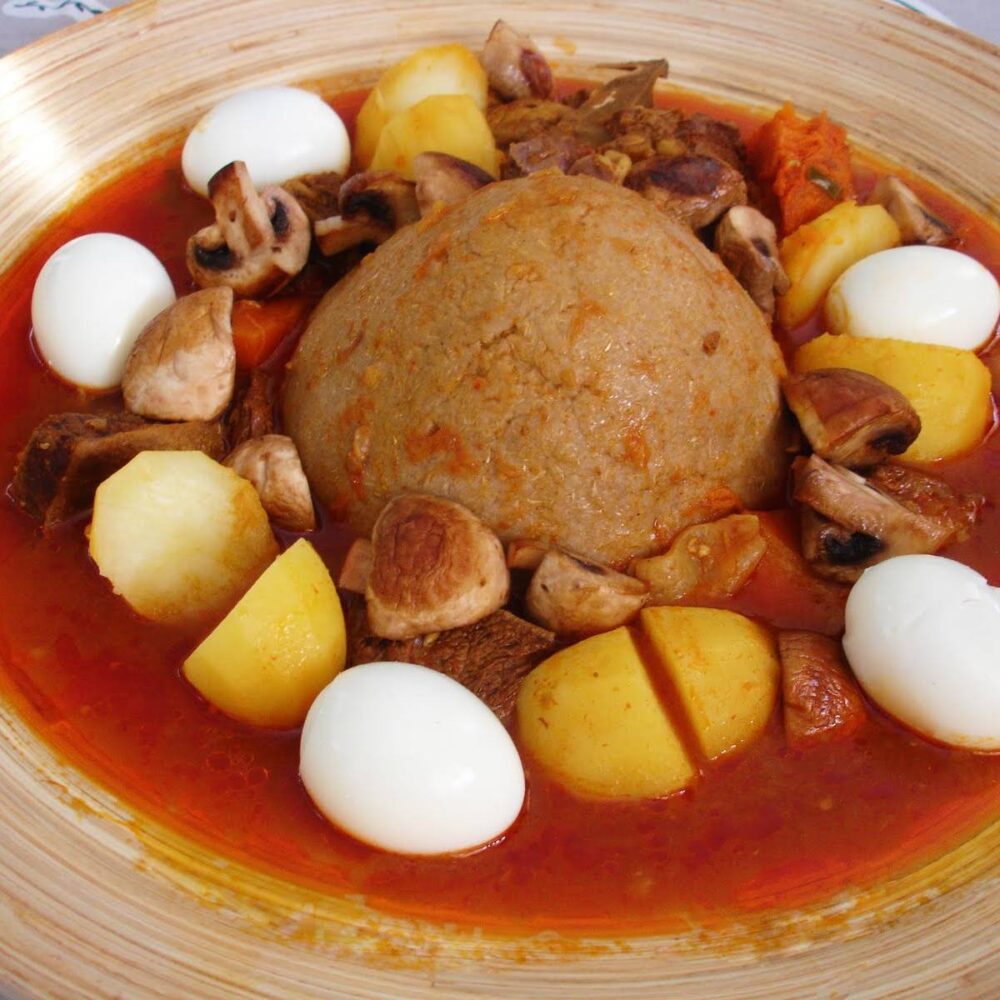
Bazeen, perhaps the most iconic doughy example – a distinctive dish kept for occasions or lunch on Fridays. It’s made from barley dough kneaded into a semi-spherical ball and placed in the middle of a large bowl, around which the sauce is poured, making the dish look like a rock island surrounded by water. Bazeen is served with tomato sauce, eggs, broad beans, potatoes, mutton, chicken, or camel meat and eaten with the fingers.
Aseeda is more like a sweet version of bazeen, made from wheat flour, cooked in water, eaten with honey, date syrup, olive oil, or smen.
Z’ummeeta or zumita is yet another ancient Libyan dough, eaten by dipping a tiny bit, taken by hand, in olive oil and chili sauce. It is usually eaten for breakfast or as a quick snack, as it takes only a few minutes to mix.
Bsisa is another ancient grain meal, a three-in-one – breakfast dish, dessert or snack, made of roasted wheat, ground with fenugreek, aniseed, cumin and sugar. Its history goes back a long way when nomads used to take bsisa on their journeys since it was both full of nutrients and easy to carry in its ground powder form. The preparation of bsisa for eating is super simple – mix powder with olive oil into a paste, and it’s done.
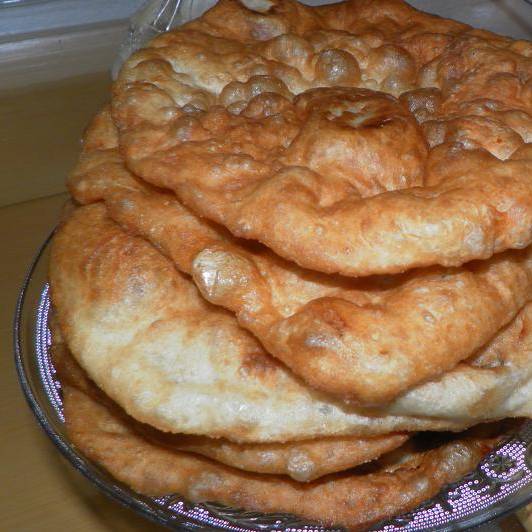
Libyan cuisine features traditional khubz (flatbread), again (small round flatbreads), taboon (smoky and chewy bread baked on hot stones), mark (flaky bread cooked on a skillet and flavored with butter and olive oil), and a French baguette.
 Pasta in Libya represents a fascinating fusion of local and Italian cuisines.
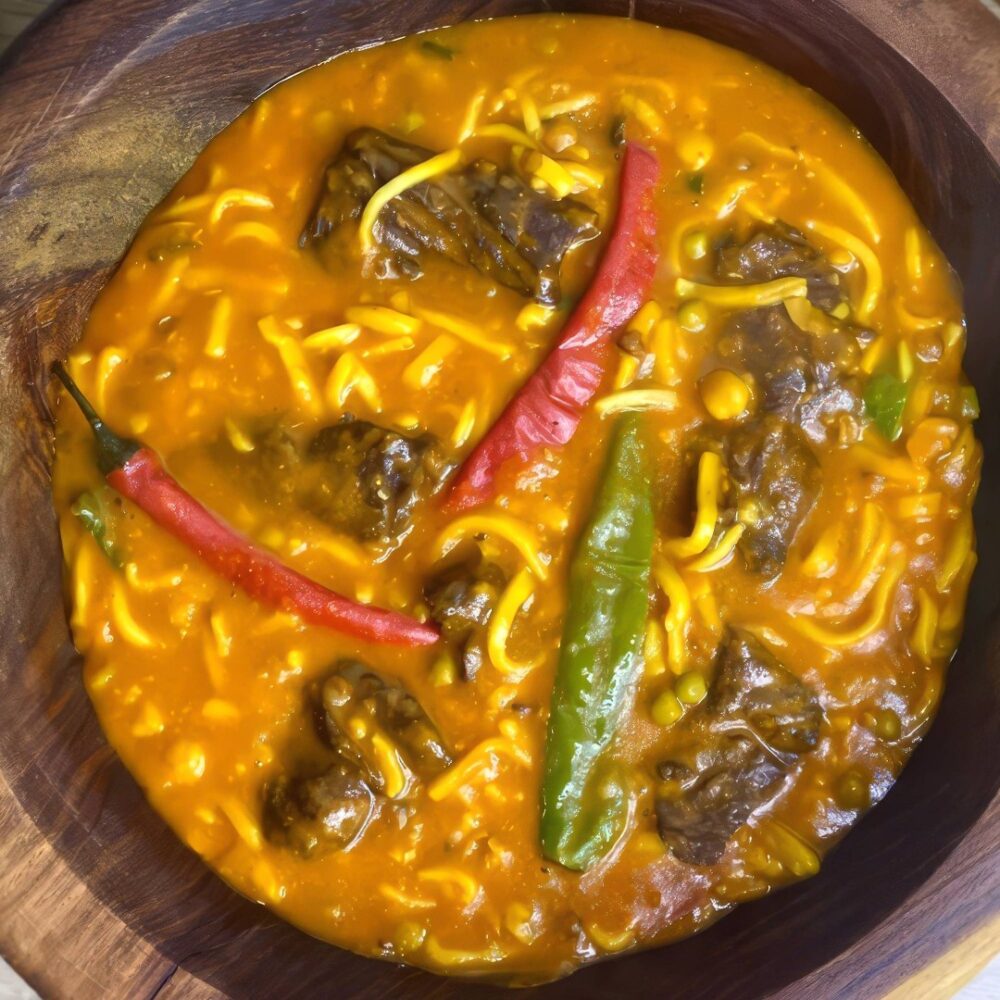
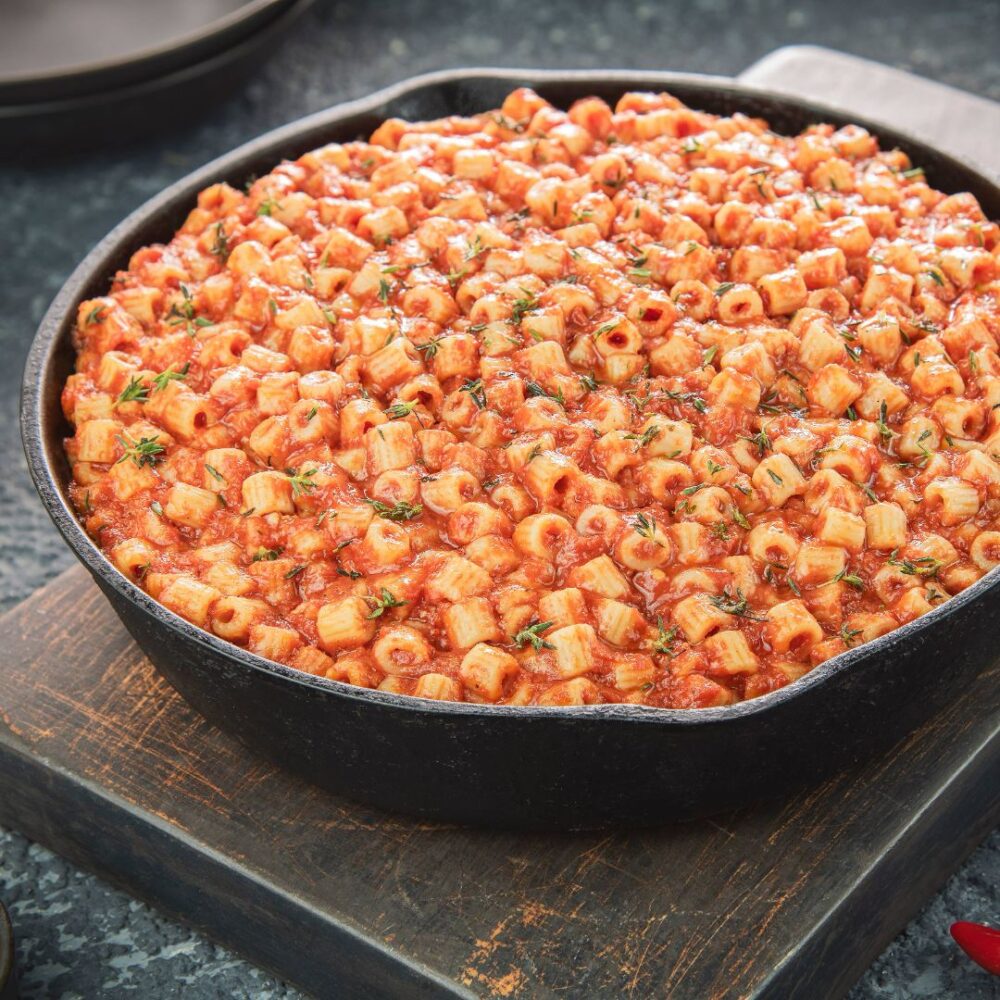
Here, pasta is usually dry and made from semolina. Spicy tomato pasta, flavored with cumin, coriander, chili peppers, and sometimes enhanced with meat, is a popular lunch option. Small pasta orzo or vermicelli are added to soups to make them more filling.
Libya has a relatively high consumption of rice, which links more closely with Egyptian habits than with Western Maghreb. Their proximity has facilitated the adoption of similar staples. In Libya, rice is cooked with a sauce similar to risotto or steamed over a vegetable and meat sauce reminiscent of couscous. It can also be cooked with aromatic spices, nuts, and dried fruits to make pilafs.
PRODUCE IN LIBYAN CUISINE
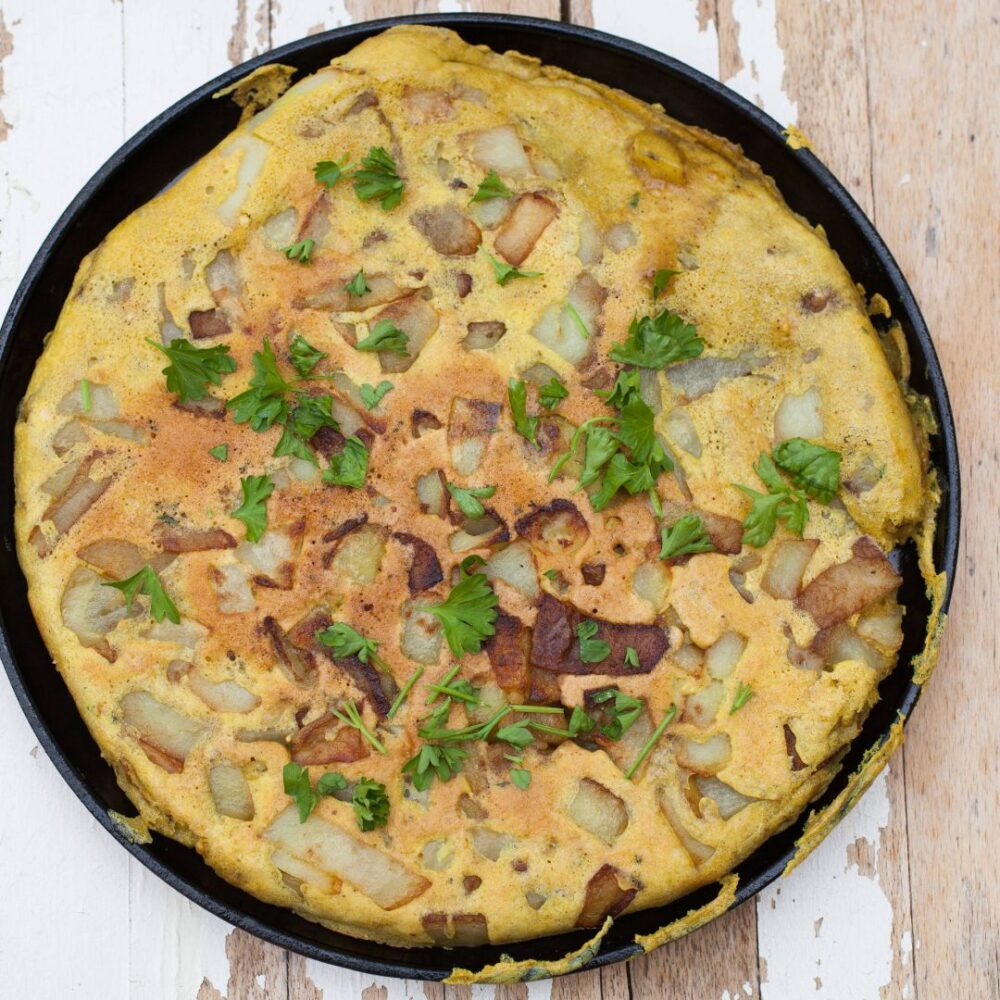
When talking potato dishes in Libya, the one popping up particularly often is m’battan (also named mubattan or batada mbatna), a uniquely Libyan name meaning ‘lining’ two layers with stuffing. Dish is made with potatoes, sliced to hold a minced lamb or beef stuffing, in a spicy tomato sauce. It’s a labor-intensive comfort food for Ramadan.
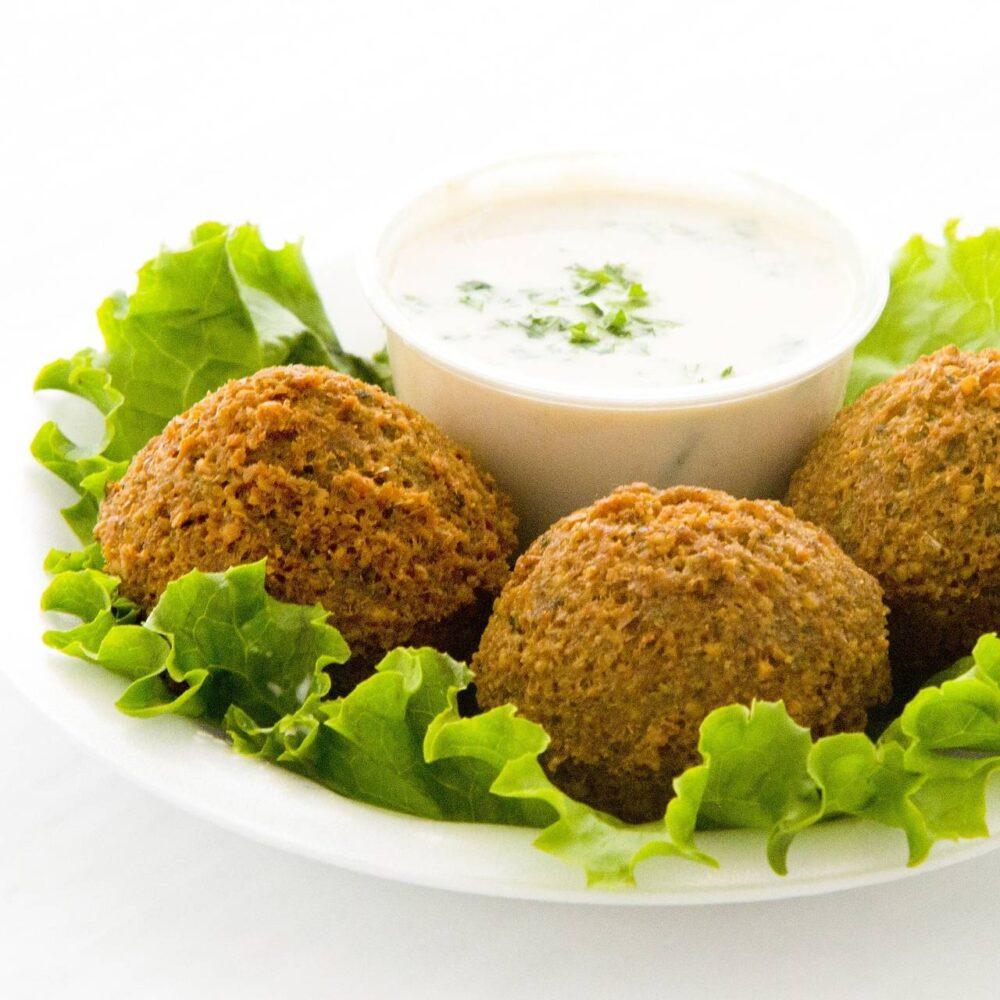
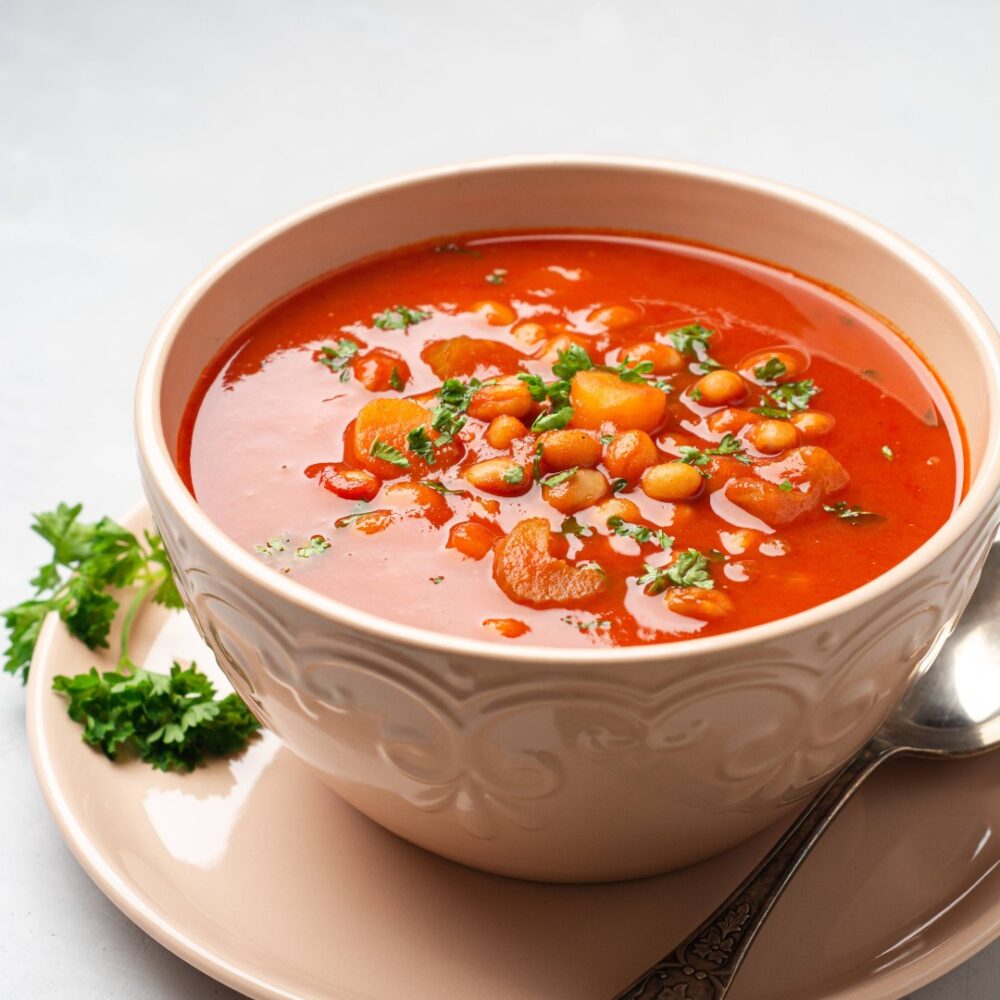
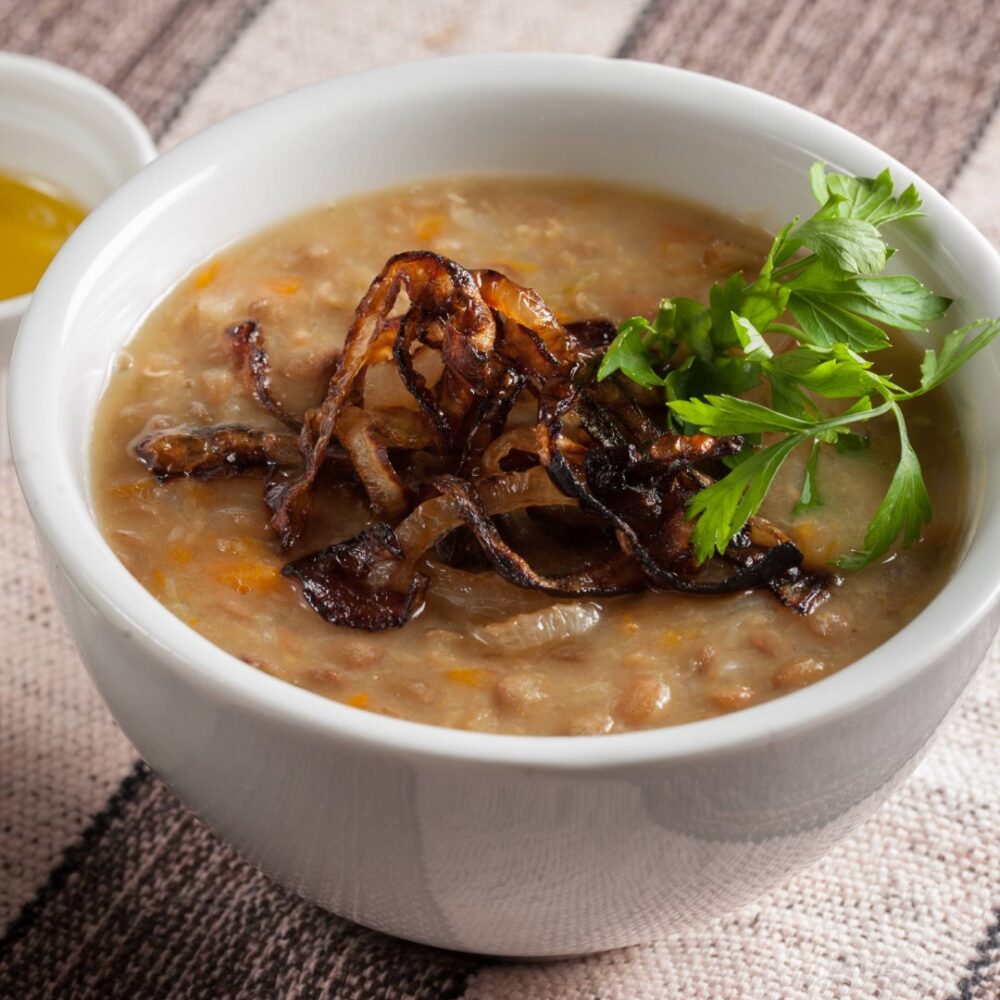
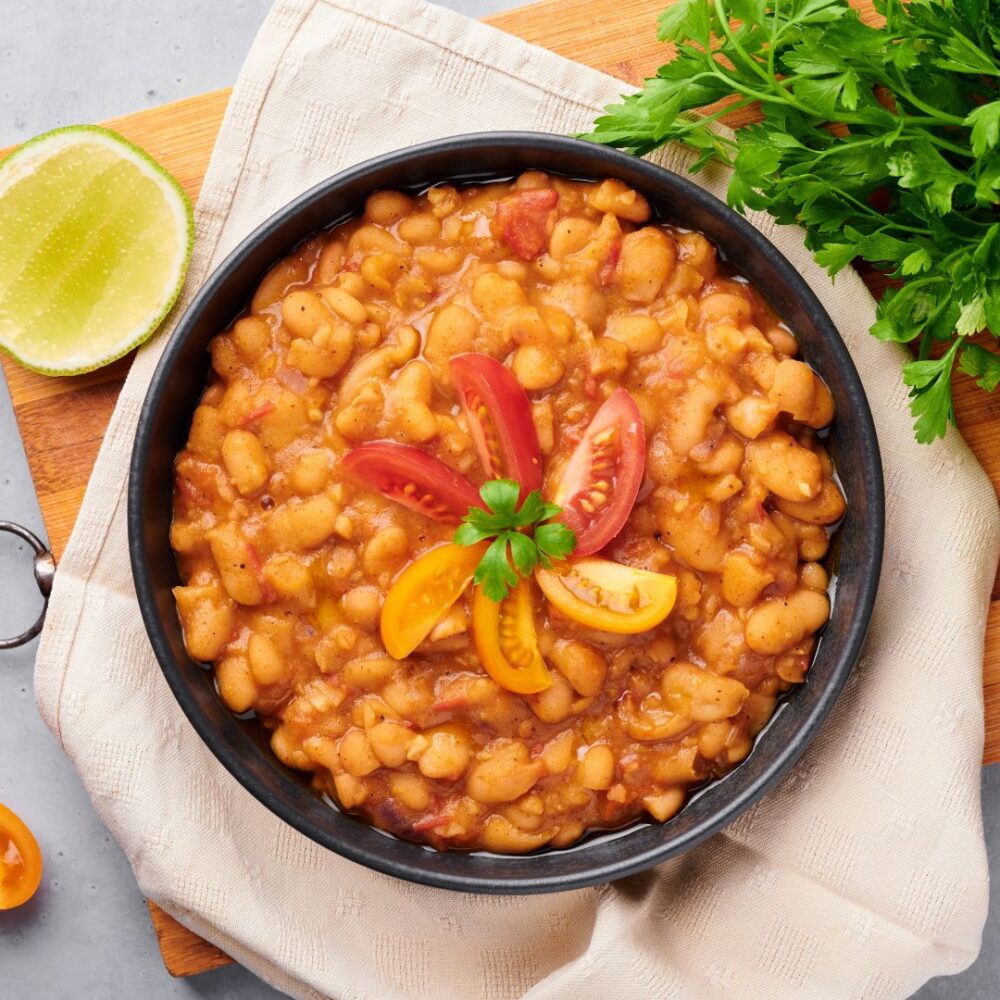
The largest source of vegetable protein comes from pulses: chickpeas, lentils, dried beans, and fava beans, which feature traditional falafels, fasolada (bean soup), tajine lubia (white bean stew), and labia silk (borlotti bean stew made with spinach, sometimes lamb).
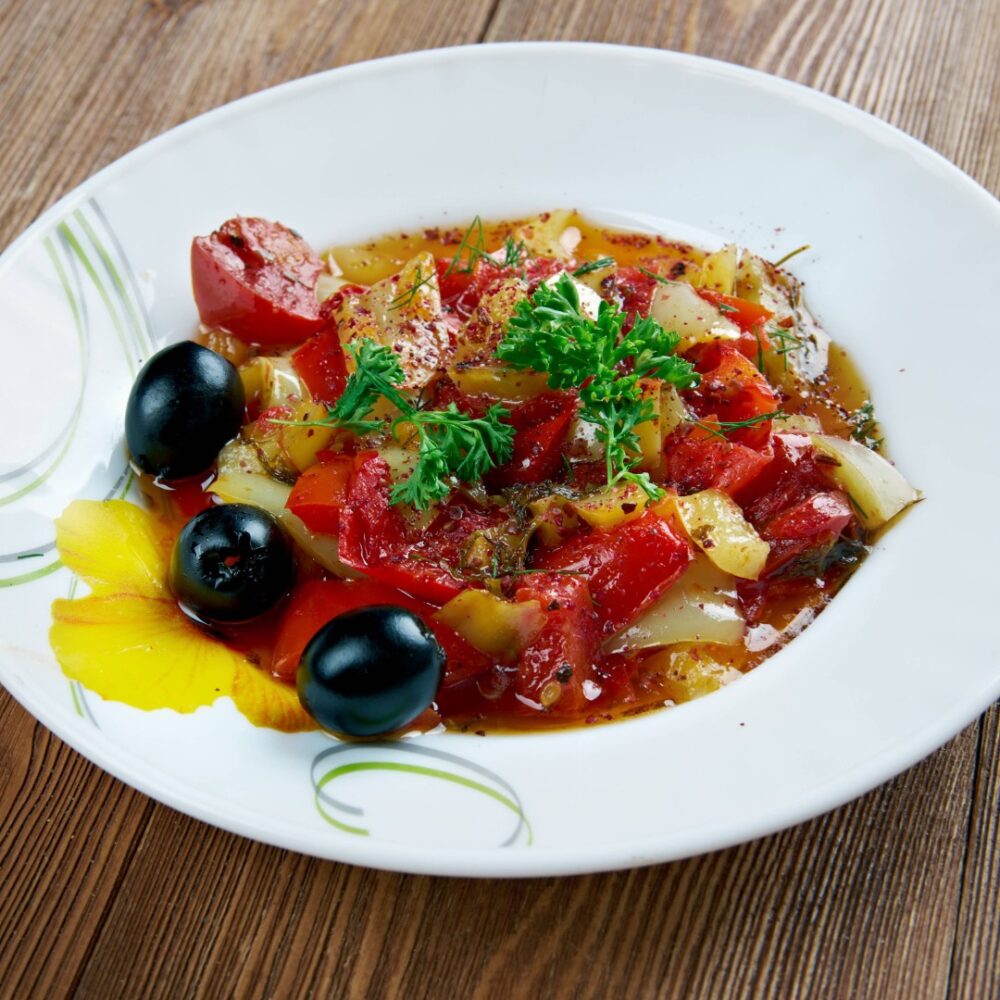
Vegetables are of great importance to traditional kitchens, especially the tomatoes, paired with sweet and chili peppers, onions, cumin. Onions and garlic are also foundational, followed by sweet and chili peppers, zucchinis, eggplants, pumpkins and leafy greens.
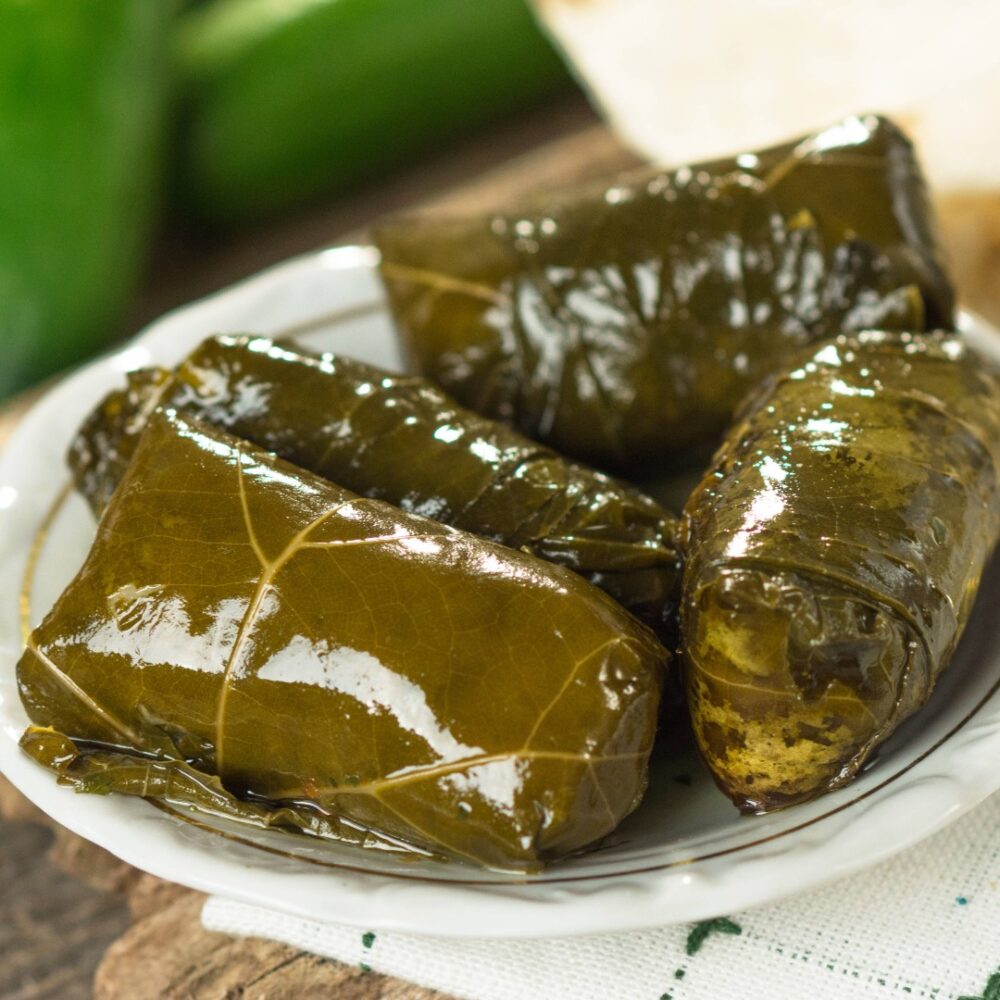
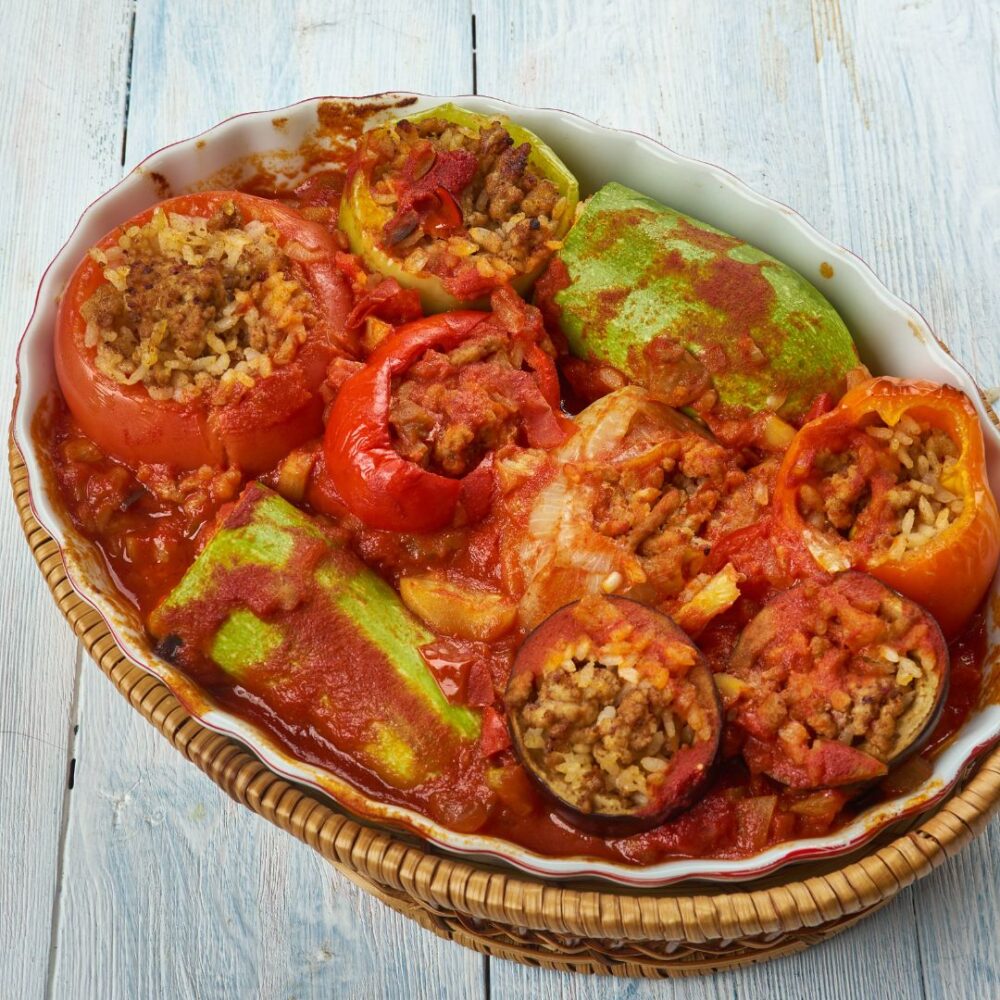
A common dish that Libya shares with Eastern neighbours and the heritage from Ottomans are stuffed vine leaves lebrak and stuffed vegetables mahshi. The preparation involves stuffing veggies with rice, herbs, and minced meat and then cooking them in a fragrant broth. Mahshi is a great make-ahead dish; it tastes even better the next day and warms up well.
Tomatoes are so important in Libyan cuisine that the country is among the top five tomato consumers per capita in the world.
And that’s interesting, because the country is largely arid. Tomatoes, combined with spices, meat or legumes, help bring moisture and freshness to dishes that otherwise rely heavily on grains, preserved foods and dense breads.
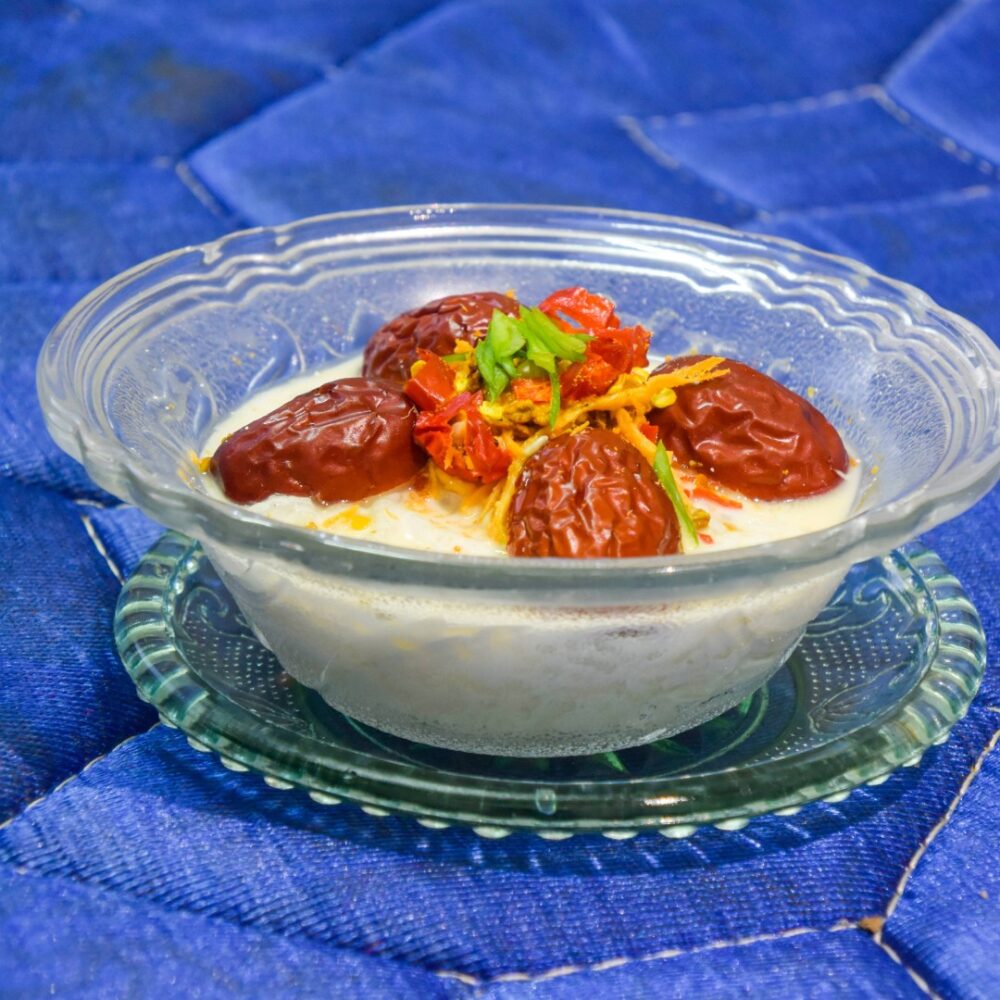
Dates are a very important crop and an essential sweet in Libyan cooking. Libya is the 5th largest date consumer in the world! Dates feature many desserts, tagines, stews, appetizers, preserves and pastes. Date syrup is added to tea and coffee, and drizzled over pancakes and porridge. Other than dates, figs, apricots, and oranges are among the most popular fruits in Libya.
MEAT IN LIBYAN CUISINE
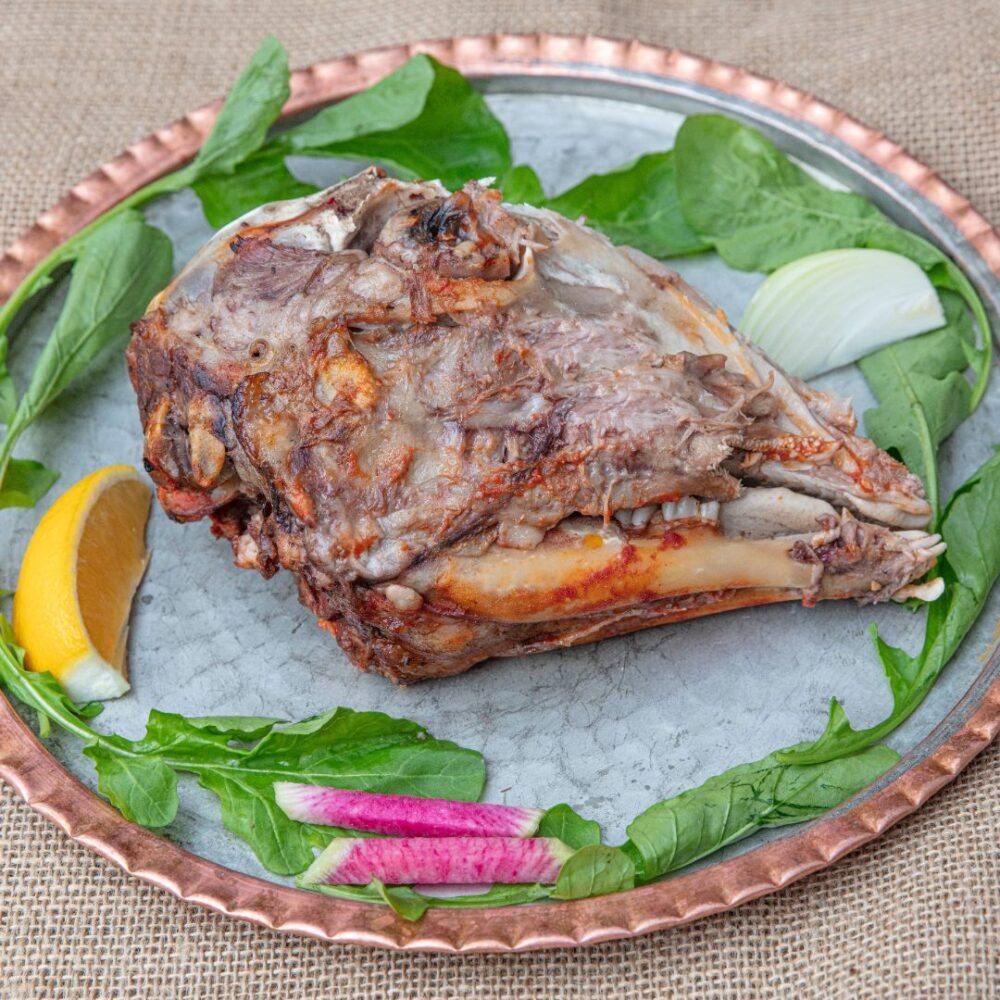
Meat from small ruminant animals is the go-to meat for most Libyans. Lamb is considered a status symbol, as wealth is measured by the size and abundance of meat served. This pattern is common to all Maghrebi countries, stemming from religious Muslim holidays that focus on celebration with food and rituals of slaughter for sacrifice.
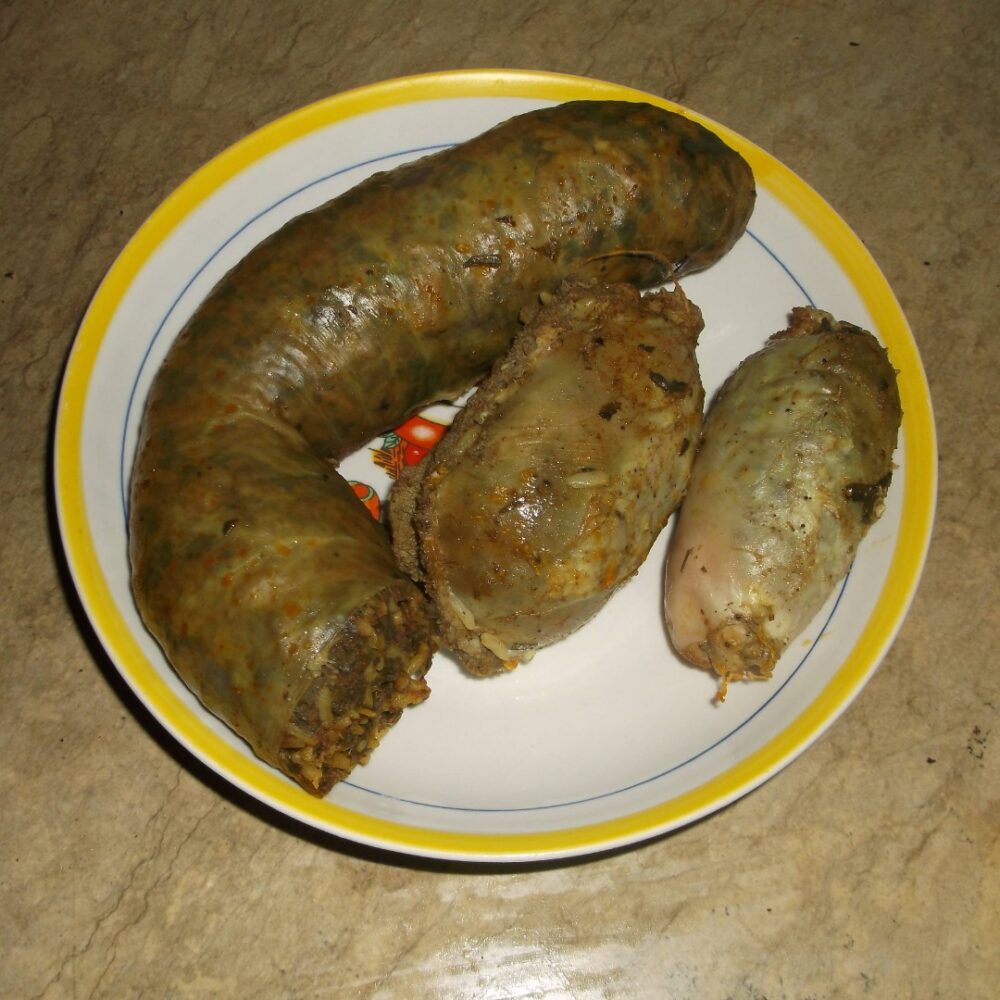
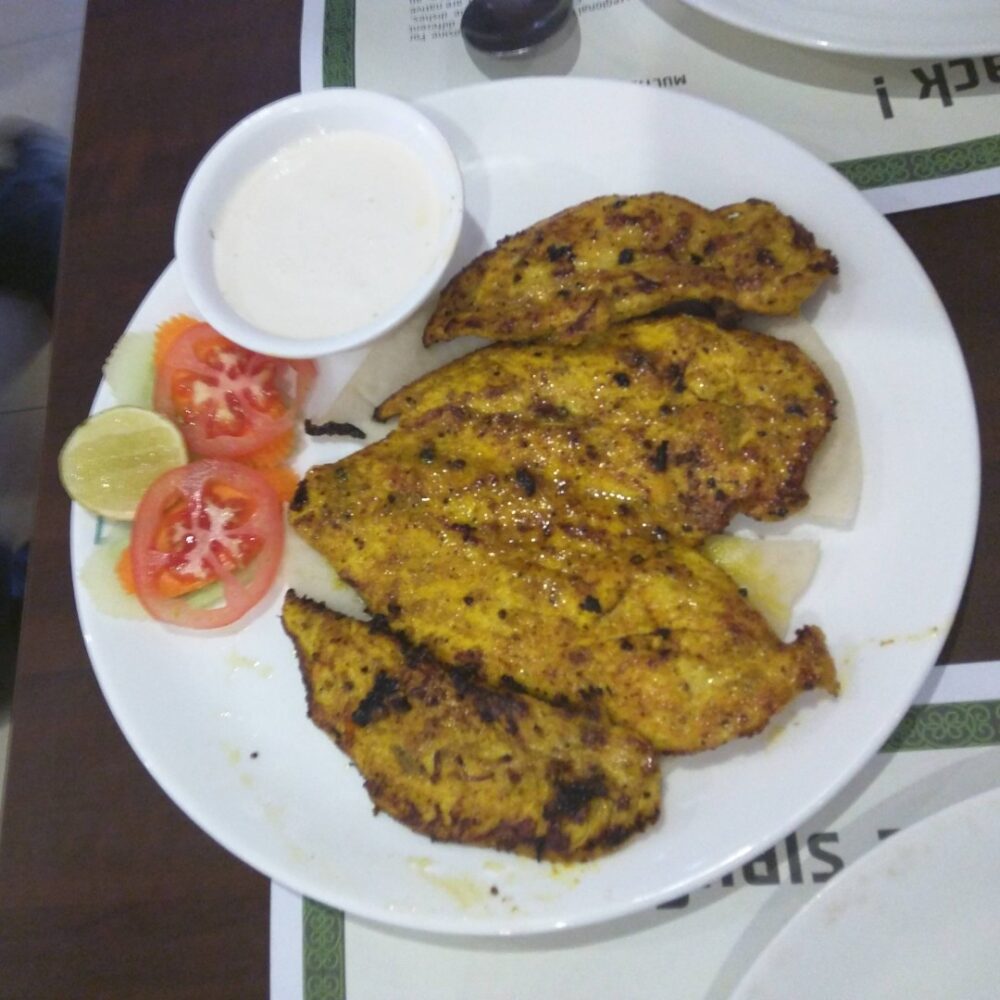
Throughout the centuries, most families saved up all year to buy a sheep and were very frugal in its consumption. They wasted hardly anything, which is also reflects in high popularity of offal dishes like osban and fasooliya bil kersha. These traditional recipes often prioritize lamb, mutton or goat due to their cultural prestige. Everyday dishes are practical and affordable, so chicken is often the choice.
Beef is also eaten, but only when the animal becomes older and of less economic use. Camel meat has long been a staple in many parts of the Middle East, Pakistan, and North and East Africa, and it is also a staple for nomadic communities in Libya.
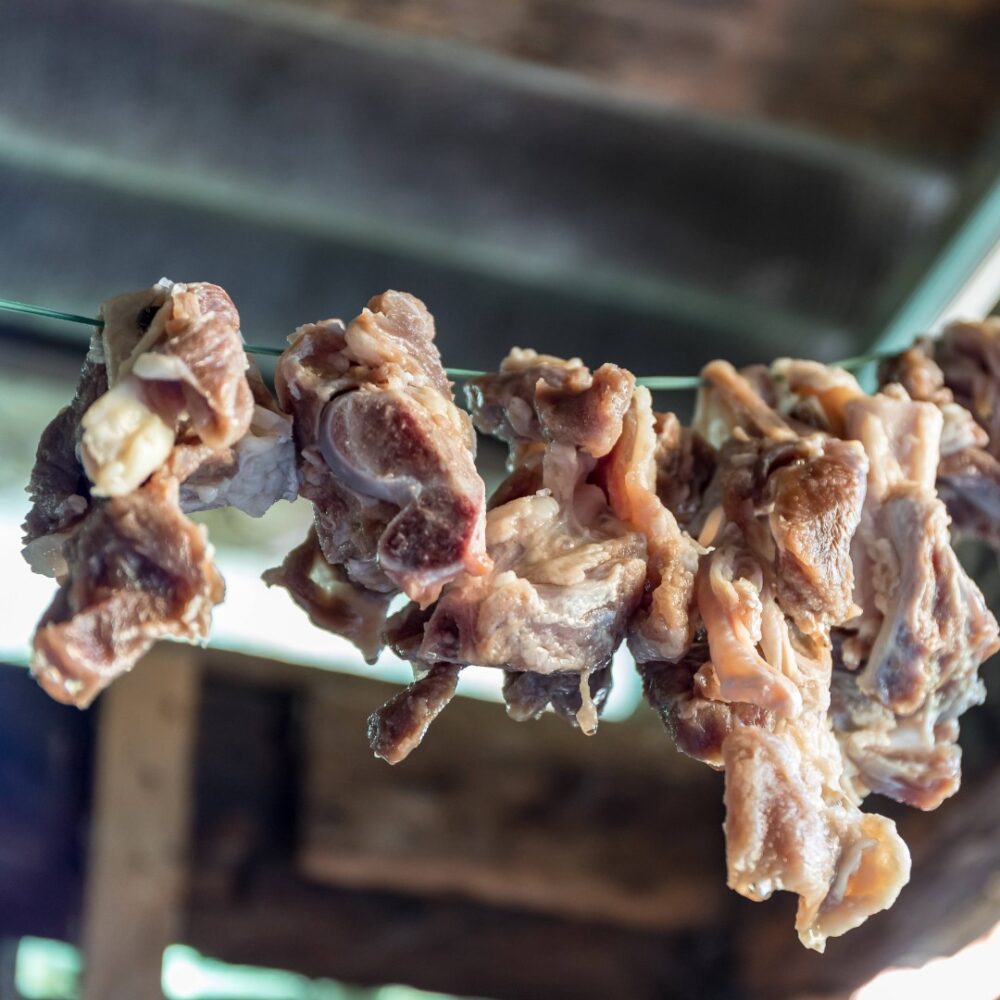
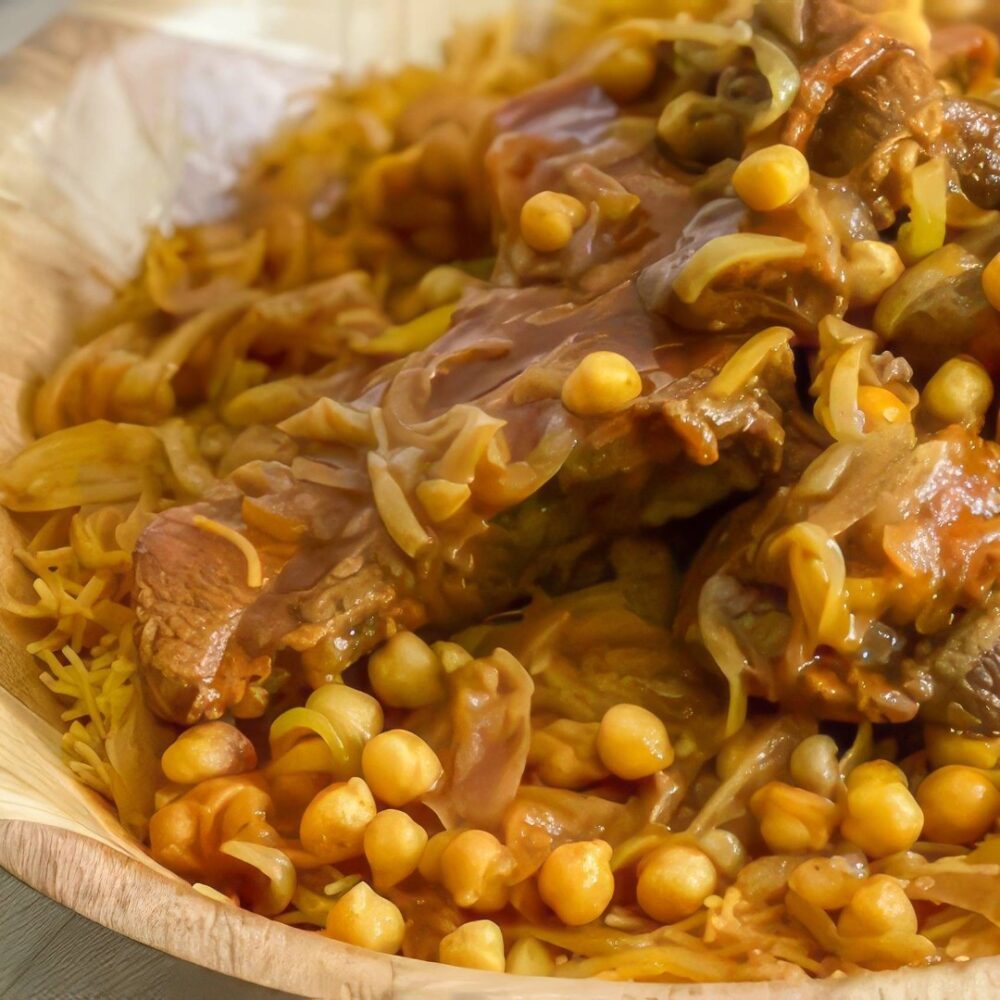
Meat drying is a widespread technique used worldwide under different names. Qarqush or qiddeed is the Libyan way. Meat is exposed to sunshine for several days, flipping it once in a while and keeping watch on dirt and unpleasant flies. This makes the qarqush a sensitive food, which many stick to preparing at home rather than buying a ready-made one from the grocery . If you happen to visit Libya during the holiday of sacrifice Eid Adha, you will see strips of meat hanging on the rooftops. This qiddeed is used in such traditional recipes as megata rishdet burma (Libyan home-made pasta).
FISH AND SEAFOOD IN LIBYAN CUISINE
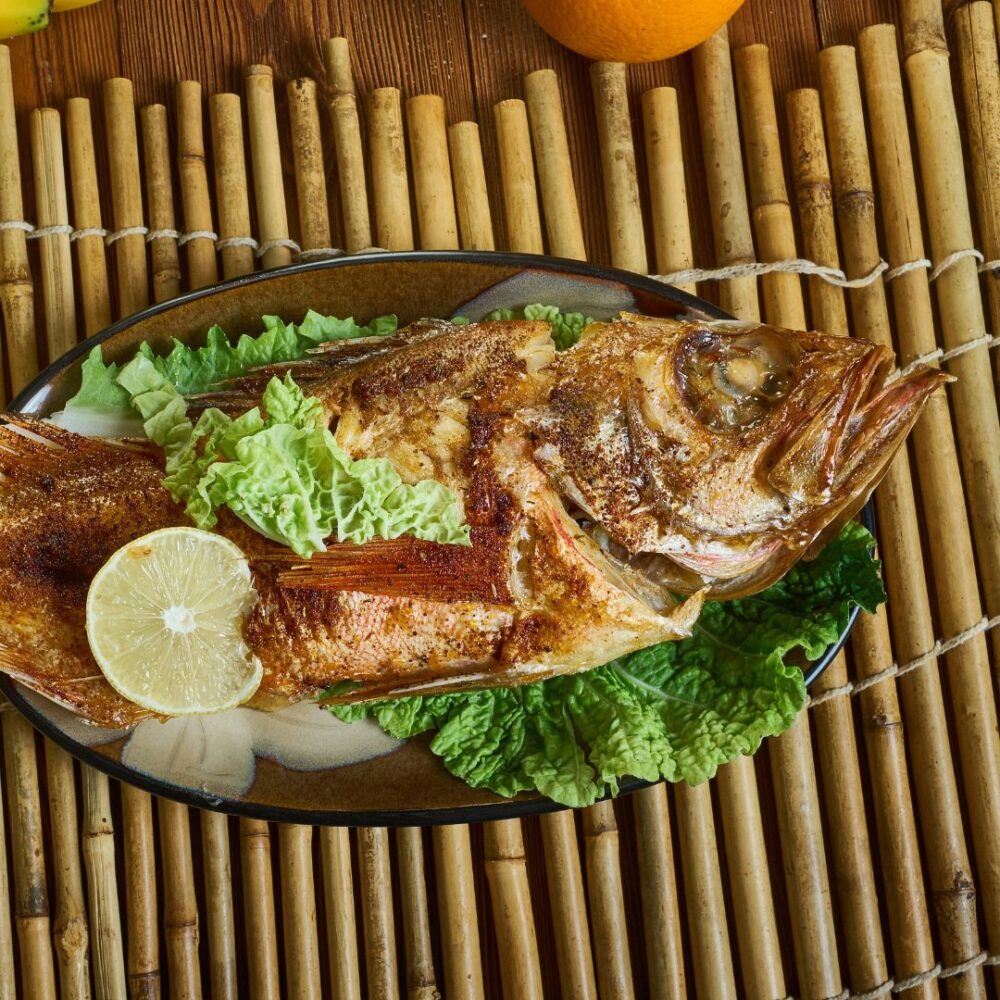
Fresh fish isn’t a major staple because most of the country is desert and far from the coast. The nearby Mediterranean waters are relatively low in productivity, so they don’t provide large fish stocks.
During the colonial era, Europeans introduced various canned foods. As North Africa modernized and urbanized post-independence, there was a shift towards fast-prepared food options. Canned tuna, with its ease of use and storage, quickly became an attractive option. Up to date, it is a trendy protein option for salads, sandwiches, pasta, and stuffed vegetable dishes.
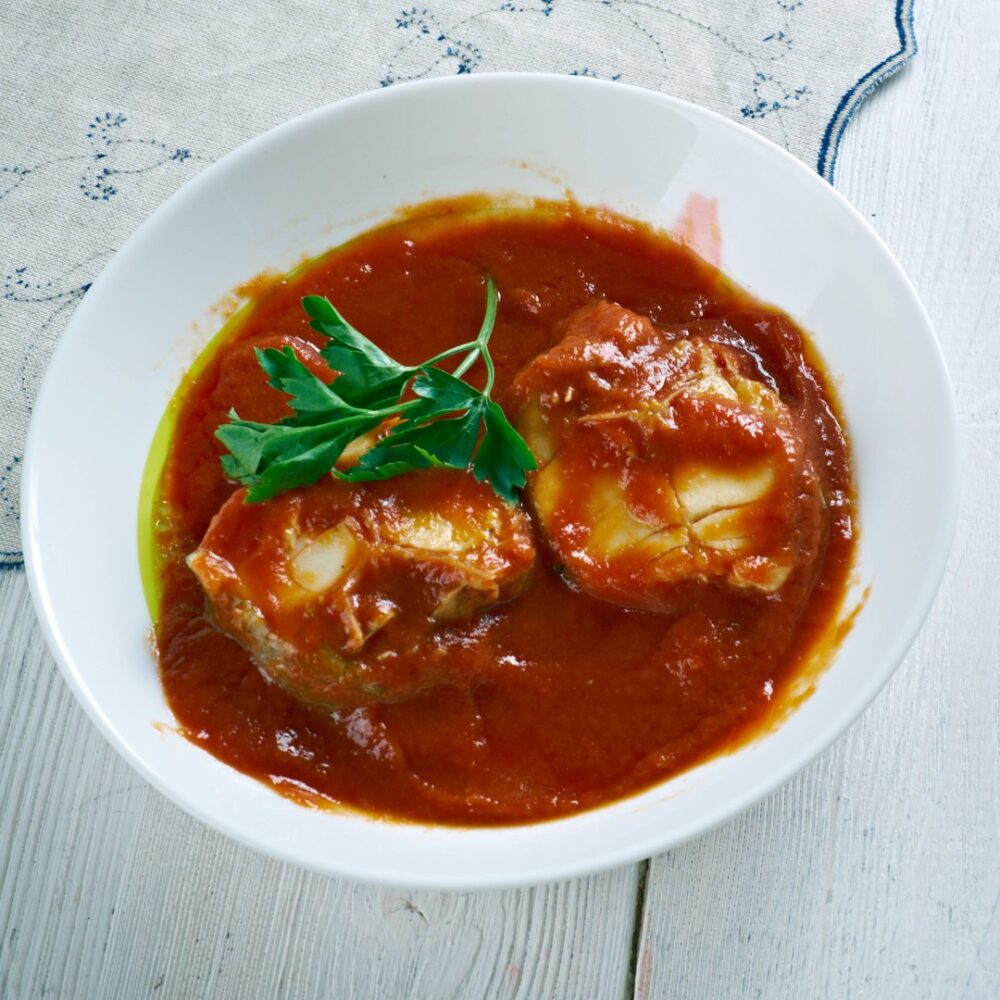
Even though not prevailing in the masses’ diet, coastal areas have some seafood specialties, like sun-dried octopus and squid. Delicacies are dried in the sun for a few days, then cut and boiled for a couple of hours before being added to a herby tomato stew, to serve with couscous. Quite often, seafood meals in Libya are accompanied by a tomato, garlic, cumin and salad and hararat spice mix.
MILK AND DAIRY IN LIBYAN CUISINE
The use of dairy in cooking is typically simple: fermented products like laban (a drink similar to buttermilk), jben (a soft cheese akin to cottage cheese or ricotta), and rayeb (a homemade yogurt) are common. Cheese is not a major staple, but it finds its place in salads or breads for breakfast.
However, dairy products are a primary food for Bedouin communities, whose frequent meal may be a bowl of yogurt and rice topped with ghee. Camel milk, a traditional staple for many desert-dwelling peoples across North Africa, is valued for its nutritional and medicinal properties. It is often sold fresh or fermented in larger supermarkets within urban centers, while in rural or desert areas, it is typically sold directly by producers.
OILS AND DESSERTS IN LIBYAN CUISINE
Food in Libya is frequently prepared with olive oil; there is not even such a thought of having ‘too much olive oil’. Once in Libya, you would need to adjust your palette to sense local olive oil everywhere. Olive oil exports have been banned since 2017 to protect the domestic production market, though this was more about stabilizing local markets rather than an outright ban on all olive oil exports.
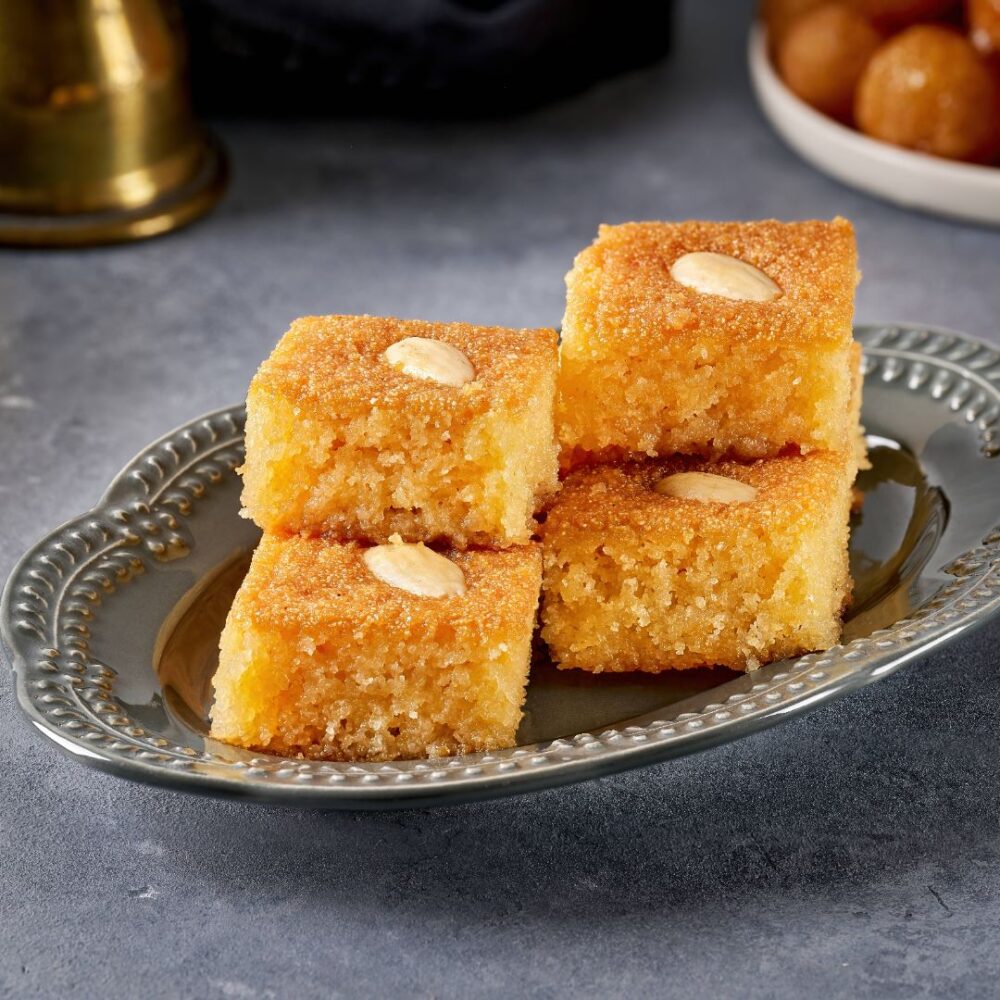
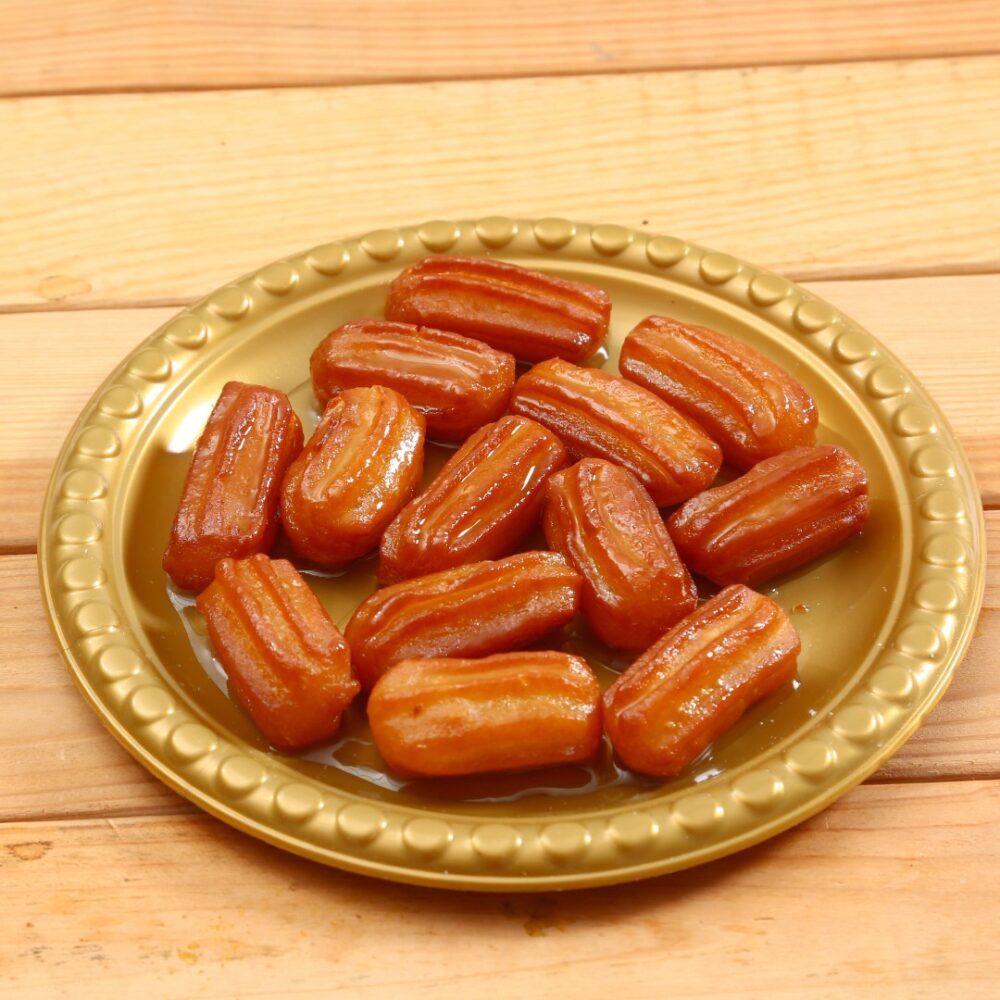
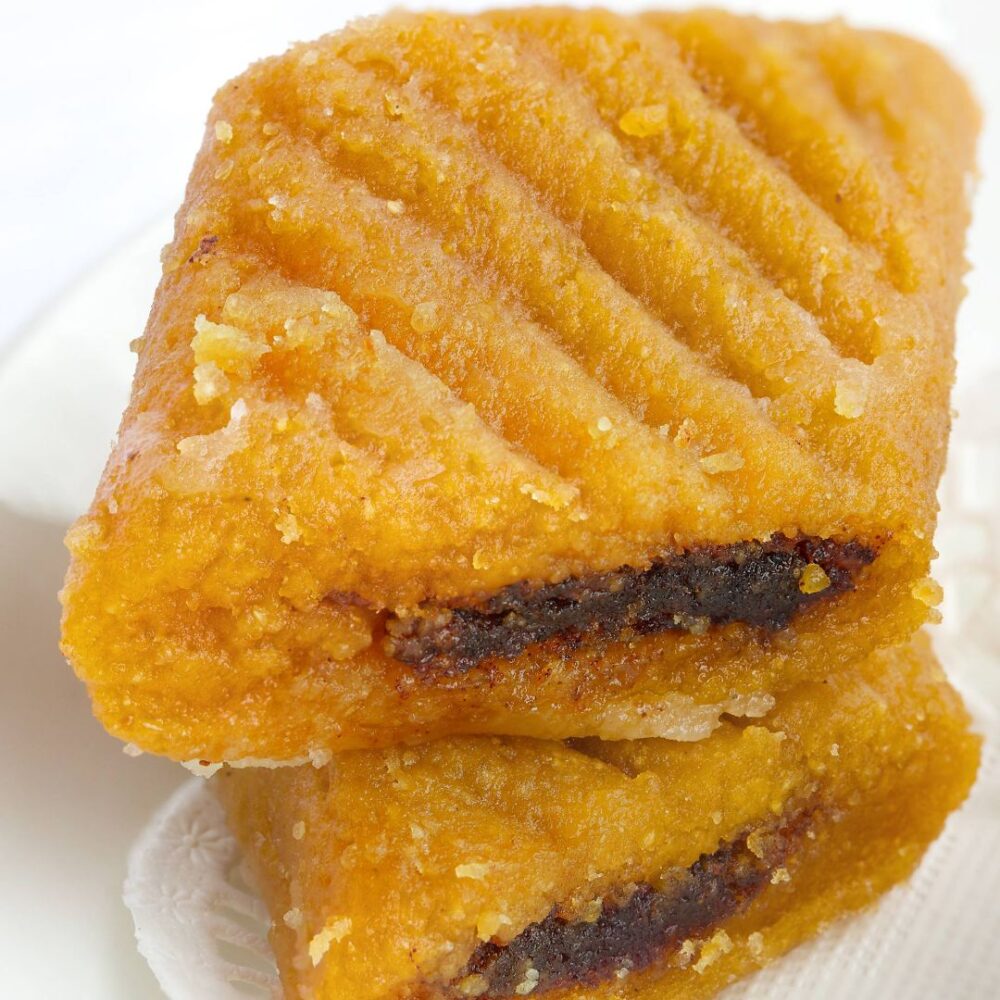
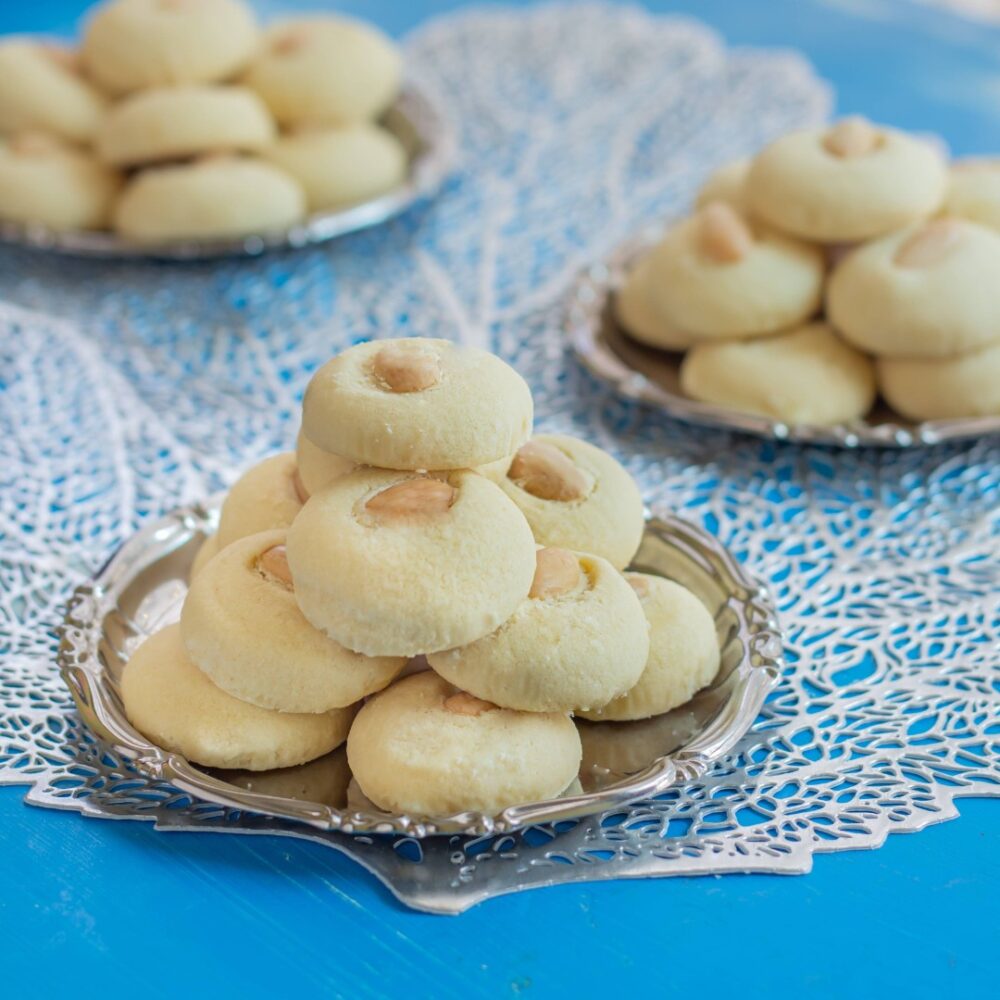
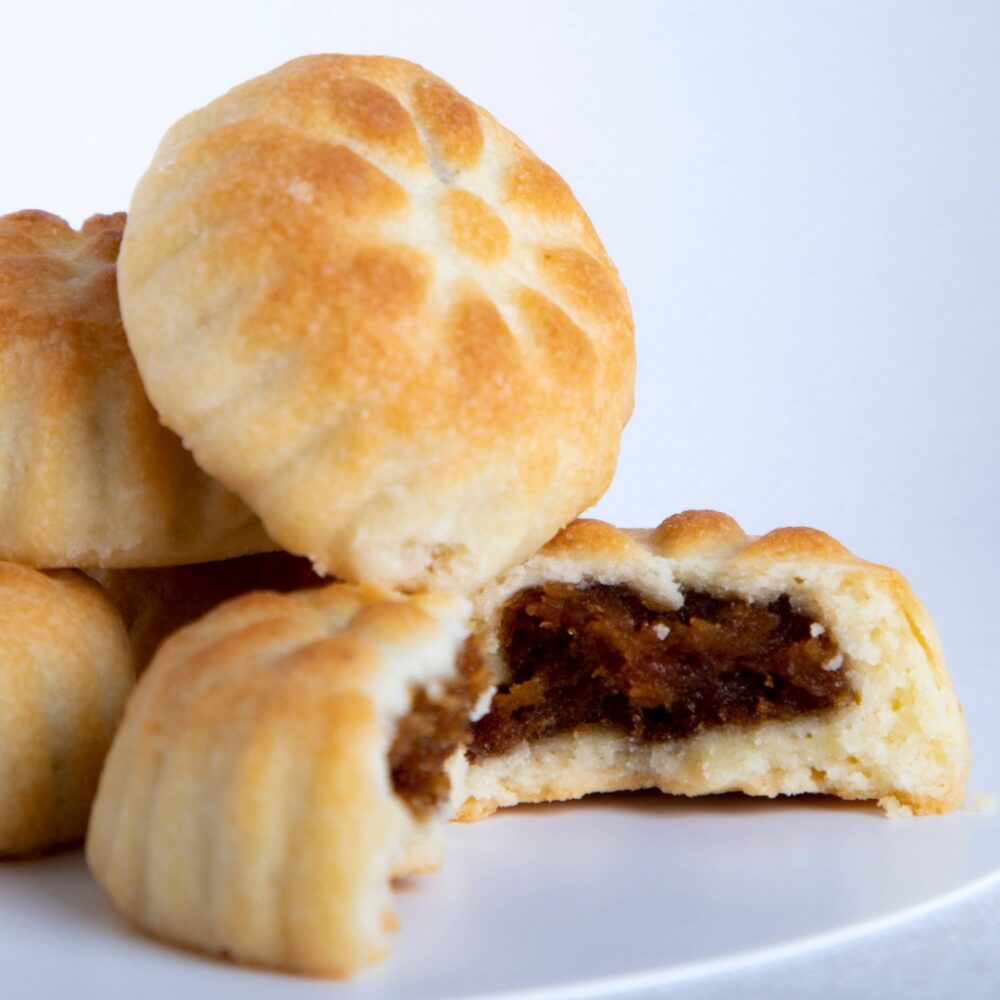
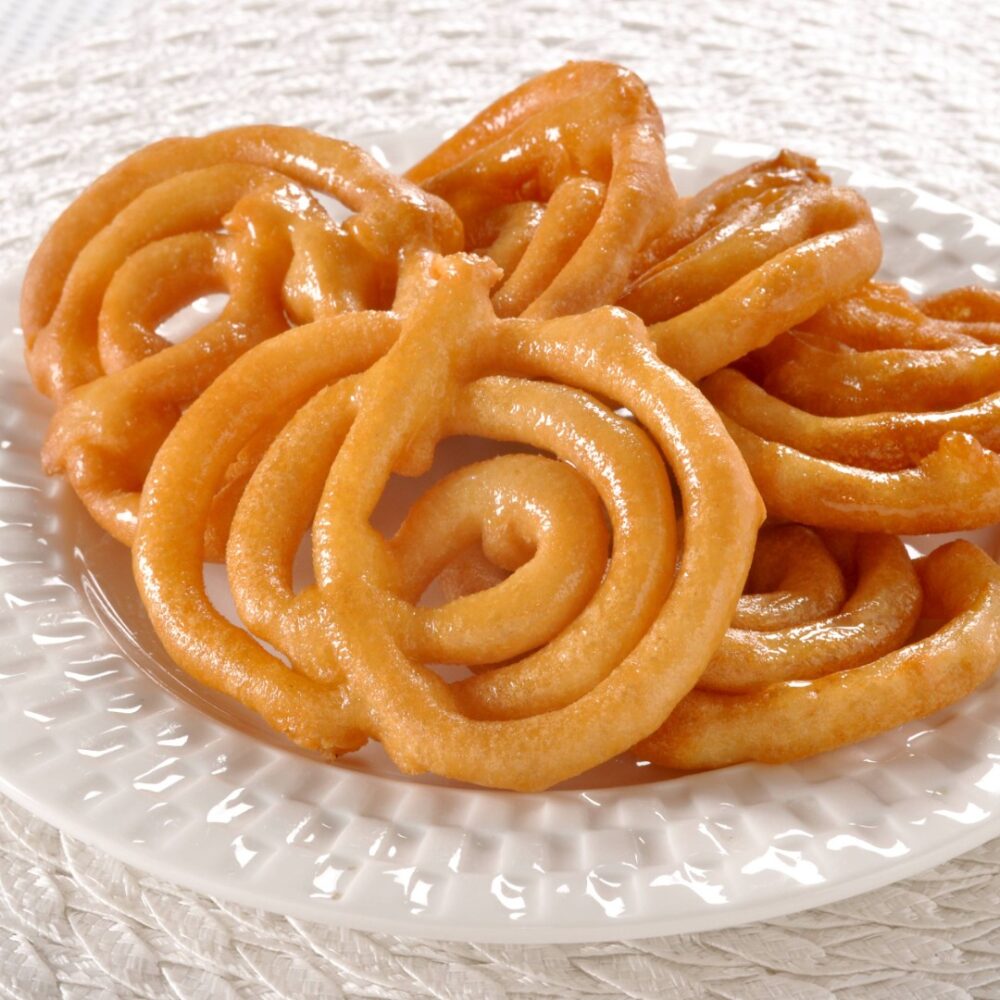
Libyan desserts rely on dates, honey, almonds, pine nuts and semolina. Warm cinnamon and cardamom, along with rosewater, give them their signature aroma. They’re usually very sweet, but served in small portions with mint tea or strong coffee to keep the balance.