THE ESSENCE OF ARMENIAN CUISINE
Armenian cuisine centers on fresh, seasonal, land offered ingredients that have barely changed over millennia. The foundation is wheat. Armenians turn it into everything from pilafs and soups to the dumplings manti. Centuries of herding built a love for good meat; beef and lamb are preferred, but pork is also eaten, which sets Armenia apart from its Muslim neighbors.
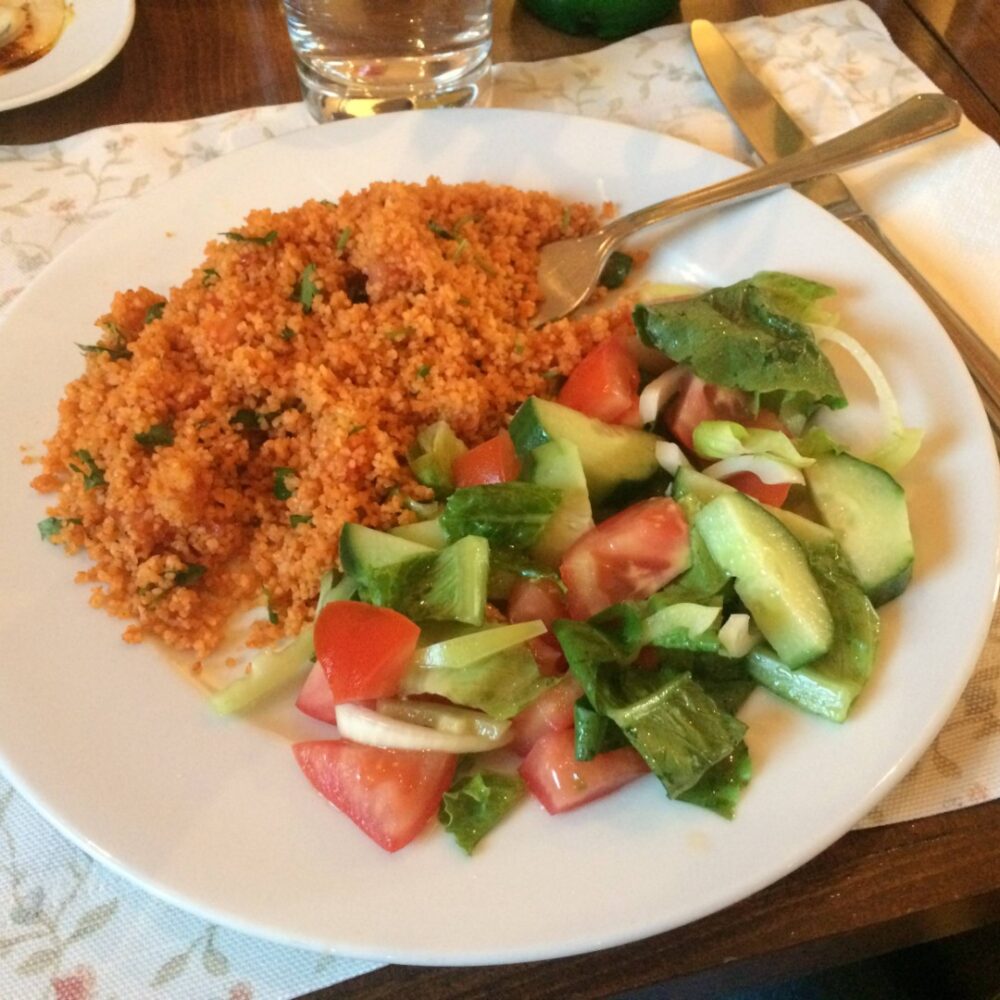
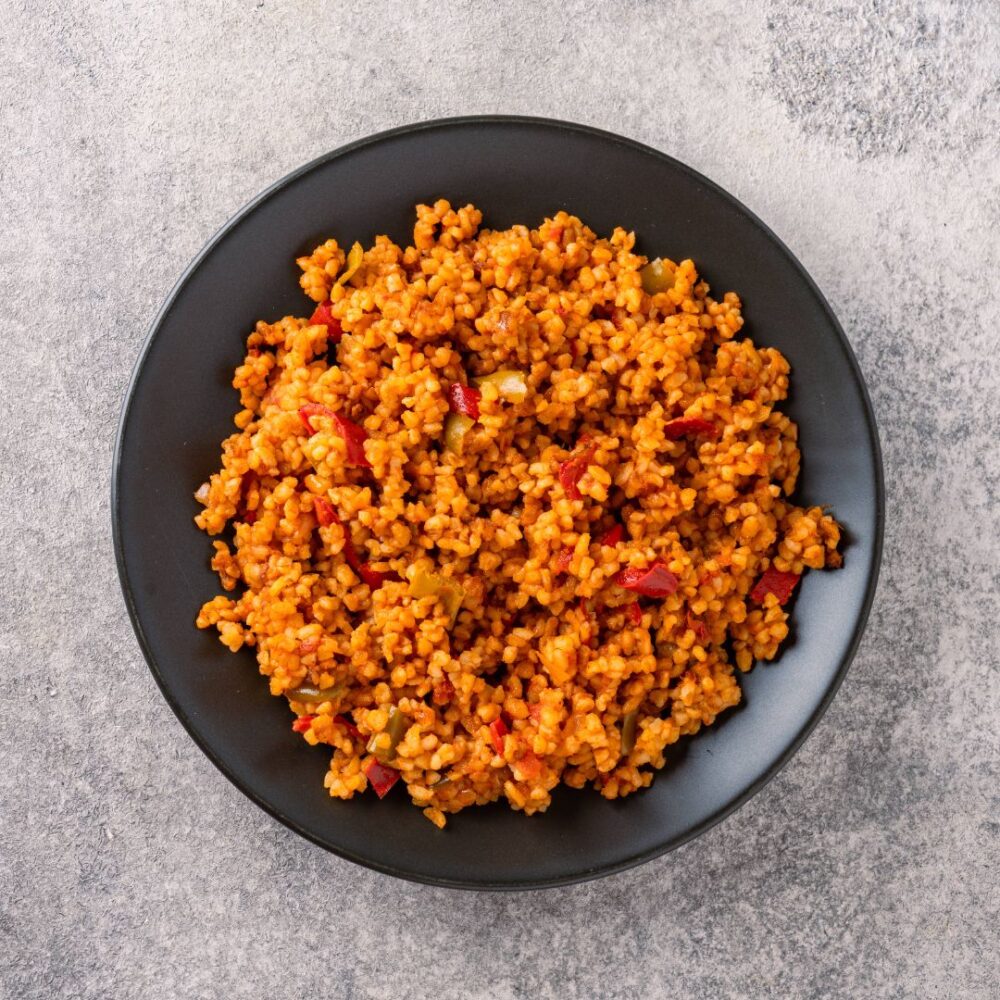
Armenia’s food is distinct with the layering of flavors. Herbs aren’t garnishes – they’re treated like ingredients. Parsley, cilantro, tarragon, and fresh basil appear in massive quantities, as well as pomegranates. Fermented dairy, especially yogurt, plays a big role in Armenian highlands and features soups, sauces, grain dishes, meat marinades. You’ll also notice fewer rice dishes than in Persian cooking, with bulgur preferred instead.
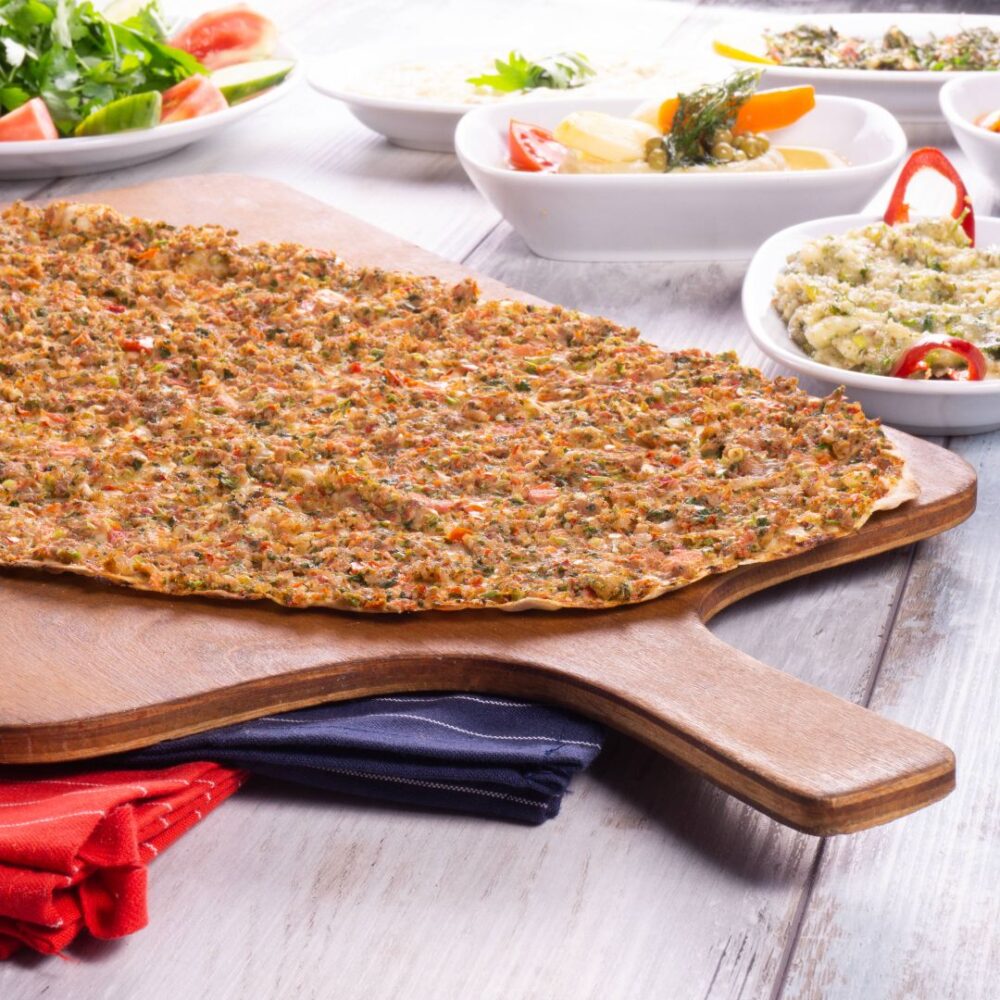
Mezze is a popular dining style throughout the eastern Mediterranean and the Middle East, and Armenia shares this tradition.
Coffee is consumed far more in daily life than tea, prepared unfiltered and served with grounds in small cups. The Armenian coffee ritual includes fortune-telling using the leftover grounds. Wine has deep roots here – Armenia is one of the world’s oldest wine-producing regions. Alongside wine, brandy (particularly Armenian cognac) is a source of national pride.
The non-alcoholic spectrum features tan, a savory yogurt drink seasoned with salt and herbs; compotes from apricots or cherries, pomegranate juice, herbal teas.
GRAINS IN ARMENIAN CUISINE
Wheat shows up in many forms: whole grain, bulgur that’s cracked and parboiled for quicker cooking, semolina made from coarse durum wheat, farina that’s ground and pre-cooked for quick hot cereals, and, of course, flour. Mixed flours are common too, with wheat blended with potatoes and maize.
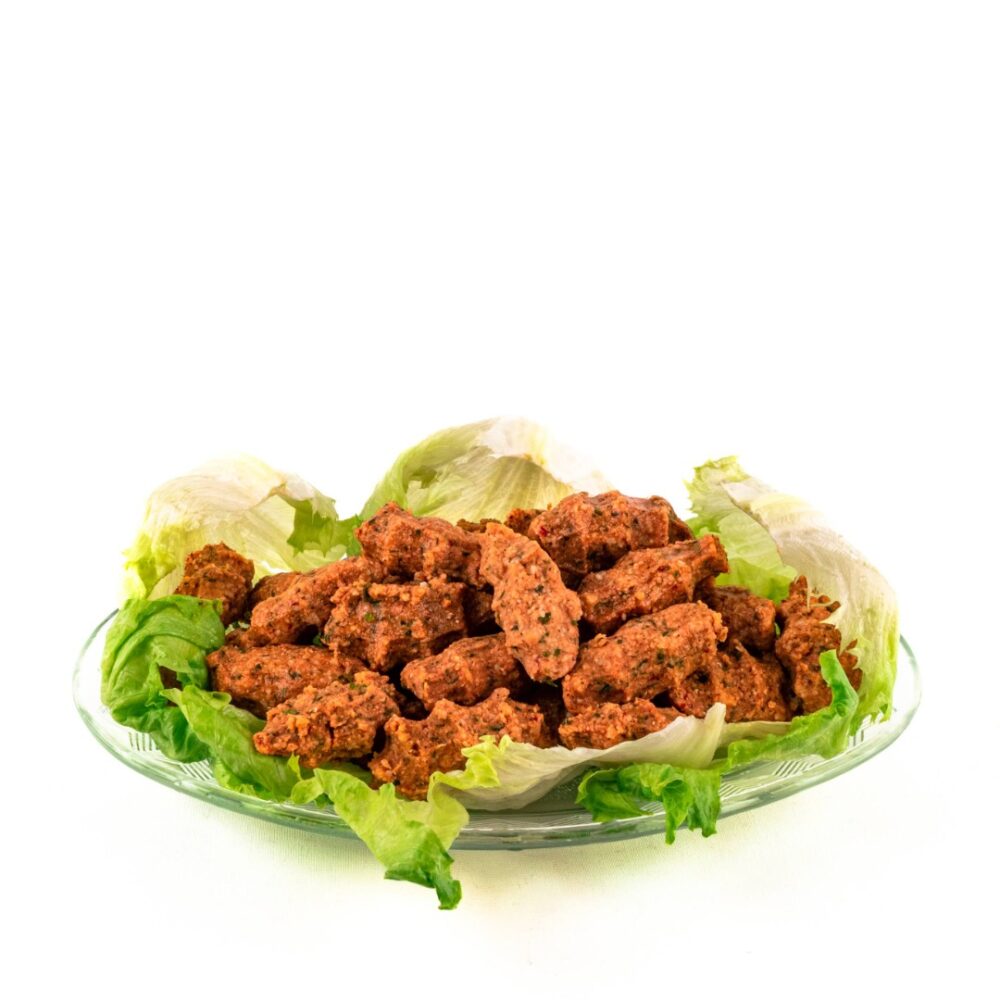
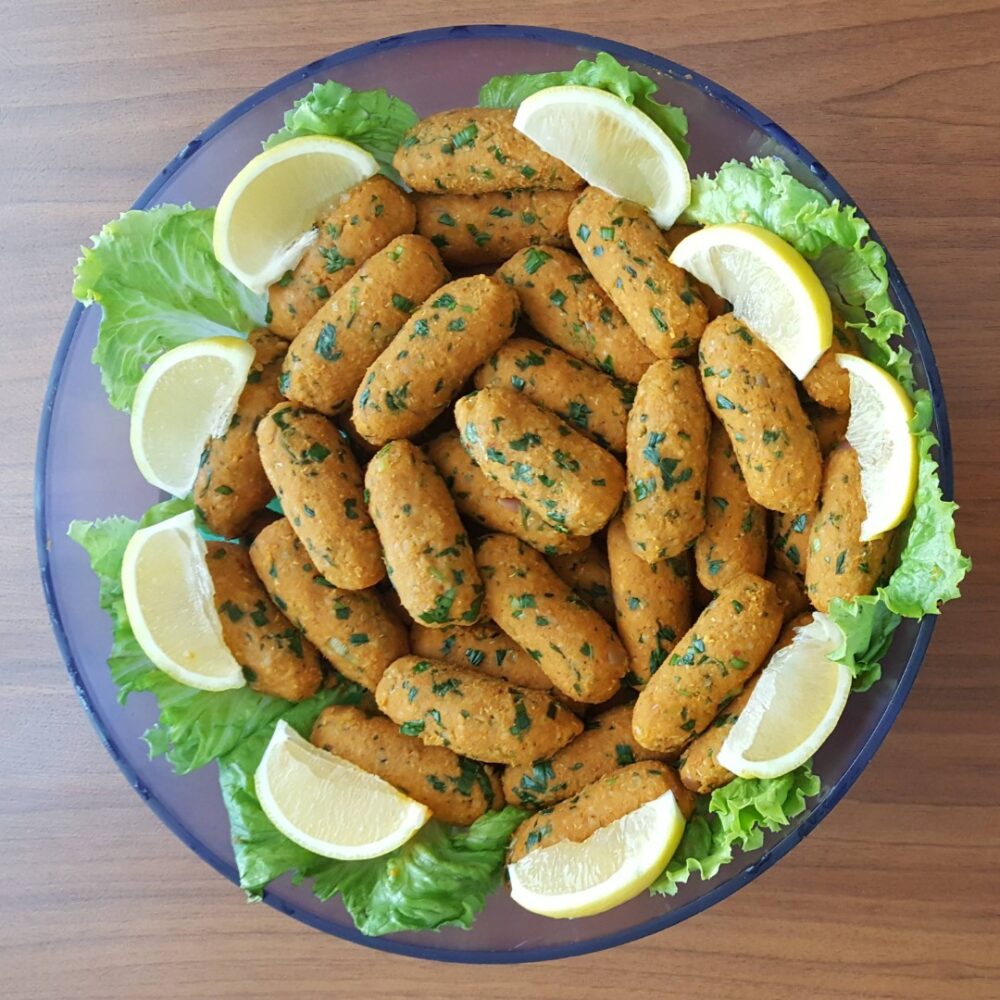
Armenians treasure bulgur’s versatility. It appears in pilafs, salads, and vegetarian dishes like eetch, a salad reminiscent of Middle Eastern tabouleh, though the Armenian version lets bulgur and tomato flavors dominate. Bulgur forms the base for vospov kofte, savory patties made of red lentils – are a popular vegetarian dish during fasting.
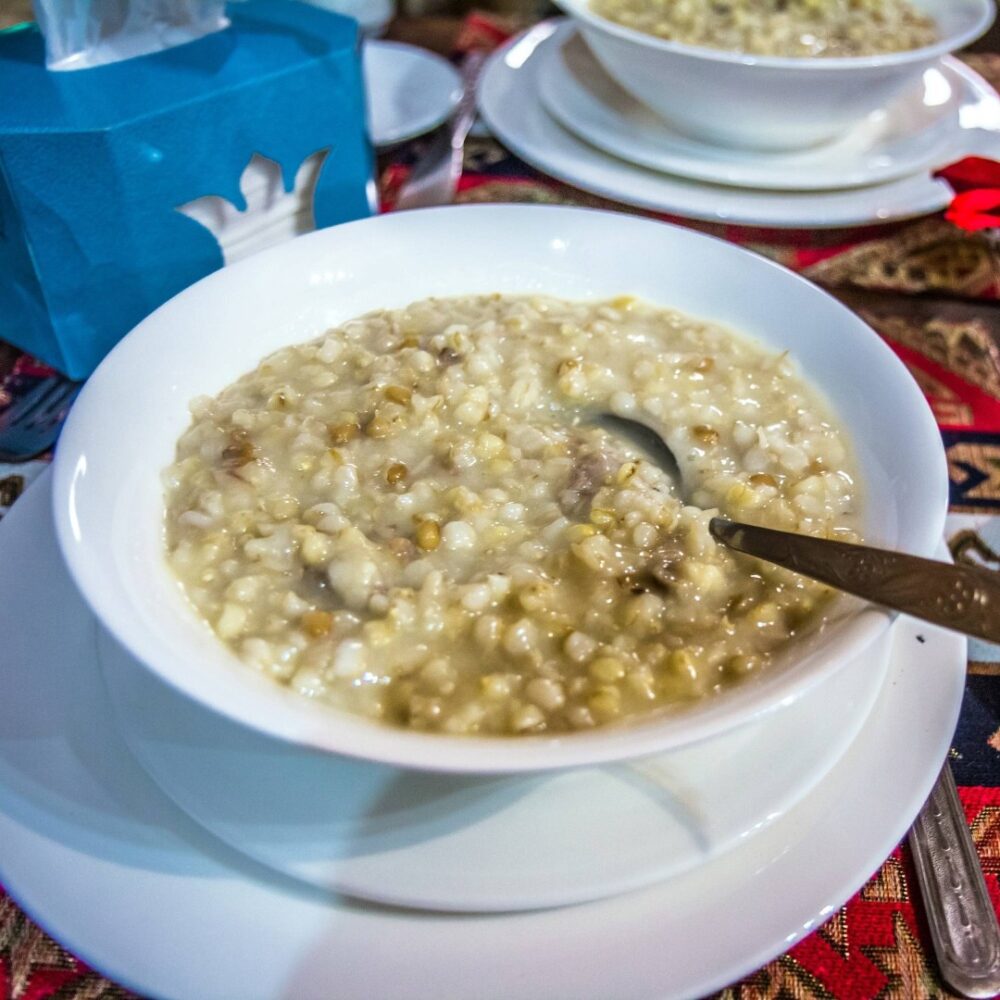
Wheat takes center stage in Armenian harissa (and that is not a fiery condiment from North Africa), a creamy porridge made from cracked wheat or bulgur and meat, slow-cooked in an underground clay oven, tonir, or nowadays, on a stove, till it turns into a comfort meal.
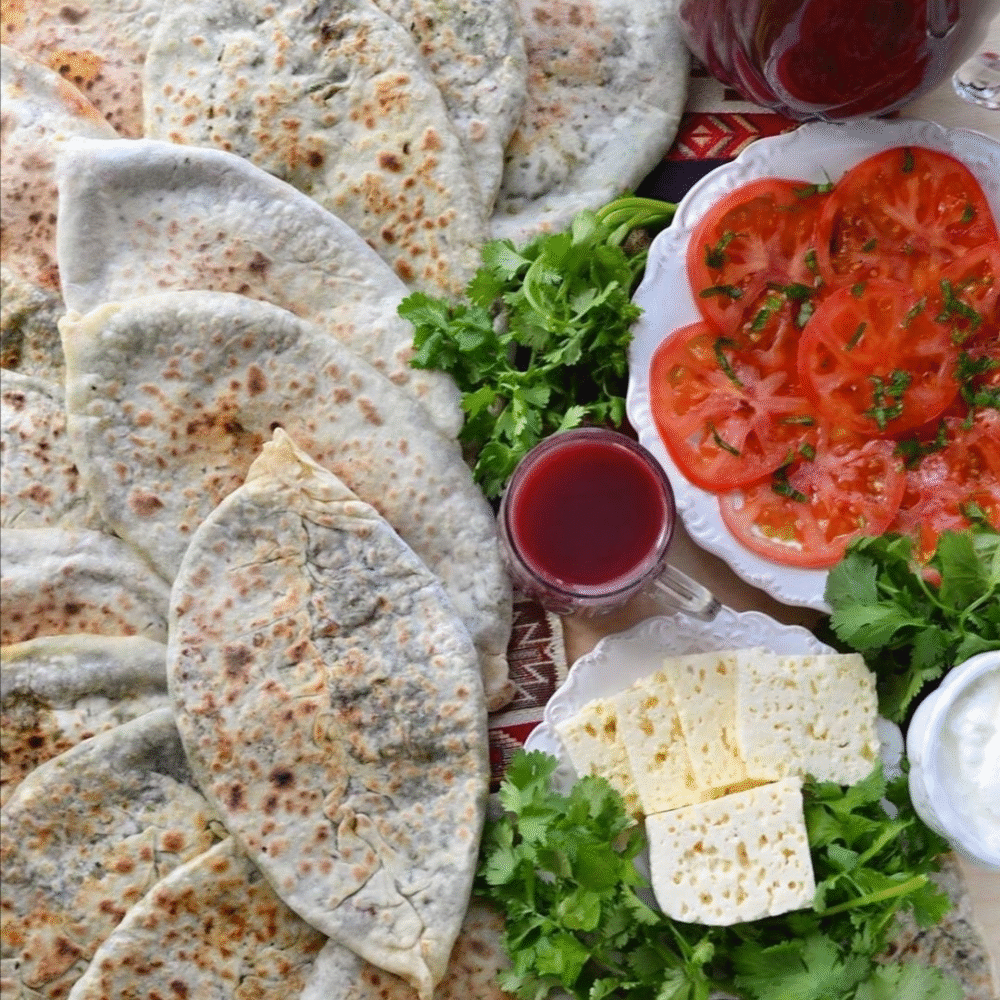
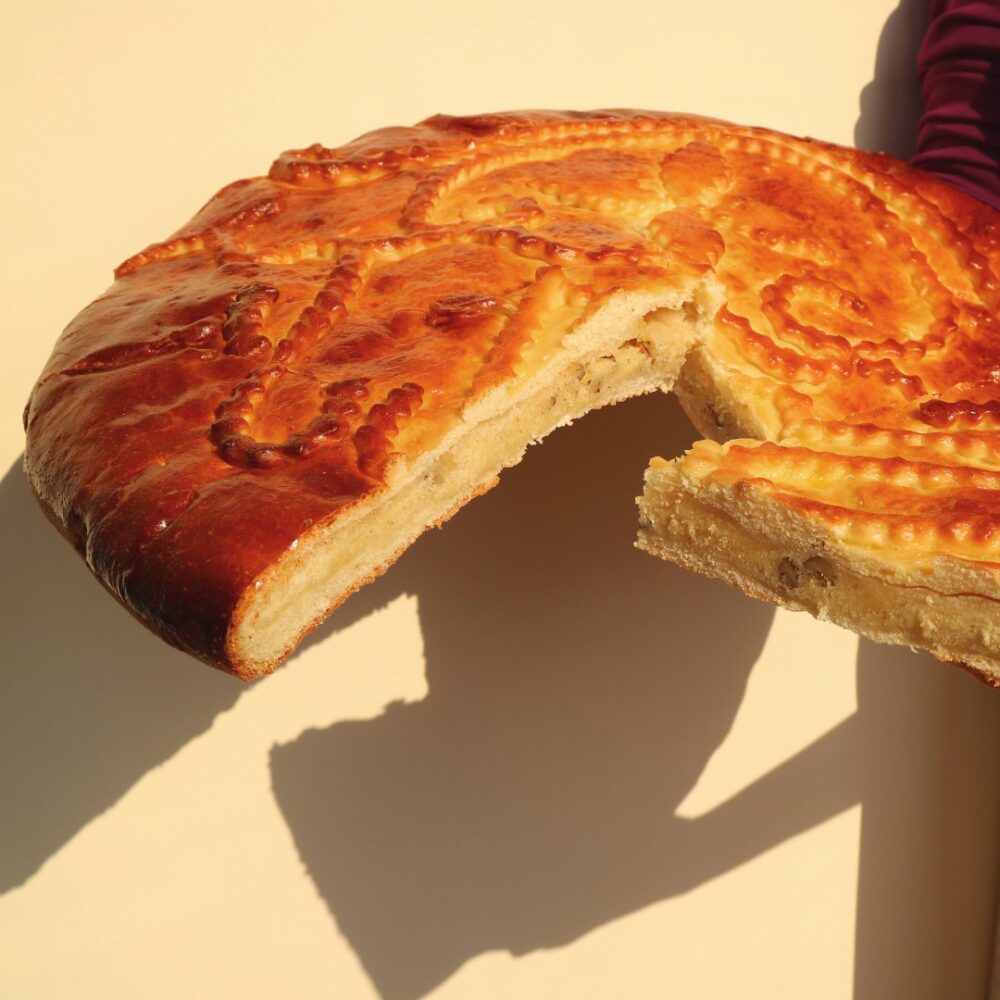
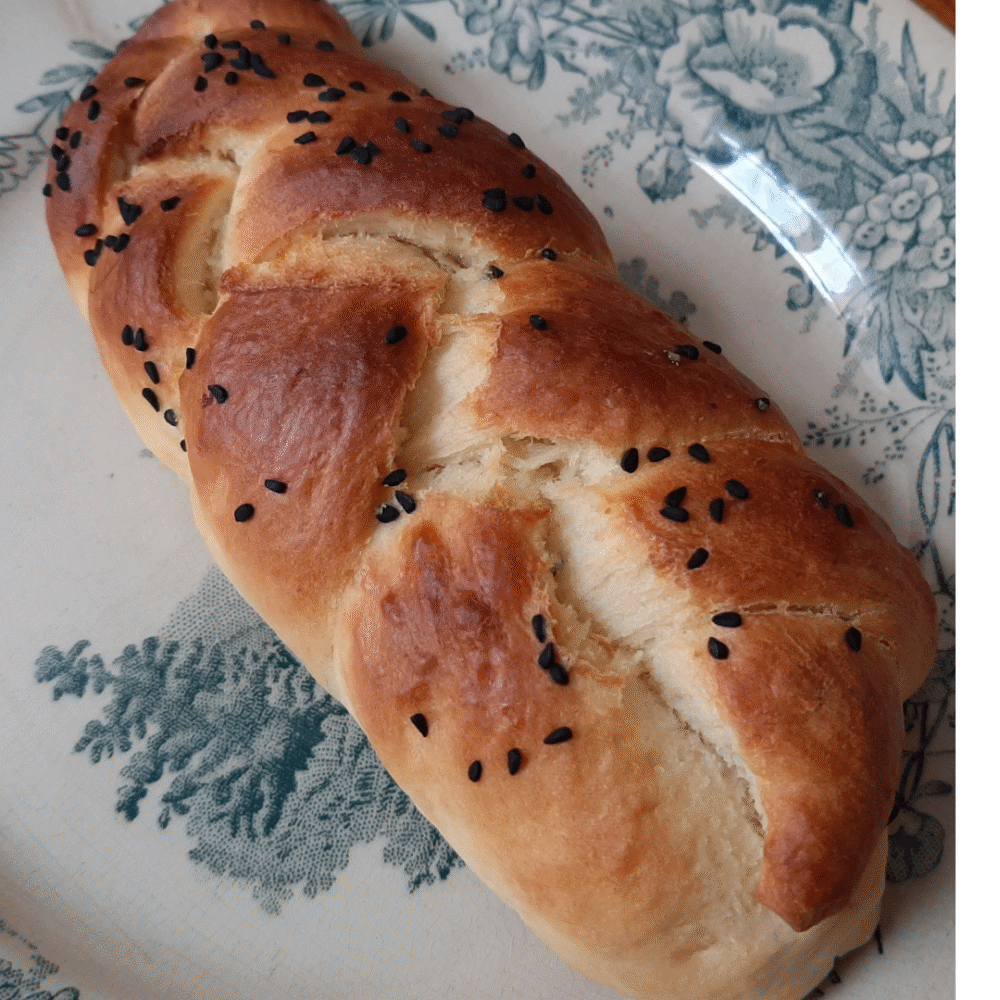
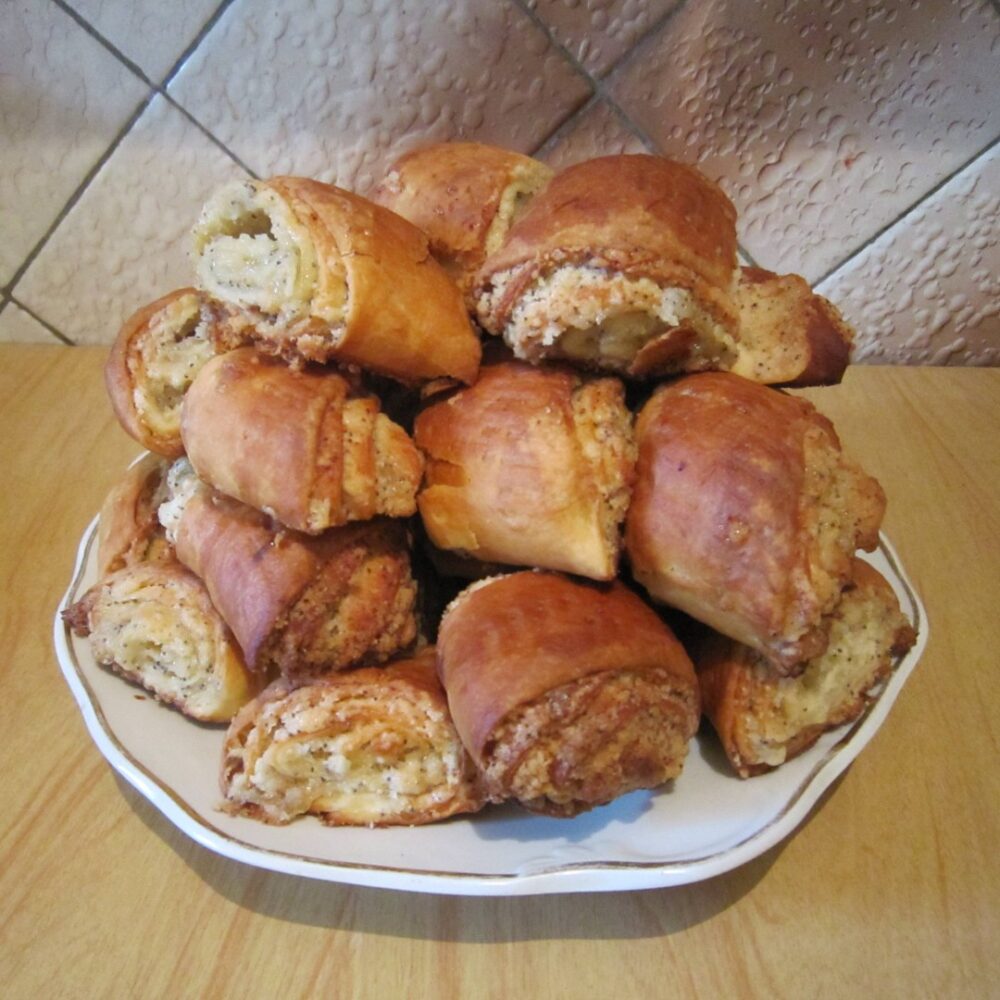
Also baked in a clay tonir, lavash accompanies almost every non-dessert meal and is recognized by UNESCO as part of Armenia’s intangible cultural heritage. Matnakash, a leavened variety, has a thicker and chewier texture, with a crispy crust. Other popular breads in Armenia include pita, Easter bread choreg and sweet bread gata.
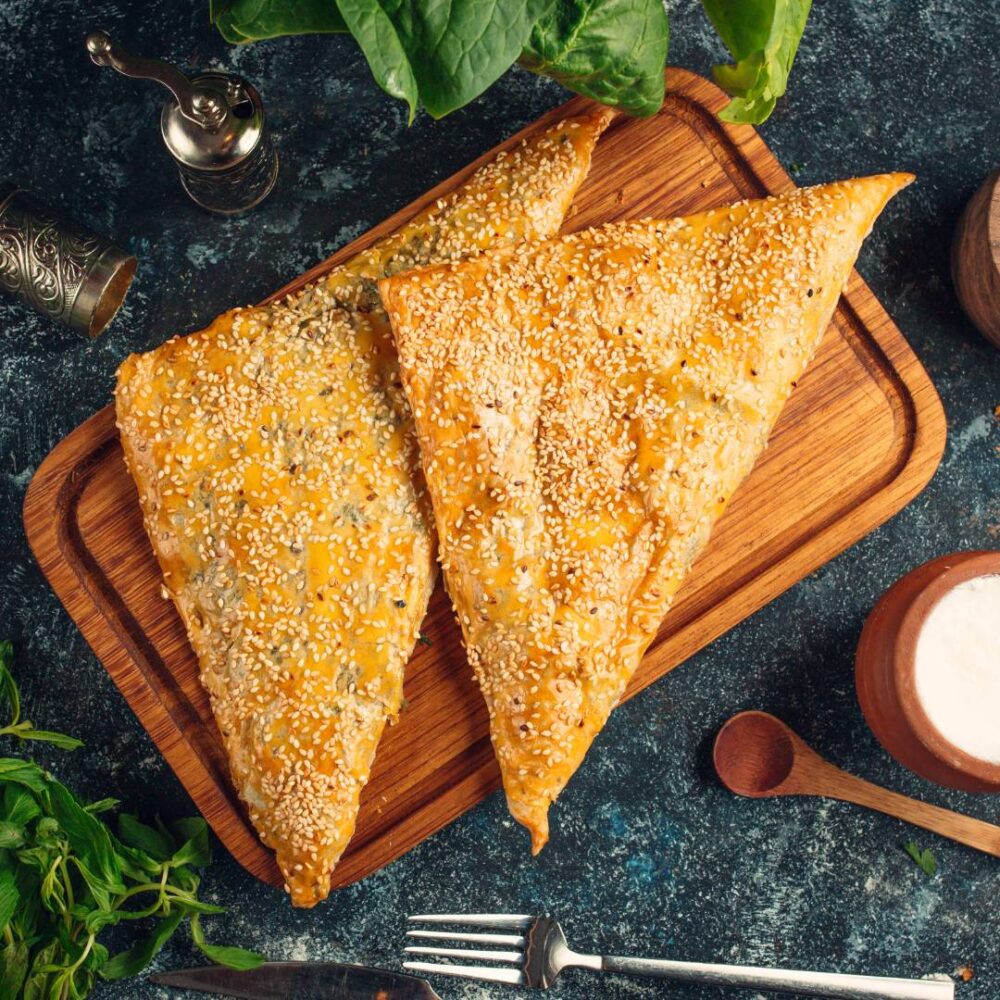
Boeregs, or boreks, borags, beregs, boregs, boraks – so many names with “bo”, that’s a street food, crispy phyllo dough appetizer with savory cheese, meat, or veggie filling. Armenians have embraced them as their own, but variations are found throughout the former Ottoman Empire, Albania, Bulgaria, Turkey, Greece, and Serbia.
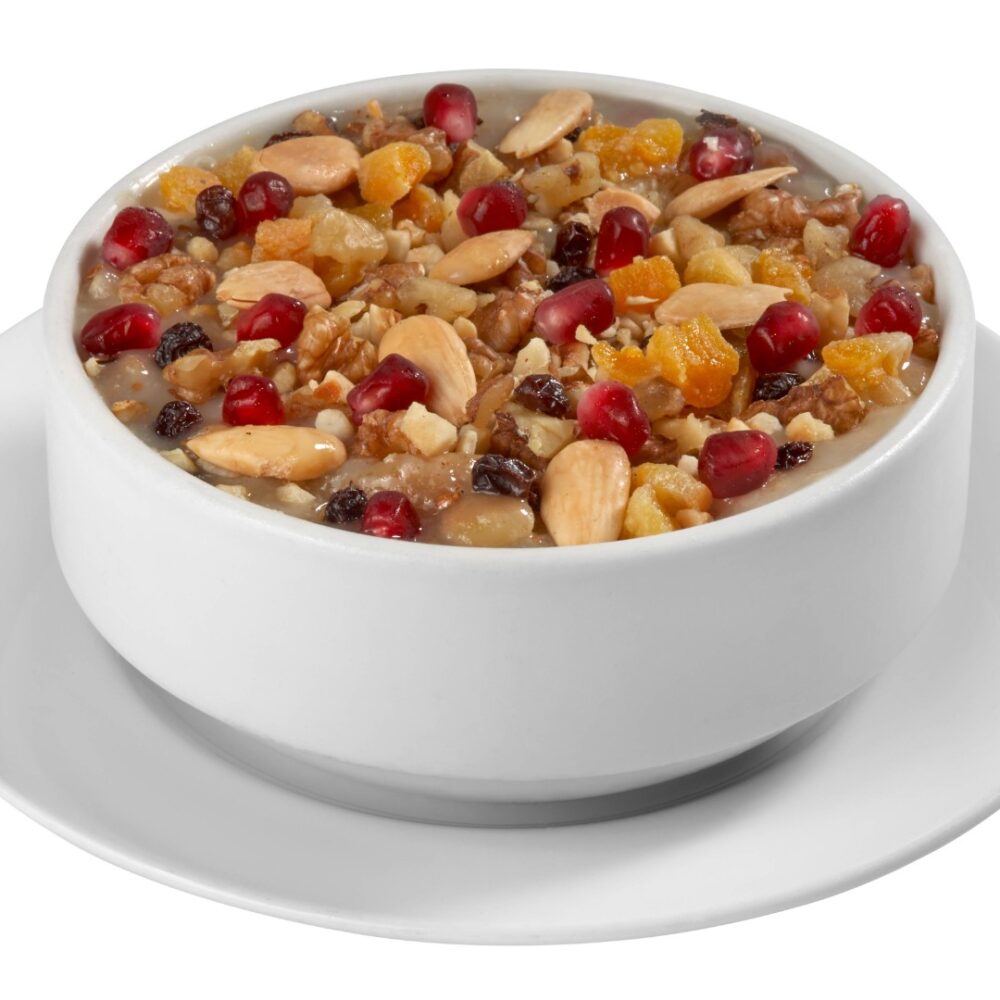
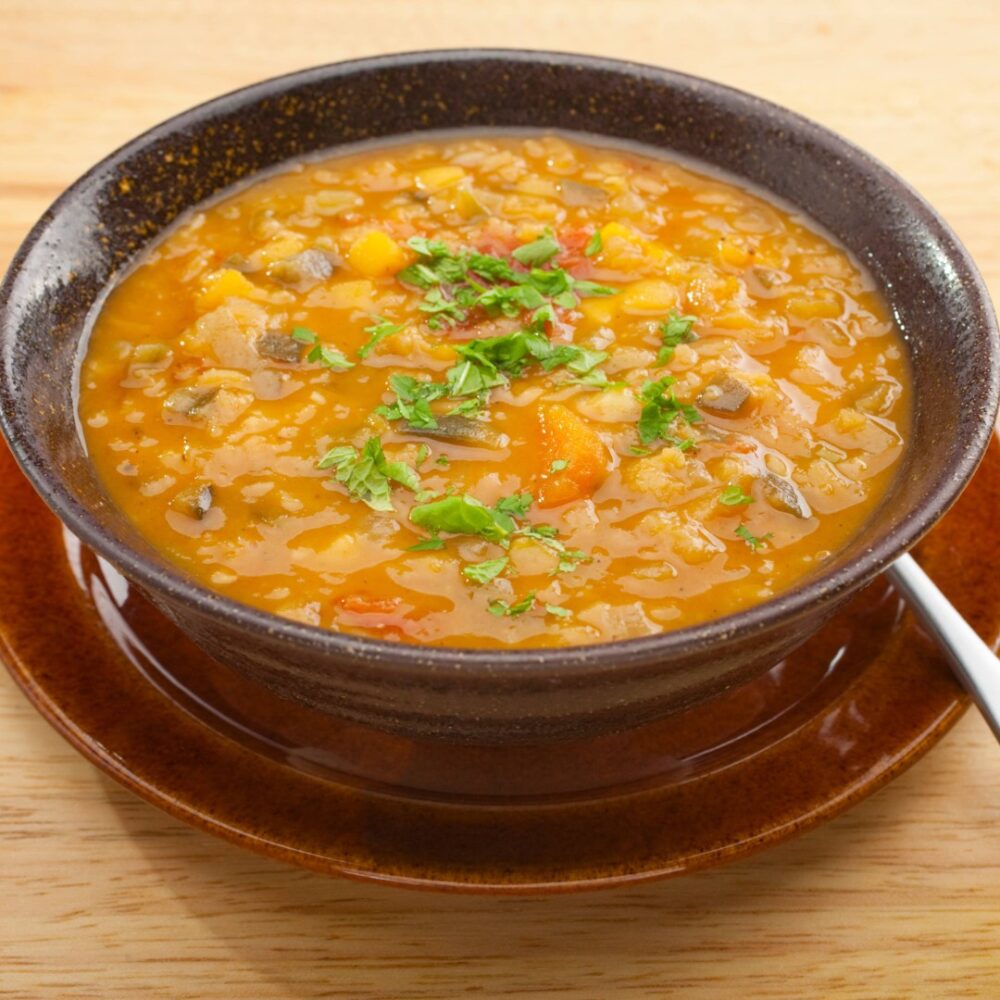
Barley thrives in dry climates, making it a natural fit for Armenian soups and stews. Barley porridge makes a hearty breakfast, seasoned with onions, herbs, and cumin for a savory version, or sweetened with honey. The grain also shows up in soups like tanabour (see milk and dairy) and ashura, a grain pudding, similar to Turkish Noah pudding.
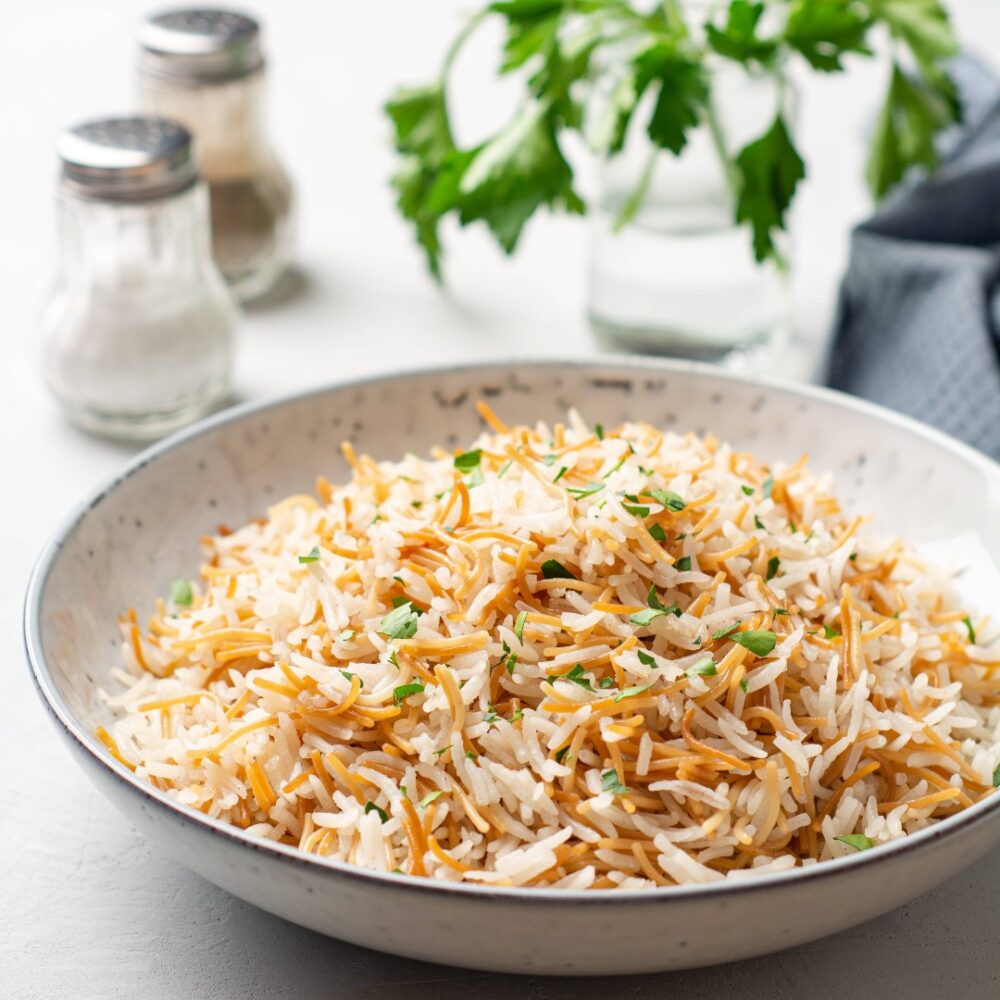
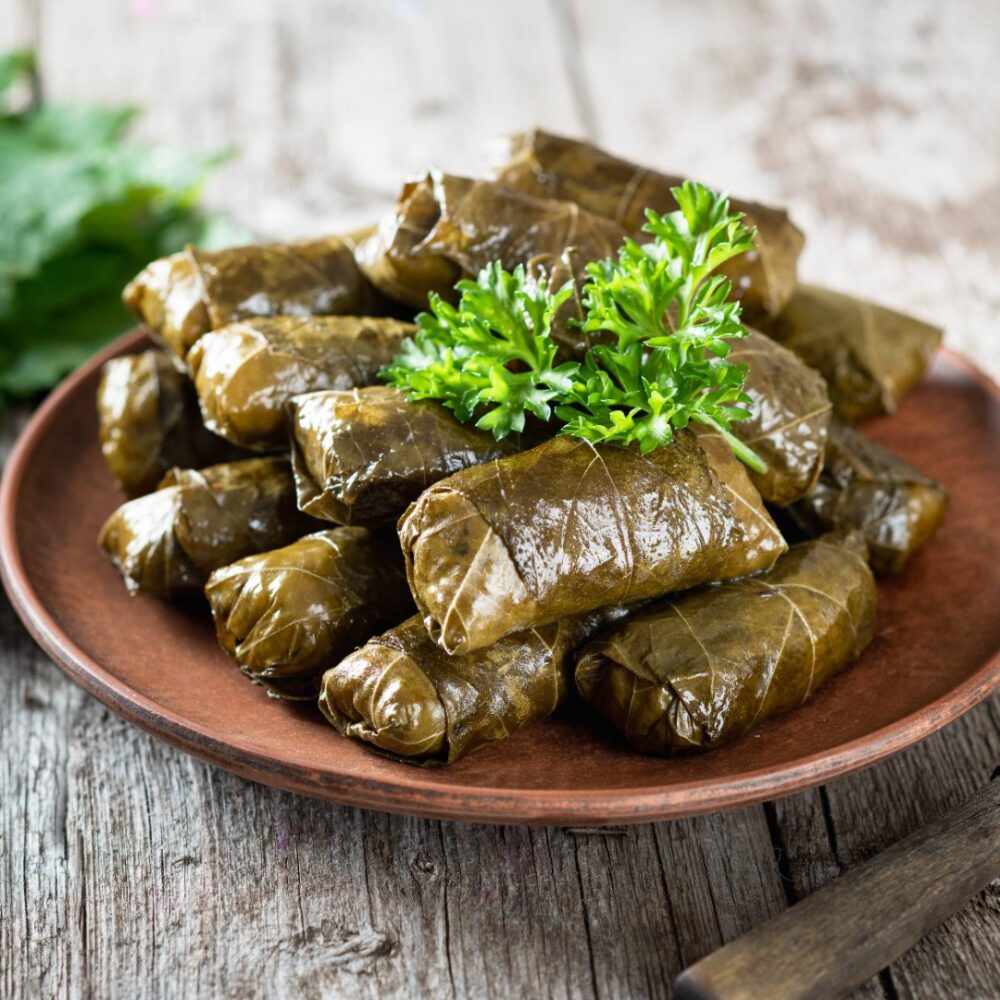
Rice arrived in Armenia through trade routes and quickly fit into rice pilaf, called plav. It is a must at celebrations and special occasions. Cooks often add vermicelli or thin dried pasta to their pilafs. Rice is also very important to dolma, where it’s mixed with herbs and spices, then wrapped in grape leaves or stuffed into peppers or zucchini.
PRODUCE IN ARMENIAN CUISINE
Armenian cooking treats vegetables as essential, not secondary. If meats are grilled for dinner, veggies follow it on the grill. This method, known locally as khorovats, works for eggplants, bell peppers, and tomatoes, which can also be incorporated into salads, lending some smokiness.
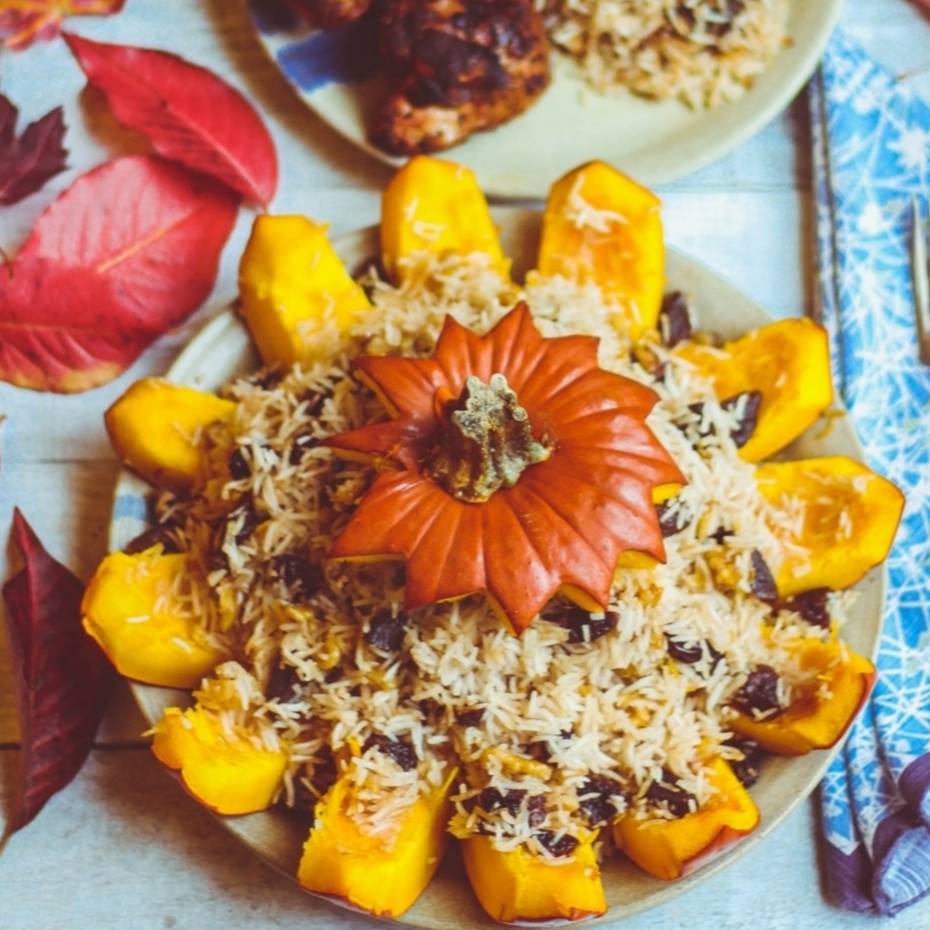
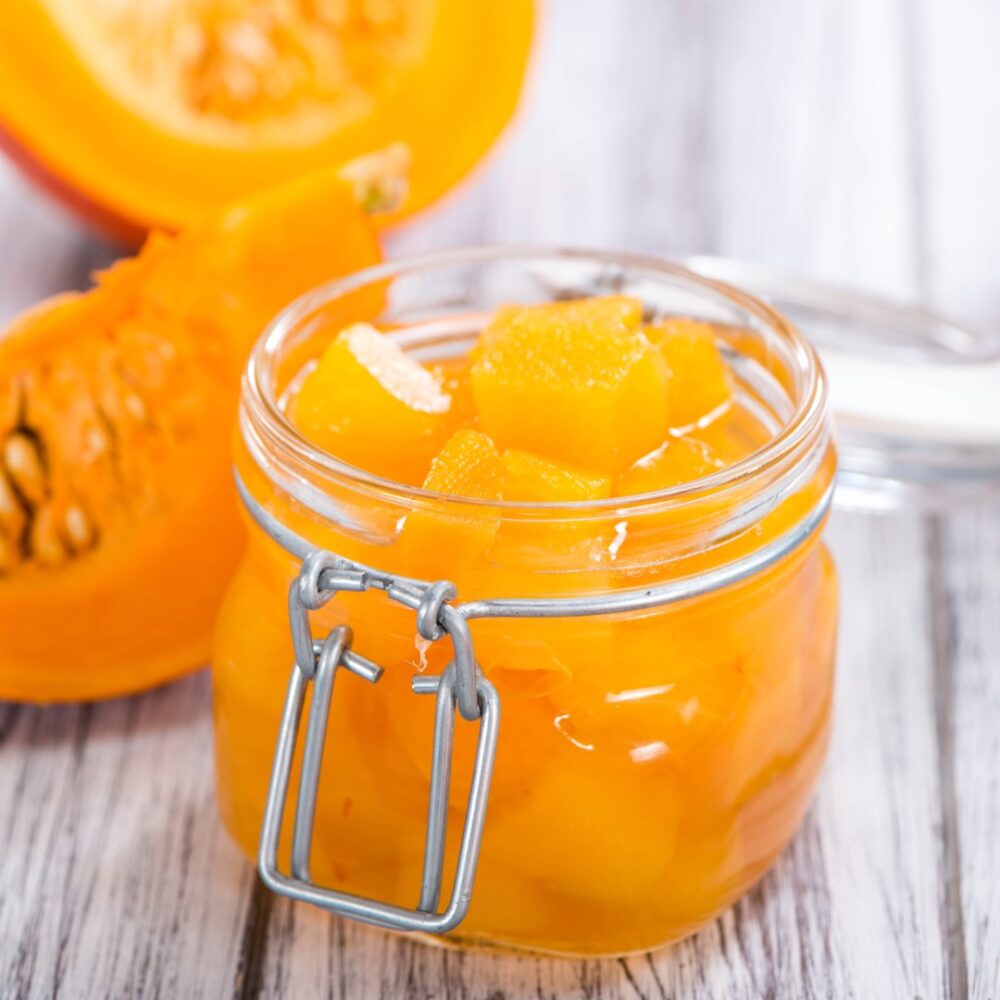
Fresh purslane, sorrel, and wild arugula are tossed in salads, dressed with a simple lemon-olive oil dressing. Spinach and chard are abundant and often used in soups and stews. Pumpkin features ghapama, a sweet and savory dish, meaning ‘cooked in a covered pot”, where the pot is the pumpkin itself. The squash or pumpkin is stuffed with rice, dried fruits, nuts and roasted.
Eggplant is a staple component in Armenian cuisine, used in dishes like eggplant caviar (mutabal, also popular in Syria and Lebanon), stuffed eggplant (imam bayildi, also popular in Turkey), and grilled eggplant salad.
One significant aspect of Armenian cuisine is dolma or tolma. These vine or cabbage leaves are carefully stuffed with rice, herbs, and ground meat. Armenians have mastered dolma using eggplants, zucchini, bell peppers, cabbage, chard, and beet leaves. Dolma is eaten with garlicky yogurt matzoon and is an essential on New Year’s Eve table.
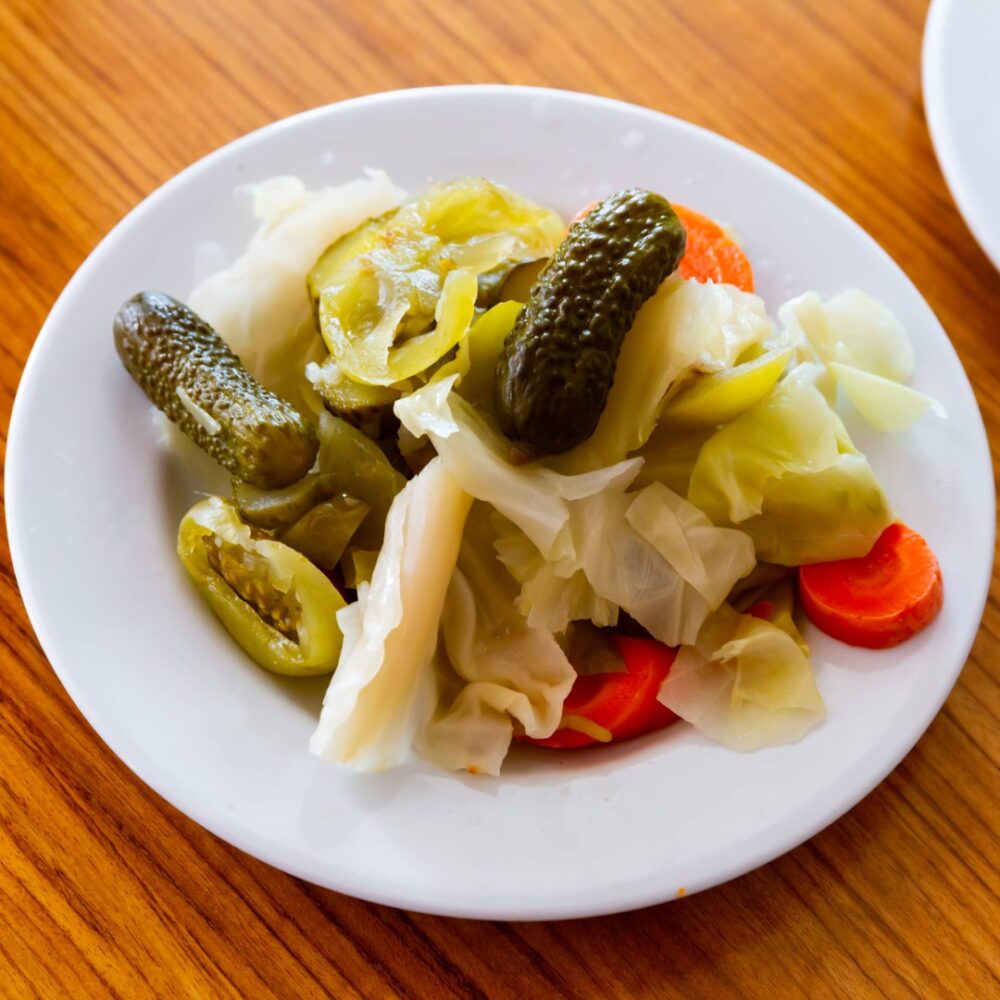
Armenia’s harsh winters demanded extending the summer’s harvest. Eggplants, peppers, green beans – any veggies – are pickled in a vibrant brine, often alongside plums or apricots. Sun-drying is another method, transforming tomatoes and eggplants into concentrated bursts of flavor used in stews and soups throughout the year.
The diffusion of the potato into the Caucasus region is not clear, but it probably occurred at various times via various routes. Potato, as a hardy and versatile crop, is able to survive in mountainous terrains. During the Soviet era, potato production was actively encouraged, and new varieties were introduced, which led to a significant increase in consumption. In Armenia, potatoes remained essential to its food security, second in importance only to wheat.
Grapes, cherries, sour cherries, apricots, peaches, plums, figs, mulberries, dates and quince are staples in Armenian culture, but pomegranates are special.
 Pomegranates symbolize eternity and are a motif in Armenian art, rugs, and jewellery, an ingredient and garnish.
Also, Armenians are fond of apricots. It is said that Armenia’s golden apricot captures the soft rays of the Armenian sun, so it bursts with flavour, aroma and a history to biblical times. Dried apricots are even more popular – as a part of mezze, puddings (ashure), porridge, meat stews, in snacking mixes.
Recently, archaeologists have found fascinating evidence that points to the cradle of viniculture in a rather unexpected place: the southern Caucasus, modern-day Armenia.
Evidence suggests wine production in Armenia dates back to 6,100 BC
Archaeologists have unearthed a wine press for stomping grapes, fermentation and storage vessels, drinking cups, and withered grape vines, skins, and seeds; this is the earliest, most reliable evidence of wine production.
Grape wine is popular in Armenia, produced from the Areni Noir variety, which is of intense color, pronounced acidity, and notes of black fruits and spices. Also popular is voskehat variety, a light-bodied white wine with hints of citrus and apricot. Armenian winemakers mostly work with modern techniques, but some traditional methods are making a comeback, like toring wine in karas – large, clay amphora. It provides open-air fermentation and earthiness for wine.
MEAT IN ARMENIAN CUISINE
As for a landlocked country, meat has always been a desired protein source. Meat consumption over the last 30 years in Armenia nearly tripled (FAOSTAT, 2021) and now is the highest within the Caucasus (Armenia, Georgia, Azerbaijan).
Lamb and beef dominate Armenian meat culture. Pork and poultry are present, but carry less status. As Christians, Armenians do not have a prohibition on pork, yet it was off the menu for a few hundred years under Muslim rule. The first Armenian immigrants had no pork recipes, but they did learn fast.
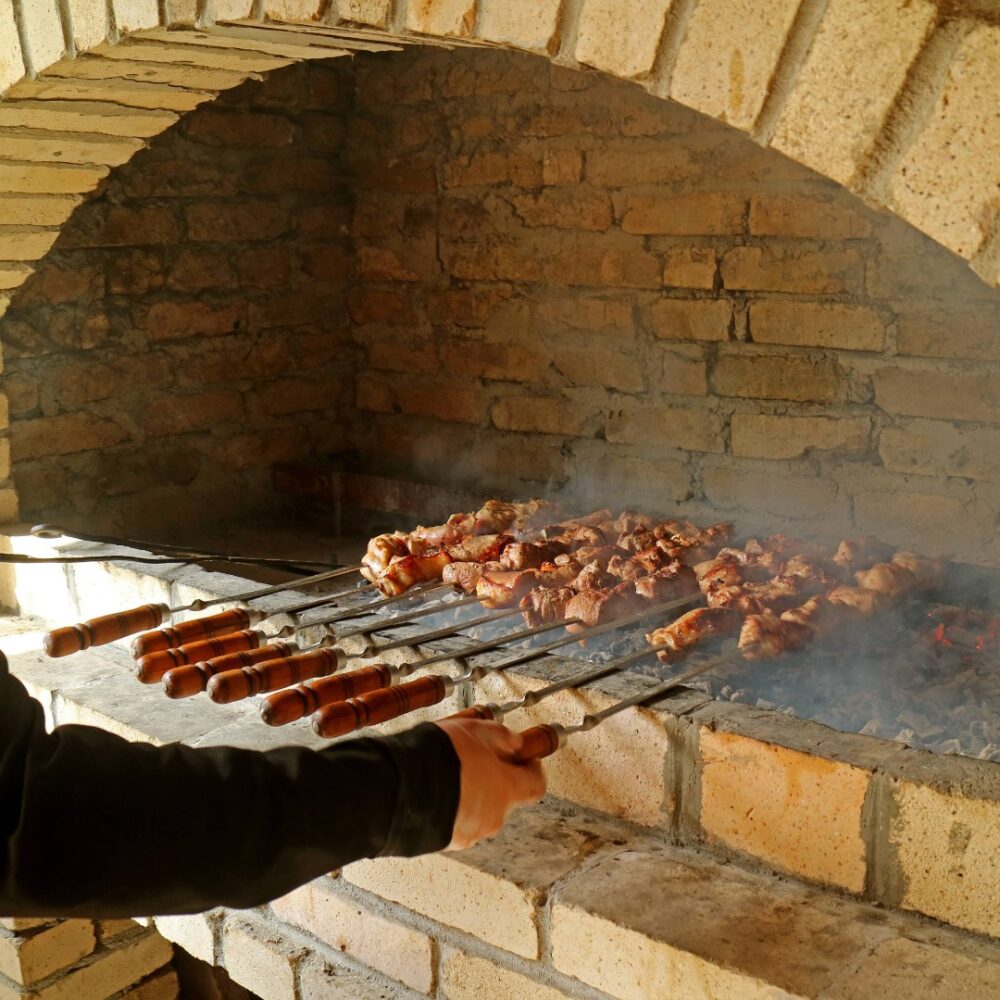
The main event of any Armenian gathering is khorovats, the national barbecue.
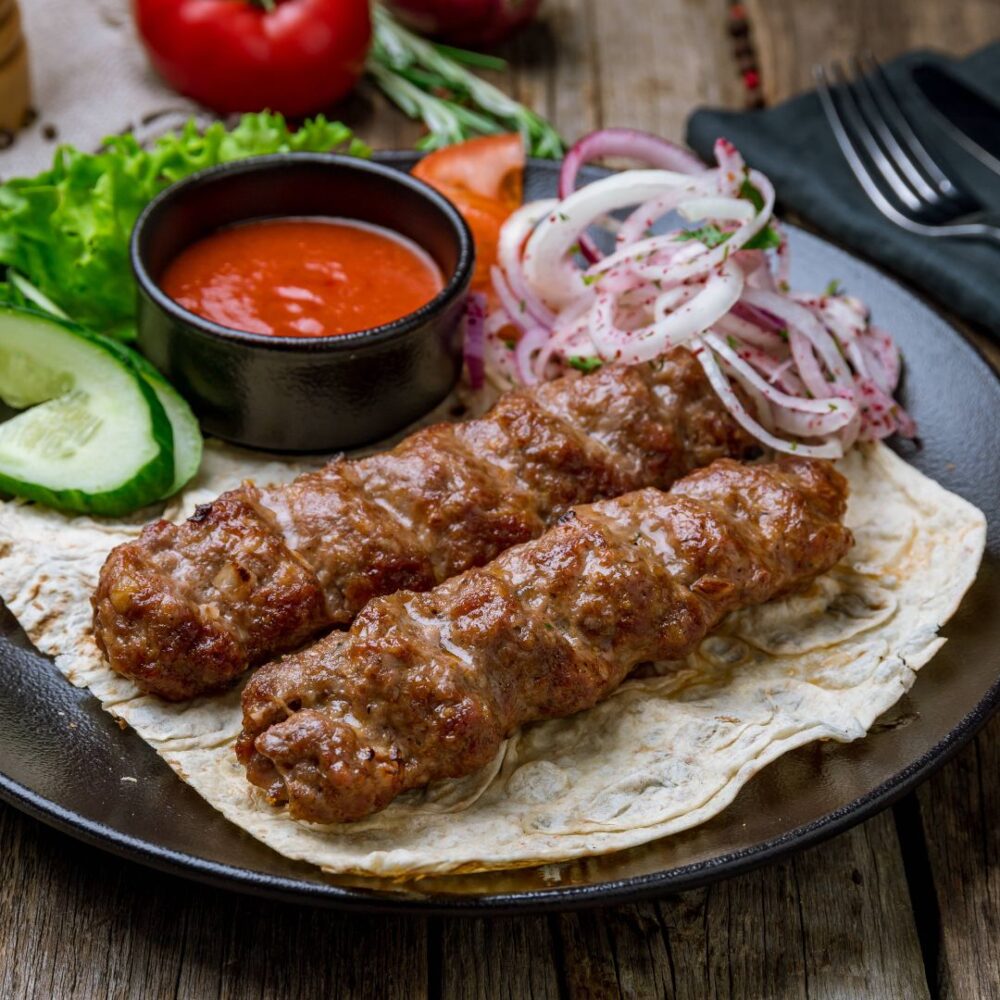
Large meat chunks are marinated with pomegranate juice, onions, cilantro and basil, sometimes with brandy for an extra kick. The dish’s success lies in the charring. Skewered meats are cooked over open pits, imparting a smoky depth. No family gathering goes without this dish – grilling is a social ritual under the open sky; its recipes are passed down by fathers to their sons, and so on. In Armenian households, women have been the primary caretakers responsible for daily meals, planning, preparation, and cooking. But khorovats transcends everyday meals. Spending time outdoors has predominantly been a male space, with men taking responsibility for preparing the grill. Grilling is a performance of masculinity, a way for men to showcase their skill and hospitality. Today, with changing gender roles, the lines are blurring.
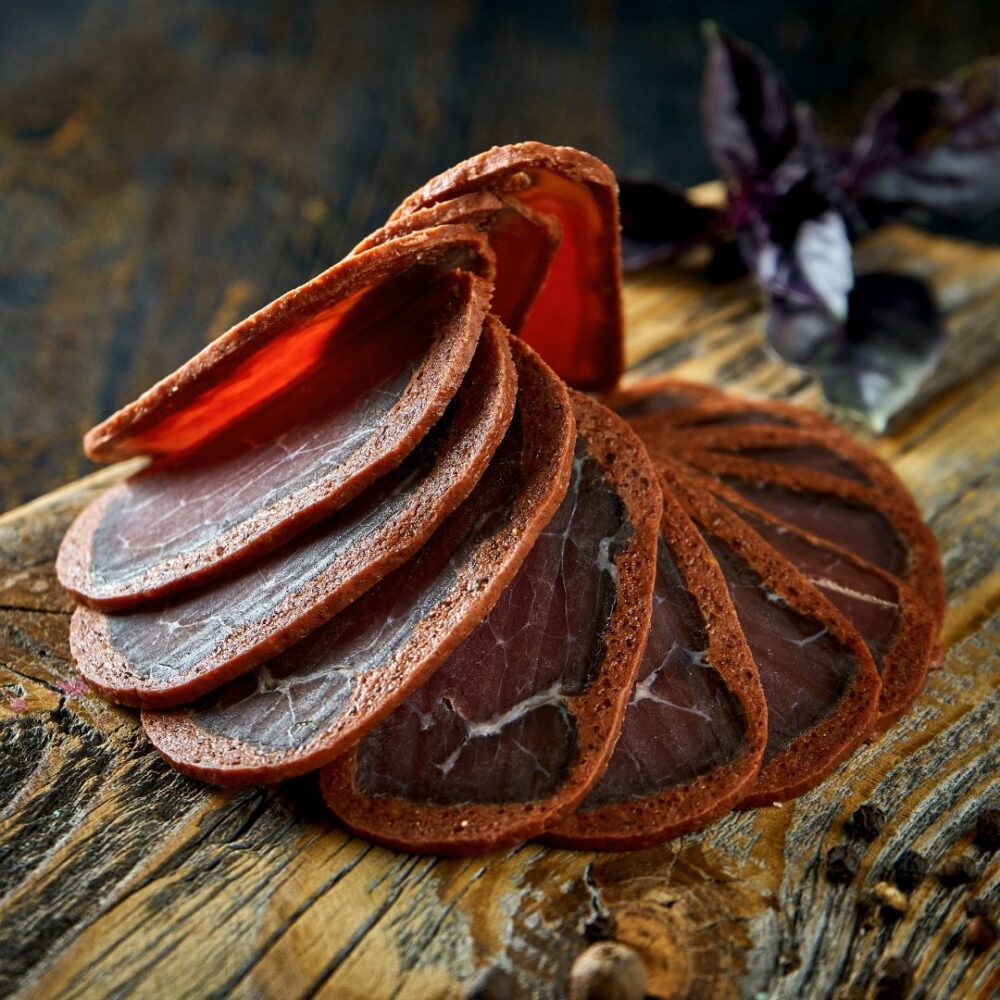
Meat preservation is crucial in Armenia. Basturma, a highly seasoned air-dried meat, is iconic and widely known. The entire curing takes about a month, resulting in a fragrant, lightly spicy delicacy enjoyed as charcuterie, in omelets, or stuffed into phyllo pastries. The Armenian diaspora has spread basturma throughout the Middle East.
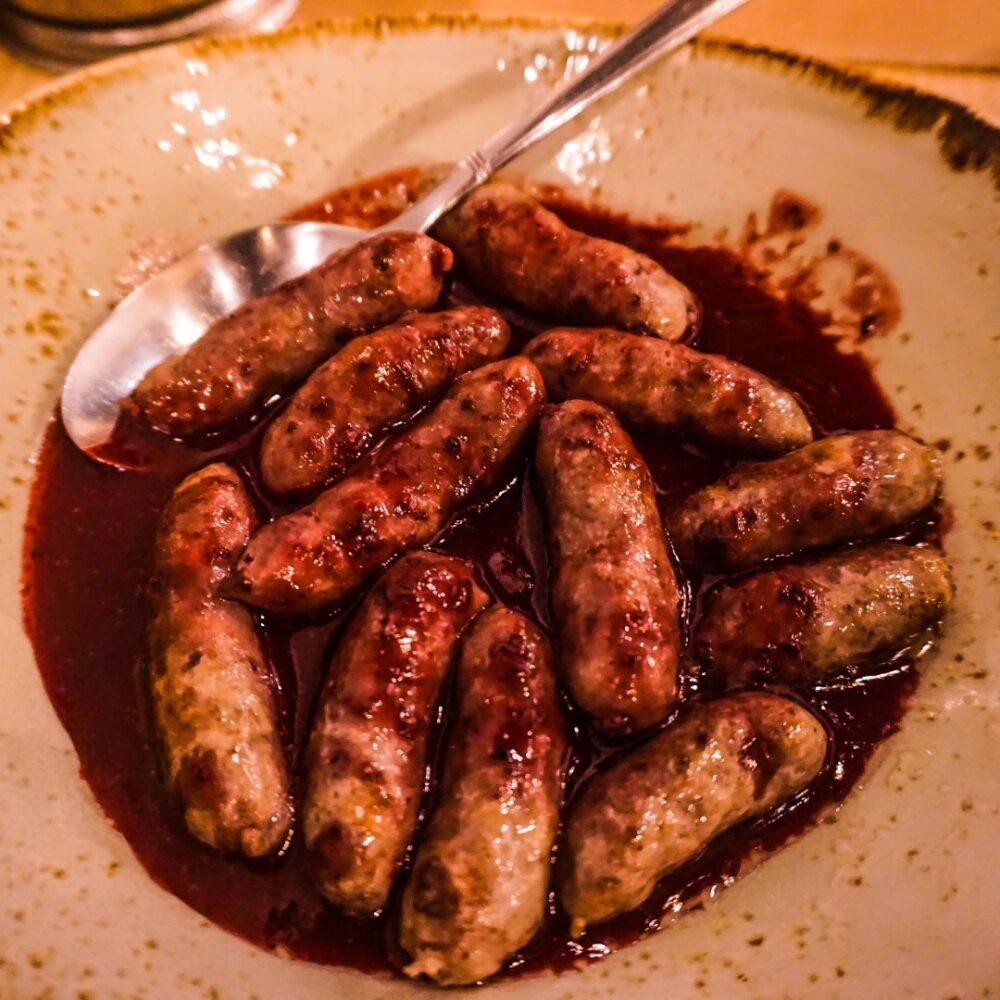
Yershig, the Armenian version of dry-fermented sausage, is also known as sujuk in the Balkans and the Middle East. It is made from ground beef or lamb mixed with garlic, cumin, sumac, paprika, and salt. Unlike the Turkish version of sujuk, it is denser and spicier. This sausage is mainly served as a cold cut, but it can also be fried.
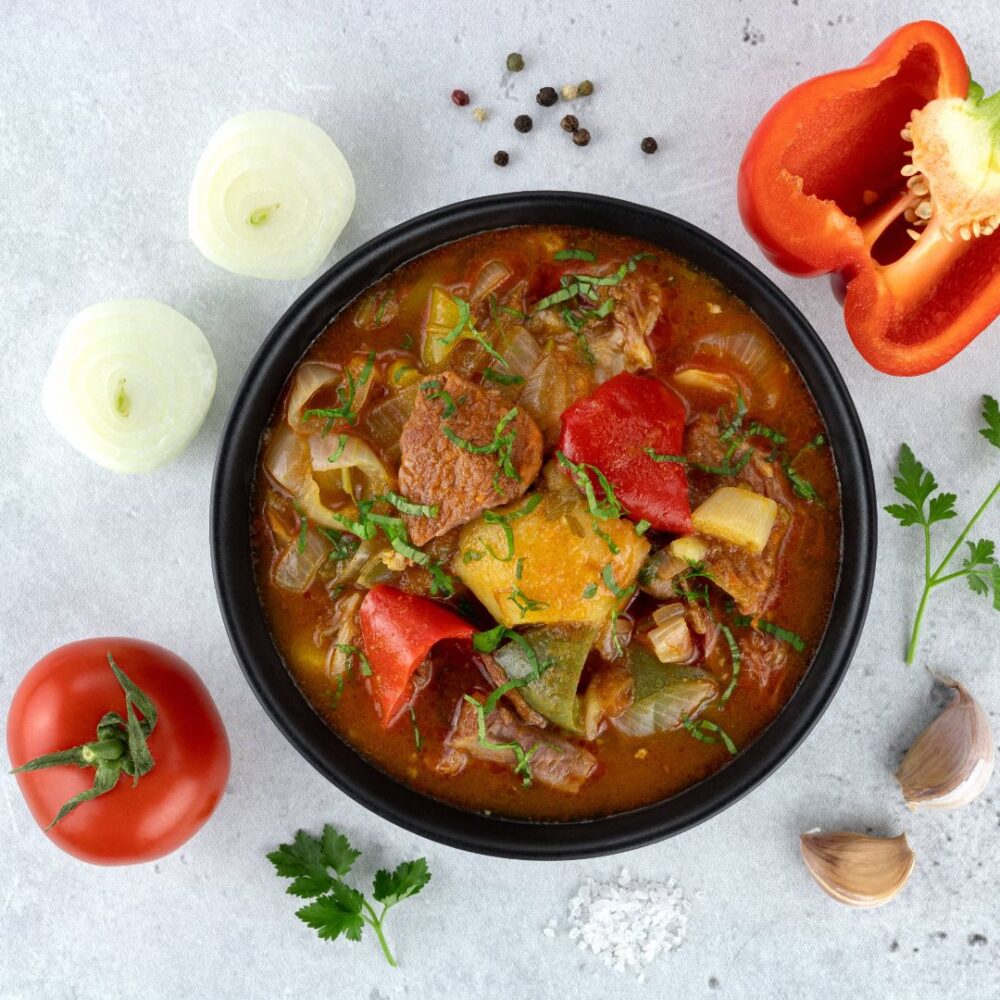
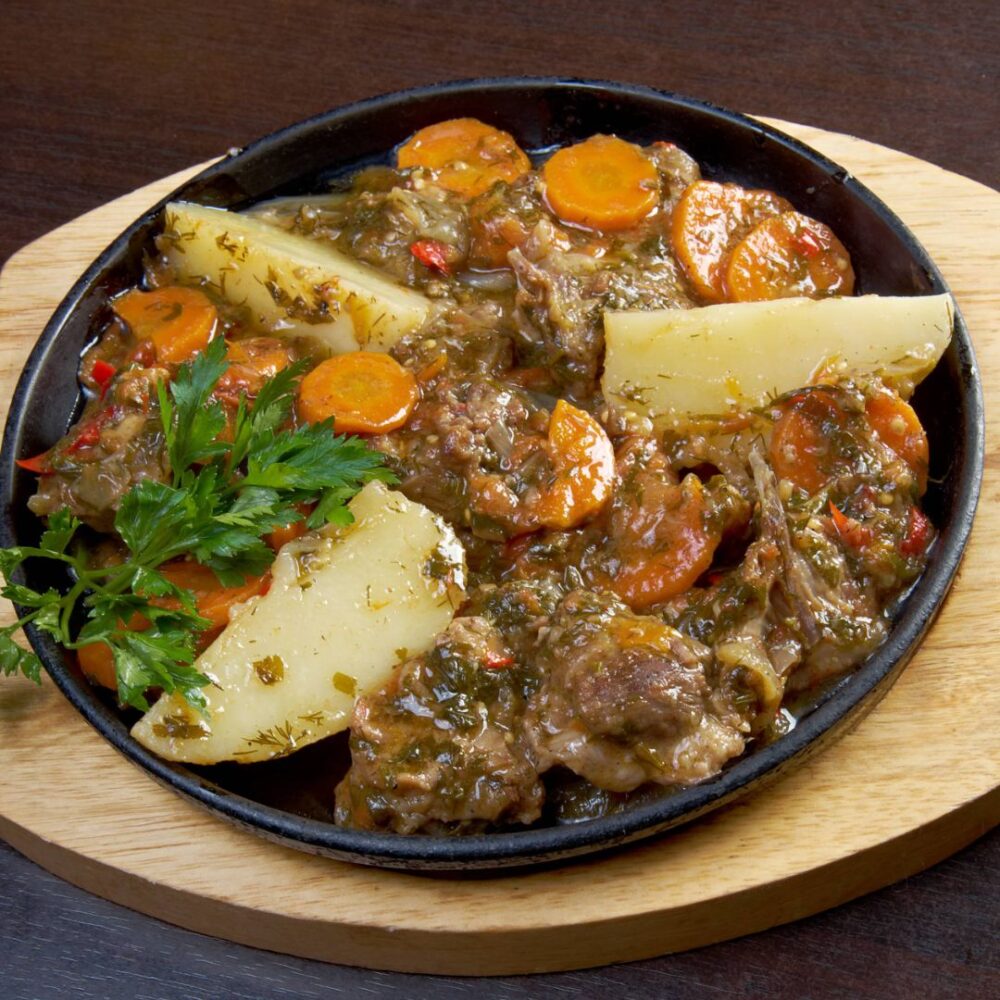
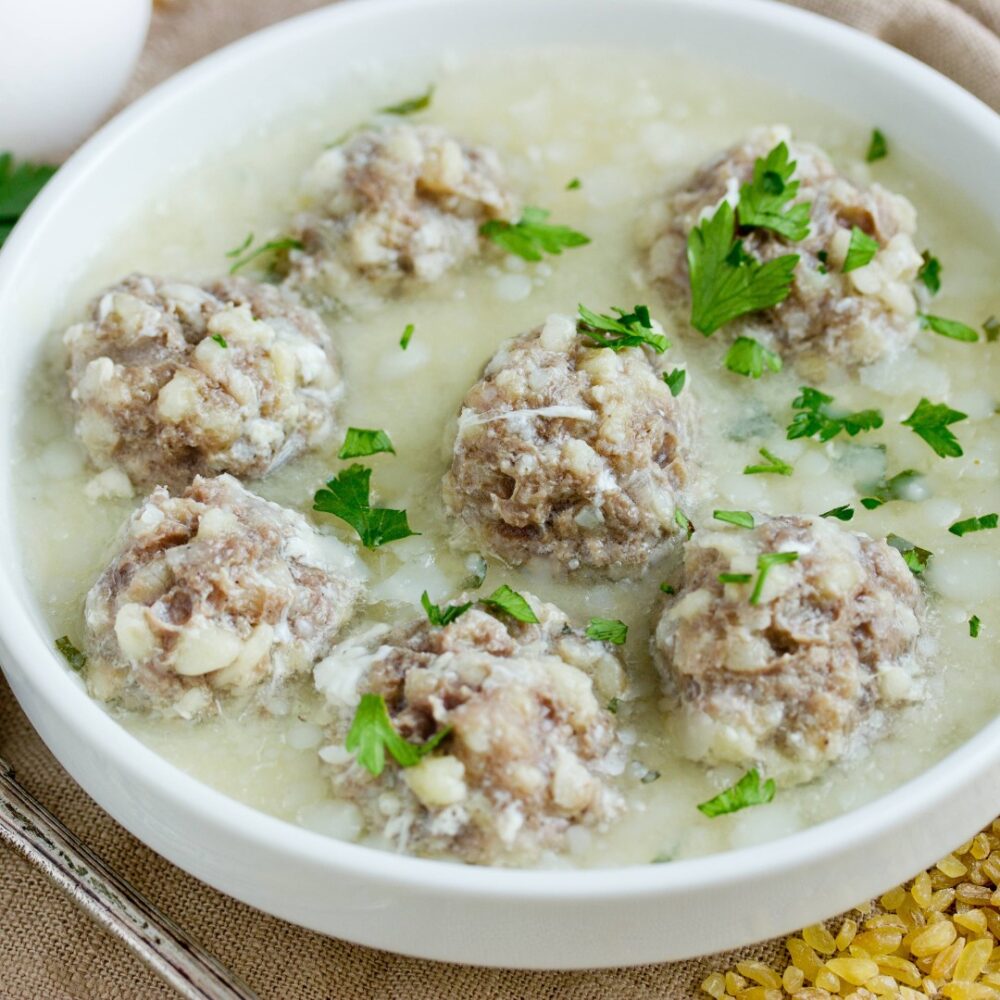
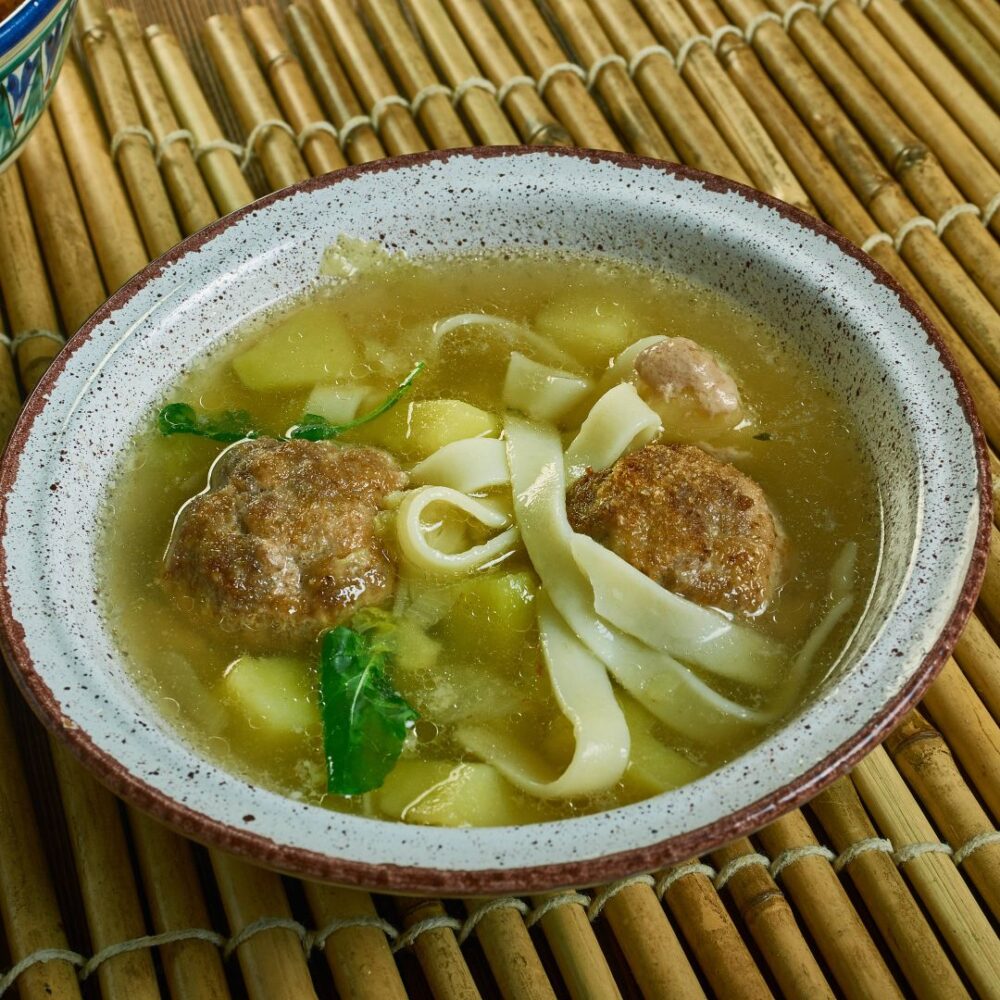
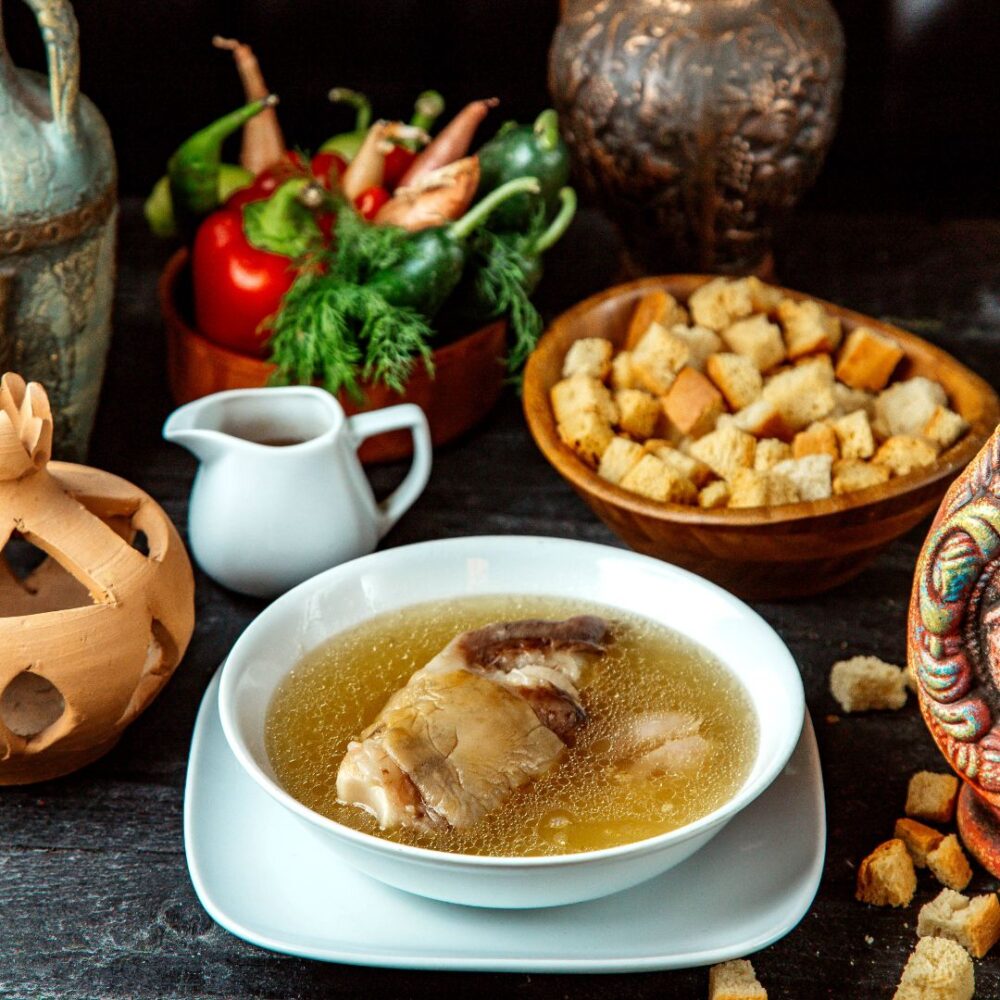
Soups and stews are staples during the long winters. Kololik, an Armenian meatball soup, consists of balls made with ground lamb, rice, onions, parsley, cooked in a beef stock, with also added rice, onions, tarragon, and potatoes. Beaten eggs can thicken it, making it a comforting and warming dish. Khash is a unique wintertime delight of beef shanks and offal, cooked for hours. The resulting collagen-rich broth, served with a generous dose of garlic and lavash, is believed to cure a hangover in the morning. Khashlama, lamb soup, was created as a solution to utilize the entire animal – bones and tougher cuts – as it cooks for hours. Seasoned with herbs and some salt, it’s a favorite for Armenian food lovers who enjoy natural, plain flavors.
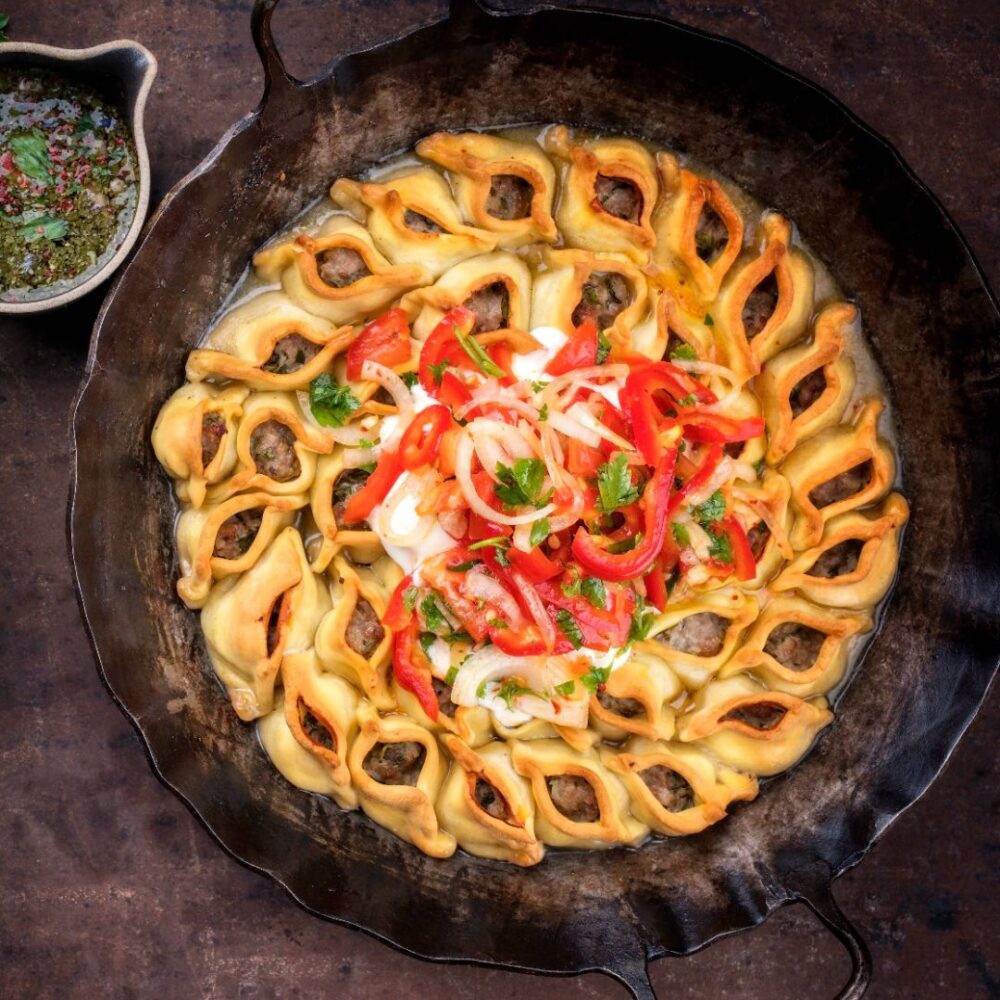
Armenian cuisine has its own dumplings – sin manti, thin parcels filled with a spiced lamb or beef mixture and steamed. Mantı is served with yogurt or a drizzle of browned butter. Armenian mantı are small and always made in an open canoe shape. An open dumpling is quite distinctive as dumplings worldwide tend to be closed up. Armenian manti are not only steamed but also baked, and while baking, the edges of the open canoe shape become crispy, keeping the inside moist. This contrast in textures is a delightful experience. Manti are more common among western Armenians, while khinkali, a closed dumpling, is preferred in the east.
FISH AND SEAFOOD IN ARMENIAN CUISINE
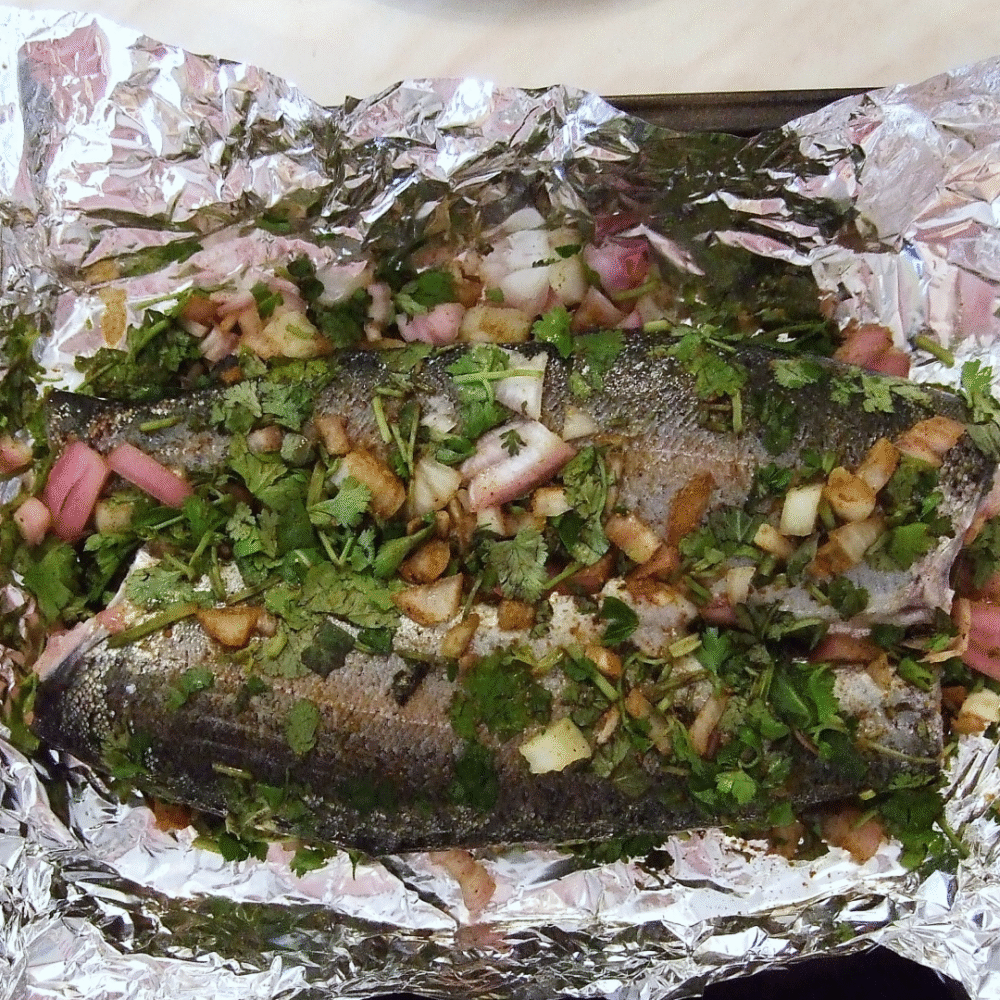
Armenia is landlocked, so seafood isn’t prominent in local cuisine. Historically, Armenians relied more on freshwater sources like Lake Sevan, the largest high-altitude freshwater lake in Eurasia, and rivers for their fish. If you encounter fish on an Armenian menu, there’s a high chance it’s ishkhan. This dish features the “king” of Sevan, the Armenian trout. Preparation methods can vary – boiled, steamed, or pan-fried.
MILK AND DAIRY IN ARMENIAN CUISINE
As for a nation of herders, milk and its derivatives are natural staples. Raw milk, fermented milk, whey, yogurt, and cheeses have a fair share on Armenian plates.
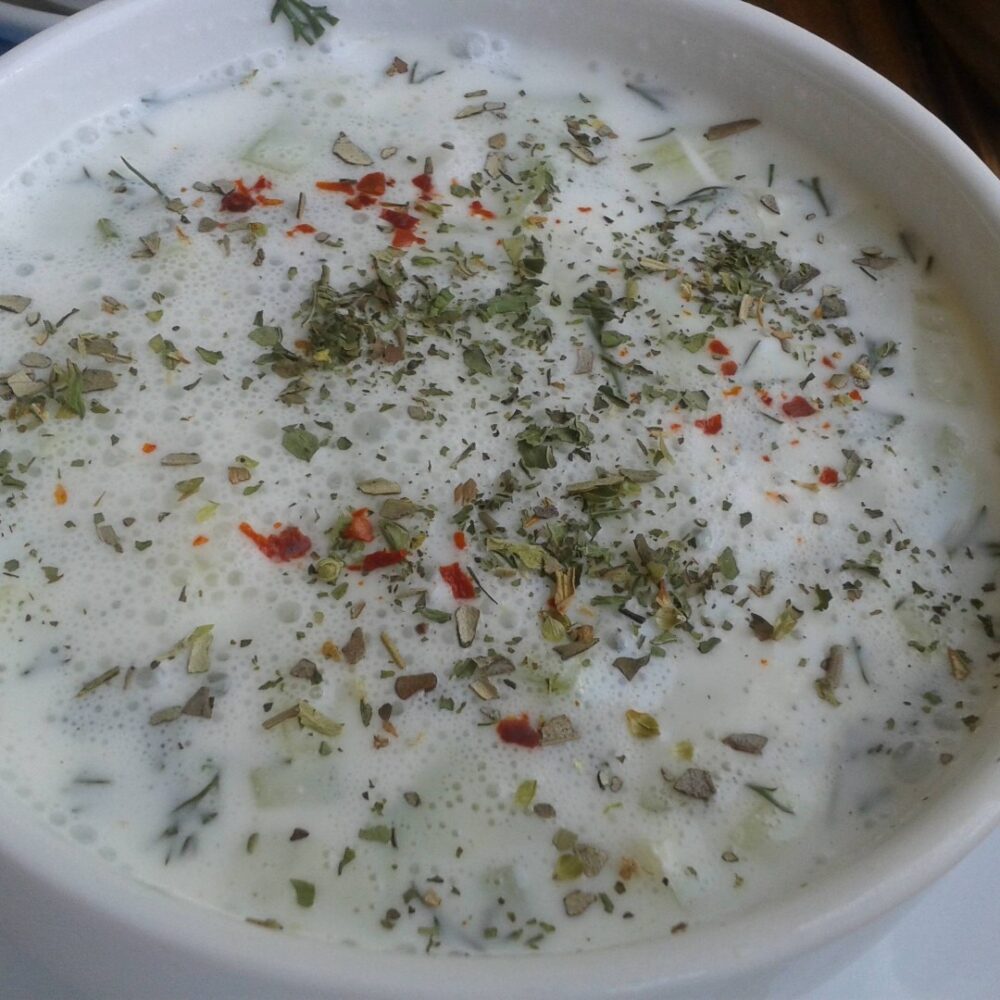
A cornerstone of Armenian dairy, produced locally since the 11th century, is matzoon, a fermented product similar to yogurt. Sweet and tangy in taste and smooth, curd-like in texture. Although it originates in Armenia, it is also found in Georgia, where it is called matsoni. Matzoon is eaten plain, with bread, used as an ingredient in salads, fillings, soups, and drinks, like tan. Tan is similar to Turkish ayran, a refreshing drink when matzoon is diluted with carbonated mineral water and salt.
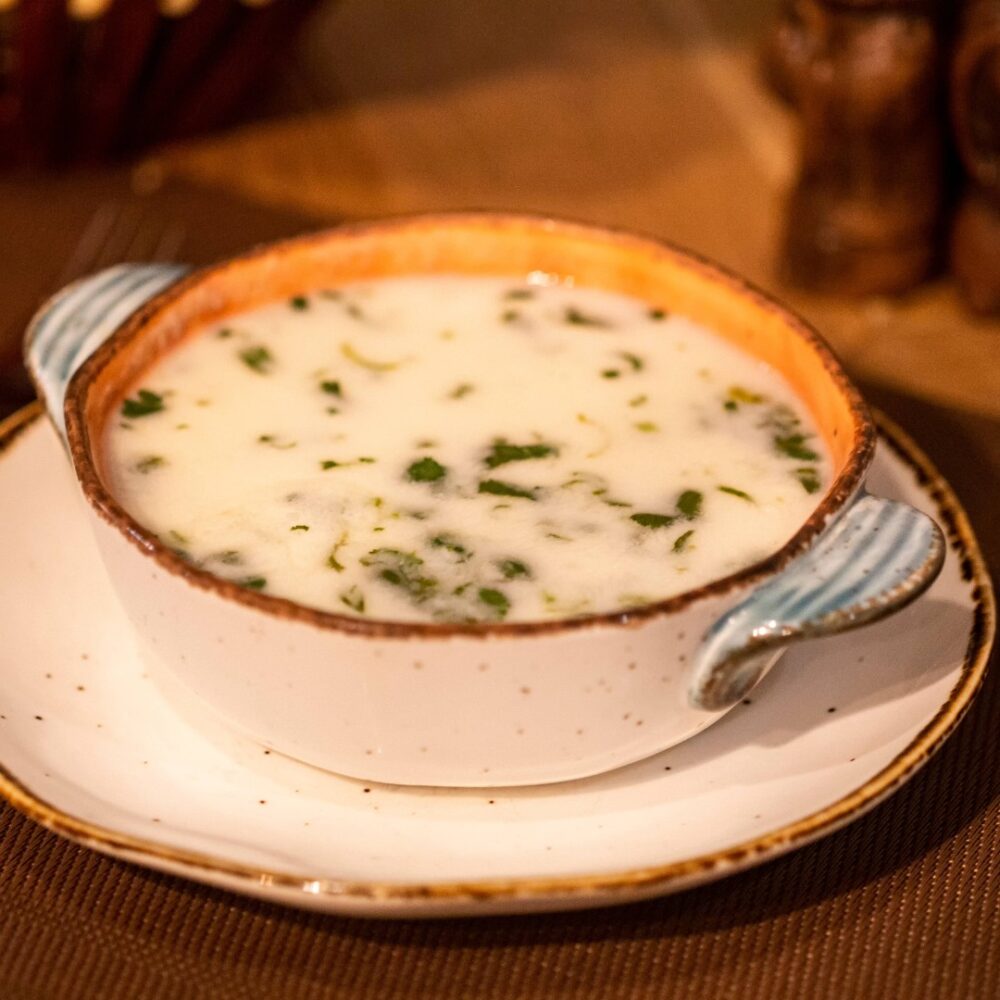
Yogurt soups are an Armenian staple, to name a few – tanabour, matsnaprtosh, jajukh.
Armenian cheeses are typically white in color, with semi-firm to firm textures. They tend to be brined or aged in salt water, giving them a tangy and salty flavor. Usually, these cheeses are hand-made without artificial additives, preserving the pure taste of the milk. The aging process takes place in clay pots or wooden barrels. String cheese varieties are popular; many cheeses are layered or braided. Some varieties incorporate local herbs or spices. To name a few of the most popular: chechil, stringy, smoked; lori, mild, creamy; chanakh, brined, tangy; motal, herbaceous, crumbly; yeghegnadzor, aged, sharp.
DESSERTS IN ARMENIAN CUISINE
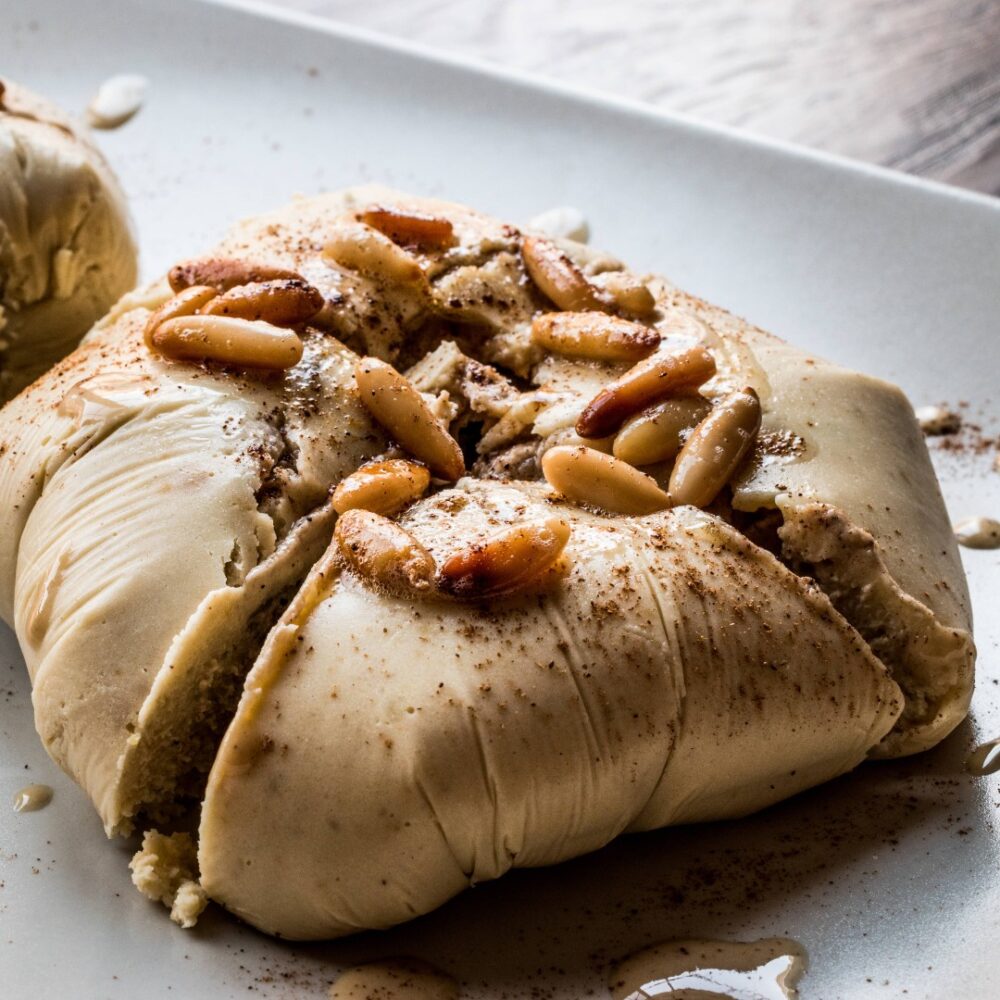
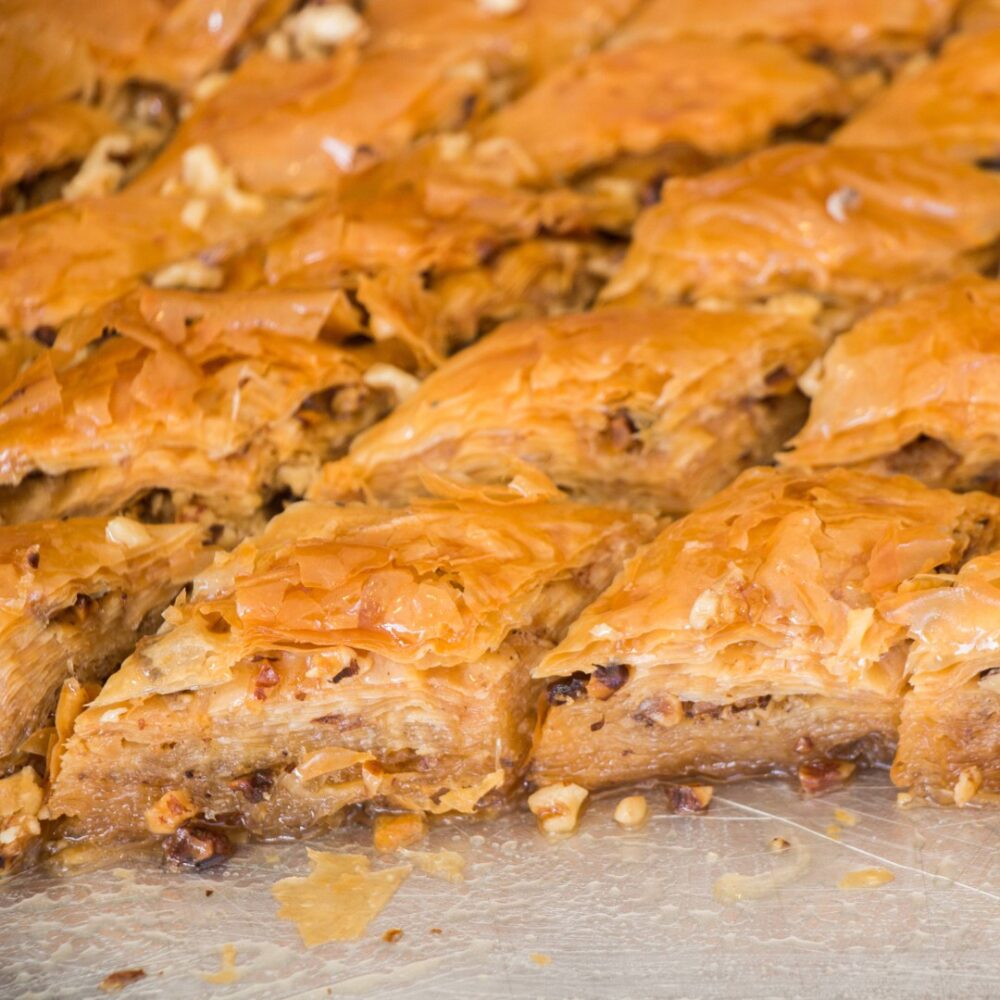
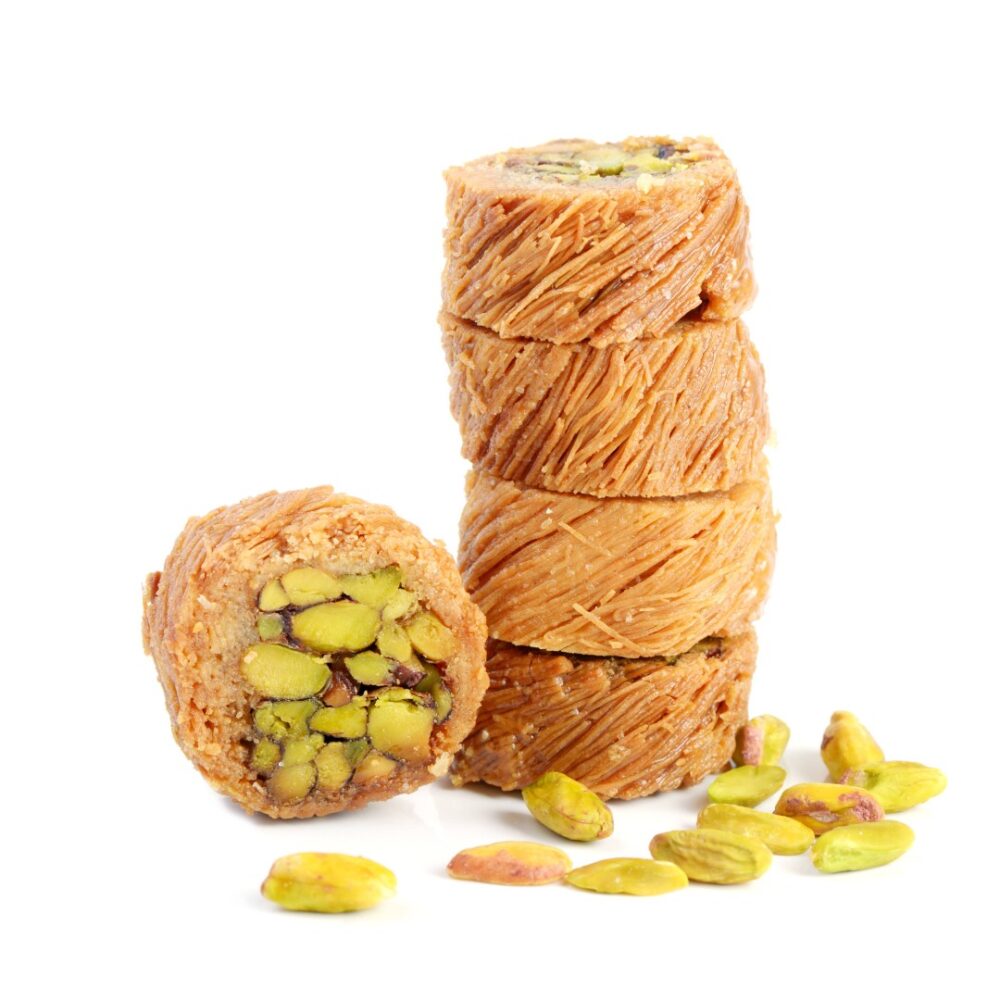
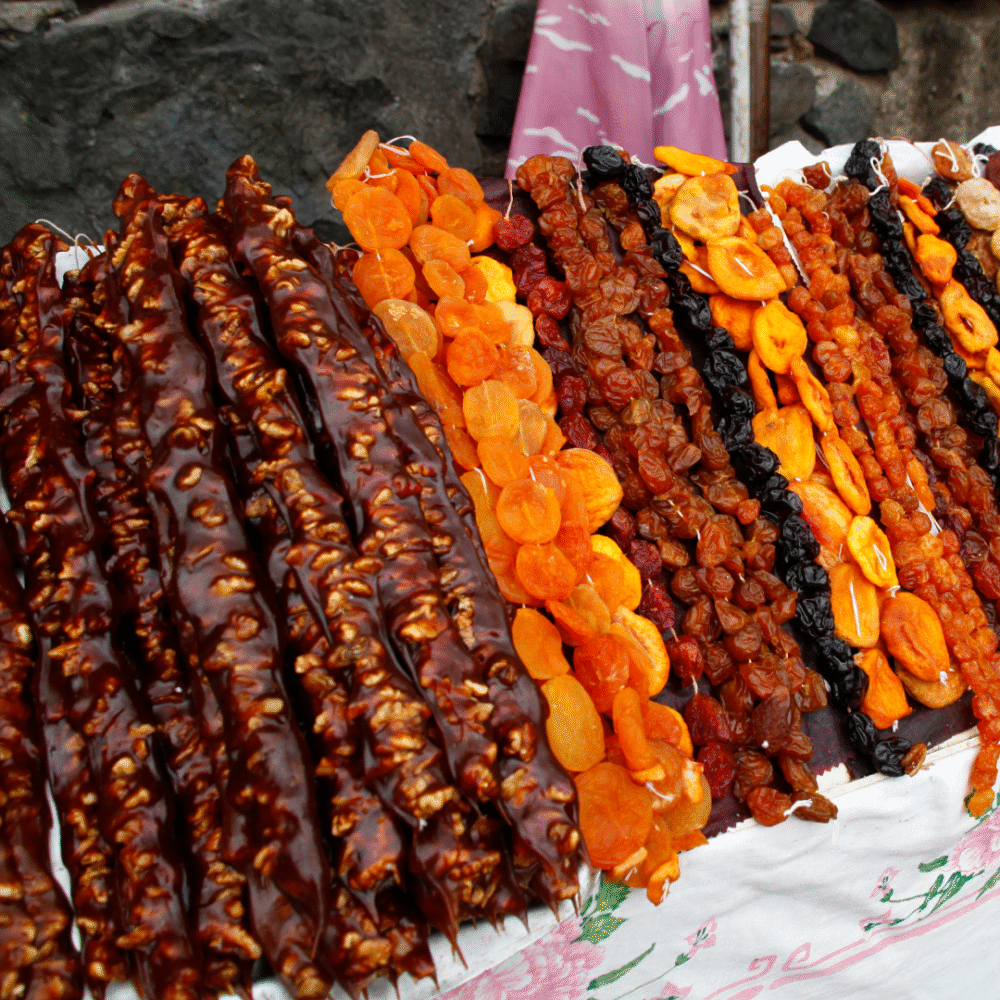
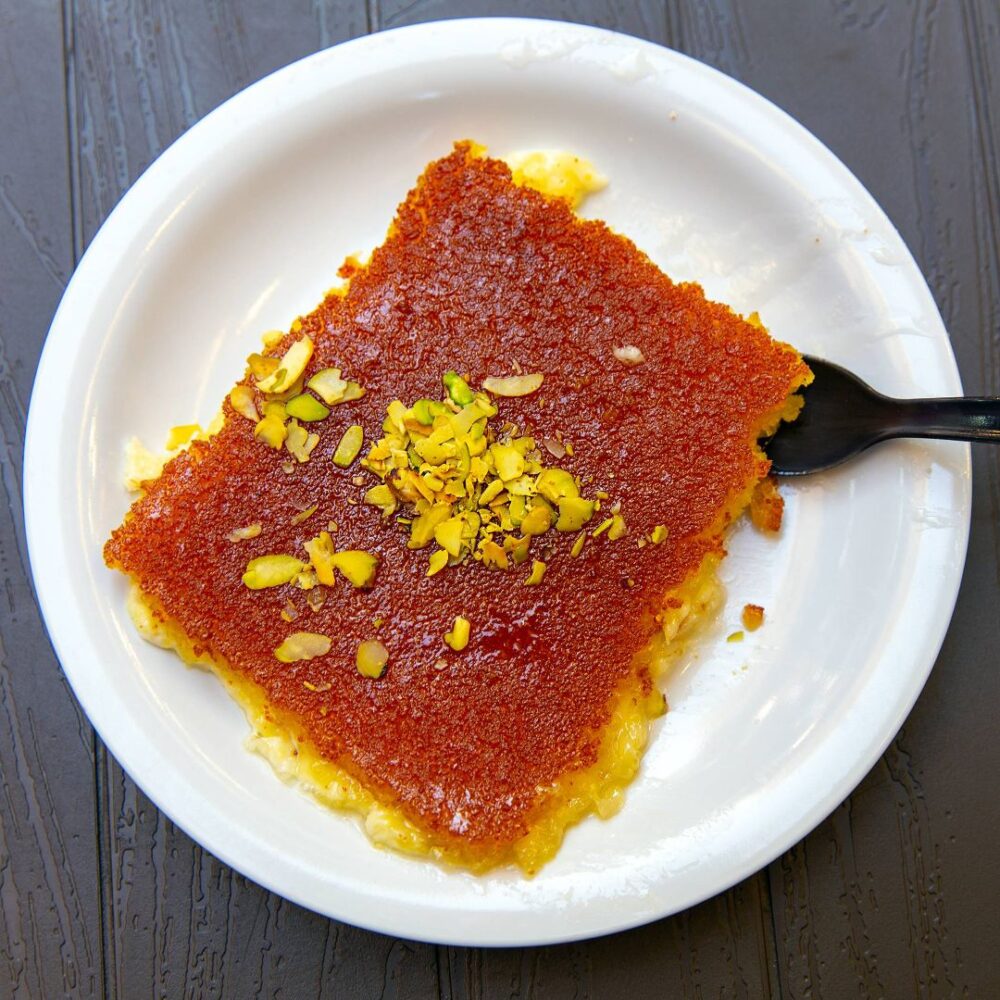
The main ingredients in Armenian desserts are honey, fresh and dried fruits, nuts, yogurt, and sesame; flavored with cinnamon, cardamom, or floral waters. The texture tends to be quite distinctive. Many have a layered or filled structure, with pastries featuring paper-thin layers stuffed with nuts or dried fruits. There’s also a notable presence of pudding desserts and fruit compotes. Of primary usage are walnuts, almonds, pine nuts, pistachios, hazelnuts, and toasted pumpkin seeds. If to select one type, walnuts are essential, especially for roejig or sweet sujuk, a candy made from walnuts, strung on a long string and coated in fruit syrup (also known in Georgia as churchkhela). In Armenia, green walnuts are even preserved — picked unripe and candied in sugar syrup to become lush and sweet accompaniments to cheese.