Quantifying culinary diversity across countries.

Libyan food: discover authentic cuisine

About country

Culinary influences

Staple ingredients

Key flavorings

Iconic dishes

Libya is a North African country of around 7 million people, which is surprisingly small given its massive size – it’s the fourth-largest country in Africa by area. The thing is, about 90% of Libya is desert (mostly the Sahara), so people live along the Mediterranean, in cities like Tripoli, the capital, and Benghazi in the east.

The population is overwhelmingly Arab and Berber; Arabic as the official language. It’s almost entirely Muslim, around 97% Sunni, Islamic law is significant in family law and financial regulations.

Economically, Libya is all about oil. It has the largest proven oil reserves in Africa. Before the 2011 revolution that toppled Gaddafi, Libya had one of the highest GDPs per capita in Africa and a pretty high Human Development Index. But the civil war and ongoing political fragmentation have absolutely hammered the economy – oil production has been erratic, infrastructure’s been damaged, and the country’s essentially split between rival governments for much of the past decade. The country’s got serious challenges ahead, trying to reunify and rebuild after years of conflict.

5 most similar countries by ingredients

5 least similar countries by ingredients

Source: Country Food Similarity Index https://objectivelists.com/country-food-similarity-index/
Libyan cuisine comparisons

Icon
GEOGRAPHY AND CLIMATE
DESERT ENVIRONMENT

– Vast majority of land is dry desert with minimal rainfall
– Limited arable soil reduces farming potential

WATER SCARCITY

– Irrigation is difficult and expensive
– Only oases allow small pockets of cultivation

DROUGHT-RESISTANT FARMING

– Crops suited to heat and low water: barley, millet, some legumes
– Reliance on stored grains as dependable staples

PASTORAL HERDING

– Common in dry areas where crops can’t grow well
– Herders move animals to follow seasonal grazing and water
– Meat and milk remain essential food sources

HEAT-DRIVEN PRESERVATION

– Drying and smoking protect protein from spoilage
– Long-lasting foods valued due to harsh climate

LIMITED SEAFOOD

– Long coastline but low marine productivity
– Fresh fish less abundant
– preserved fish more common

KEY AGRICULTURAL PRODUCTS

– Wheat, barley
– Sheep, goat, cattle, camel, poultry
– Tomatoes, onions, peppers, cucumbers
– Dates, figs, plums, citrus, grapes
– Potatoes
– Olives

Icon
INDIGENOUS INFLUENCES
BERBERS (AMAZIGH)

– One of the oldest indigenous peoples of North Africa
– Early farmers of wheat, dates and beans
– Created couscous using semolina wheat
– Flatbreads baked on hot stones or in earth ovens
– Long-simmered stews, fermented butter smen are common

TUAREGS

– A nomadic subset of Berber heritage
– Cuisine adapted to travel lifestyle and extreme aridity
– Dairy from goats and camels key to daily diet
– Other staples: millet, rice, dates, raisins, apricots
– Sweet mint tea central to hospitality

Icon
MIXED HISTORICAL INFLUENCES
CARTHAGINIANS (9 – 2c BCE)

– Introduced large-scale cultivation of grains, vines and olives
– Expanded olive oil production through Mediterranean trade

ROMANS (2c BCE – 5c CE)

– Advanced irrigation and agriculture
– Made North Africa a major global olive oil producer
– Some ancient olive trees and systems still used today

ARAB INFLUENCE (from 7c)

– Popularized cumin, saffron, coriander, ginger, cloves, cinnamon
– Brought thin doughs, nut sweets and dried fruit in dishes

OTTOMAN INFLUENCE (16-20c)

– Spread baklava, börek/brik, kebabs and grilled meats
– Spread stuffed vegetables with rice-meat fillings dishes
– Established Turkish coffee and café culture

ITALIAN INFLUENCE (1911–1943)

– Pasta became more popular; tomato sauces spread widely
– Improved olive oil quality and use
– Pizza, gelato and espresso introduced, but less central than pasta

JEWISH INFLUENCE (centuries-long presence)

– Contributed dishes like mafroum (stuffed fried veggies with meat), chraime (spicy fish), pilpelchuma (garlic-chili paste)
– Sustained a tradition of slow-cooked stews over hand-rolled couscous with rich spices

Icon
RELIGIOUS AND CULTURAL INFLUENCES
RELIGIOUS TRADITIONS

– Islam shapes dietary rules and daily eating habits
– Halal slaughter
– Pork and alcohol are avoided
– Religious events and fasting set specific meal customs

SOCIAL & FAMILY FOOD TRADITIONS

– Focus on hospitality and shared meals
– Communal dishes, elders and guests served first
– Home cooking is central
– Tea is important in daily social life
– Special meals for births, weddings and Eid celebration

Icon

GEOGRAPHY AND CLIMATE

Over 95% of Libya’s land is desert, and rainfall is low. Although agriculture is the second-largest economic sector, Libya highly depends on imports. Climatic conditions and poor soils limit farming output, domestic food production meets about 25% of demand. This has historically limited crops and encouraged the nomadic lifestyles with livestock providing meat and milk. Consequently, Libyan cuisine relies on ingredients that do not require refrigeration and can be stored for long periods: dates, drought-resistant barley, millet, dried legumes. In the oases scattered across the desert, it is possible to cultivate certain fruits and vegetables.

Although Libya has nearly 1,800 km of coastline and the second-largest continental shelf in the Mediterranean, its waters are not particularly rich in plankton needed to sustain fishing waters.  The lower productivity of coastal waters also affects the fishing industry, which might not be as prolific as in other Mediterranean countries. This limitation means that fresh seafood, while available, is not as abundant; a greater reliance on dried or salted fish exists.

Icon

INDIGENOUS INFLUENCES

The indigenous Berber population cultivated wheat, dates, beans,  fermented butter smen, and created couscous, after semolina wheat was introduced by the Carthaginians. Berbers baked breads on hot stones or in earth ovens and slowly simmered nourishing stews (see more about Berbers in country Morocco).

Tuaregs, a particularly large Berber community, wanders across the Sahara Desert and adapts well to the desert. The harsh aridity necessitates simple, filling, nutritious meals that can be prepared under challenging conditions. Tuareg dishes are straightforward, made from a few staple ingredients: millet and rice to make porridges and bread, milk, cheese, and butter (often from camels or goats traveling together), dried dates, raisins, apricots. Although not consumed daily, goat, sheep, and camel meat, fresh, dried, or smoked, is a part of the festivals and ceremonies. Tea, a symbol of Tuareg’s social life and hospitality, is usually green and brewed with a lot of sugar and mint.

Icon

MIXED HISTORICAL INFLUENCES

The Carthaginians, a civilization founded by Phoenicians, thrived in the Mediterranean from the 9th to the 2nd century BCE and extended into parts of what is now Libya. Carthage became a powerful city-state and later an empire. While direct traces of Carthaginian cuisine might not be explicitly visible in Libyan cooking, the agricultural practices and trade networks have had a lasting impact on the region. They popularized grains, vines, olives, and olive oil.

The Romans, during their rule from around the 2nd BCE to the 5th century CE, introduced sophisticated agriculture, irrigation systems, and expanded the olive oil in North Africa. Libya was one of the world’s largest producers of olive oil during Roman times, with some ancient olive trees still surviving, and many Roman irrigation systems remain.

Muslim Arabs invaded North Africa in the 7th century, bringing exotic cumin, saffron, coriander, ginger, cloves, and cinnamon through their extensive trade. While these spices were popularized by Arabs, some may have already been present in limited quantities. The use of thin doughs, nut-based sweets, and dried fruits also has Arabic influences.

Libya became a part of the Ottoman Empire in the 16th century until the 20th century when Italy took control. The Ottomans were known for their elaborate sweet and savory pastries – baklava, börek (brik, bureek) – both are extremely popular now; also, grilled meats and kebabs. Turkish coffee and the tradition of enjoying it in coffeehouses – all of this legacy has become part of local social life. The concept of stuffing vegetables – bell peppers, zucchini, and tomatoes with rice and meat can also be attributed to Ottomans.

The Italian occupation of Libya (1911–1943), thoug brief, left a lasting legacy: the use of pasta, such as makarona bil bechamel dish, the use of tomatoes and tomato paste in dishes, improved olive oil quality. Pizza, gelato, and espresso coffee were also widely consumed during this period.

Icon

RELIGIOUS AND CULTURAL INFLUENCES

The 7th-century Arab conquest meant not only military control, but also cultural, religious, and economic changes. One of the key legacies was the introduction of Islam, which became ingrained in North African societies. Cuisine-wise, Islamic dietary laws regulate halal (permissible) and haram (forbidden) foods, the avoidance of pork and alcohol in traditional cooking, religious celebrations, fasting periods, and their specific foods.

The average Libyan daily plate size is

2160 g.
Icon

Grains

Icon

Fish and seafood

Icon

Produce

Icon

Eggs and dairy

Icon

Meats

Icon

Sugar, fats and nuts

Core ingredients

THE ESSENCE OF LIBYAN CUISINE

Libyan cuisine shares many staples with Morocco, Algeria, and Tunisia: olives,  olive oil, dates, lamb, beef, beans, nuts, and dishes like couscous, tagine, shakshouka. Compared to other Maghreb countries, Libya has the lowest cereal intake but the highest fat and meat consumption in the region. Libya’s diet has more fish and seafood; overall consumption of foods of animal origin is 33% – significantly higher than its neighbours.

In Libya, one of the social customs is the daily tea-drinking. The tea is very strong, thick, and syrup-like. It’s prepared when chatting, when family members gather to socialize for about an hour before going their separate ways. During this time, each person drinks two rounds of tea, each lasting about half an hour. The third round is served with roasted almonds mixed with the tea in the same glass.

All alcoholic drinks have been banned in Libya by Sharia, the religious laws of Islam. However, illegally imported alcohol is available on the black market alongside a homemade spirit called bokha.

GRAINS IN LIBYAN CUISINE

Most Libyan dishes start with a starchy base: wheat couscous, pasta, rice, or barley. The major staple wheat mainly comes in the form of bread, couscous, pasta, porridges, or ancient breads: aseeda, zumita, and bazeen. Libyans continue to use ancient methods of preparing dough from ground grains, either by cooking it or using it raw, this practice has been passed down for thousands of years.

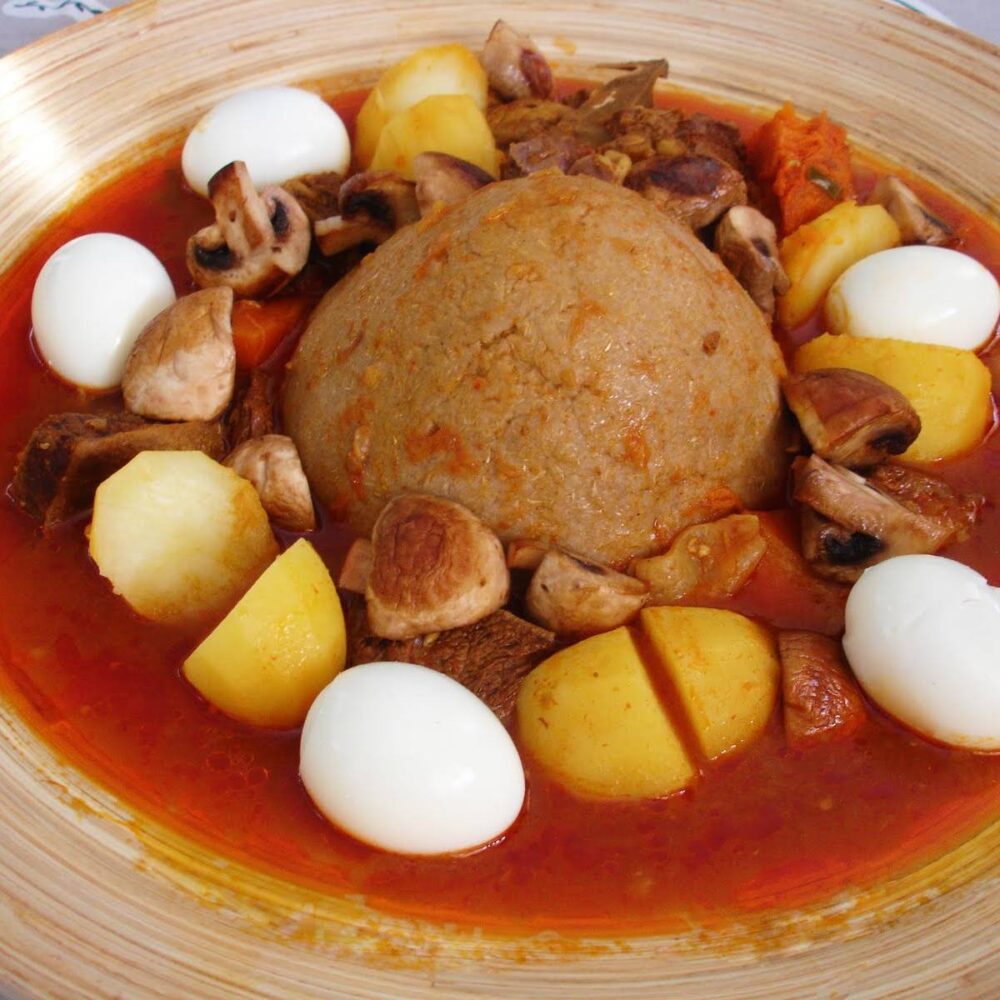
Bazeen, perhaps the most iconic doughy example – a distinctive dish kept for occasions or lunch on Fridays. It’s made from barley dough kneaded into a semi-spherical ball and placed in the middle of a large bowl, around which the sauce is poured, making the dish look like a rock island surrounded by water. Bazeen is served with tomato sauce, eggs, broad beans, potatoes, mutton, chicken, or camel meat and eaten with the fingers.

Aseeda is more like a sweet version of bazeen, made from wheat flour, cooked in water, eaten with honey, date syrup, olive oil, or smen.

Z’ummeeta or zumita is yet another ancient Libyan dough, eaten by dipping a tiny bit, taken by hand, in olive oil and chili sauce. It is usually eaten for breakfast or as a quick snack, as it takes only a few minutes to mix. 

Bsisa is another ancient grain meal, a three-in-one – breakfast dish, dessert or snack, made of roasted wheat, ground with fenugreek, aniseed, cumin and sugar. Its history goes back a long way when nomads used to take bsisa on their journeys since it was both full of nutrients and easy to carry in its ground powder form. The preparation of bsisa for eating is super simple – mix powder with olive oil into a paste, and it’s done.

Libyan cuisine features traditional khubz (flatbread), again (small round flatbreads), taboon (smoky and chewy bread baked on hot stones), mark (flaky bread cooked on a skillet and flavored with butter and olive oil), and a French baguette.

Icon Pasta in Libya represents a fascinating fusion of local and Italian cuisines.

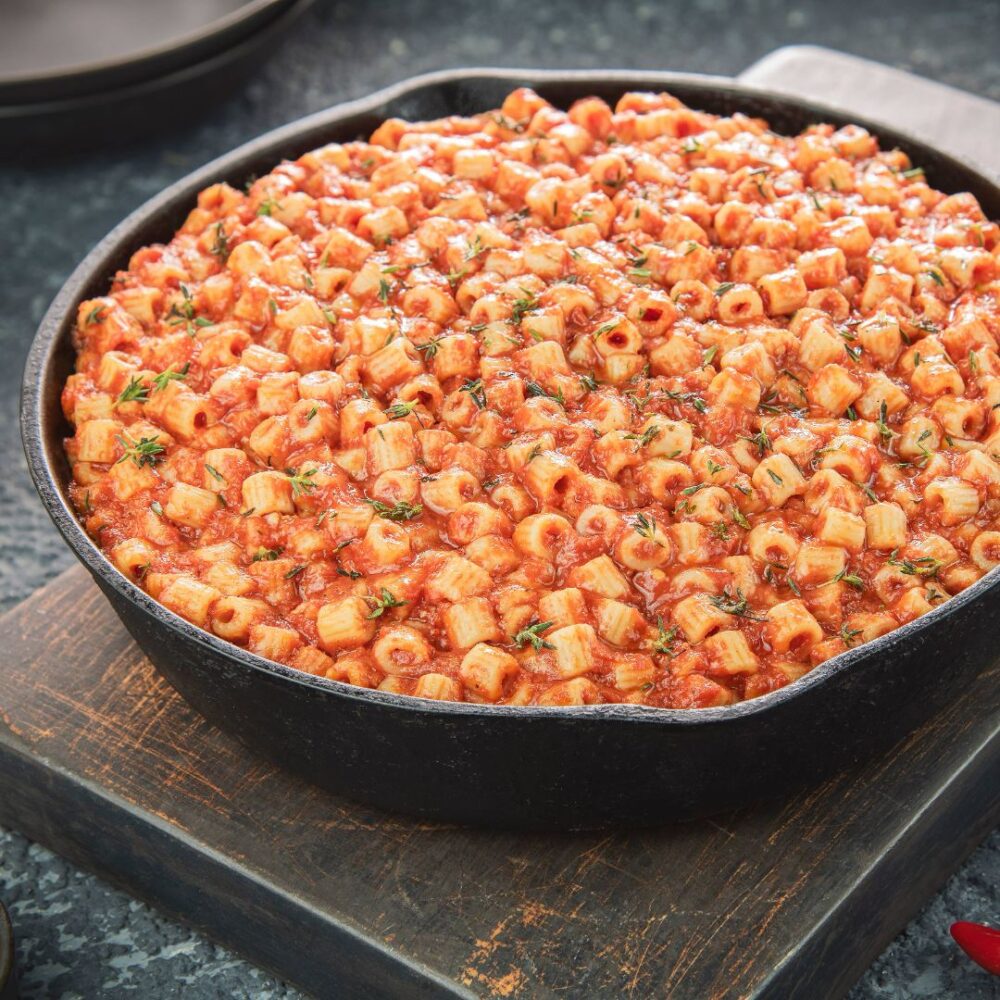
Here, pasta is usually dry and made from semolina. Spicy tomato pasta, flavored with cumin, coriander, chili peppers, and sometimes enhanced with meat, is a popular lunch option. Small pasta orzo or vermicelli are added to soups to make them more filling.

Libya has a relatively high consumption of rice, which links more closely with Egyptian habits than with Western Maghreb. Their proximity has facilitated the adoption of similar staples. In Libya, rice is cooked with a sauce similar to risotto or steamed over a vegetable and meat sauce reminiscent of couscous. It can also be cooked with aromatic spices, nuts, and dried fruits to make pilafs.

PRODUCE IN LIBYAN CUISINE

When talking  potato dishes in Libya, the one popping up particularly often is m’battan (also named mubattan or batada mbatna), a uniquely Libyan name meaning ‘lining’ two layers with stuffing. Dish is made with potatoes, sliced to hold a minced lamb or beef stuffing, in a spicy tomato sauce. It’s a labor-intensive comfort food for Ramadan.

The largest source of vegetable protein comes from pulses: chickpeas, lentils, dried beans, and fava beans, which feature traditional falafels, fasolada (bean soup), tajine lubia (white bean stew), and labia silk (borlotti bean stew made with spinach, sometimes lamb).

Vegetables are of great importance to traditional kitchens, especially the tomatoes, paired with sweet and chili peppers, onions, cumin. Onions and garlic are also foundational, followed by sweet and chili peppers, zucchinis, eggplants, pumpkins and leafy greens.

A common dish that Libya shares with Eastern neighbours and the heritage from Ottomans are stuffed vine leaves lebrak and stuffed vegetables mahshi. The preparation involves stuffing veggies with rice, herbs, and minced meat and then cooking them in a fragrant broth. Mahshi is a great make-ahead dish; it tastes even better the next day and warms up well.

Icon Tomatoes are so important in Libyan cuisine that the country is among the top five tomato consumers per capita in the world.

And that’s interesting, because the country is largely arid. Tomatoes, combined with spices, meat or legumes, help bring moisture and freshness to dishes that otherwise rely heavily on grains, preserved foods and dense breads.

Dates are a very important crop and an essential sweet in Libyan cooking. Libya is the 5th largest date consumer in the world! Dates feature many desserts, tagines, stews, appetizers, preserves and pastes. Date syrup is added to tea and coffee, and drizzled over pancakes and porridge. Other than dates, figs, apricots, and oranges are among the most popular fruits in Libya.

MEAT IN LIBYAN CUISINE

Meat from small ruminant animals is the go-to meat for most Libyans. Lamb is considered a status symbol, as wealth is measured by the size and abundance of meat served.  This pattern is common to all Maghrebi countries, stemming from religious Muslim holidays that focus on celebration with food and rituals of slaughter for sacrifice.

Throughout the centuries, most families saved up all year to buy a sheep and were very frugal in its consumption. They wasted hardly anything, which is also reflects in high popularity of offal dishes like osban and fasooliya bil kersha. These traditional recipes often prioritize lamb, mutton or goat due to their cultural prestige. Everyday dishes are practical and affordable, so chicken is often the choice.

Beef is also eaten, but only when the animal becomes older and of less economic use. Camel meat has long been a staple in many parts of the Middle East, Pakistan, and North and East Africa, and it is also a staple for nomadic communities in Libya.

Meat drying is a widespread technique used worldwide under different names. Qarqush or qiddeed is the Libyan way. Meat is exposed to sunshine for several days, flipping it once in a while and keeping watch on dirt and unpleasant flies. This makes the qarqush a sensitive food, which many stick to preparing at home rather than buying a ready-made one from the grocery . If you happen to visit Libya during the holiday of sacrifice Eid Adha, you will see strips of meat hanging on the rooftops. This qiddeed is used in such traditional recipes as megata rishdet burma (Libyan home-made pasta).

FISH AND SEAFOOD IN LIBYAN CUISINE

Fresh fish isn’t a major staple because most of the country is desert and far from the coast. The nearby Mediterranean waters are relatively low in productivity, so they don’t provide large fish stocks.

During the colonial era, Europeans introduced various canned foods. As North Africa modernized and urbanized post-independence, there was a shift towards fast-prepared food options. Canned tuna, with its ease of use and storage, quickly became an attractive option. Up to date, it is a trendy protein option for salads, sandwiches, pasta, and stuffed vegetable dishes.

Even though not prevailing in the masses’ diet, coastal areas have some seafood specialties, like sun-dried octopus and squid. Delicacies are dried in the sun for a few days, then cut and boiled for a couple of hours before being added to a herby tomato stew, to serve with couscous. Quite often, seafood meals in Libya are accompanied by a tomato, garlic, cumin and salad and hararat spice mix.

MILK AND DAIRY IN LIBYAN CUISINE

The use of dairy in cooking is typically simple: fermented products like laban (a drink similar to buttermilk), jben (a soft cheese akin to cottage cheese or ricotta), and rayeb (a homemade yogurt) are common. Cheese is not a major staple, but it finds its place in salads or breads for breakfast.

However, dairy products are a primary food for Bedouin communities, whose frequent meal may be a bowl of yogurt and rice topped with ghee. Camel milk, a traditional staple for many desert-dwelling peoples across North Africa, is valued for its nutritional and medicinal properties. It is often sold fresh or fermented in larger supermarkets within urban centers, while in rural or desert areas, it is typically sold directly by producers.

OILS AND DESSERTS IN LIBYAN CUISINE

Food in Libya is frequently prepared with olive oil; there is not even such a thought of having ‘too much olive oil’. Once in Libya, you would need to adjust your palette to sense local olive oil everywhere. Olive oil exports have been banned since 2017 to protect the domestic production market, though this was more about stabilizing local markets rather than an outright ban on all olive oil exports.

Libyan desserts rely on dates, honey, almonds, pine nuts and semolina. Warm cinnamon and cardamom, along with rosewater, give them their signature aroma. They’re usually very sweet, but served in small portions with mint tea or strong coffee to keep the balance.

SEASONINGS

Libyan profile is warm, aromatic, peppery. Dishes start with a base of olive oil, onions, garlic, tomato or tomato-paste, bell peppers. This base builds savory depth. Then they layer in spices — either individually –  cumin, coriander, paprika, turmeric, or via spice blends. These add warmth, complexity, and North African-style. Saffron, though less common, appears in some special dishes, with its touch of luxury. Parsley. mint, preserved lemons or floral waters contribute freshness. Tahini, a creamy paste made from sesame seeds, is popular in dressings for its smooth texture and nutty taste. For many dishes, gravies simmer slowly, giving time flavors time to meld and deepen.

BZAAR is a fundamental spice mix in Libyan cooking, similar to other North African spice blends like ras el hanout, which include cumin, coriander, turmeric, paprika, cinnamon, and black pepper. It is used to season meats, stews, and rice dishes.

HARARAT is a special Libyan blend of five spices (or seven spices, depending on the recipe): cinnamon, cumin, coriander, red chilies, and allspice. It is also universal and flavors soups, stews, rice dishes, and meats.
HAWAIJ  – this spice mix, though more common in Yemen, is also used in some Libyan dishes. It includes black pepper, cumin, cardamom, cloves, and coriander.

SAUCES

HARRISA PASTE – chili peppers along with garlic, cumin, coriander, and often caraway, mixed into a base of olive oil.

PILPELCHUMA – a fiery chili-garlic paste originating from the Libyan Jewish community, known for its intense heat and bold flavor, and is very versatile for salads, marinades, legume and rice dishes (also beloved in Israel). It is made from a blend of roasted or dried peppers, garlic, cumin, caraway, olive oil, and lemon juice. 
SHARMOULA (CHERMOULA) is a marinade and sauce made from a blend of garlic, cumin, paprika, coriander, olive oil, lemon, and sometimes saffron. Used to marinate fish and meat or served as a dipping for grilled dishes.

Icon

Herbs

PARSLEY

MINT

CILANTRO

BAY LEAVES

THYME

Icon

Spices

CUMIN

CORIANDER

PAPRIKA

CARAWAY

CINNAMON

BLACK PEPPER

NIGELA SEED

SAFFRON

CLOVES

DRY CHILI

GINGER

FENUGREEK

Icon

Aromatics

GARLIC

ONION

TOMATO

CHILI PEPPERS

BELL PEPPERS

LEMON

ORANGE WATER

ROSEWATER

Icon

Condiments

OLIVE OIL

OLIVES

PEPPER PASTE

TOMATO PASTE

PRESERVED LEMONS

FERMENTED BUTTER

DATES

DATE SYRUP / SILAN

HONEY

Select to see authentic flavor combinations and what they go with

Icon

Meats

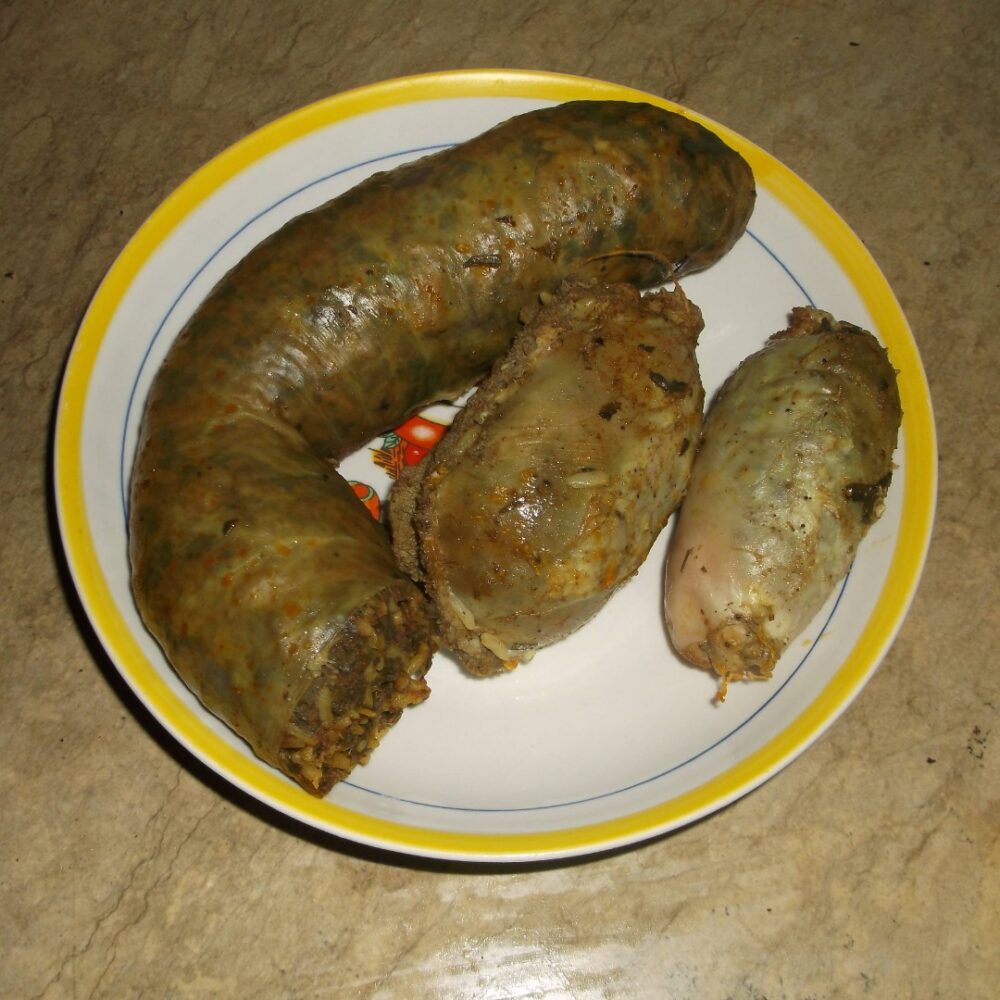
Usban

USBAN – traditional Libyan food made of guts stuffed with organs and herbs.

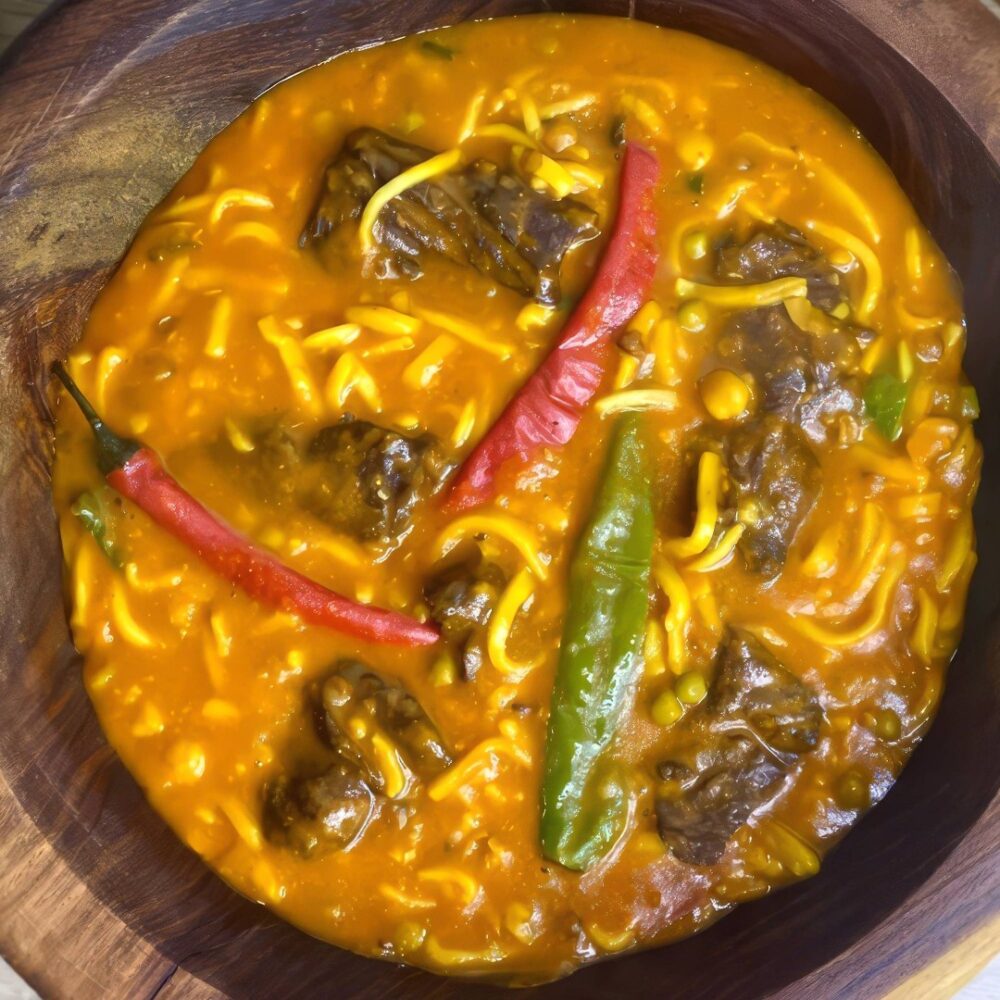
Rishdet burma

RISHDET BURMA – homemade pasta, made with guedid dried meat, dried peas and lentils, fenugreek, and fresh herbs.

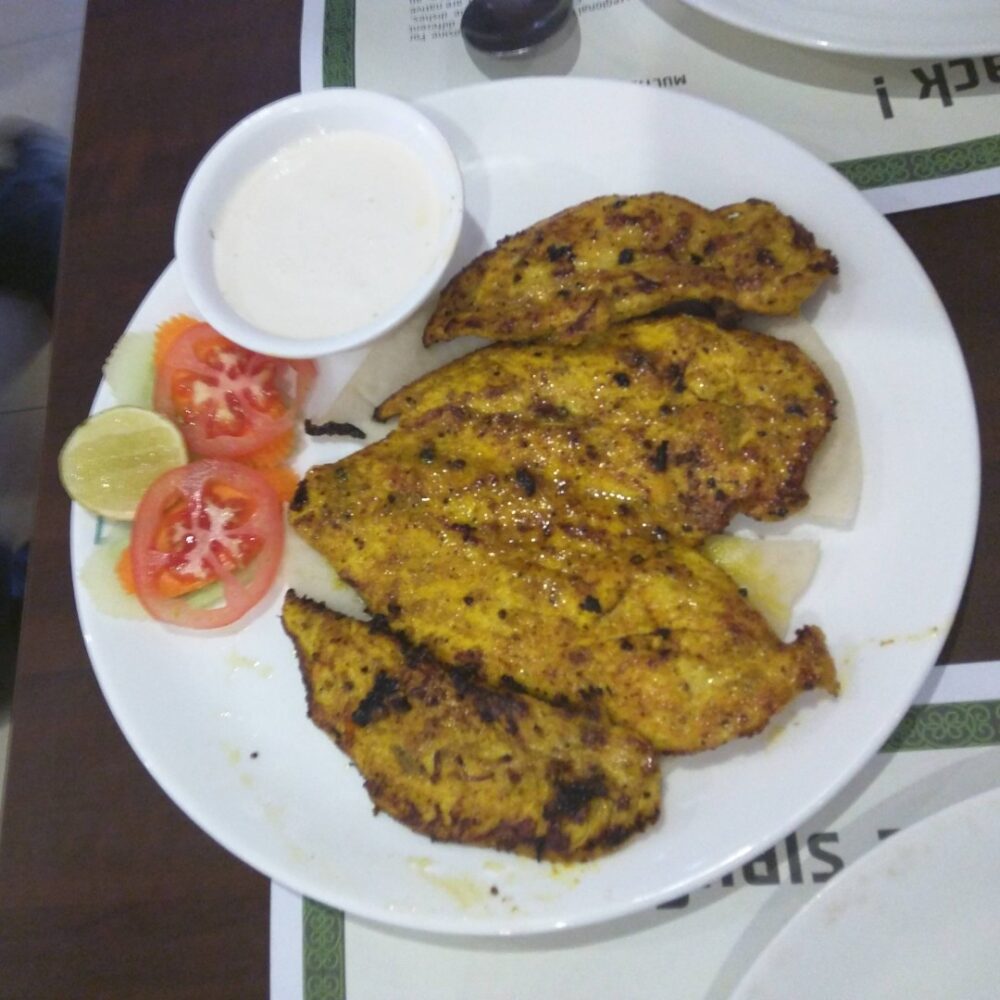
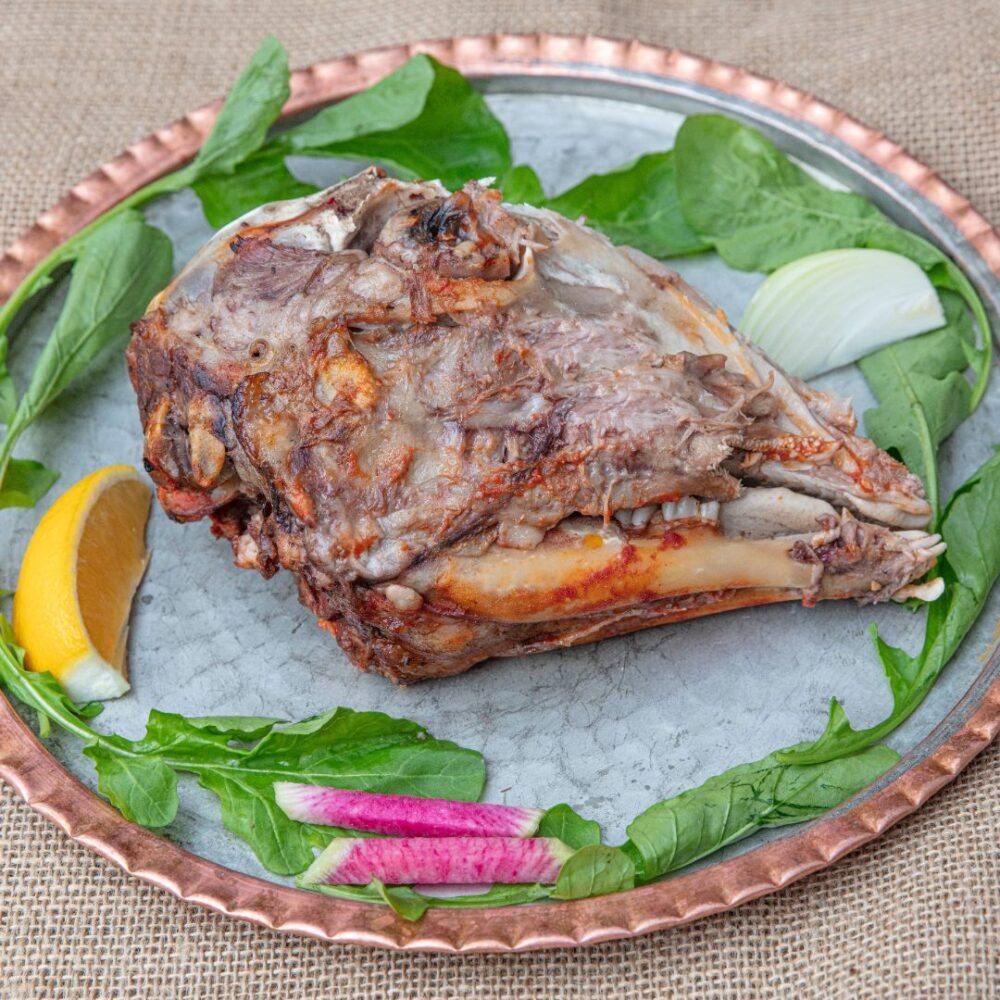
Dajaj Mashwi Ayyappannagamani, CC BY-SA 4.0, via Wikimedia Commons

DAJAJ MASHWI – marinated grilled chicken breast.

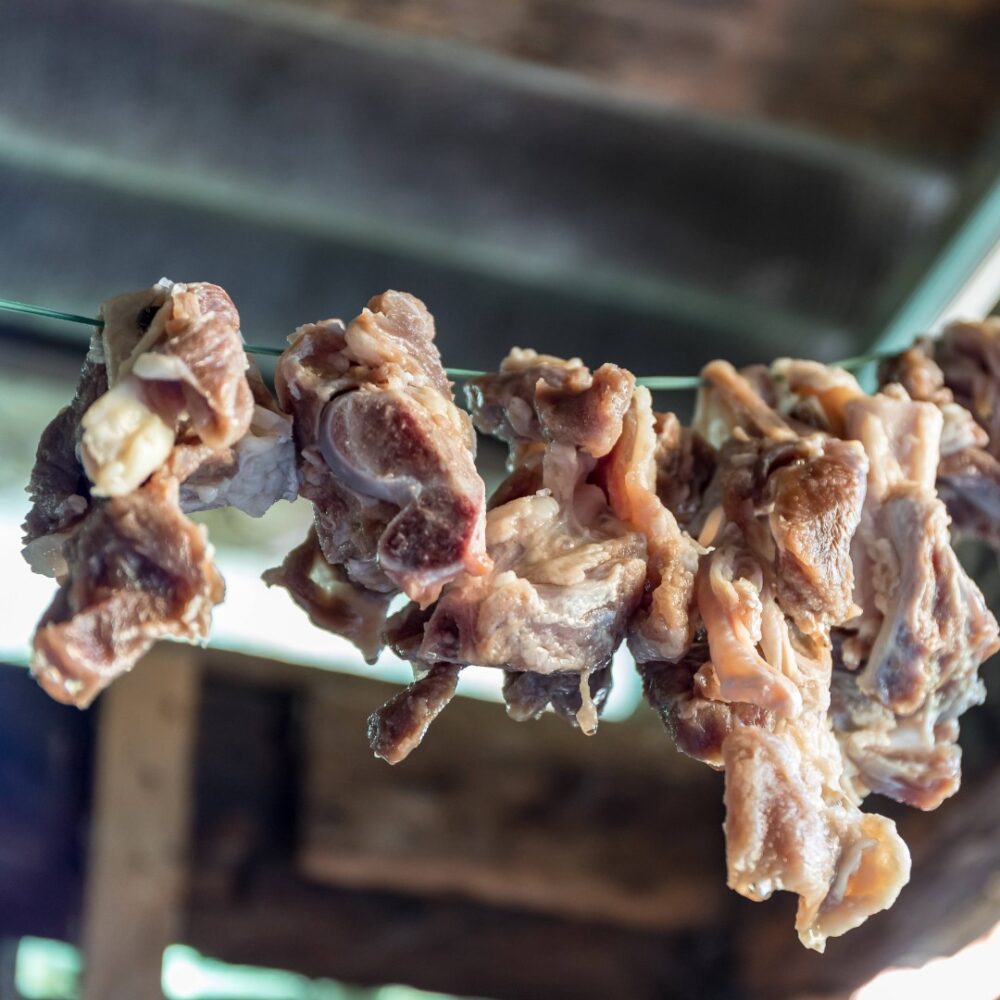
Guedid

GUEDID – salted and dried lamb meat.

Icon

Fish and seafood

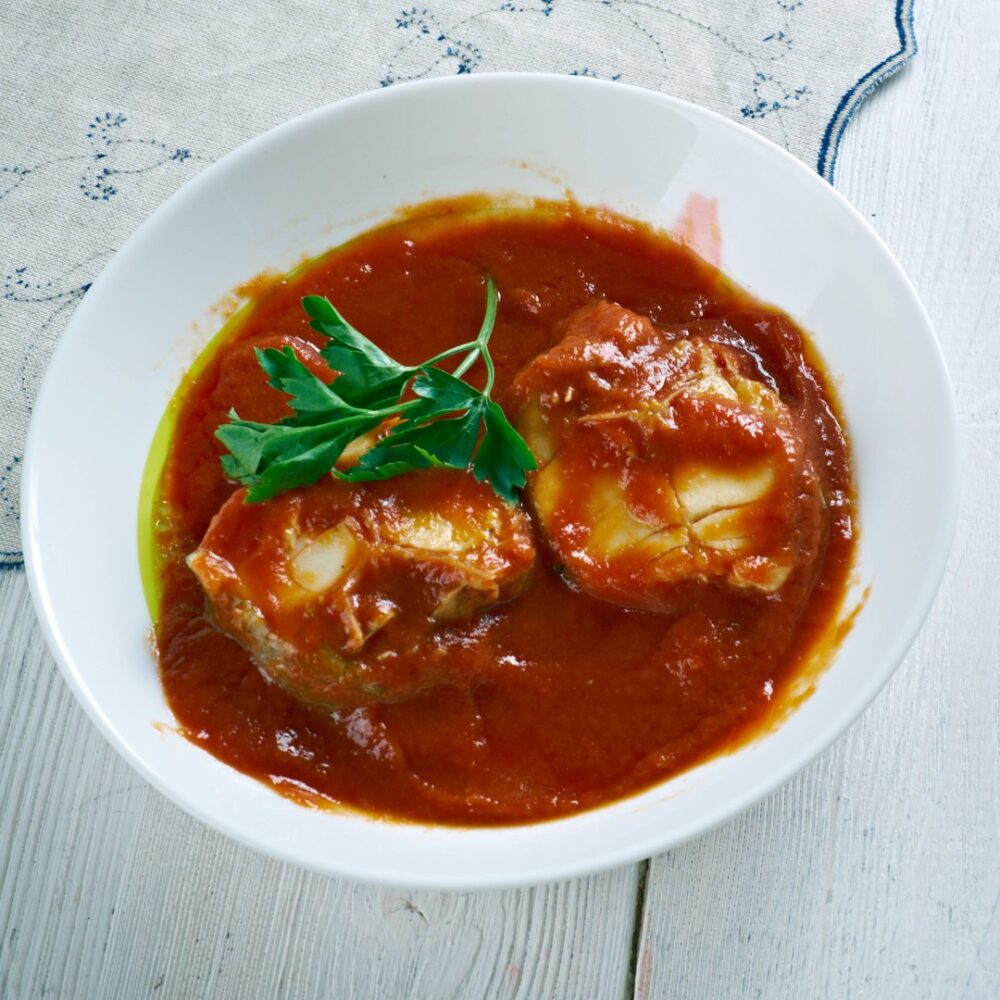
Haraimi

HARAIMI – fish poached in spicy tomato sauce with potatoes, Libyan Jewish dish.

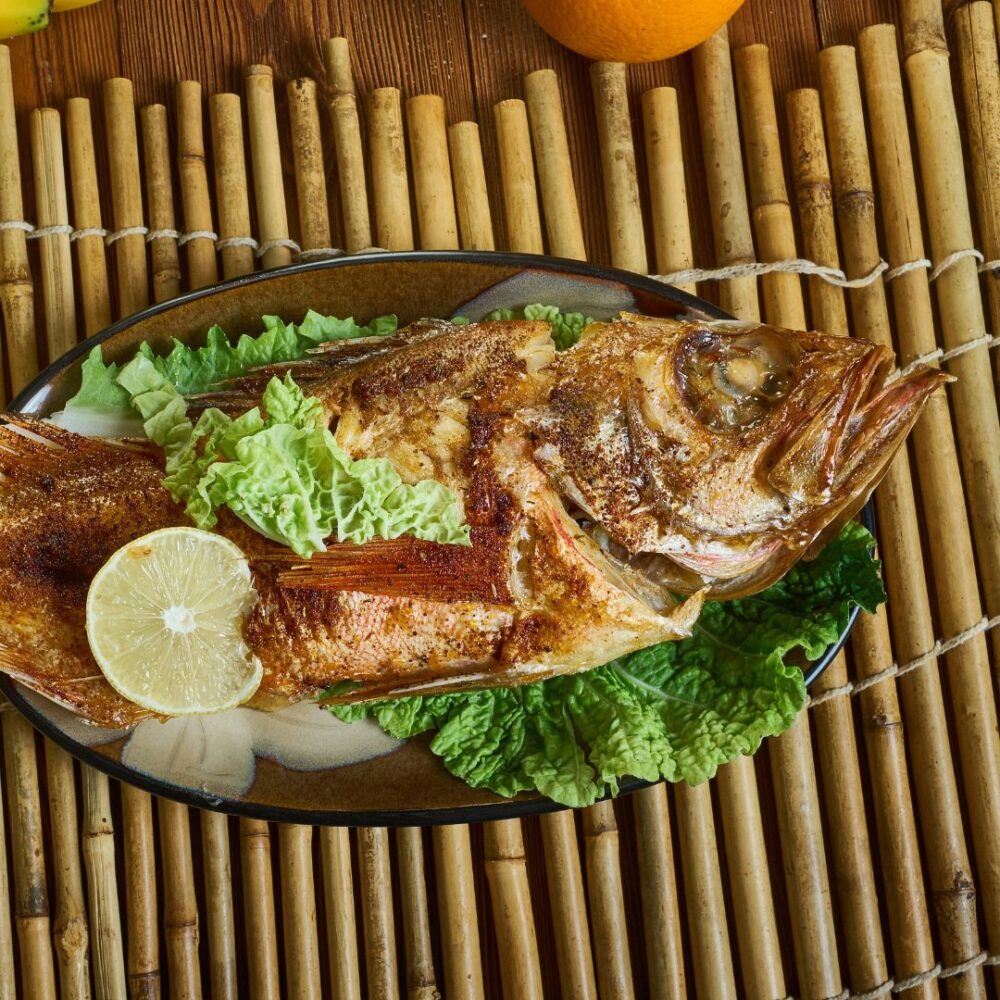
Samak mashwi

SAMAK MASHWI – Grilled fish seasoned with a mixture of spices, lemon, and olive oil.

Icon

Grains

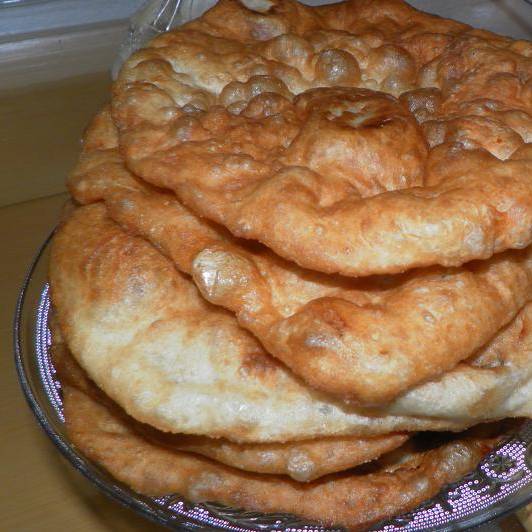
Sfinz Rania al-Bahara, CC BY-SA 4.0, via Wikimedia Commons

SFINZ – spongy fried bread, breakfast treat.

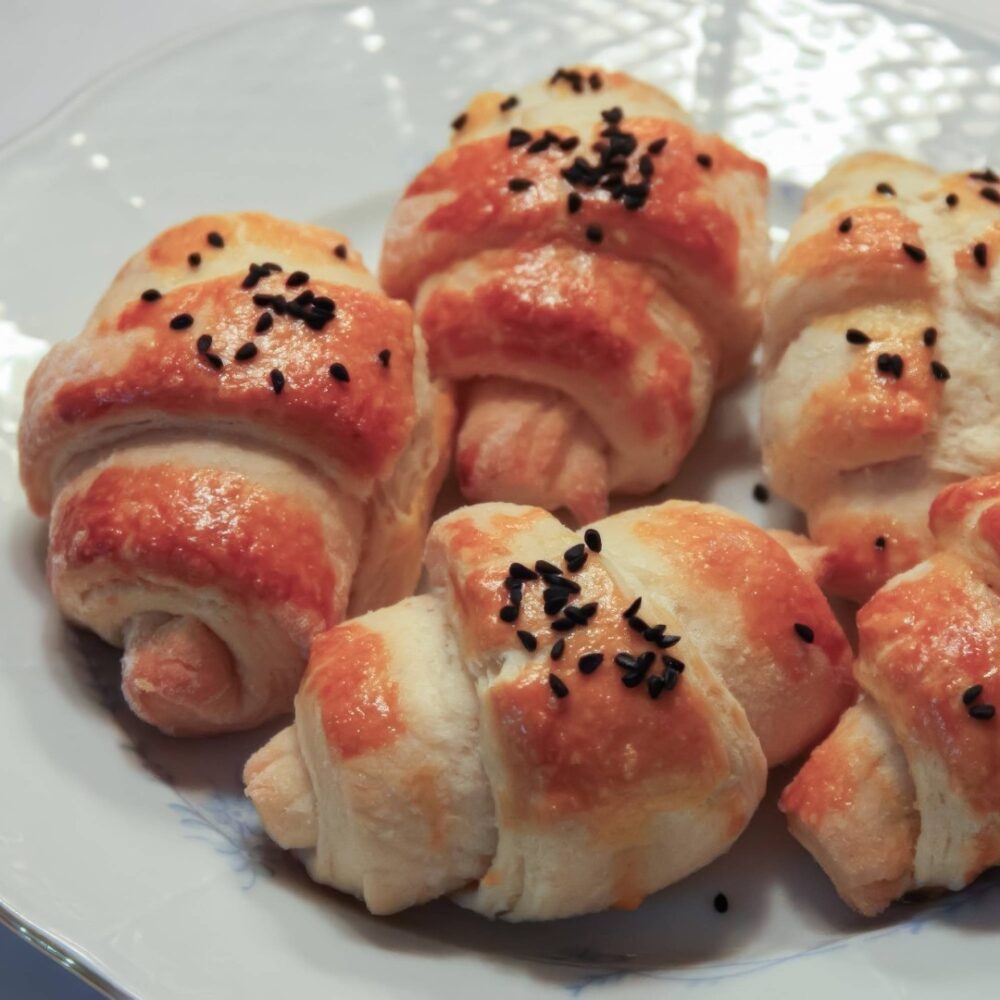
Khbeiza bil tonn

KHBEIZA BIL TONN – stuffed breads, popular fillings white cheese and dried mint, tuna and harissa, cheese and olives.

Bazeen Libiya11, CC BY-SA 3.0, via Wikimedia Commons

BAZEEN – a traditional dish made from barley flour. The dough is shaped into a round ball and served with a rich meat or lamb stew, often accompanied by potatoes, eggs, and tomato sauce.

Mbakbaka

IMBAKBA or MBAKBAKA – a unique pasta and meat dish where small pieces of pasta are cooked with lamb or mutton in a rich tomato-based sauce with chickpeas and spices.

Rishdat kaskas

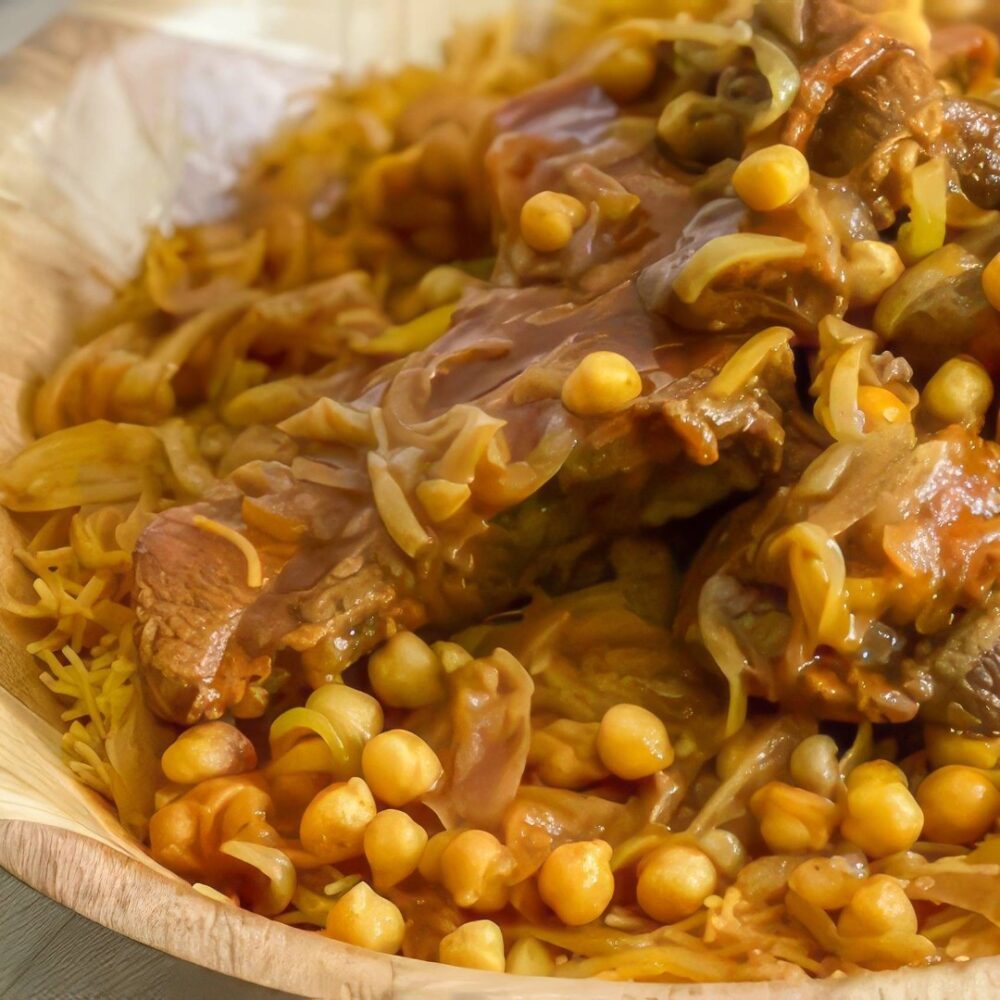
RISHDAT KASKAS – fresh pasta from thin noodles, steam-cooked and served with onion-rich sauce and lamb.

Icon

Produce

Falafels

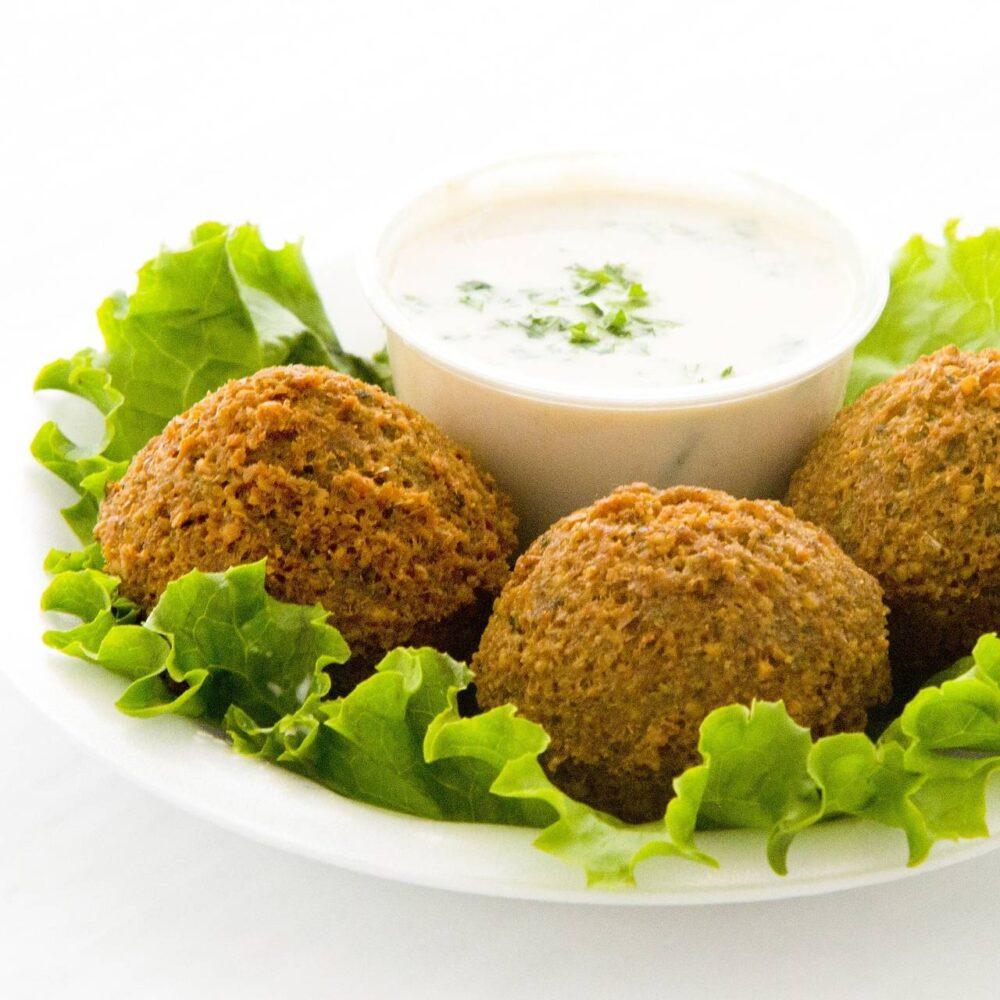
FALAFELS – a popular dish in many parts of the Middle East and North Africa, including Libya, falafels are deep-fried balls or patties made from ground chickpeas or fava beans, mixed with herbs and spices. In Libya, falafels are often enjoyed in sandwiches or wraps with salad, tahini, and pickles.

Fasolada

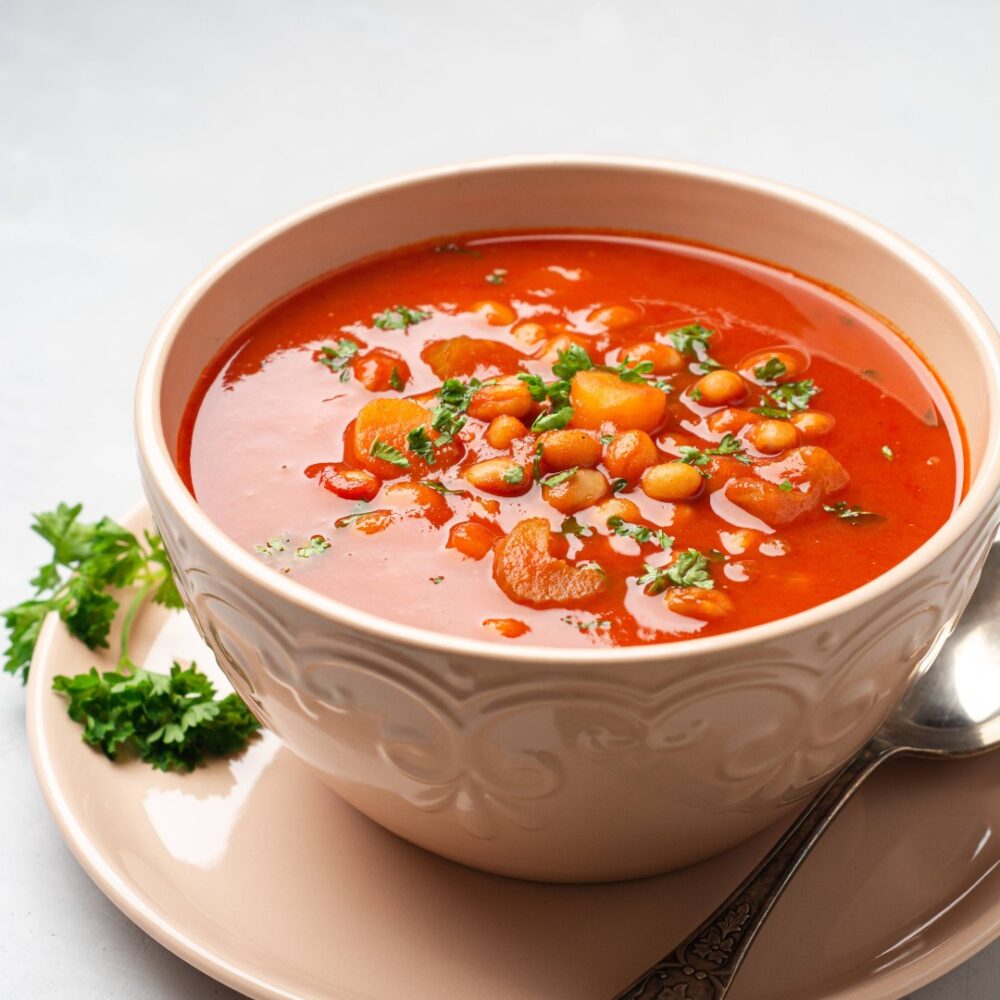
FASOLADA – a bean soup with Greek origins but also found in Libya, this dish is made from white beans, tomatoes, onions, and often flavored with olive oil, garlic, and herbs.

Hasa adas

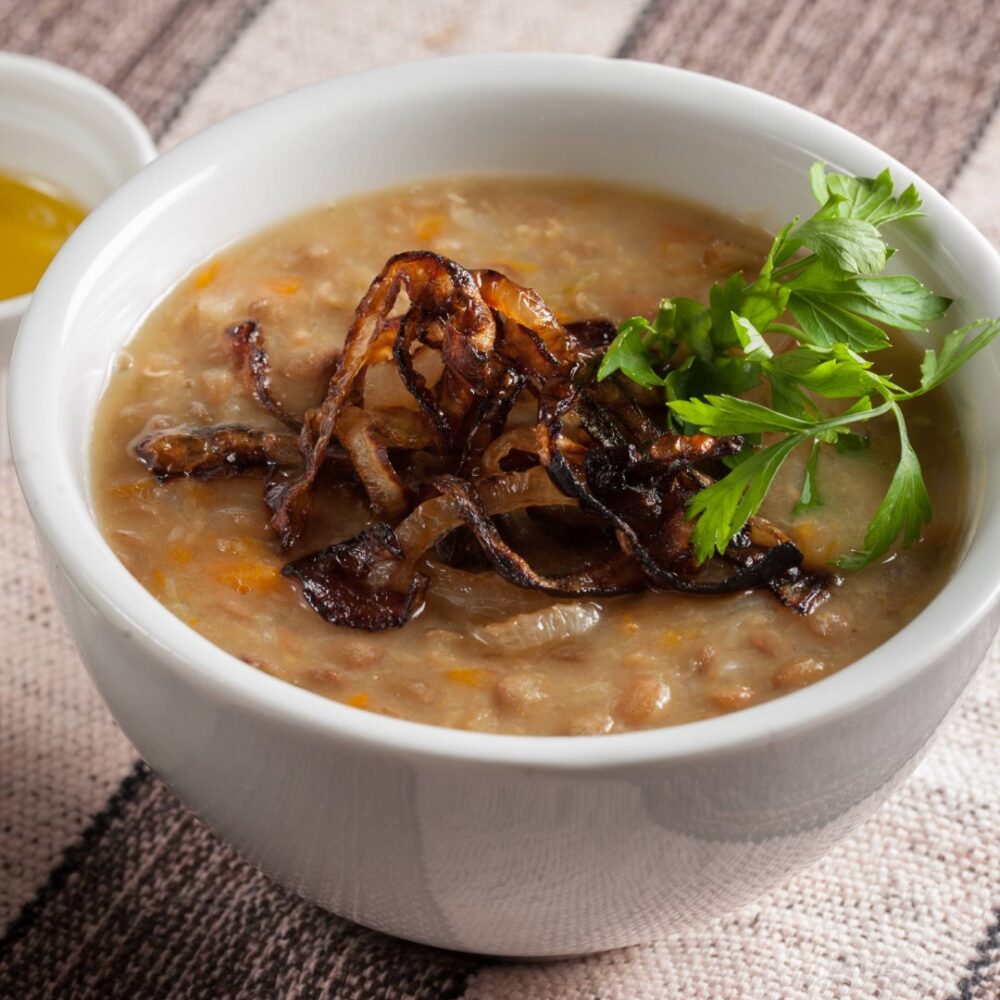
HASA ADAS – thick lentil soup flavored with cumin and topped with caramelized onion wings.

Foul Mudammas

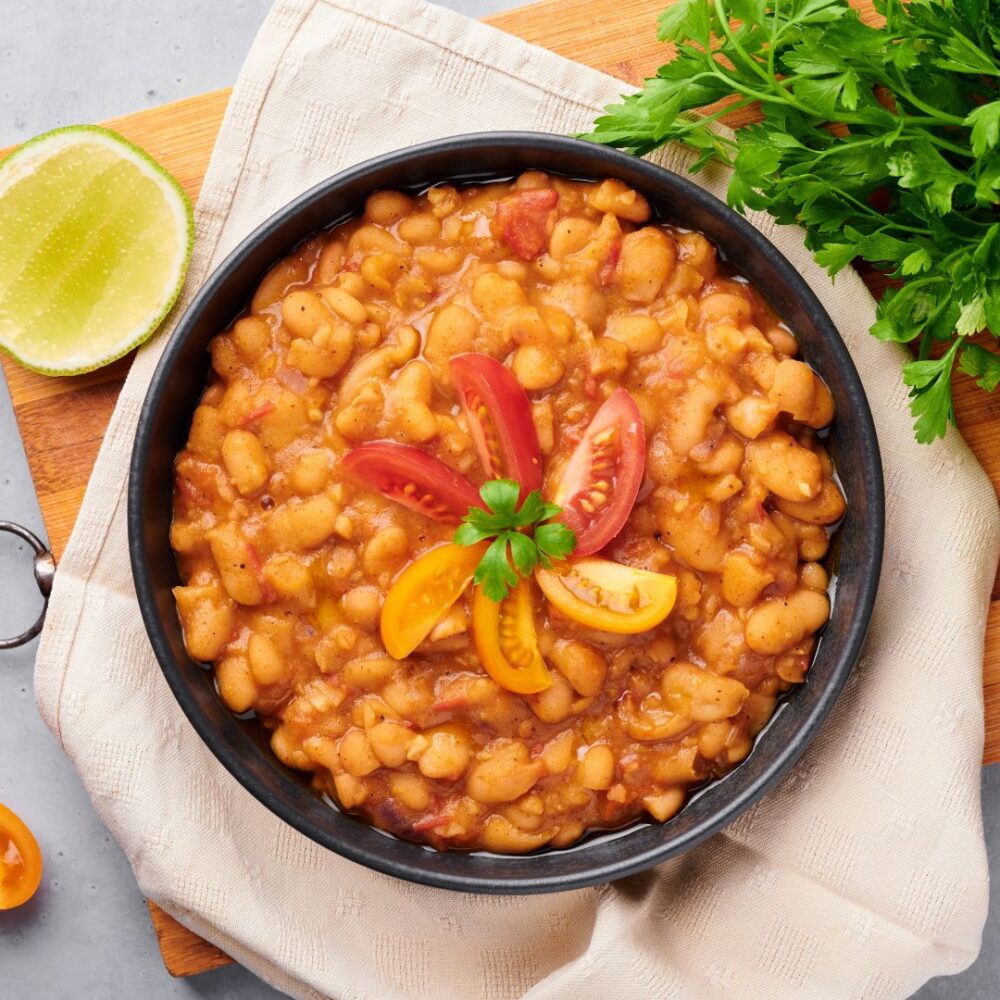
FOUL MUDAMMAS – bean stew, though popular throughout North Africa, the Libyan version often includes olive oil, cumin, and garlic, served with bread for breakfast.

Sharmoula

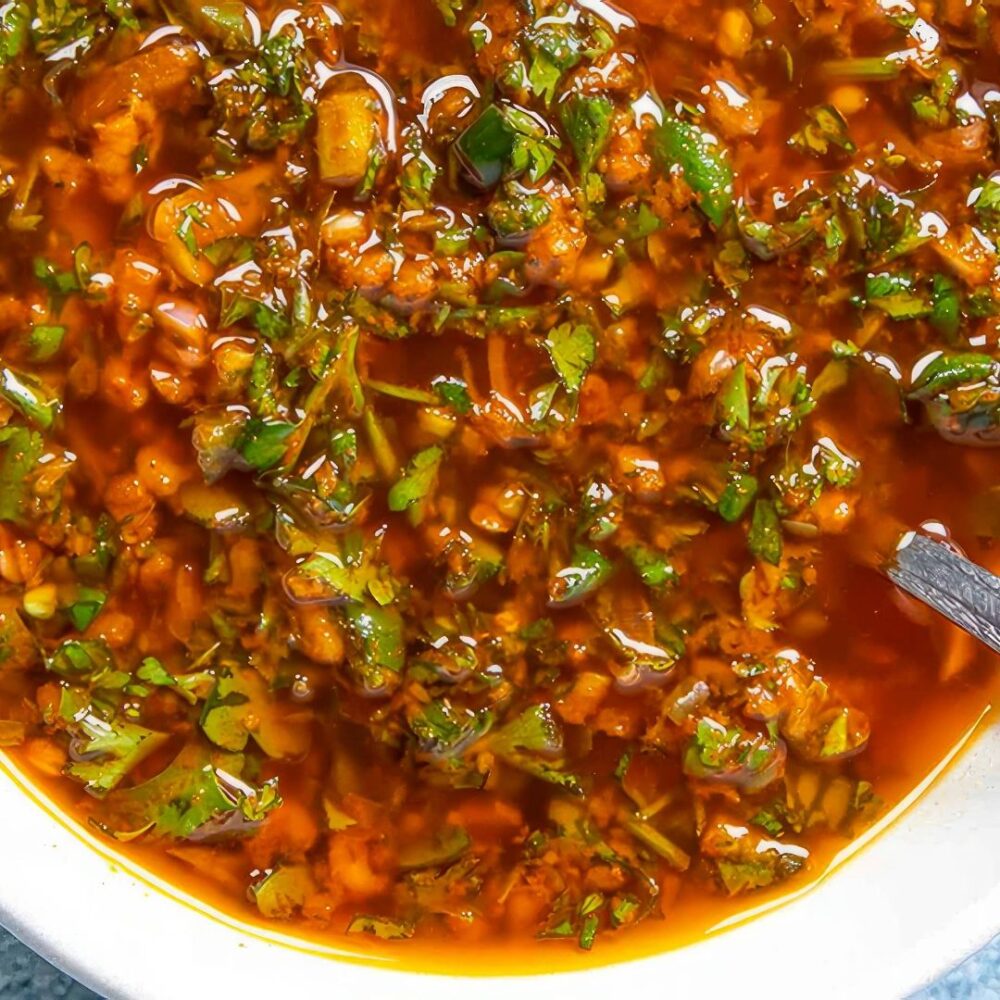
SHARMOULA – salsa or finely diced salad made with tomatoes, jalapeño, cucumber, onion, fresh herbs, and a tangy olive oil dressing.

Salata mashwia

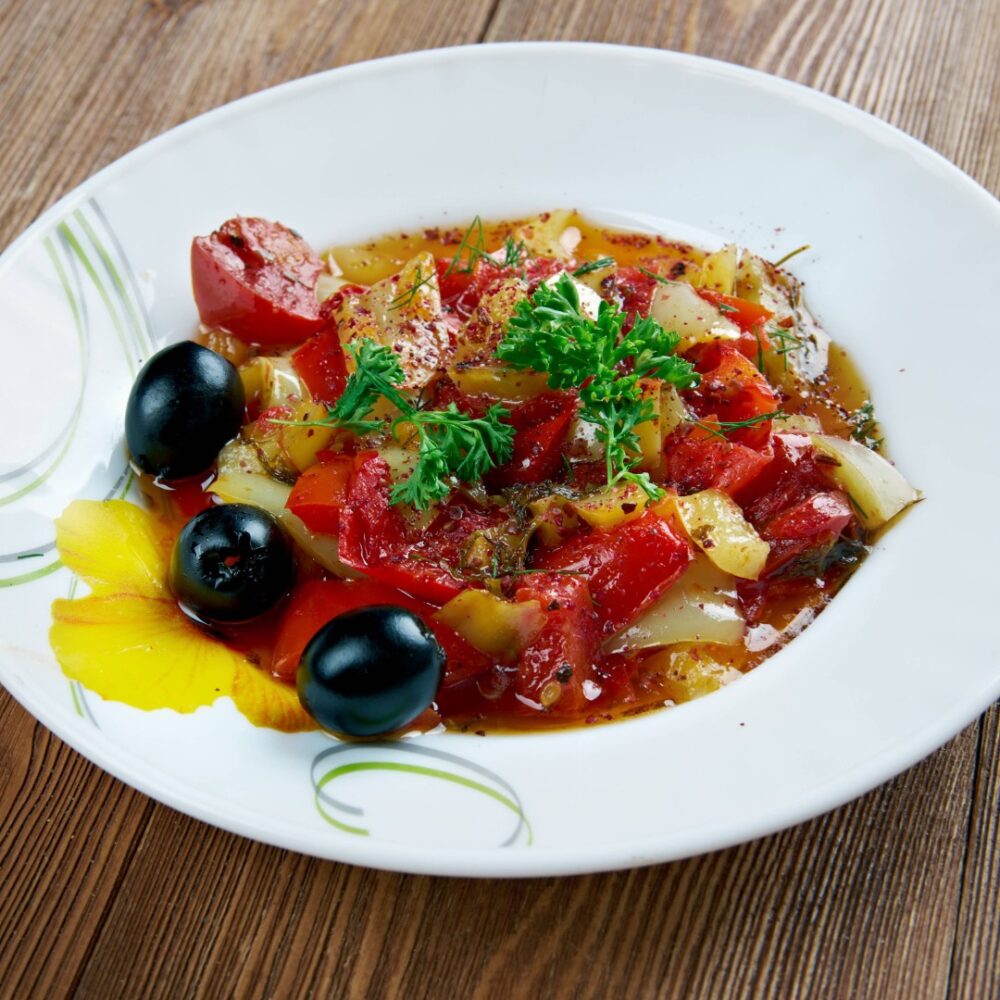
SALATA MASHWIYA – grilled and mashed salad of tomatoes, bell peppers, onions, eggplant, garlic and hot chillies, served with hard-boiled eggs.

Salatet kronb

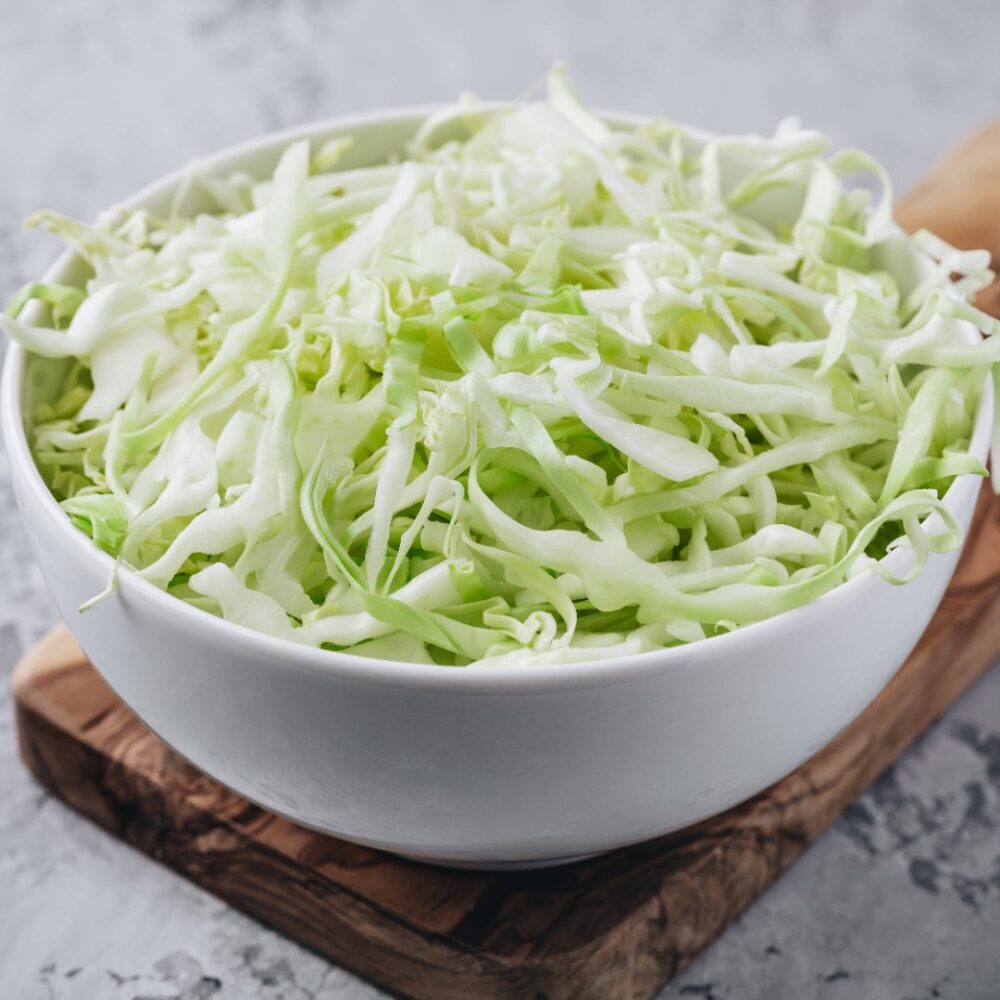
SALATET KRONB – fresh-tasting cabbage salad with olive oil, served with heavier spicy meats.

Abrak

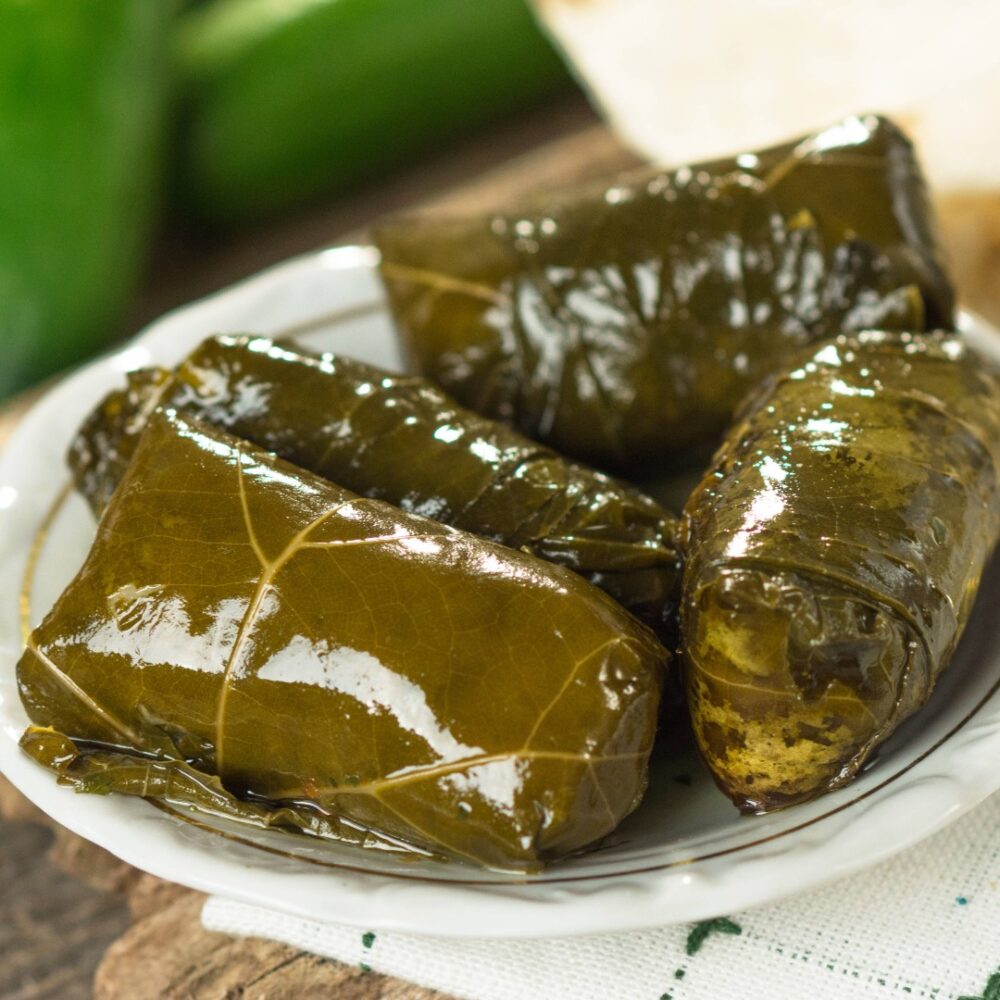
ABRAK or LEBRAK – steamed vine grapes or spinach stuffed with rice, coriander, optionally meat and herb fillings.

Tajin mahshi

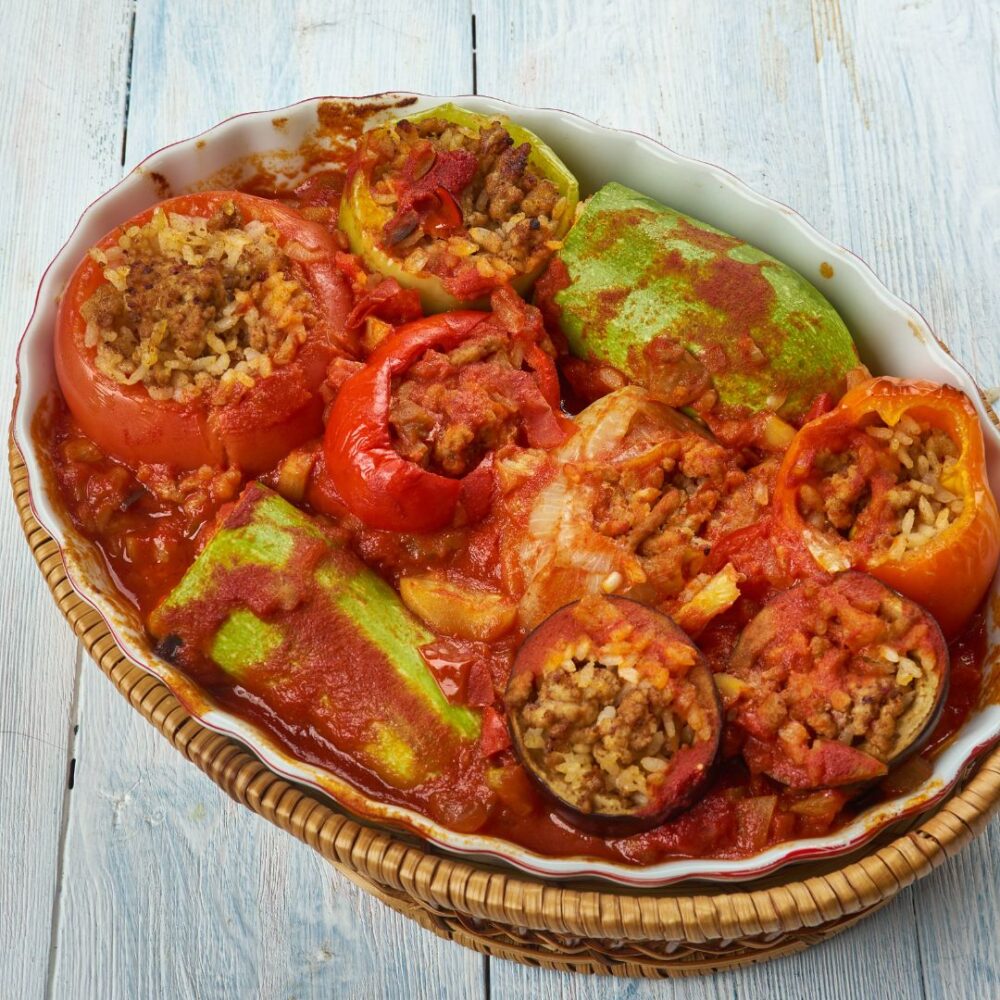
TAJIN MAHSHI – paprika, tomatoes, onions, zucchini or eggplants stuffed with lamb, onions, rice and spices such as ginger, chilies, cinnamon and turmeric.

Icon

Eggs and dairy

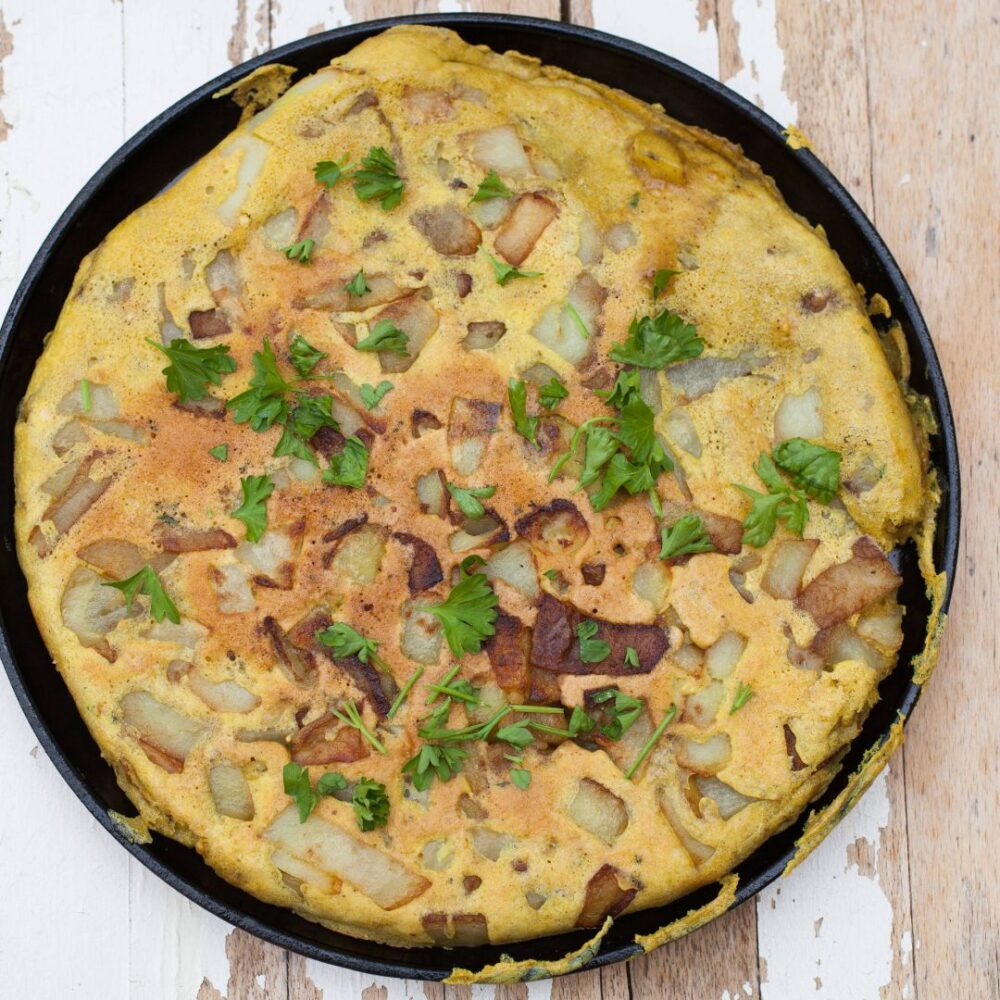
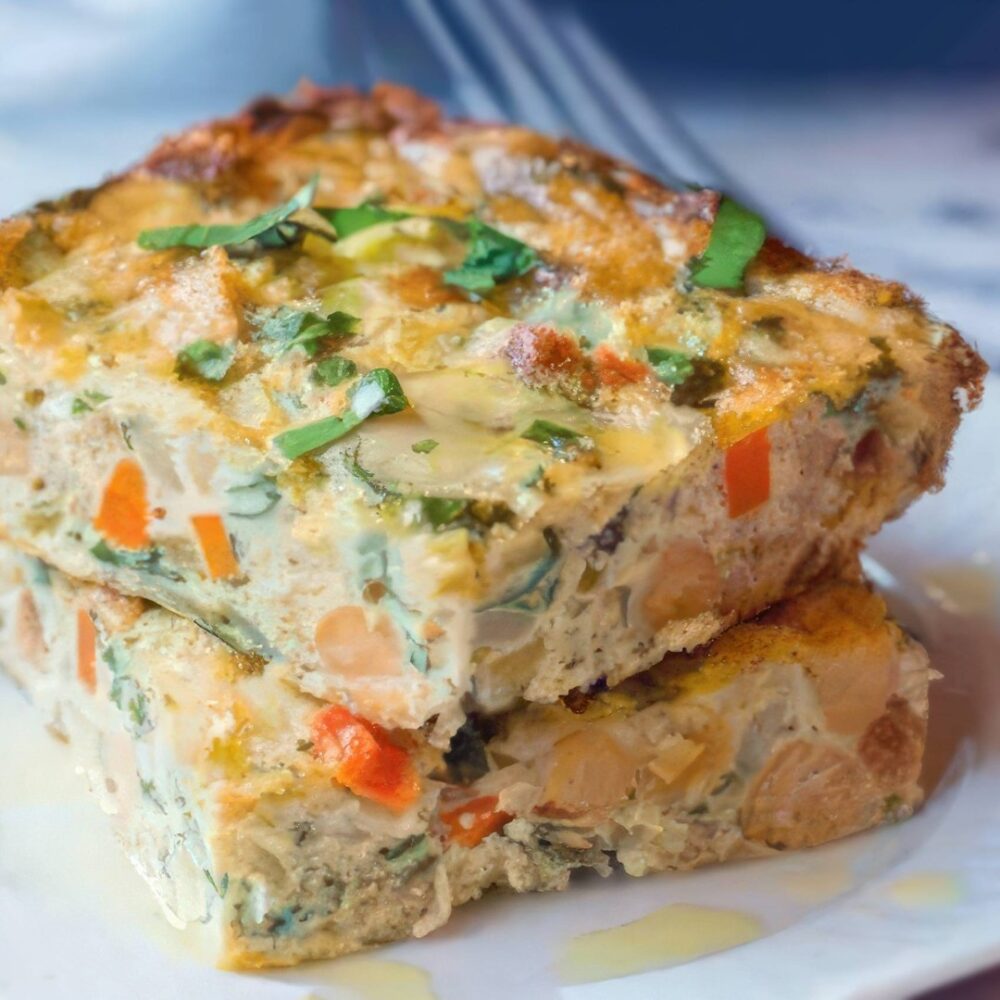
Ejja

EJJA – an egg-based dish similar to an omelette or frittata, made with chopped potatoes, tomatoes, chillies and fresh herbs such as coriander or parsley.

Tajeen

TAJEEN – is an oven-baked mixture of eggs, chicken or lamb, vegetables, cheese, and spices. It is similar to the Tunisian version, not Moroccan or Algerian.

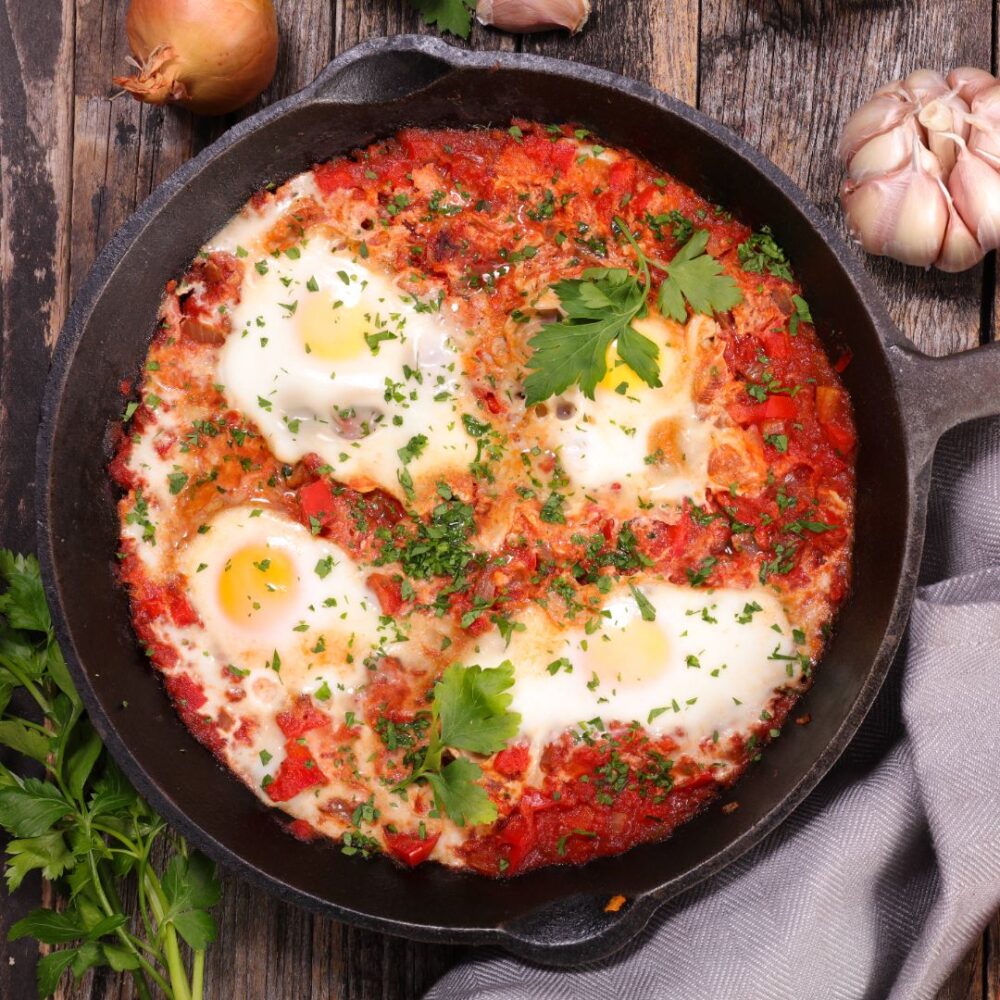
Shakshouka

SHAKSHOUKA – eggs poached in a sauce of tomatoes, chili peppers, onions, cumin, paprika, cayenne pepper, and sometimes harissa and fried lamb sausage.

Icon

Sugar, fats and nuts

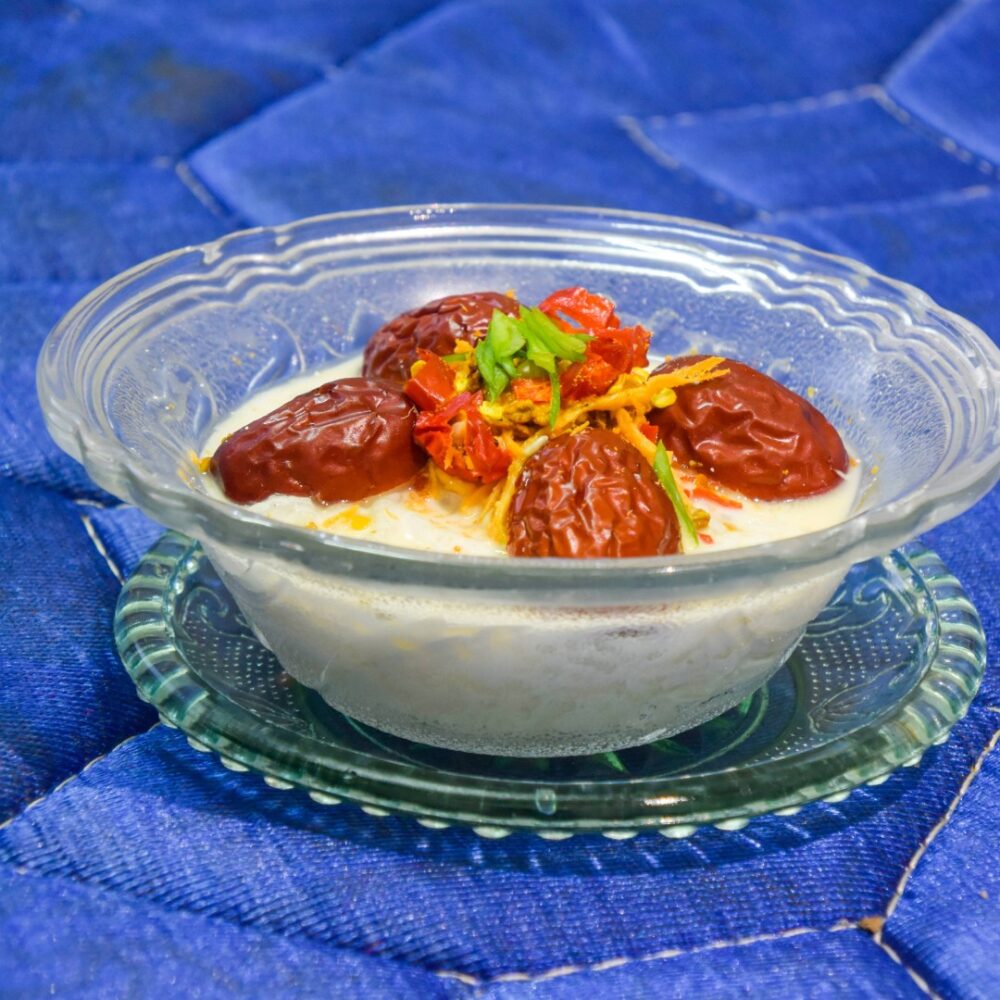
Mahalabiah

MAHALABIAH – nutritious dessert pudding made with sugar, milk and cornstarch, flavored with cinnamon, honey and nuts.

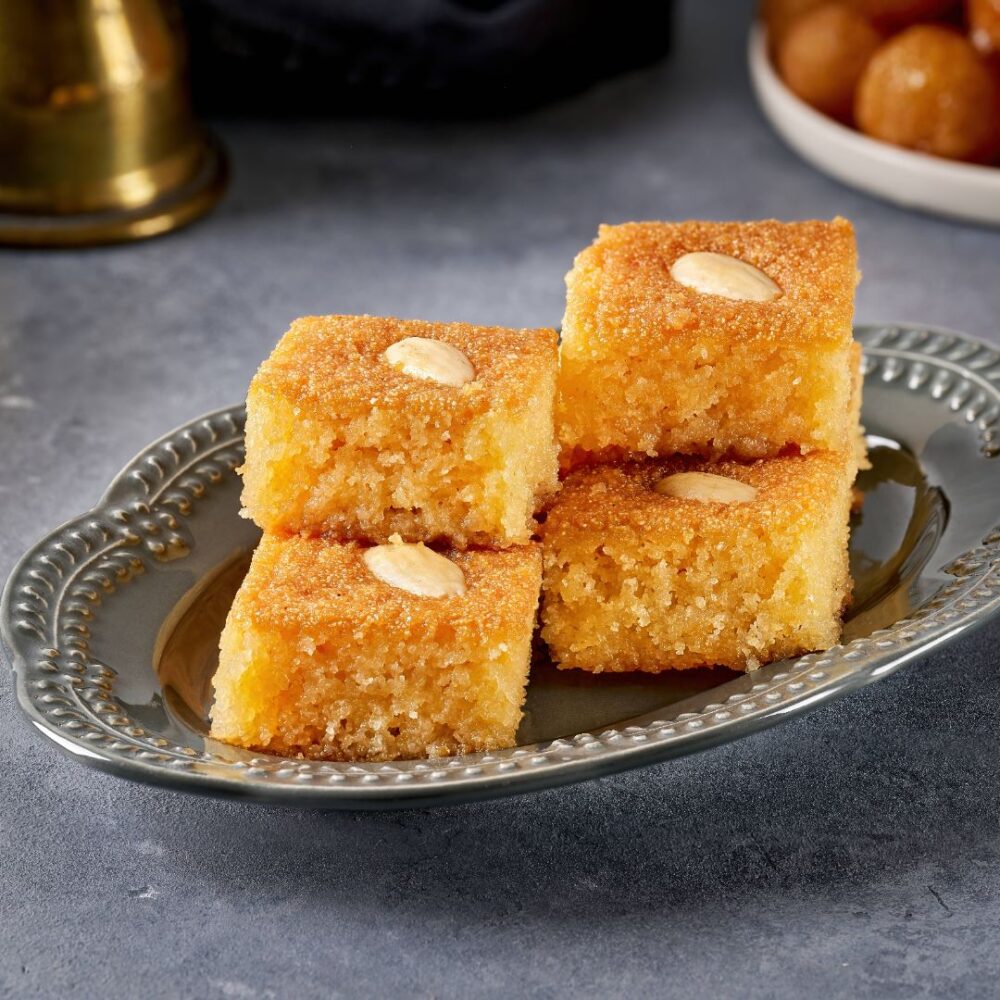
Basbousa bil tamr

BASBOUSA BIL TAMR – semolina-based cake drenched in date syrup and decorated with almonds.

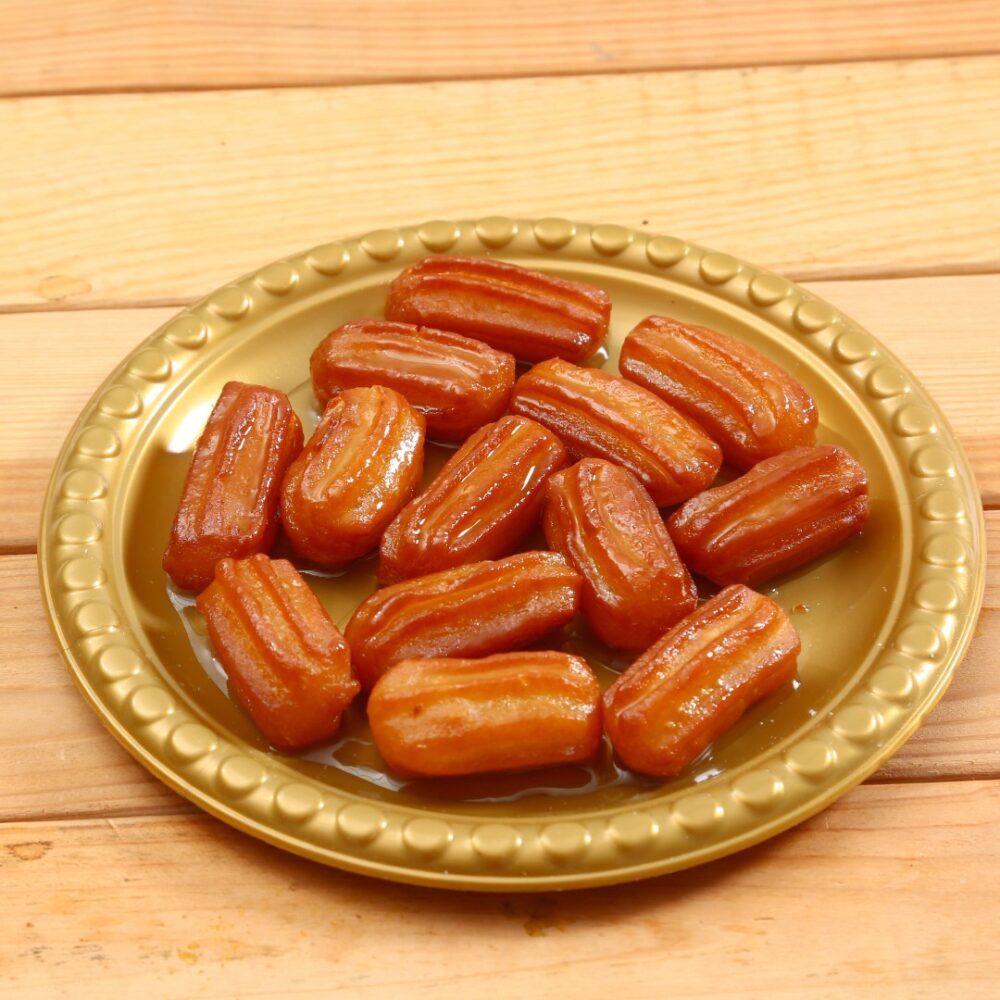
Balah al sham

BALAH AL-SHAM – A deep-fried dessert made from choux pastry dough, similar to churros, but soaked in sweet syrup after frying.

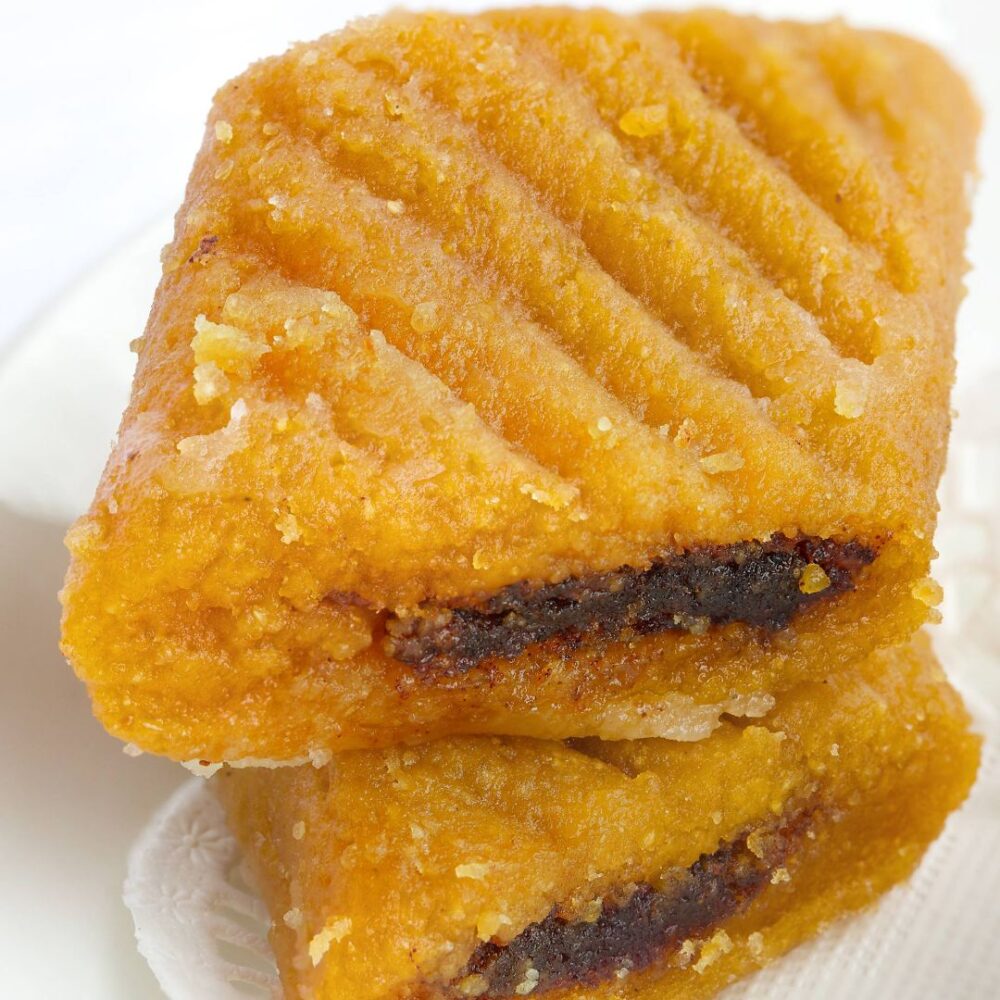
Makhroudh

MAKHROUDH – diamond-shaped and date or almond-filled cookies.

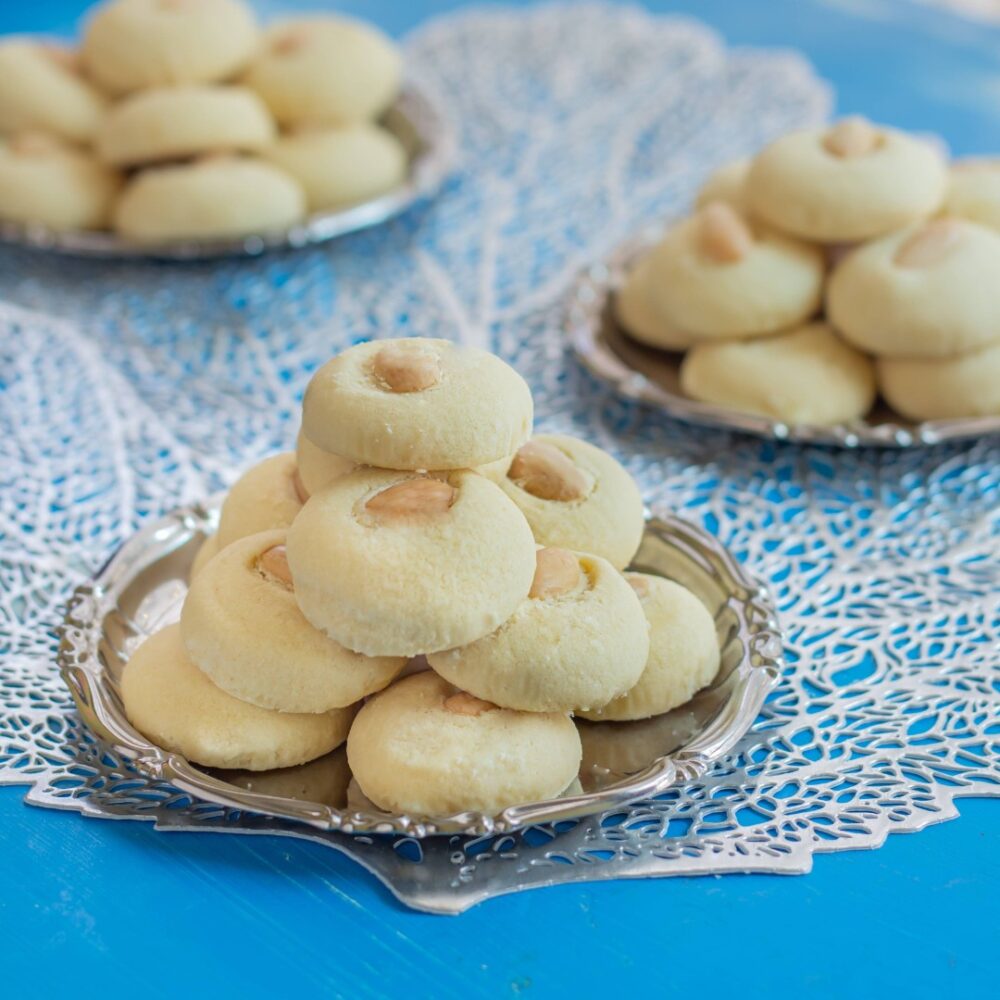
Ghrayba

GHRAYBA – round shortrbead cookies made with flour, sugar, butter and almonds.

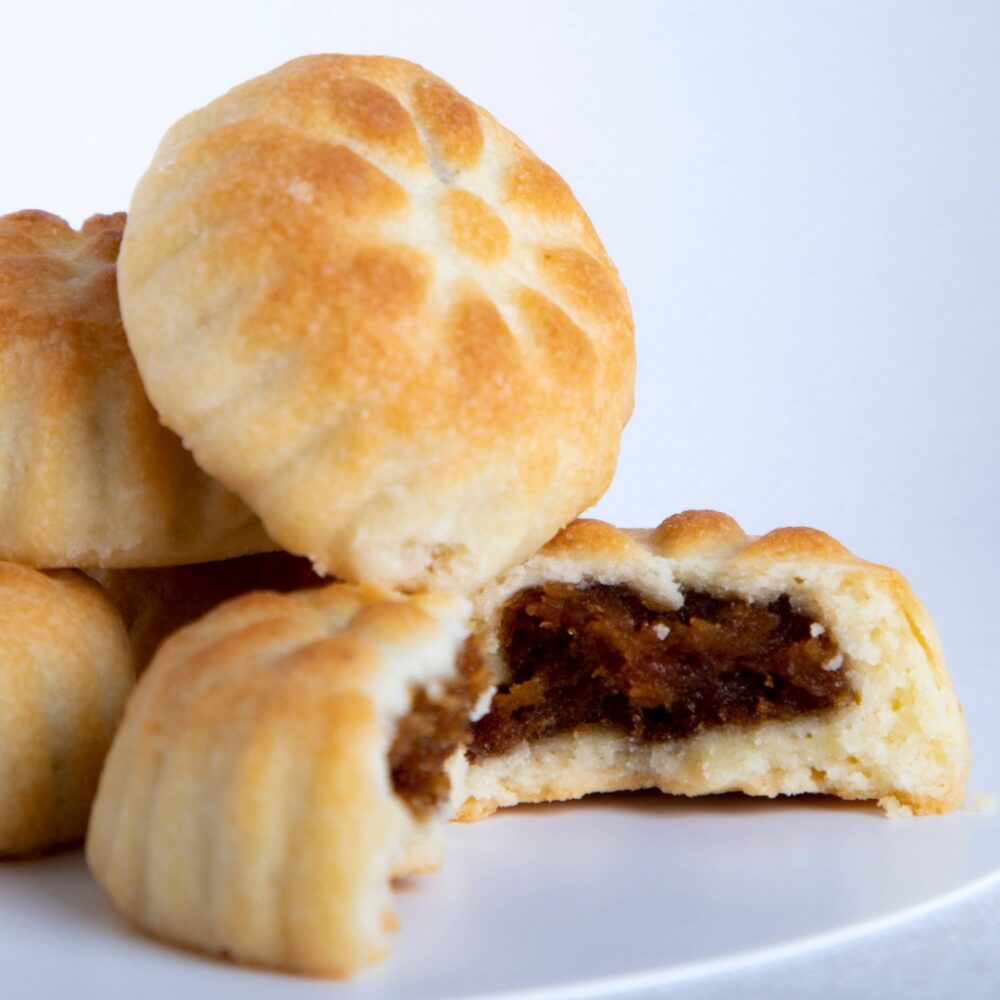
Maamoul

MAAMOUL – date-filled cookies from semolina flour.

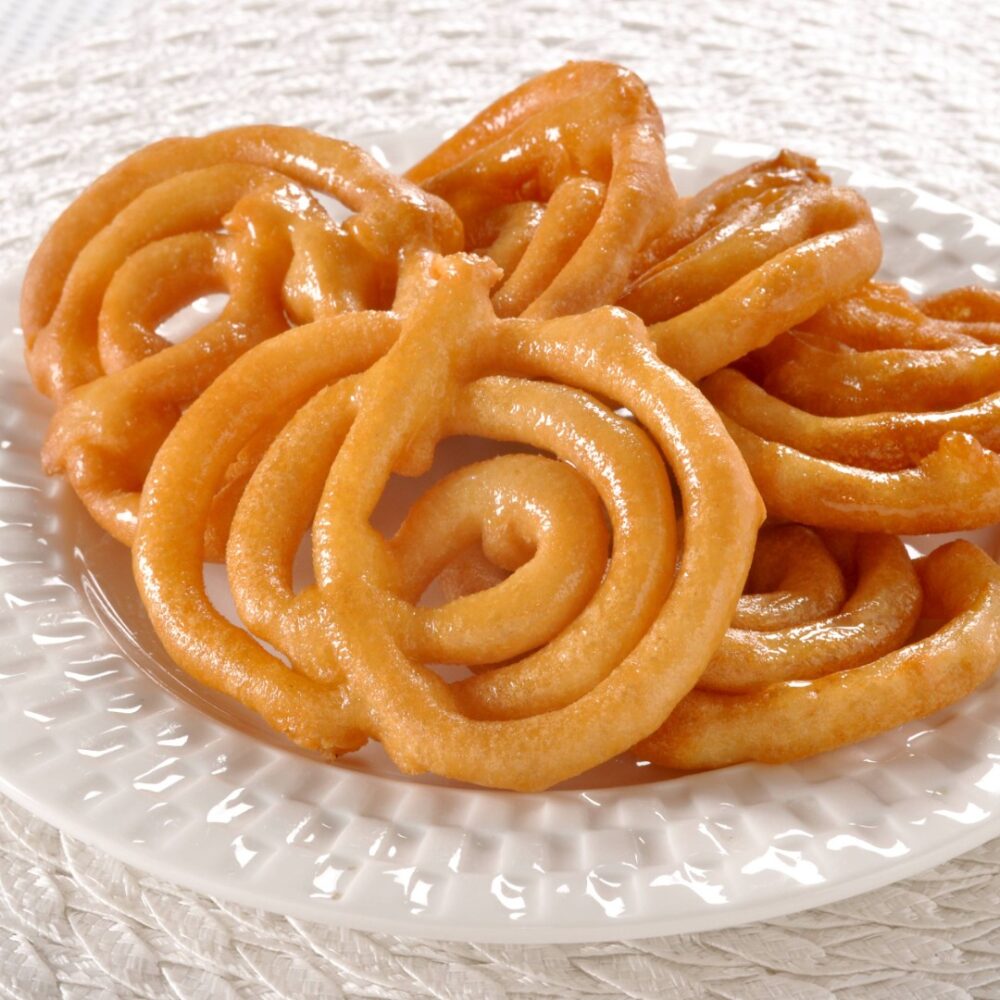
Zalabia

ZALABIA – a fried dough dessert shaped into spirals or rings, similar to jalebi in other parts of the Arab world. Once fried, the dough is soaked in syrup, giving it a sweet, sticky texture.

Back to Top