Quantifying culinary diversity across countries.

Georgian food: discover traditional cuisine

About country

Culinary influences

Staple ingredients

Key flavorings

Iconic dishes

Georgia is a nation of about 3.8 million people, and the population has been shrinking bit by bit over the years. Most of the country is ethnically Georgian, around 87%, the rest is Azerbaijanis, Armenians, and scattered pockets of Russians, Ossetians, and Greeks. After the Soviet collapse, many minorities left, so the country got more homogeneous over time. Georgian is what you’ll hear everywhere. It comes with its own distinctive alphabet that’s been around for centuries and looks nothing like Cyrillic or Latin script.

Cities hold about 60% of the population. Tbilisi, the capital, is huge relative to everything else and accounts for a third of all Georgians. The countryside feels sparse, with only 55 people per square kilometer on average.

Religion matters here. Georgian Orthodox Christianity dominates at over 80%, and the church carries real cultural and political weight. Muslims make up about 11%, mostly ethnic Azerbaijanis in the south. A small Armenian Apostolic community exists as well.

5 most similar countries by ingredients

5 least similar countries by ingredients

Source: Country Food Similarity Index https://objectivelists.com/country-food-similarity-index/
Georgian cuisine comparisons

Icon
GEOGRAPHY AND CLIMATE
GEOGRAPHY

– Mountainous country dominated by the Greater and Lesser Caucasus
– Sharp contrast between high mountains and fertile valleys
– Many regions isolated by terrain, encouraging regional identities
– Volcanic and alluvial soils in valleys
– Black Sea access in the west influences local products and climate

CLIMATE & MICROCLIMATES

– Extremely diverse climate within short distances
– Cold, snowy winters in mountain regions
– Hot summers in eastern lowlands
– High rainfall in western Georgia; drier conditions in the east
– Numerous microclimates allow wide crop diversity

AGRICULTURE & LIVESTOCK

– Limited arable land in mountains favored herding
– Sheep, cattle, dairy, and lamb central to traditional diet
– Fertile valleys produce wheat, barley, grapes, fruits, and vegetables
– One of the world’s oldest wine-producing regions

 CROPS & PLANT FOODS

– Grapes, walnuts, pomegranates, plums, herbs widely used
– Vegetables include eggplant, peppers, onions, beans
– Wild foods from forests and hills: herbs, greens, berries

KEY AGRICULTURAL PRODUCTS

– Grapes, wine
– Hazelnuts, walnuts, almonds, chestnuts
– Tangerines, oranges, lemons, peaches, plums, apples
– Tomatoes, cucumbers, peppers
– Potatoes and root crops
– Wheat, barley, maize
– Cattle, sheep, milk
– Tea, mineral water
– Sunflower

Icon
INDIGENOUS INFLUENCES
KARTVELIANS

– Native peoples of the South Caucasus, ancestors of modern Georgians
– Presence from at least the Neolithic period (c. 6000–8000 BCE)
– Sedentary agricultural societies with village life
– Strong ritual and social role of feasting and hospitality
– Core ingredients and techniques remain in modern cuisine

LIFESTYLE

– Mixed economy: farming in valleys, herding in mountains
– Fields, vineyards, orchards, and gardens integrated around villages
– Livestock was very important and kept alongside crop farming
– Hunting supplemented diet
– Wine production embedded in household life, not centralized
– Community-centered food production

CORE FOODS

– Grapes and wine
– What and barley breads and porridges
– Cattle and sheep milk, cheese, fermented products
– Lamb and beef
– Walnuts
– Coriander, dill, blue fenugreek
– Beans, eggplant, onions, greens
– Plums, grapes, pomegranates

TECHNIQUES

–  Winemaking in clay vessels (qvevri) buried underground
–  Fermentation of dairy and vegetables
–  Drying of fruits, herbs, and meats
–  Pickling and salting for storage
–  Breads beaked in clay or stone ovens
–  Sauces thickened with nuts

Icon
EXTERNAL INFLUENCES
SILK ROAD TRADE (2-3c)

– Georgia served as a transit corridor, not a culinary origin
– Limited influx of spices (saffron, cinnamon, coriander) and rice
– Kartvelian flavor base remained intact

PERSIAN INFLUENCE (6c BCE–17c)

– Long-term contact via trade, diplomacy, and political control
– Shared use of saffron, coriander, fenugreek, herbs, and walnuts
– Many ingredients already present locally, Persian cuisine increased their prestige and circulation

OTTOMAN INFLUENCE (16-19c)

– Centuries of contact and partial control
– Likely introduction of kebab style
– Reinforced use of yogurt and cheese

RUSSIAN / SOVIET INFLUENCE (19-20c)

– Limited culinary impact despite political control
– Standardization of food production and distribution
– Some spread of potatoes and sunflowers
– Reverse influence – khachapuri, shashlik, ajika, Georgian wine spread into Russian culture

Icon
RELIGION AND CULTURE
RELIGION

– Minimal influence of dietary prohibitions compared to Islam or Judaism
– Early adoption of Christianity (4th century CE)
– Food rules around fasting and feasting
– Rich plant-based dish choices
– Wine holds a sacred status, tied religious rituals and daily life

CULTURAL AND SOCIAL INFLUENCES

– Strong hospitality
– Supra culture of feasting
Tamada toasting tradition
– Gendered food roles: women in home cooking; men handled wine and feasts
– Cities adopted rural food traditions
– Local pride preserved distinct regional dishes

The average Georgian daily plate size is

1825 g.
Icon

Grains

Icon

Fish and seafood

Icon

Produce

Icon

Eggs and dairy

Icon

Meats

Icon

Sugar, fats and nuts

Core ingredients

THE ESSENCE OF GEORGIAN CUISINE

Georgian table follows a principle of strategic abundance. Not excess for show, but insurance against want. You cook more than needed because hospitality demands it, because the neighbor might arrive, because scarcity lives in cultural memory. This is how people think about portions and variety. One dish isn’t enough; the table needs multiple textures, temperatures, and flavors available simultaneously.

Georgian cuisine balances meat and dairy with abundant herbs and sharp acidity. Fat and acid create the core tension. Rich elements (dairy, nuts, meat when present) always pair with sharp counterpoints: wine vinegar, pomegranate molasses, tkemali (sour plum sauce), pickles and this isn’t accidental. Heavy food in a cold climate needs something to cut through it, wake up the palate. Fermentation is also very common. Pickled vegetables, fermented breads, aged cheeses, wine made in buried clay vessels: they all deliver the enzymes and probiotics that modern nutritionists seek.

Wine is sacred. The 8,000-year-old qvevri evolved independently from Greek and Roman wines. Clay vessels buried underground maintain perfect temperature. Whole grape clusters ferment with stems, seeds, and skins, creating amber wines with structure and tannin that stand up to the food’s intensity. For non-alcoholic choices, mineral water, homemade lemonade, fruity compotes, tangy fermented drinks like kvass, and herbal teas are all popular. Coffee is a beloved ritual, paired with churchkhela, a sweet treat made with walnuts and grape skin.

A traditional Georgian feast, the Supra, deserves special mention. It celebrates family, friendship and community with tables groaning under impossible quantities of food: cheese, bread, pickles, walnut sauces, roasted meats, wine enough to drown in, everything arriving at once. Someone becomes tamada, the toastmaster, orchestrating the evening through toasts that follow ancient order: to peace, to parents, to the dead, to children, to love. Each toast demands a full glass emptied in one go. The food keeps coming even when plates are full. Hospitality here carries weight.

GRAINS IN GEORGIAN CUISINE

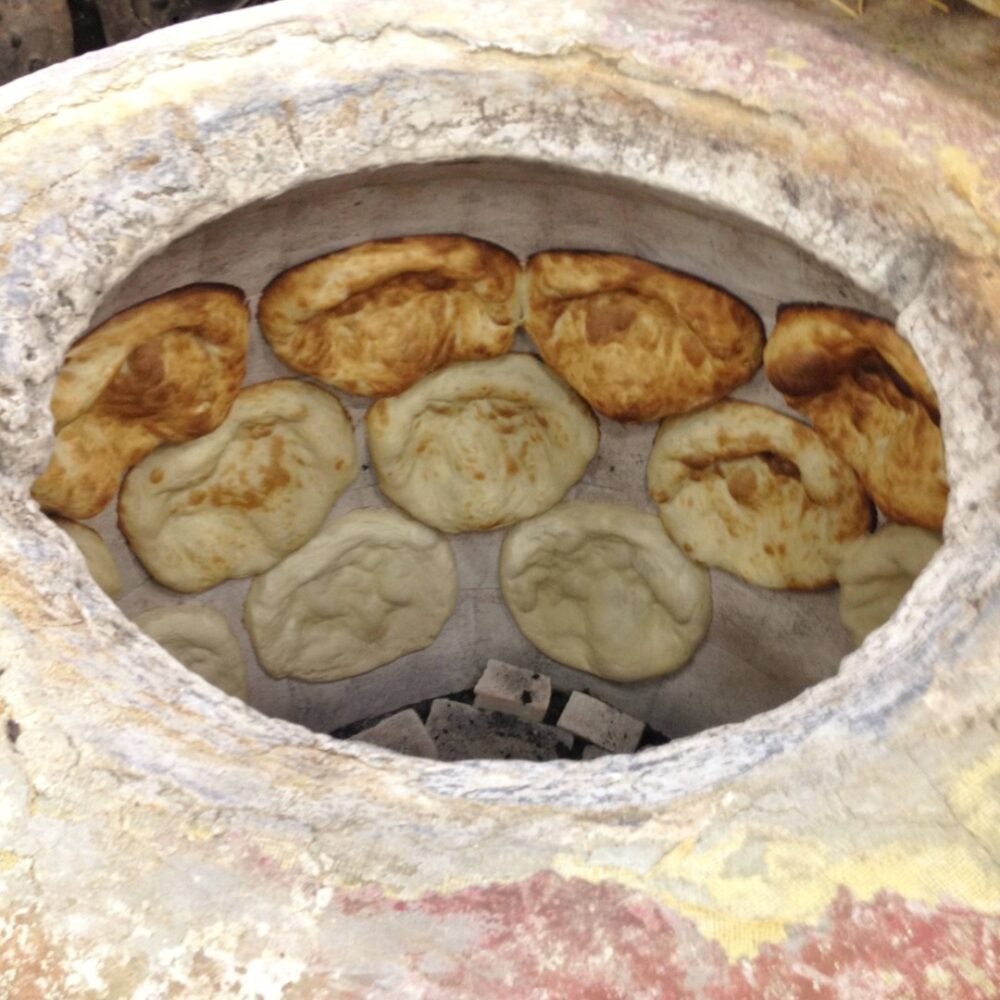
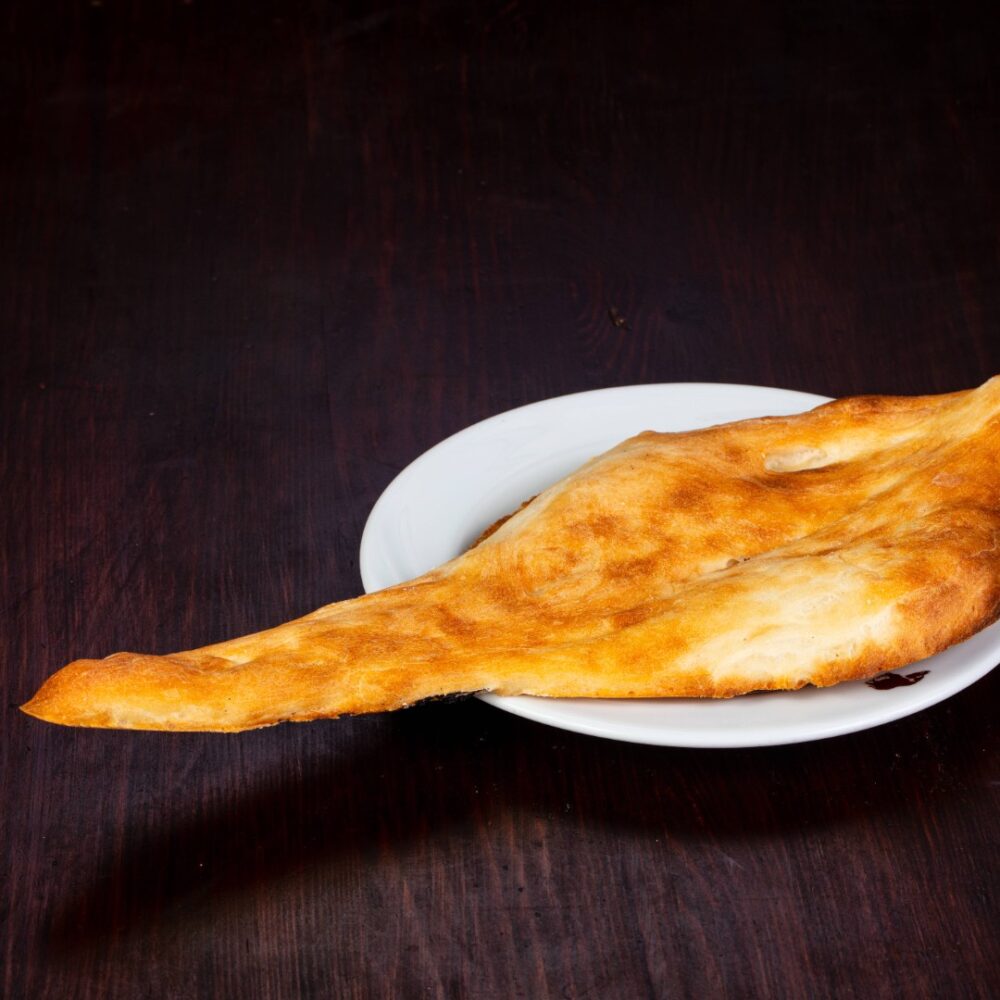
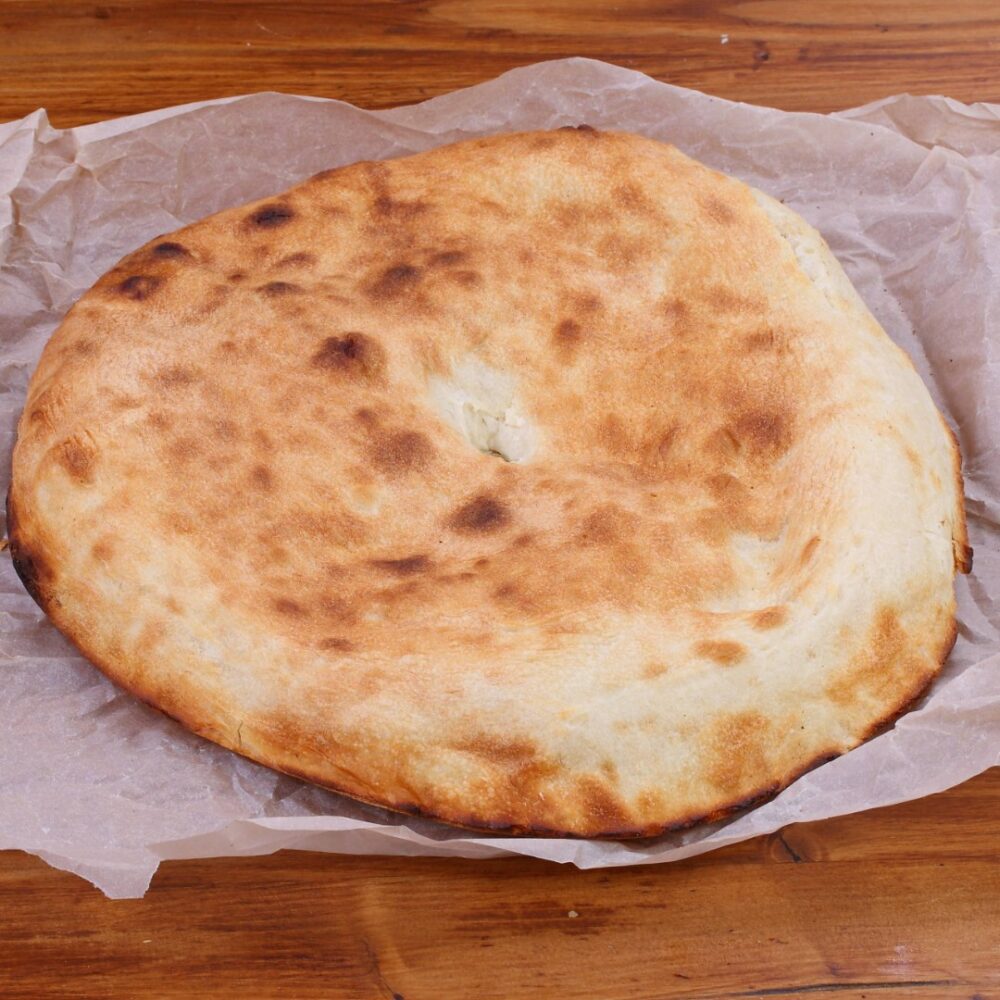
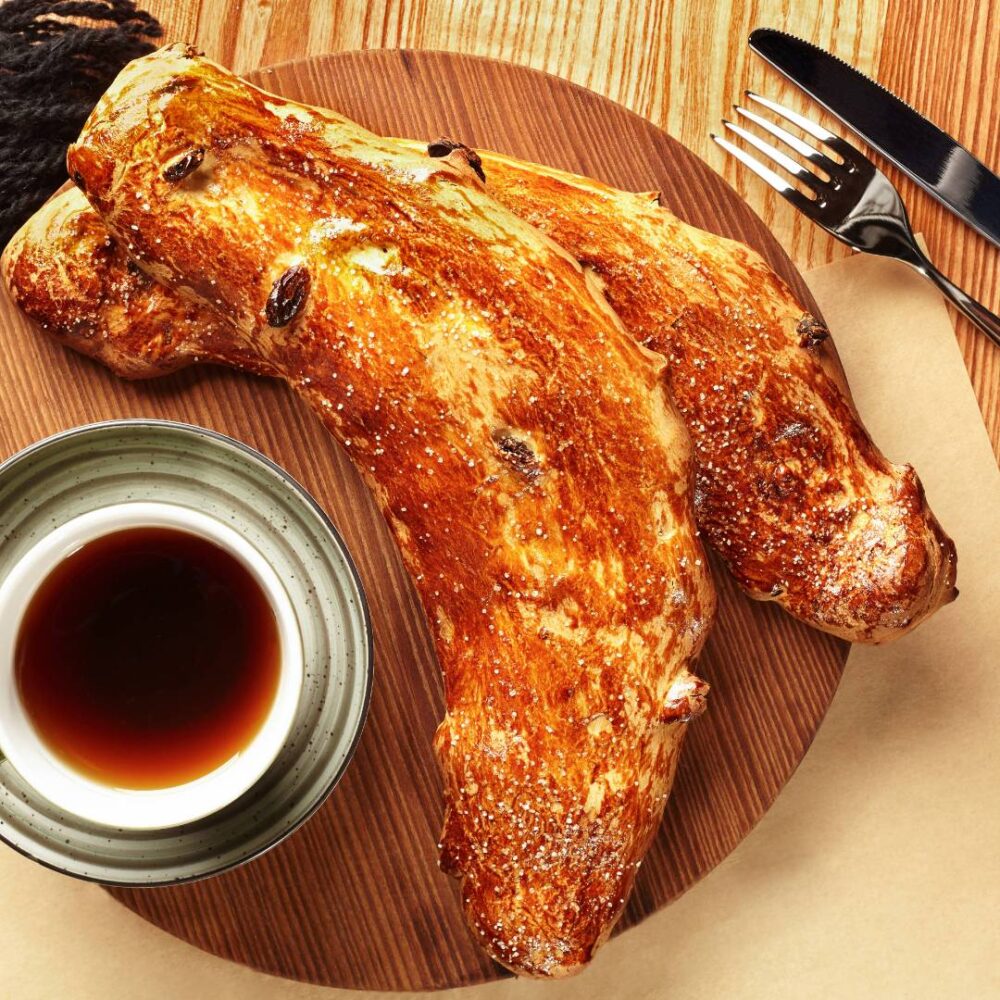
Wheat is the king of grains, providing flour for traditional breads tonis puri, shotis puri, lavashi, and khachapuri. Bread is both food and utensil, absorbing sauces and uniting disparate elements. Traditional bread is baked in a large, cylindrical oven called a tone.  Shotis puri, a sub-type of tonis puri has a distinctive canoe shape and thickness, achieved by sticking long strands of dough to the inside of a round clay oven. Georgian lavash is unique compared to others (like the Armenian lavash); it is generally larger, sometimes up to 60 centimetres in diameter, and slightly thicker, with a pronounced puffiness in the centre, chewy texture and air pockets.

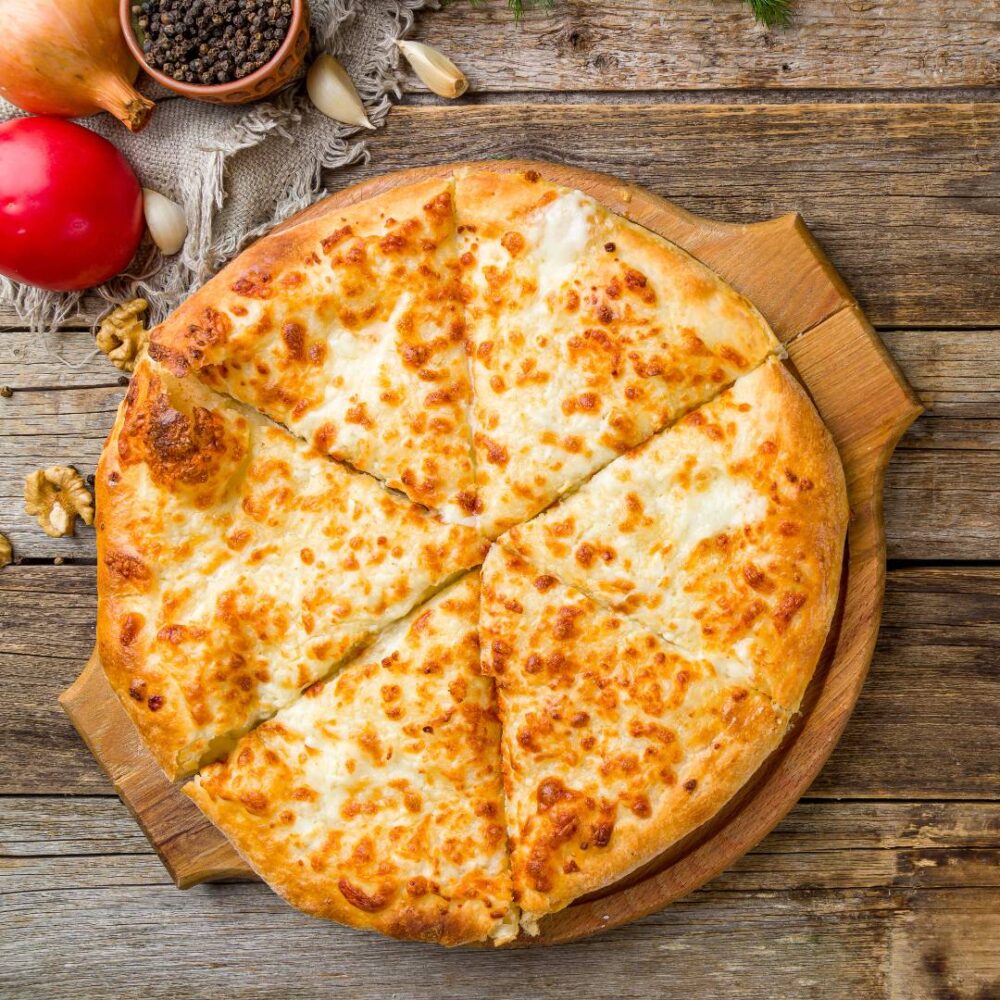
Khachapuri, a national dish and intangible Georgian cultural heritage, is an iconic family of savory pastries, served fresh and hot, stuffed with cheese and sometimes eggs, or meat. In 2019, Georgia introduced a “khachapuri index” to track inflation. It measures the cost of ingredients for one Imeretian khachapuri. This made a traditional dish an economic indicator. Regional khachapuri variations:

  • Imeruli – The most popular form. Yeast dough filled with white Imeretian salted cheese.
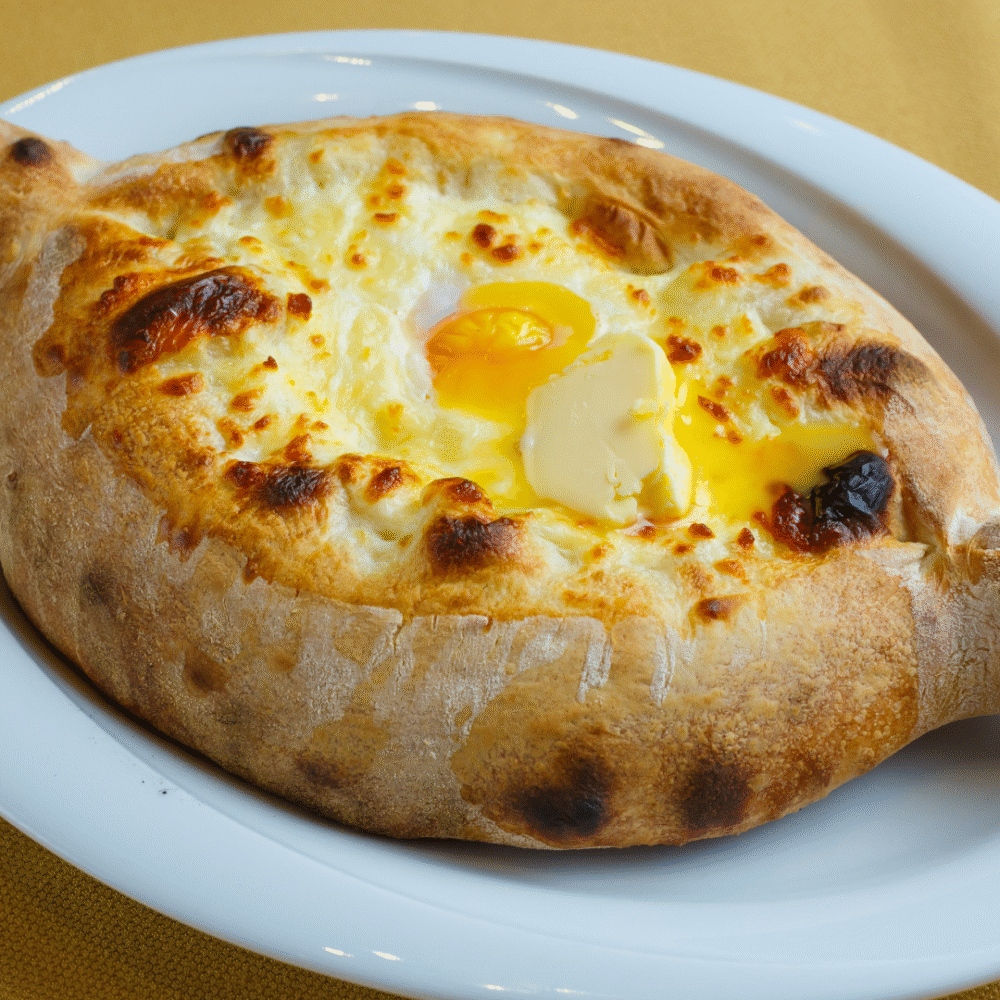
  • Adjaruli – From Adjara on the Black Sea. Boat-shaped with cheese, butter, and an egg yolk in the center.
  • Megruli – Like Imeruli but topped with extra cheese.
  • Achma – From Abkhazia. Multiple layers resembling lasagna without sauce
  • Guruli – Contains chopped boiled eggs inside. Shaped like a crescent calzone.
  • Osuri – Ossetian style with potato and cheese filling.

Corn ranks second after wheat in popularity, especially in mountainous regions where it anchors simple, sustaining meals like ghomi (cornmeal mush), mchadi (cornbread), and chvishtari (cheesy cornbread). Barley has been cultivated for centuries, but plays a smaller role, appearing mainly as porridge in highland areas or as a thickener for soups. Rice arrived through trade routes and never became central, it shows up in just a few dishes: tolma (stuffed grape or cabbage leaves) and occasional pilafs like shila plavi or sweet versions with dried fruits and nuts.

PRODUCE IN GEORGIAN CUISINE

Any meat on a Georgian table is always accompanied by a large pile of vegetables and greens. No feast can do without a vast amount of veggie dishes. Greens are served all year round, but depending on the season, they can be parsley, fennel, ramson, mint, lettuce, basil, savory, estragon. Greens are often accompanied by garden radish, whole tomatoes, cucumbers, and peppers.

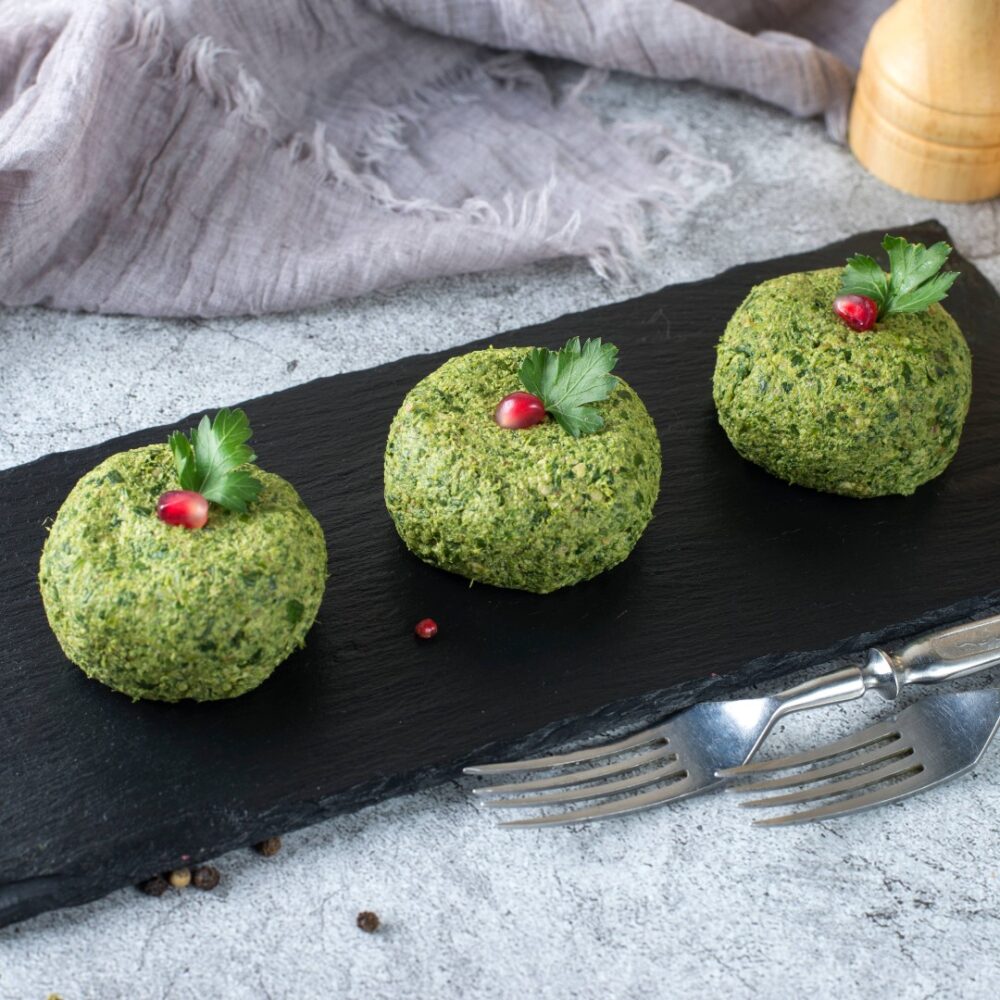
Georgian cuisine has a lot of vegetarian dishes made with beans, eggplants, and spinach.  An interesting appetizer is pkhali, sometimes spelled mkhali – a cold pureed vegetables shaped into balls. Imagine a Georgian shepherd, high in the Caucasus Mountains, with a basket full of freshly picked greens and a pouch of walnuts.  He roasts some nettles or spinach over a campfire, grinds them with fragrant herbs and walnuts, and voila! Pkhali is born. This might be a romanticized non-factual version, but it highlights the resourcefulness of Georgian cuisine.

Many families in rural areas practice subsistence farming: they grow their own vegetables and fruits, with little or no surplus for market sales. This portion of produce, coming from home gardens, can be underrepresented in official data sources.

People with knowledge and experience can harvest many edible mushroom varieties in Georgia; commercially available mushrooms in Georgia are less common. While not a staple ingredient in every dish, mushrooms are featured in mushroom chashushuli, a family-style stew featuring potatoes, mushrooms, onions, garlic, and herbs.

Fruits in Georgian cuisine cut through rich, heavy food. Plums become tkemali, a tart sauce that accompanies nearly everything. Pomegranates get pressed into molasses, which adds sweet-sour depth. Barberries, cornelian cherries, and unripe grapes all contribute acidity.

Georgia’s climate is hot and humid, and it produces intense fruiting seasons. People respond by making a creative product to preserve them – fruit leather tklapi, quite a unique ingredient. During fruit harvest, there is an abundance of produce that remains; tklapi offers a way to preserve plums, apricots, and mulberries for year-round consumption. To make it, fruit puree is spread thinly onto a thin sheet and sun-dried. Tklapi can be either sour or sweet, depending on the natural sugars from fruit: the sour version, made from cherry plums, is often used in soups and stews; served along with cheese, the sweet version from apricots or peaches features churchkhela dessert.

MEAT IN GEOGRIAN CUISINE

Georgian cooking omits no type of meat. There isn’t one single prestige meat, but high-quality pork neck, lamb, beef and chicken are valued, prepared simply with wine and herbs. Offal might not be on the menu at every restaurant, but it is beloved at home. Some mountainous areas hunt boars and rabbits.

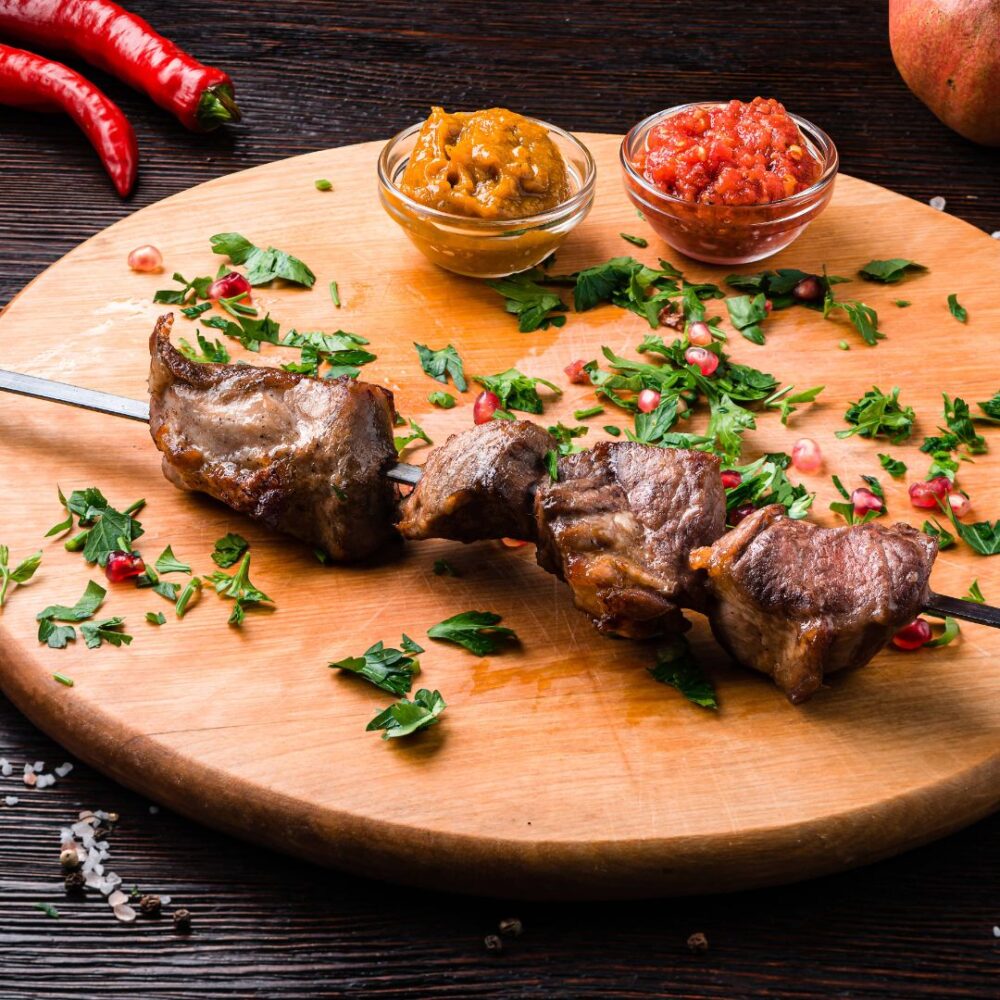
Grilling over grapevine embers will surely happen during celebration regardless of the season. Mtsvadi chunks of marinated and grilled meat – any type, but the most popular is pork –  on a skewer, is a celebratory staple, another national dish, one of the country’s oldest recipes.  Key to mtsvadi’s success lies in the simple marinade, made from onions, garlic, herbs (tarragon or summer savory, for example), black pepper, salt, and acidic element: pomegranate juice, tkemali, or wine. Grilling happens outside, often in courtyards, vineyards, or nature, so it falls into the male sphere.

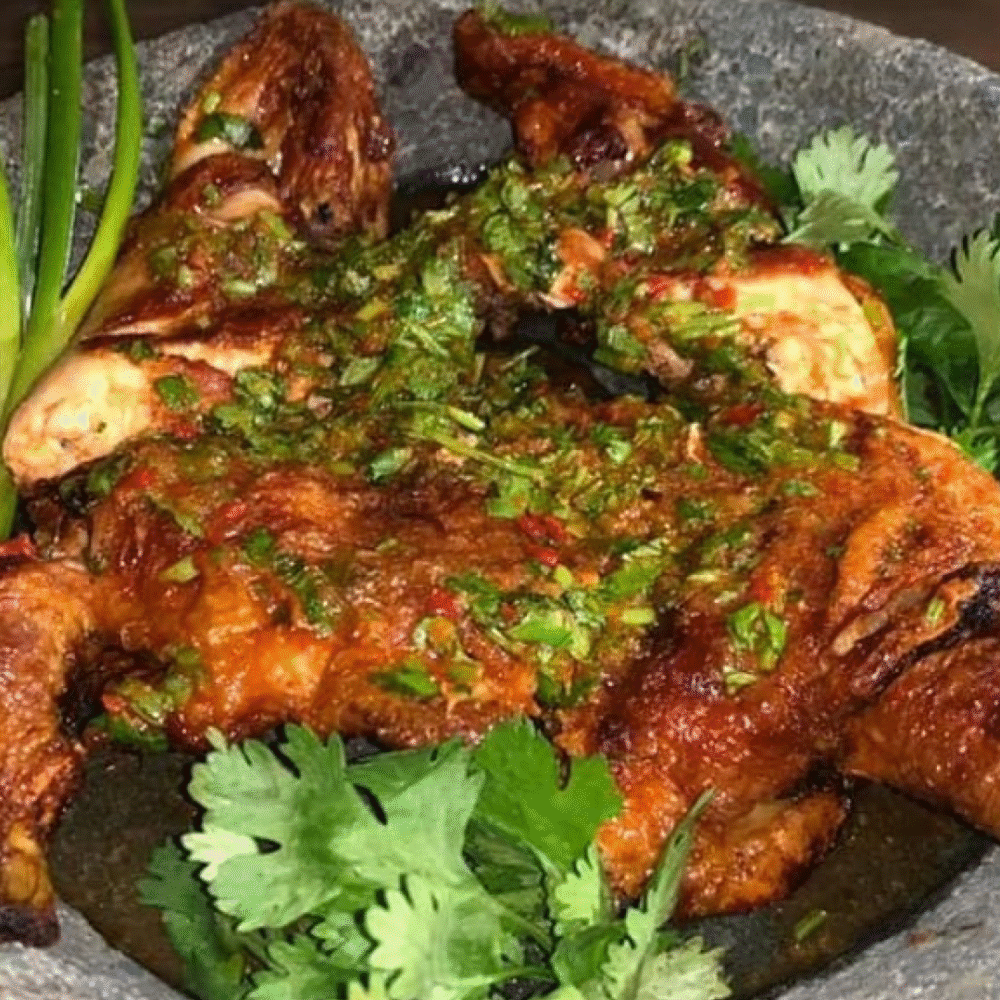
Chicken tabaka is a pan-fried poultry dish popular in other Caucasian cuisines. To fry thoroughly, the chicken is flattened out on a cast-iron pan and pressed by a weight. The chicken ends up golden brown and crispy on the outside while staying juicy inside, and is served with or traditional tkemali sauce.

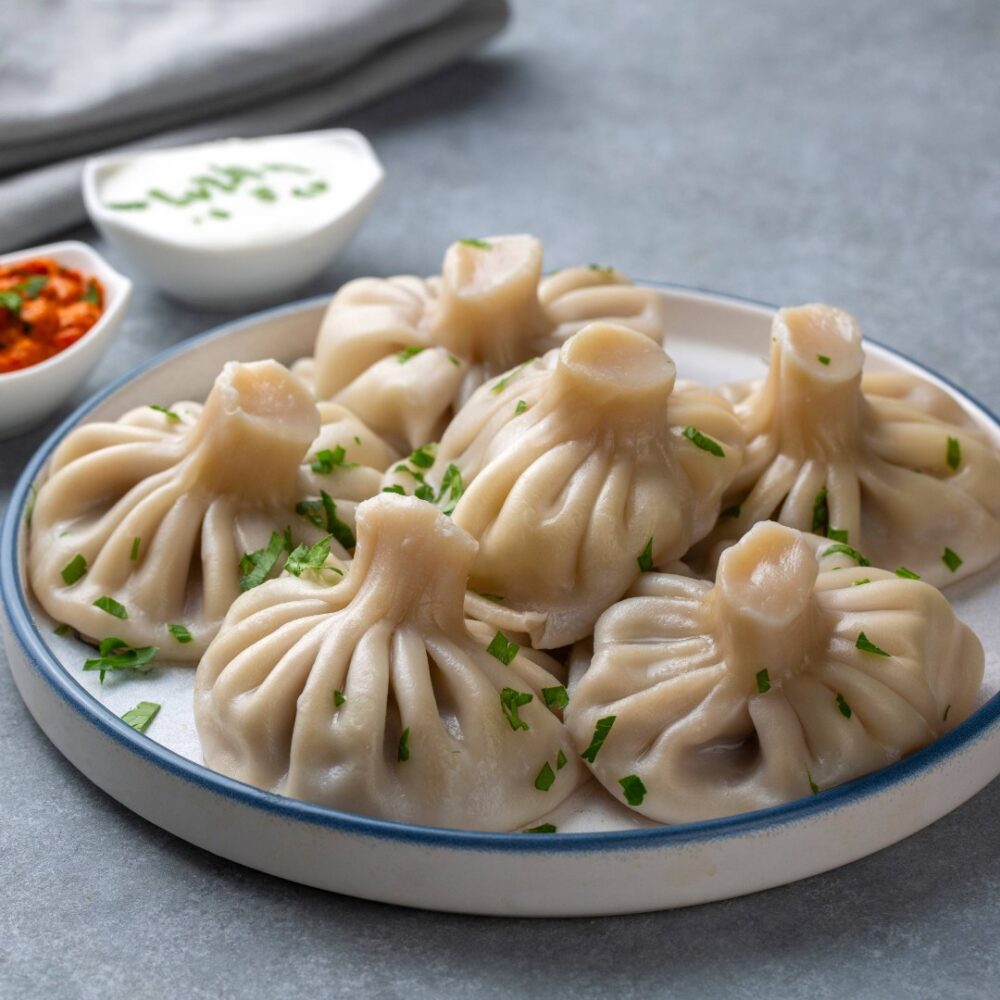
Khinkali, also a signature food – succulent dumpling, made of twisted knobs of dough, stuffed with spiced meat. Initially, khinkalis were stuffed with lamb, the meat of the mountains. Later, variations of pork and beef appeared as the dish got popular and reached urban areas; then vegetarian versions were developed. Khinkali is eaten plain or with ground black pepper. The meat filling is uncooked when the dumpling is assembled, so meat juices are trapped inside. Warm water or broth is added to the chopped meat to make it even juicier. Khinkali is consumed first by sucking the juices while taking the first bite. The top is tough and is not supposed to be eaten, but discarded to the plate so that those eating can count how much they managed.

And finally, the stews. Thick, meaty, one-pot soups-stews are a staple in Georgian cuisine: kharcho, chakapuli, chanakhi, chikirtima, gupta, khashi, chakhokhbili – all provide comfort and warmth during chilly months.

FISH IN GEORGIAN CUISINE

The country’s agriculture favors livestock and crops more than sea treasure. Without well-developed fishing techniques and preservation, pre-modern Georgians might have struggled to catch and store enough fish to make it a staple. However, Georgia has a well-established freshwater fishing, particularly for bass species – largemouth and spotted bass – in its many lakes and reservoirs. Still, fish dishes make up a small part of traditional cuisine, particularly when compared with the abundance of meat recipes.  Trout and carp are the most popular fish, usually fried or barbecued.

MILK AND DAIRY

Georgians produce various old-recipe cheeses, like sulguni and imeruli. These are moderately salty cow’s milk products with an elastic texture. Sheep’s milk cheeses are also used for cheeses, like the pungent guda and smoked cheeses from the mountains. Though cheese is as integral to Georgian cuisine as it is in European cuisine, it plays a different role: it’s rarely served as a snack; Georgian cheese is very frequently added into hot dishes. It can be boiled in milk, roasted on a spit, fried in oil, baked in pastry, or flavoured with oil and spices to add depth. Besides the popular cheese-filled khachapuri bread, Georgians make several traditional dishes with cheese, such as nadughi, gebjalia.

Alongside cheese, matsoni/matzoon, a fermented yogurt, is a side to balance the richness. Matzoon is an Armenian product, distributed in Armenia and Georgia (source), sometimes called Caspian Sea yogurt. Matsoni has been patented in Georgia since 2012. For its nutritiousness, this yogurt is often given to kids and used in cakes, doughs, and marinades.

NUTS AND DESSERTS

Walnut trees have been growing in Georgia for millennia. They were once considered symbols of abundance and were planted near churches. To date, they are a Georgian staple, ground into pastes for sauces, incorporated into stews, or stuffed into meats to complement the meat flavours. Besides nuts, traditional recipes also call for walnut oil.

Walnuts blur the line between nut and fruit. They’re harvested green and pickled, creating an intensely flavored condiment. This early harvest tradition reflects a cuisine that thinks about plants across their entire lifecycle, not just at peak ripeness.

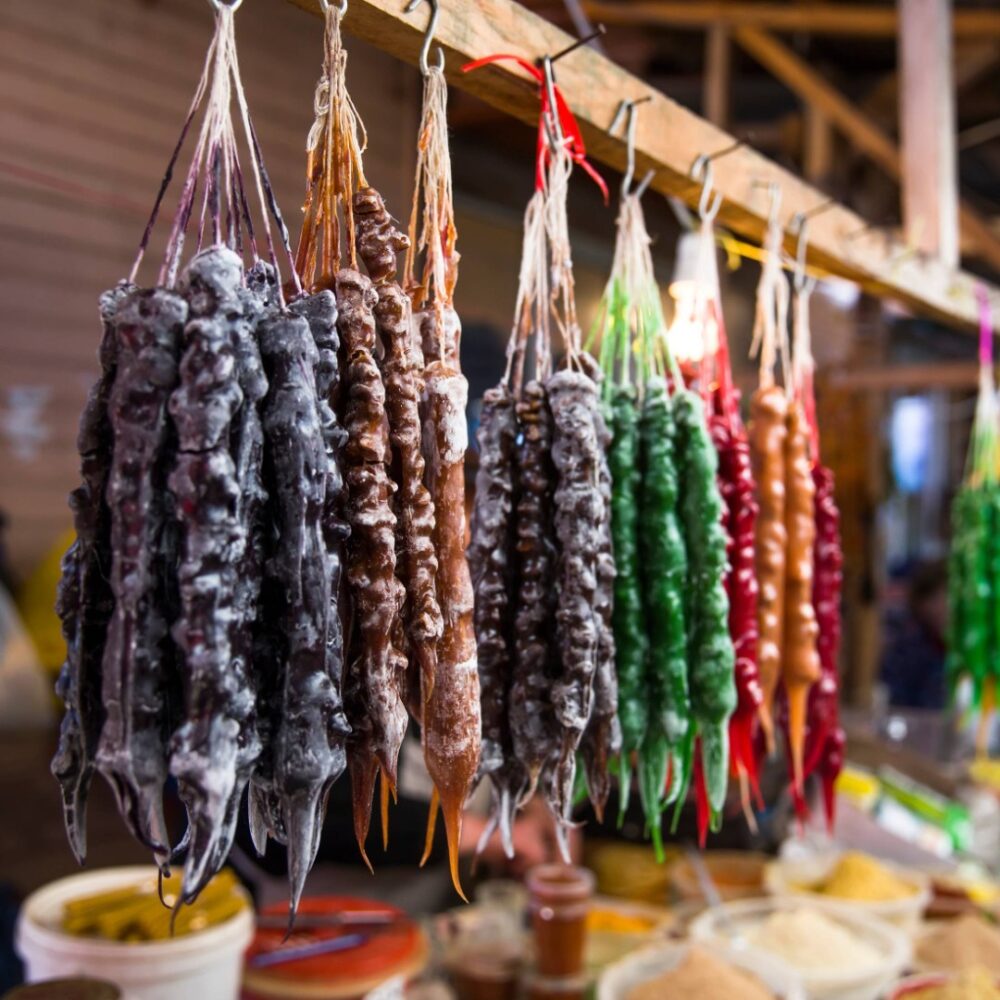
The most famous dessert also calls for nuts. Churchkhela – an overgrown pea pod-shaped dessert, made of nuts put on a string and repeatedly dipped in a mix of grape juice, flour, and honey. The most common churchkhela is made of walnuts, but hazelnuts, almonds are sometimes used. Churchkhela doesn´t have a striking taste, but since it’s light, durable, and nutritious, it’s worth taking a few pieces on mountain treks. And it´s also a very popular souvenir.

Georgian desserts have several distinctive combinations of characteristics: the use of nuts, grape juice or concentrated grape must, honey, fresh and dried fruits, flour, matsoni. Desserts are overall less sugary than in the West, and textural contrasts are important. One particularly distinctive aspect is that many are nutritionally dense and were traditionally used as travel food or energy sources during long journeys or physical work.


SEASONINGS

Georgian food tastes sour and savory first, then nutty and herbal, with warmth. Flavors are built around contrast between richness and acidity.  Sourness is very important; it is created with sour plums, pomegranate juice, grape verjuice, and small amounts of vinegar. Fruit acidity sharpens meats and walnut sauces and often replaces the role that citrus or dairy plays in other cuisines.

Walnuts are a structural element,  ground into sauces satsivi and bazhe, used to thicken stews, and mixed into fillings. Walnuts add fat, bitterness, and body without cream or butter.

Fresh herbs define much of the aroma. Fresh cilantro is the most important, used both as leaves and seeds. Dill, parsley, summer savory and especially fresh tarragon are used generously. Many dishes combine dried and fresh herbs in a single dish. Garlic is used confidently but in balance, rarely sharp.

Georgians use coriander seed, fenugreek, marigold petals, and black pepper a lot. Chili exists, but does not define the cuisine. Blue fenugreek is much more prominent than in neighbouring cuisines. It belongs to the same family as the fenugreek, but has a milder, sweeter flavour reminiscent of  autumn leaves. Also, the marigold flower is quite distinctive, called the Imeretian Saffron. Georgians use the dried and ground petals to give an earthy flavour and bright yellow colour to walnut dishes and sauces.

Many spices are dried and ground together rather than added separately, thus there are unique Geogrian mixes:

KHMELI SUNELI – a distinct blend, which combines coriander, fenugreek, blue fenugreek, marigold, bay leaf, summer savory, celery seed, dried basil, dill, parsley, and mint. There is no fixed recipe for khmeli suneli, like Indian masala.

SVANETIAN SALT is a popular mix; the recipe originates in Svaneti, but nowadays it can be bought virtually everywhere and is a practical souvenir. Salt contains a mixture of sea salt, dried garlic, fenugreek, coriander, cumin, chili pepper, dill, and several other herbs.

AJIKA – a spicy and subtly flavored condiment made with hot peppers, garlic, coriander, tomato, fenugreek, marigold, and salt. It is a part of the Intangible Cultural Heritage of Georgia. It comes in red and green varieties, with red being the hotter option. Red ajika exists in two variants – dry and wet. Dry is a seasoning mix used on raw meat, while the wet one has the consistency of a thicker mustard and is used to highlight the already roasted meat.

TKEMALI – Georgian sauce made of cherry and red-leaf plums. The flavour of this sauce varies, but it’s generally pungently tart. Alongside plums, garlic, cumin, coriander, dill, chili pepper, pennyrile and salt are used. Tkemali is used for fried or grilled meat, poultry and potato dishes, and has a place in Georgian cuisine similar to the one ketchup has in the United States.

BAZHE – rich and creamy sauce of ground walnuts, coriander, fenugreek, blue fenugreek, marigold petals and sometimes onions and garlic. The unique texture comes from the way the walnuts are processed and emulsified with water or other liquids. A touch of vinegar or pomegranate juice is often added to balance brightness. It can be served as a dip for vegetables or bread or poured over grilled meats or fish.

SATSIVI – is a thicker, more luxurious sauce compared to bazhe. It’s made with ground walnuts, coriander, fenugreek, blue fenugreek, sometimes cinnamon or cloves. Satsivi can be served hot or cold and is a classic accompaniment to poultry dishes, especially chicken or turkey.

Icon

Herbs

CILANTRO

TARRAGON

DILL

SUMMER SAVORY

PARSLEY

MINT

THYME

WILD GARLIC

BAY LEAVES

MARIGOLD

PENNYROYAL

Icon

Spices

FENUGREEK

BLUE FENUGREEK

CORIANDER

BLACK PEPPER

CUMIN

DRY CHILI

Icon

Aromatics

GARLIC

ONION

TOMATO

Icon

Condiments

WALNUTS

WINE

SOUR PLUMS

WINE VINEGAR

FRUIT MOLASSES

TOMATO PASTE

YOGURT

HONEY

Select to see authentic flavor combinations and what they go with

Icon

Meats

Kharcho

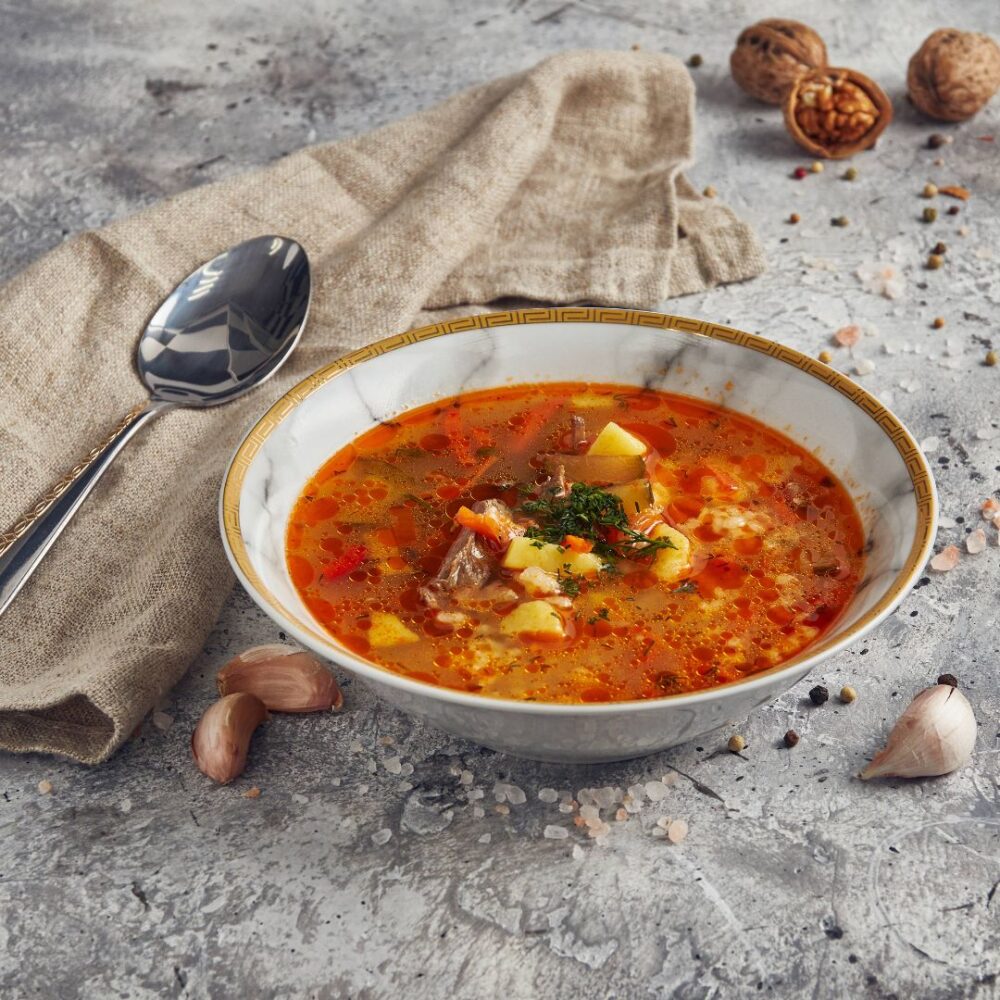
KHARCHO – thick, hearty beef, lamb or pork soup-stew with sour notes from pureed fruit leather tklapi or vinegar. Soup also features rice, carrots, tomatoes, chili peppers and cilantro.

Chanakhi

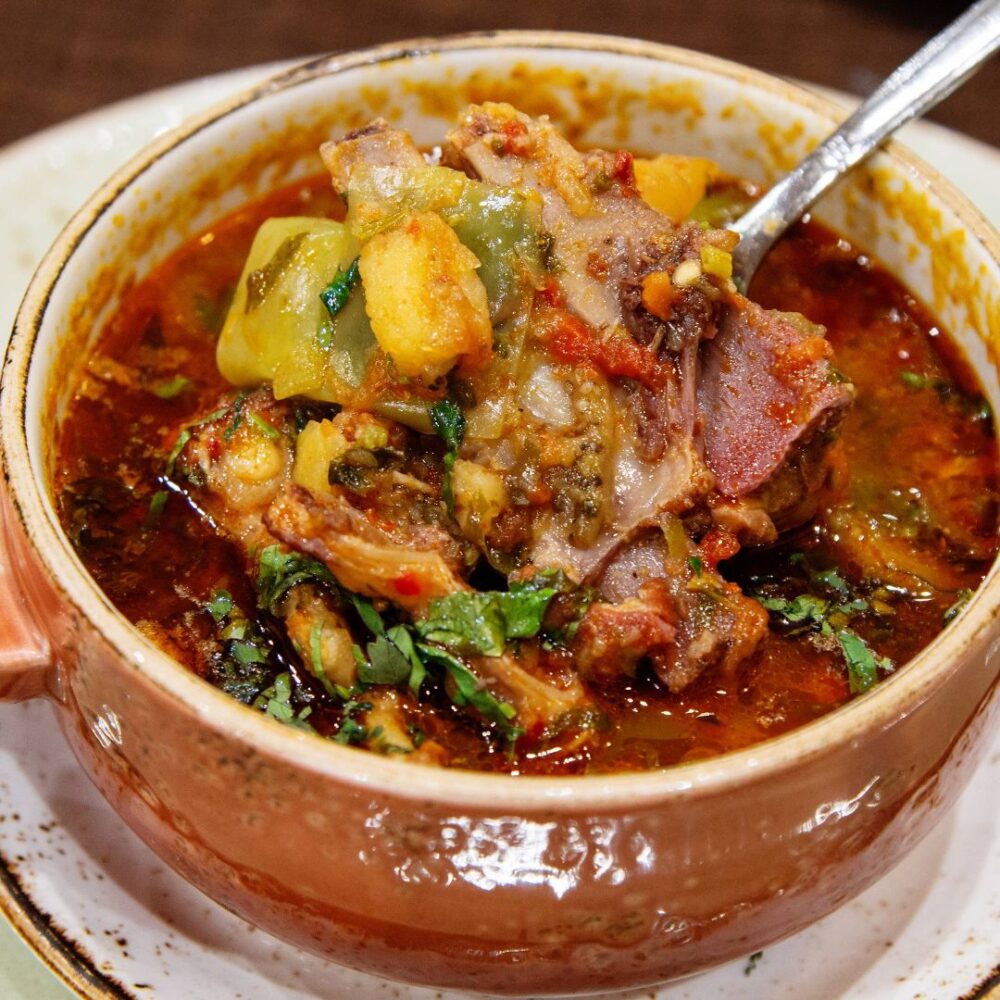
CHANAKHI – layered lamb stew with onions, eggplants, tomatoes, potatoes, greens, and garlic, simmered in individual clay pots in the oven with melted butter.

Ojakhuri

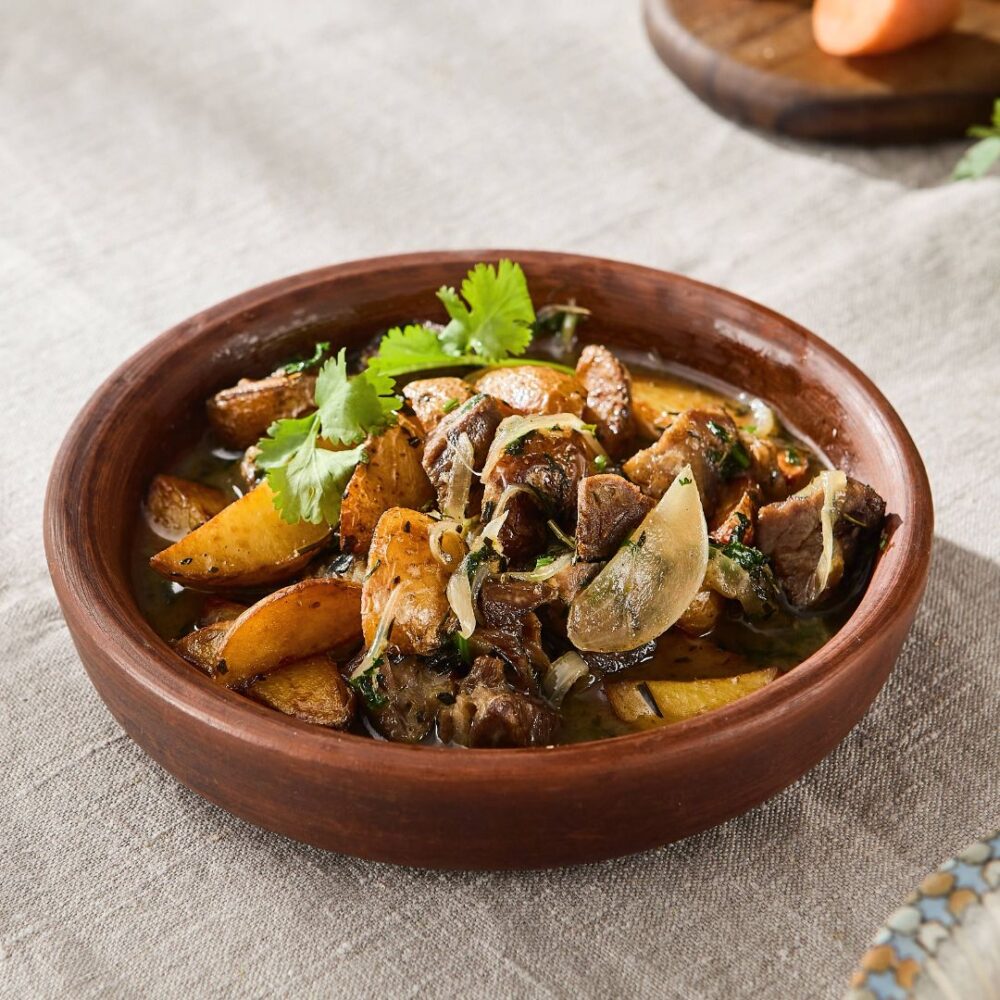
OJAKHURI – rich and hearty pork meat, potatoes, onion, garlic, all roasted together and served in a clay pot.

Chikhirtma

CHIKIRTMA – light chicken broth soup mixed with egg yolks, flavored with garlic, lemon, coriander and cinnamon.

Khashi

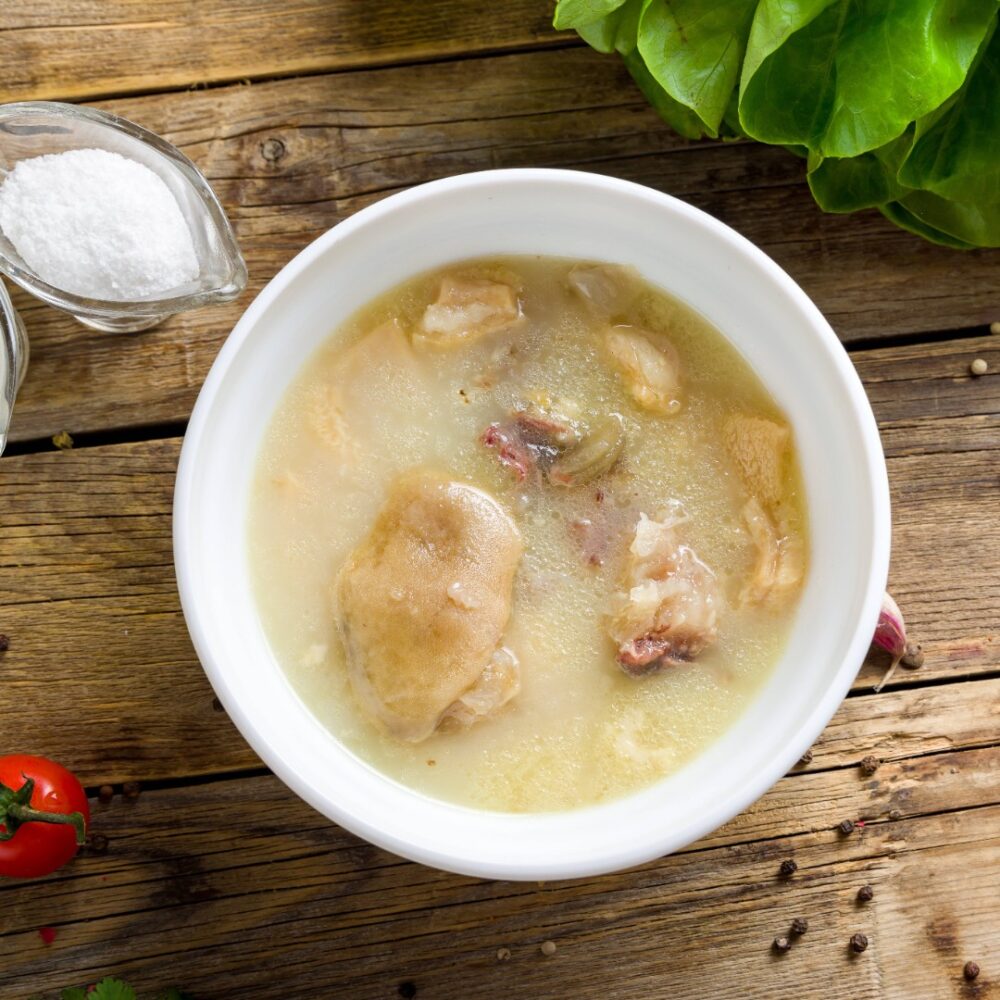
KHASHI – intestines, tripes, and hooves soup with soaked bread, a common cure for a hangover, consumed in the morning.

Chakhokhbili

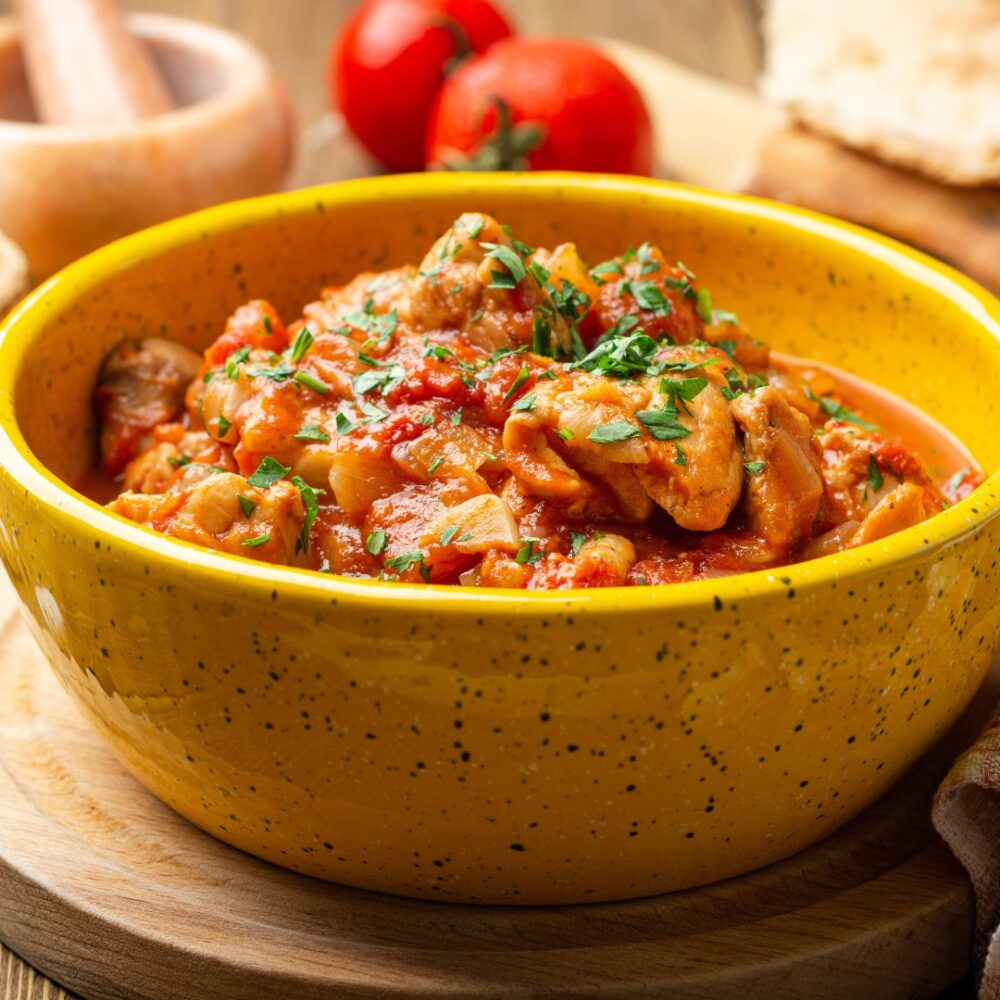
CHAKHOKHBILI – herbed, dry-fried chicken and tomato stew. The name comes from the word “pheasant”.

Lesya Dolyk, CC BY-SA 2.0 , via Wikimedia Commons

SATSIVI — chicken in walnut sauce, made by combining walnuts into a puree and seasoned with fenugreek, coriander, cinnamon, garlic, salt, and peppers. Served cold.

Ostri

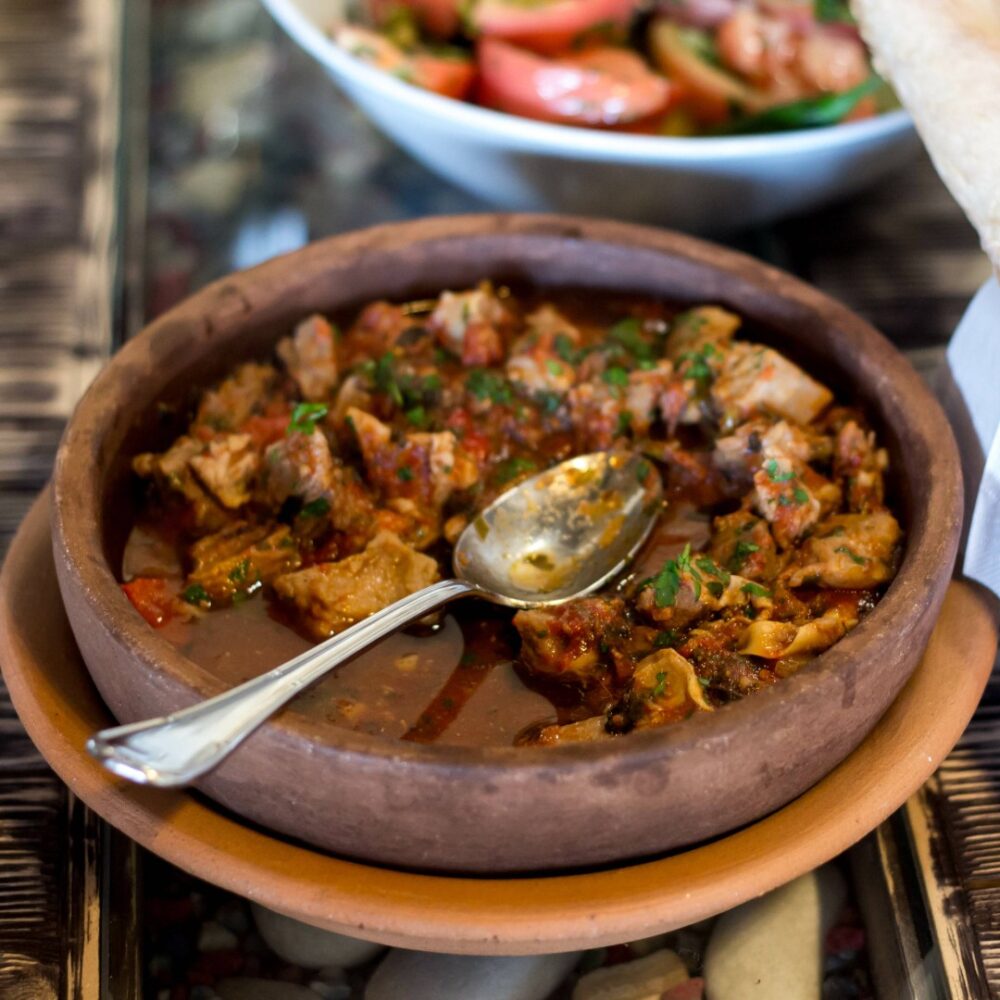
OSTRI / CHASHUSHULI – spicy beef stew resembling goulash. The beef is cooked with tomatoes, mushrooms, garlic, spices and herbs.

Eka Samkharadze, CC BY-SA 4.0 , via Wikimedia Commons

CHICKEN TABAKA – whole chicken that’s been flattened and pan-fried.

Mtsvadi

MTSVADI – traditional juicy barbeque on a large skewer, tossed with onions, finished with freshly squeezed pomegranate juice, served with tkemali plum sauce.

Khinkali

KHINKALI – Georgian dumplings stuffed with meat or other stuffings, eaten with hands.

Shkmeruli chicken

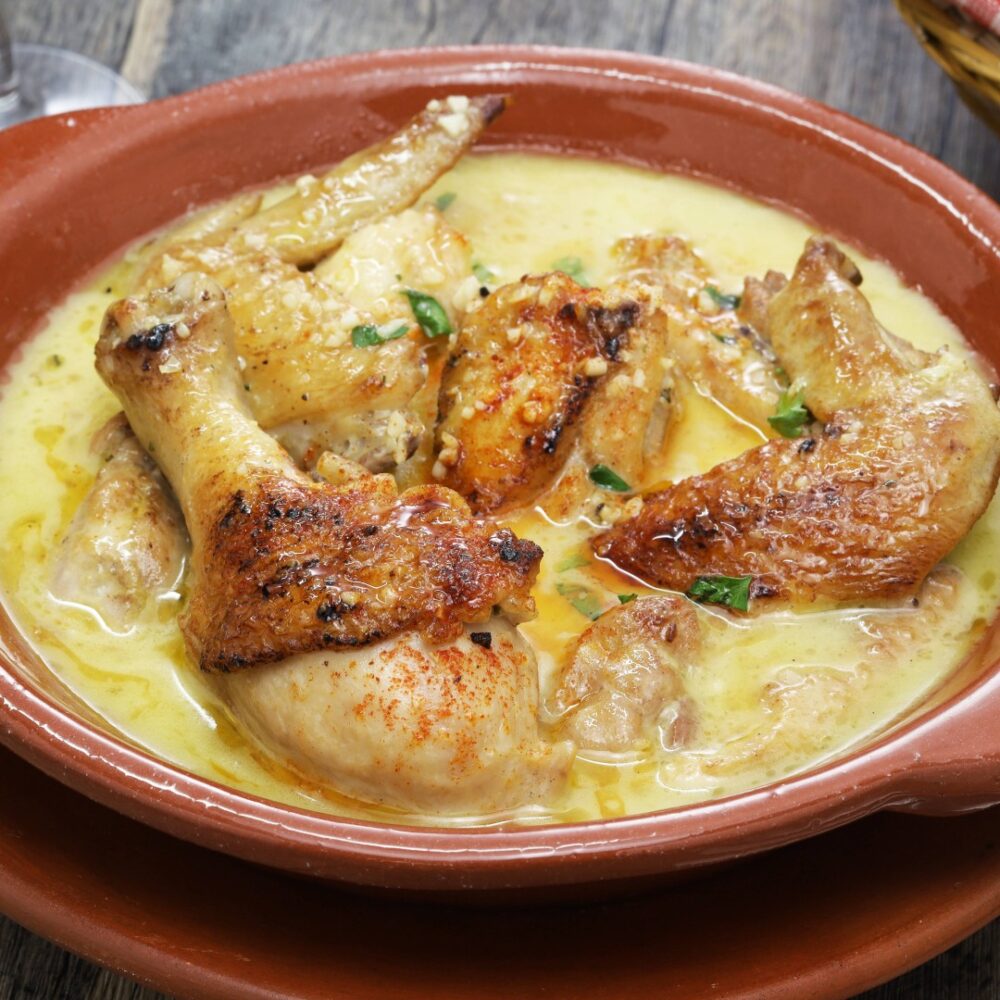
SHKMERULI CHICKEN – is a traditional dish coming from a Racha region. It’s a roasted chicken further boiled in a garlic sauce, served in a clay pot.

Kupati

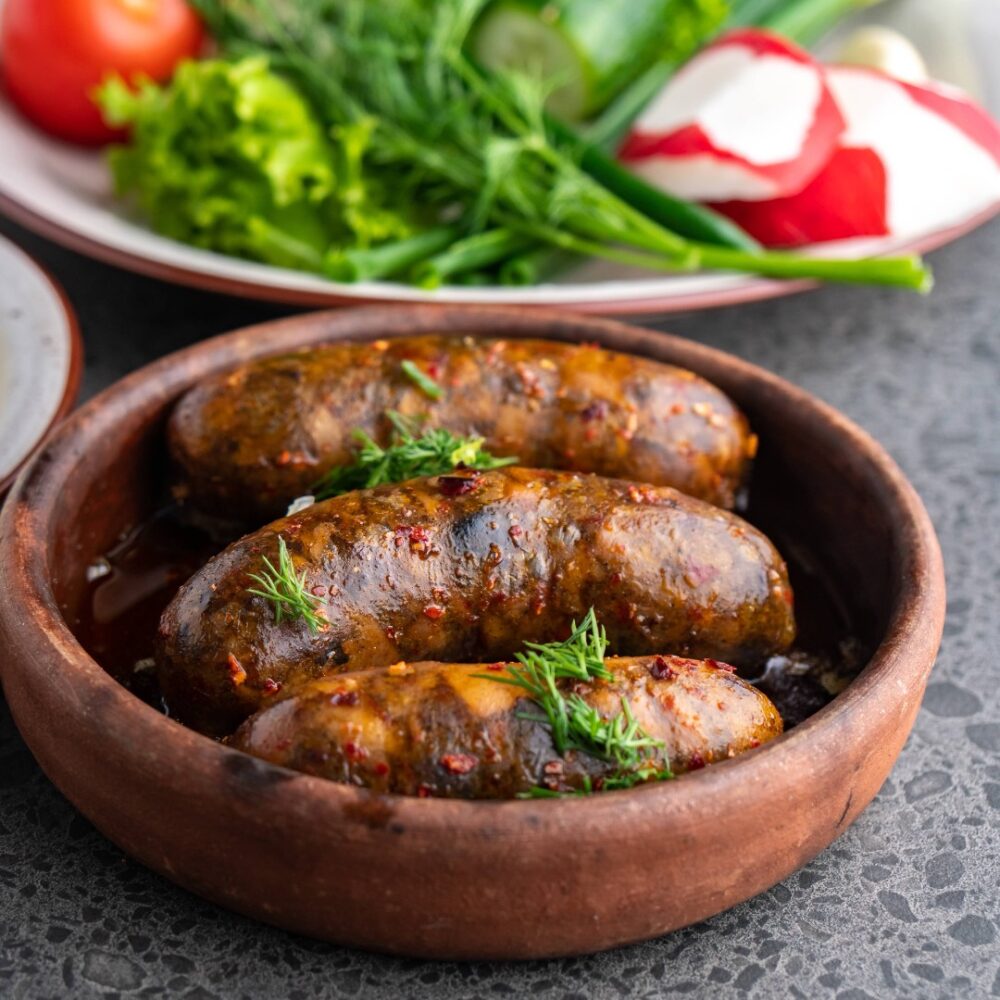
KUPATI – homemade pork sausages, made from ground pork, intestines or chitterlings. Popular in Caucasus.

Kuchmachi

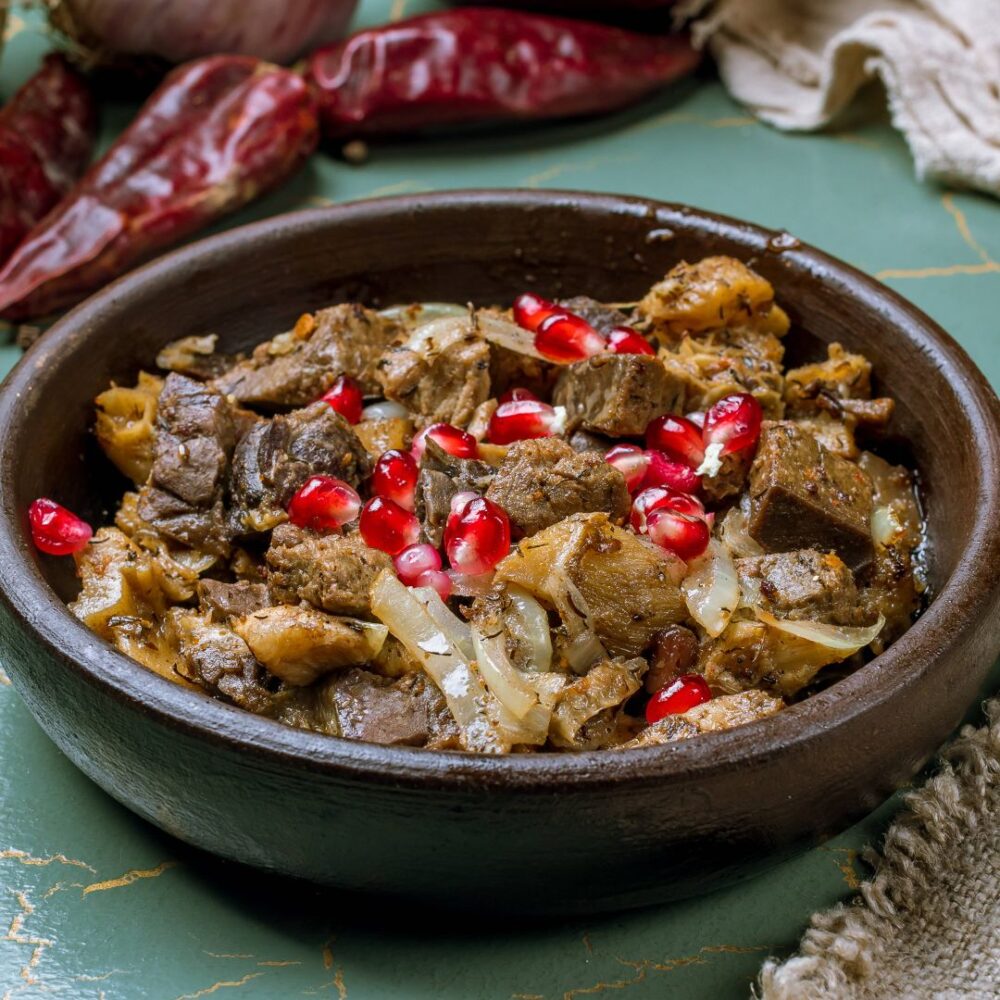
KUCHMACHI – chicken liver, hearts, and gizzards dish with walnuts and pomegranates topping.

Icon

Fish and seafood

Satsivi fish

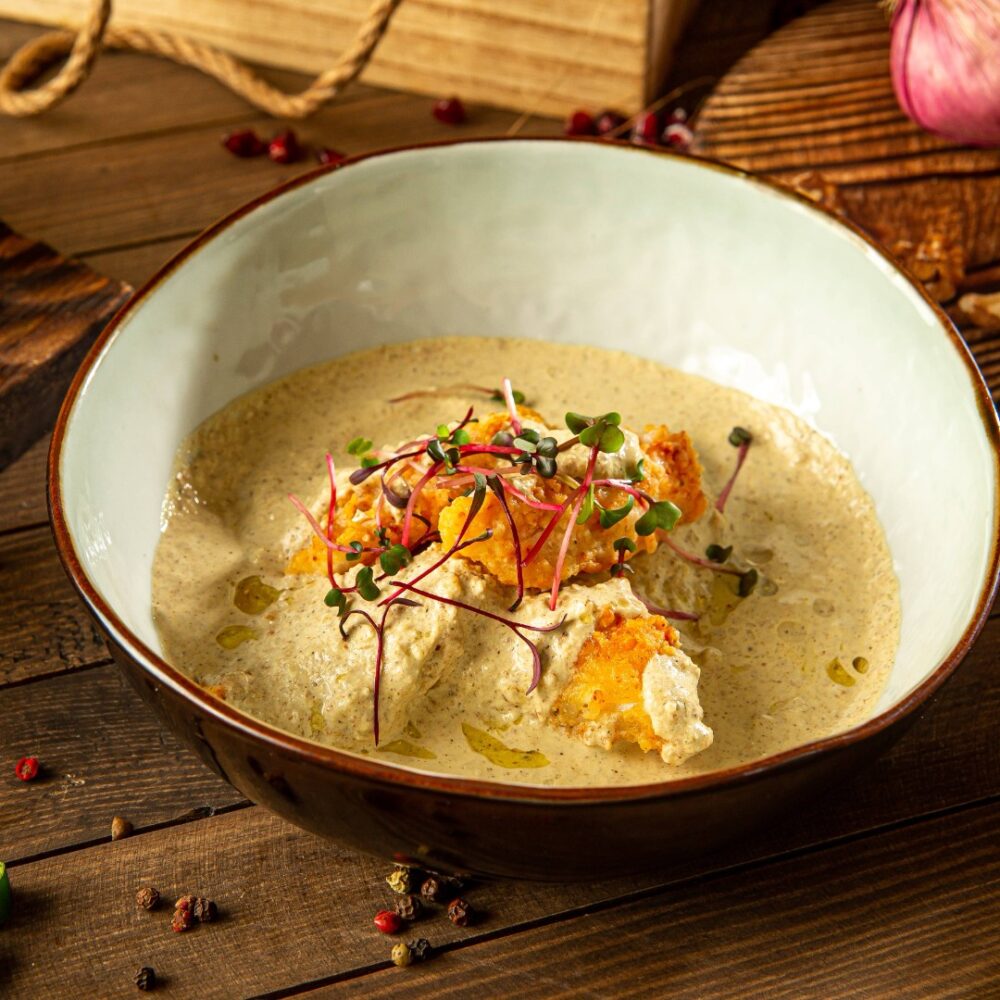
SATSIVI FISH – cooked fish, often carp, in a walnut sauce seasoned with garlic and cilantro. Served cold.

Icon

Grains

Tonis puri Ele.XCI, CC BY-SA 4.0, via Wikimedia Commons

TONIS PURI – wheat bread baked in a special large round stone oven called tone.

Shotis puri

SHOTIS PURI – a sub-type of tonis puri bread with a specific canoe shape, usually more celebratory.

Lavash

LAVASH – thick, but puffy flatbread with chewy texture, can be wrapped around fillings for handheld meals.

Khachapuri

KHACHAPURI — Khachapuri is an iconic family of savory pastries made from wheat dough. They are stuffed with cheese and sometimes additional eggs, vegetables, or meat.

Eugene Krasnaok, CC BY 4.0 , via Wikimedia Commons

KHACHAPURI ADJARULI is a Georgian bread from Adjara, the Black Sea coast. It’s the boat-shaped khachapuri filled with melted cheese, topped with a raw egg yolk and butter, added at the table. You mix everything together with a fork, then tear the crust and dip it into the filling.

Lobiani

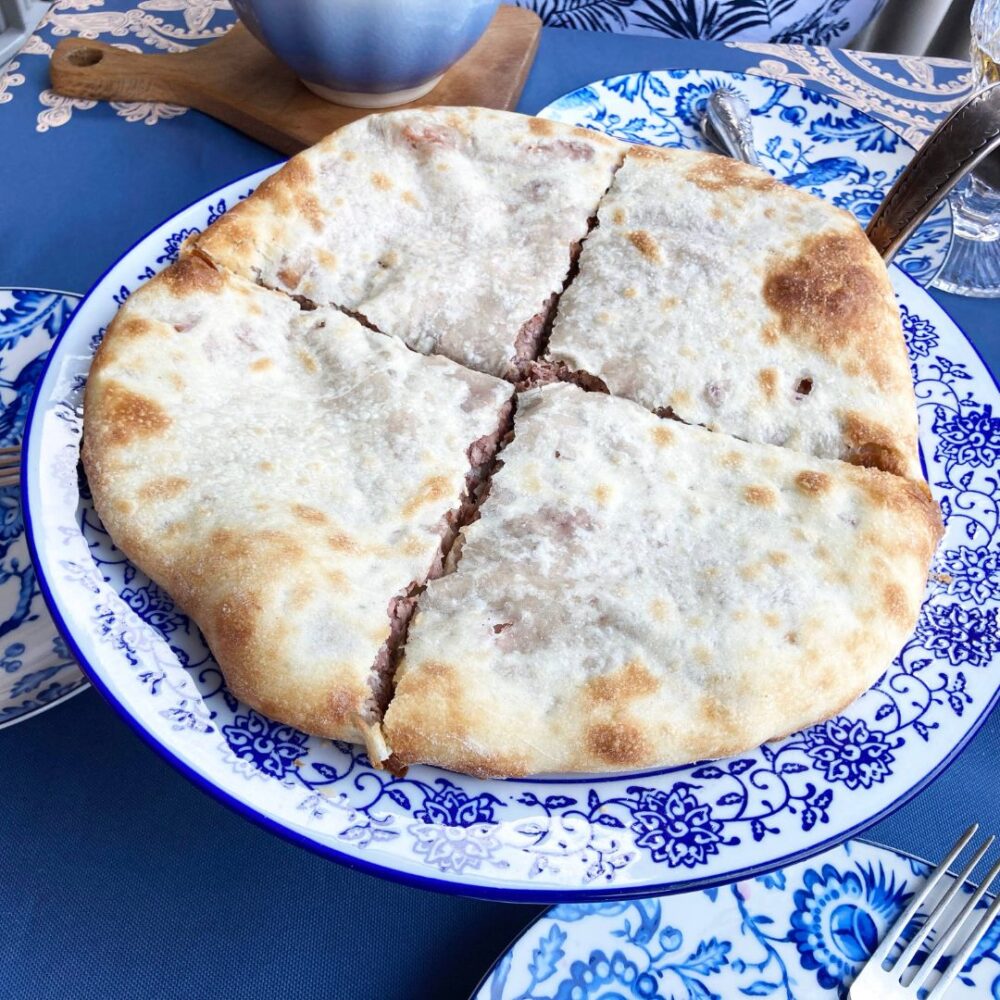
LOBIANI – bread, similar to khachapuri, but filled with mashed kidney beans, fried onions, spices.

Mchadi

MCHADI – baked or fried cornbread eaten with lobio (bean stew) and/or cheese.

Chvishtari

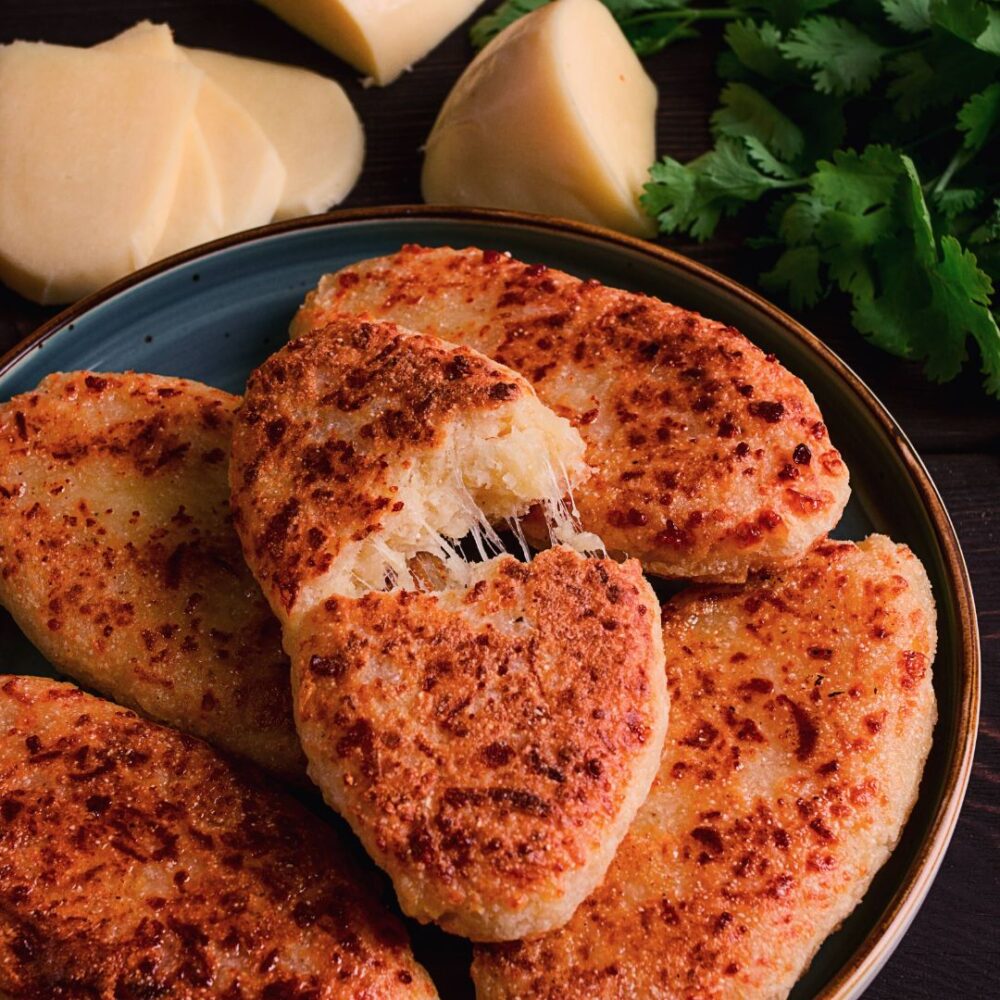
CHVISHTARI – cornbread with cheese from the mountainous Svaneti region.

Ghomi

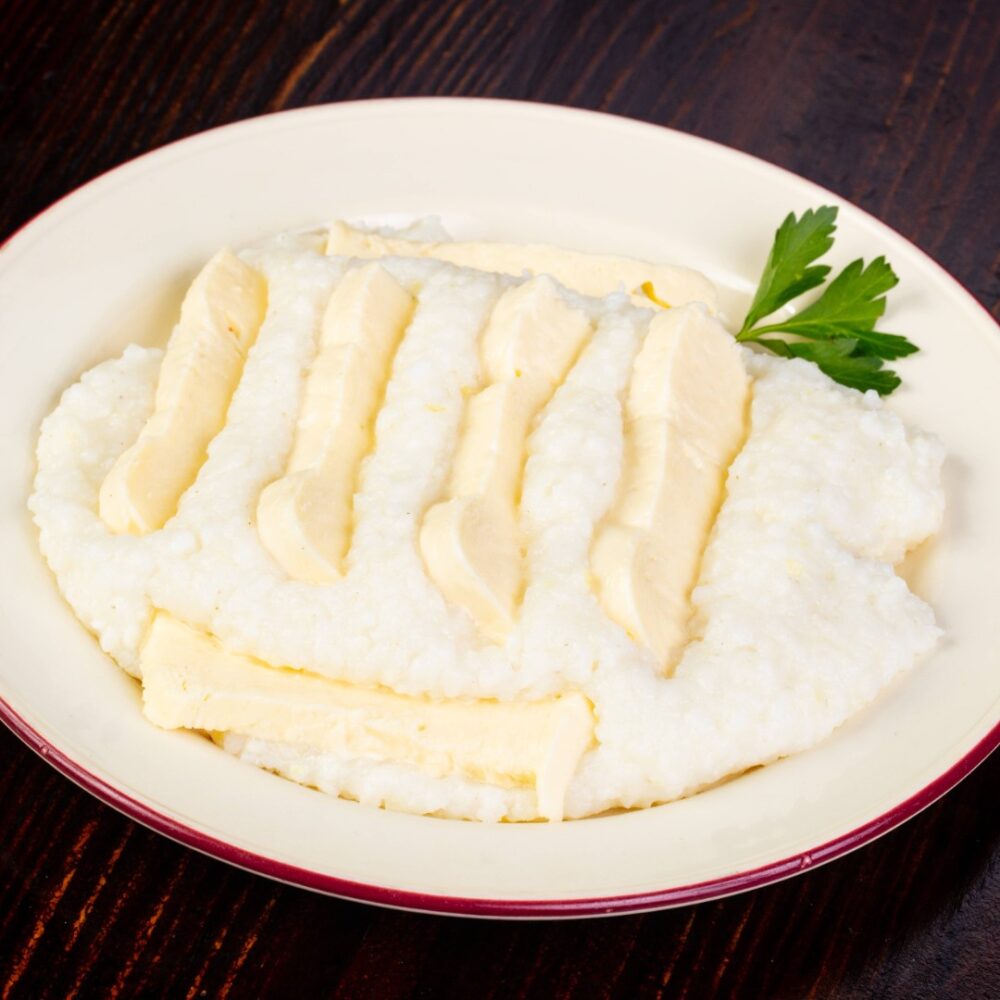
GHOMI – cornmeal porridge, served with cheese, which melts inside the hot porridge.

Shila Plavi

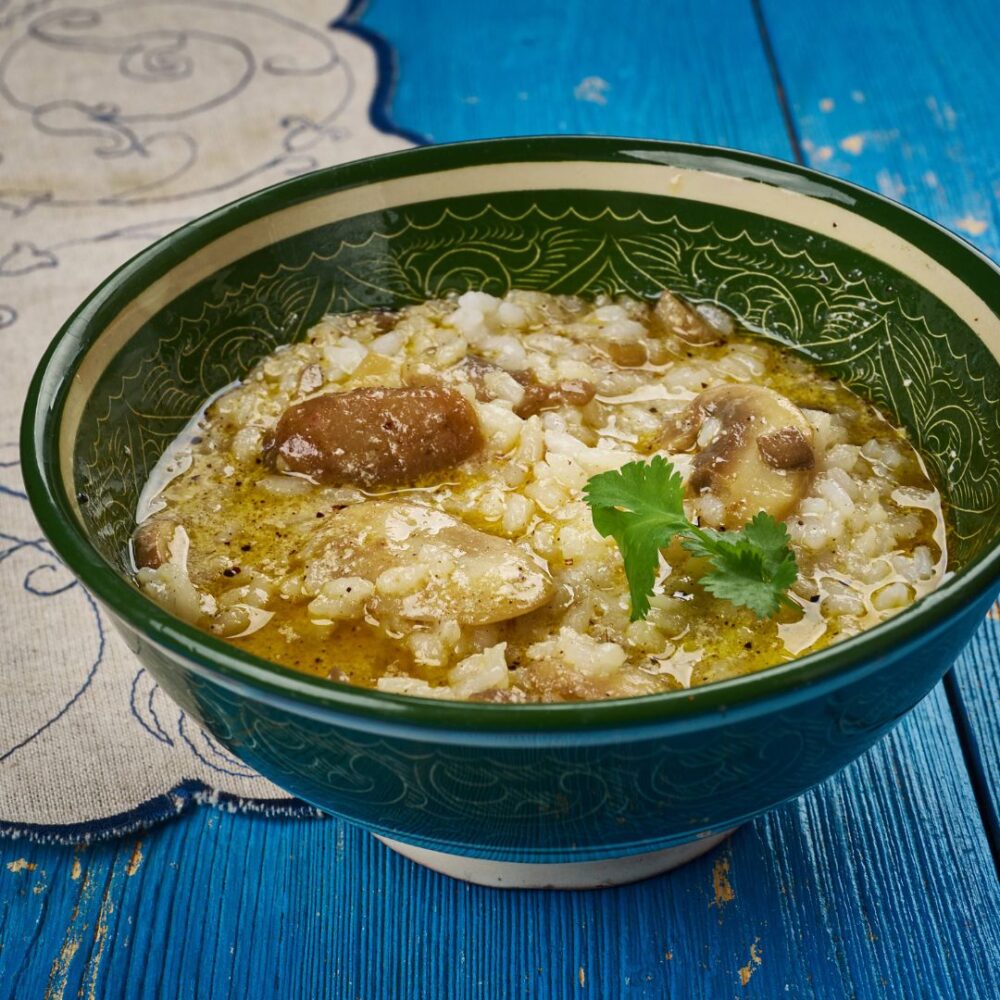
SHILA PLAVI – is a rice pilaf made with either meat or mushrooms, along with onions, oil, black pepper, and cumin. Saffron and white wine can be added as optional ingredients.

Icon

Produce

Badrijani Nigvzit

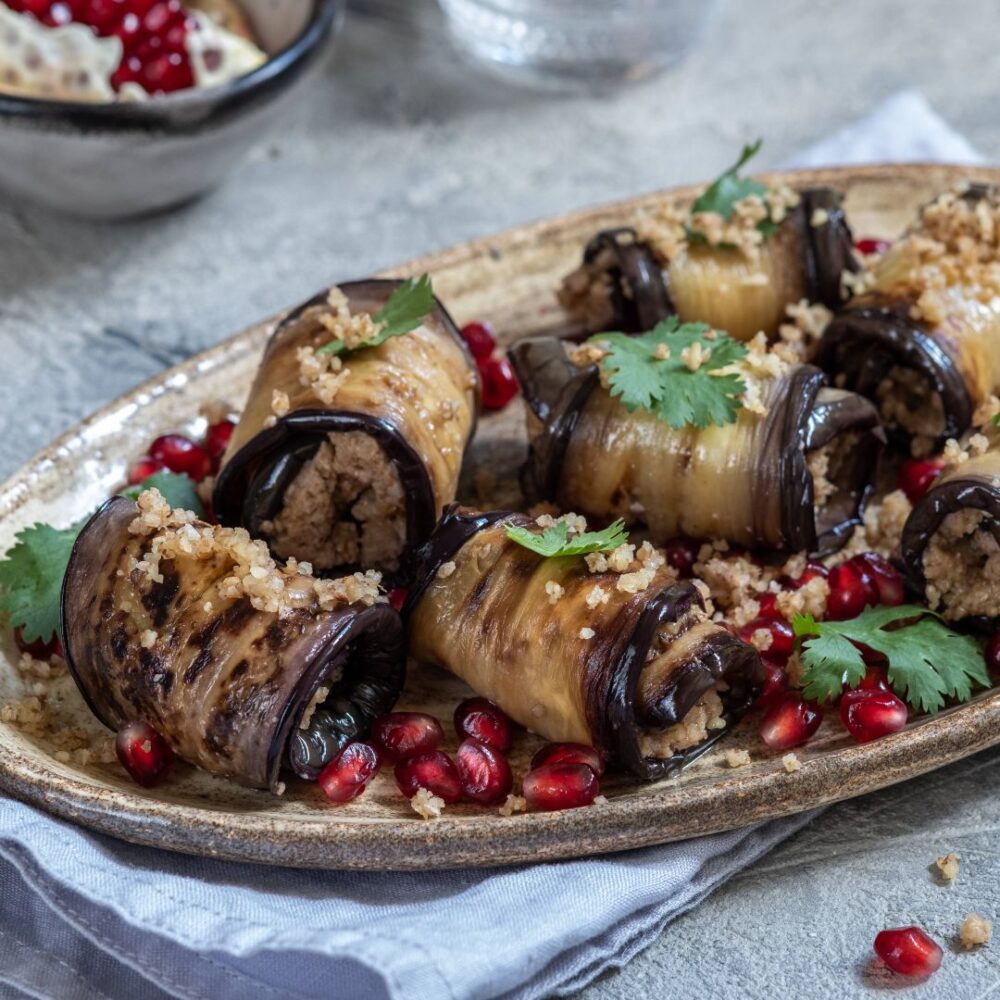
BADRIJANI NIGVZIT – grilled slices of eggplant, covered with walnut-garlic paste, seasoned with ajika and coriander, decorated with pomegranate seeds.

Pkhali

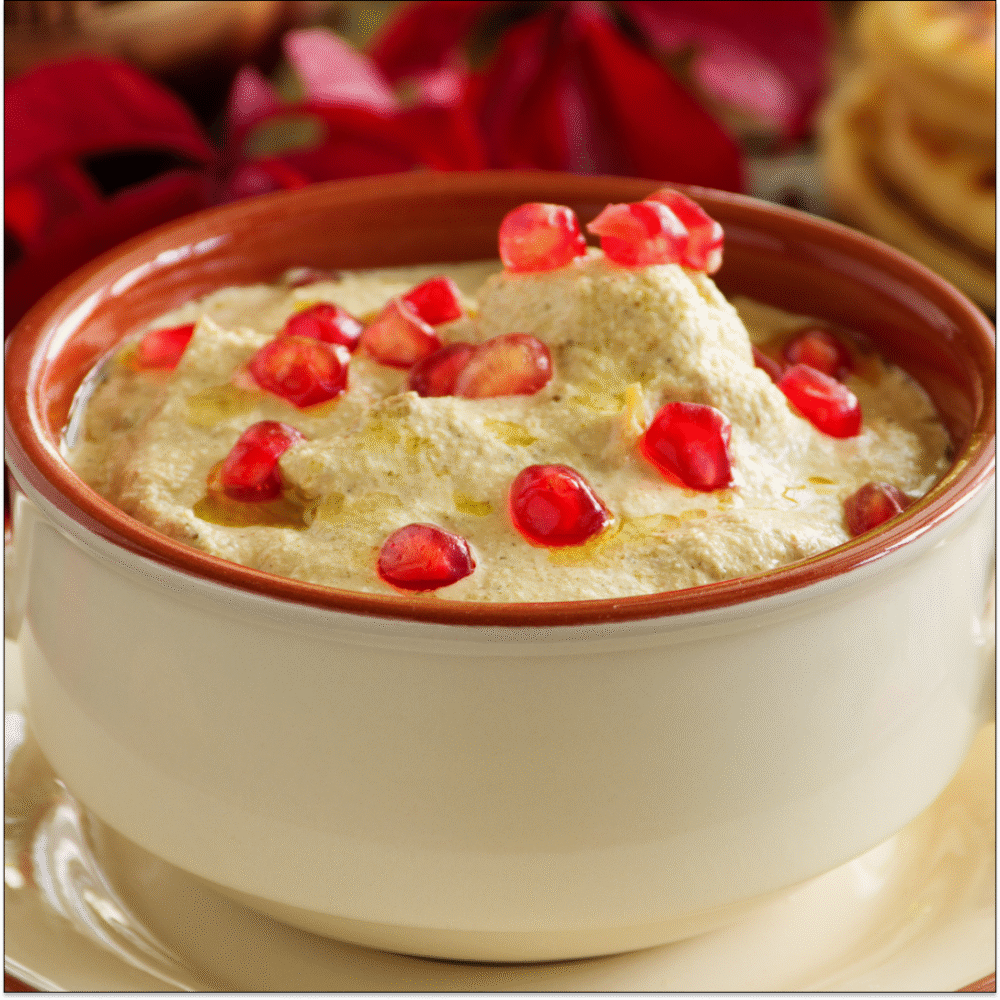
PKHALI or MKHALI – chopped and minced vegetables: cabbage, eggplant, spinach, beans, beets, combined with ground walnuts, vinegar, onions, garlic, and herbs. The common ingredient of all variations of pkhali is puréed walnut sauce.

Eka Samkharadze, CC BY-SA 4.0 , via Wikimedia Commons

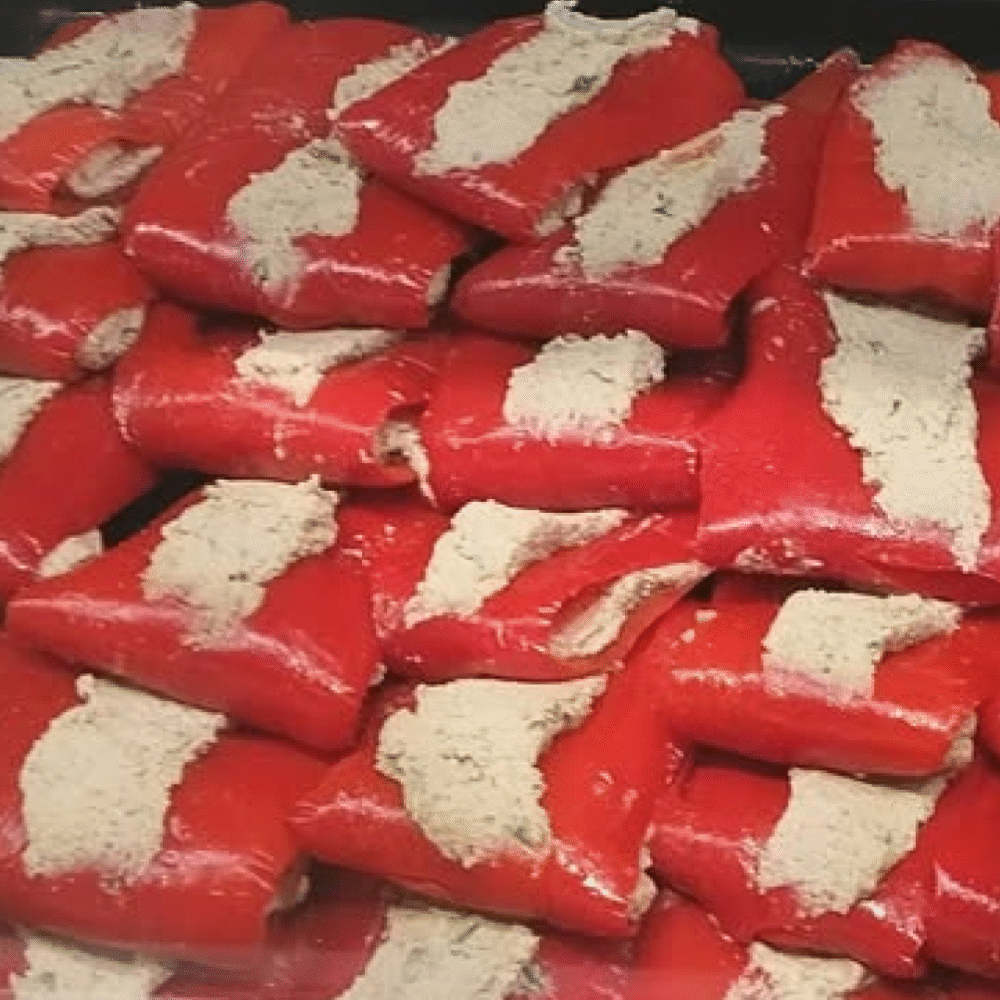
PEPPER PKHALI – red bell pepper with walnut filling.

Eka Samkharadze, CC BY-SA 4.0 , via Wikimedia Commons

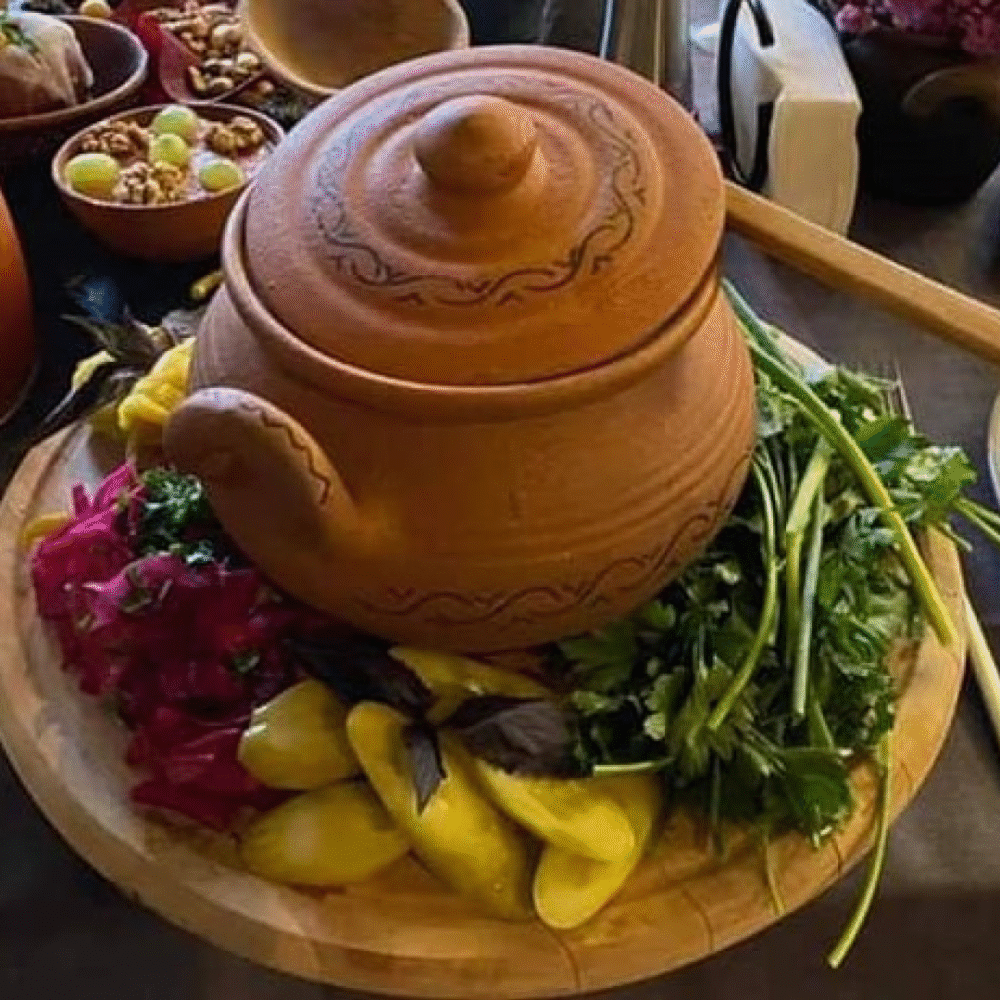
LOBIO – beans in a pot with pickles and herbs, a dish of kidney beans, onions, and garlic, braised in a clay pot.

Ajapsandali

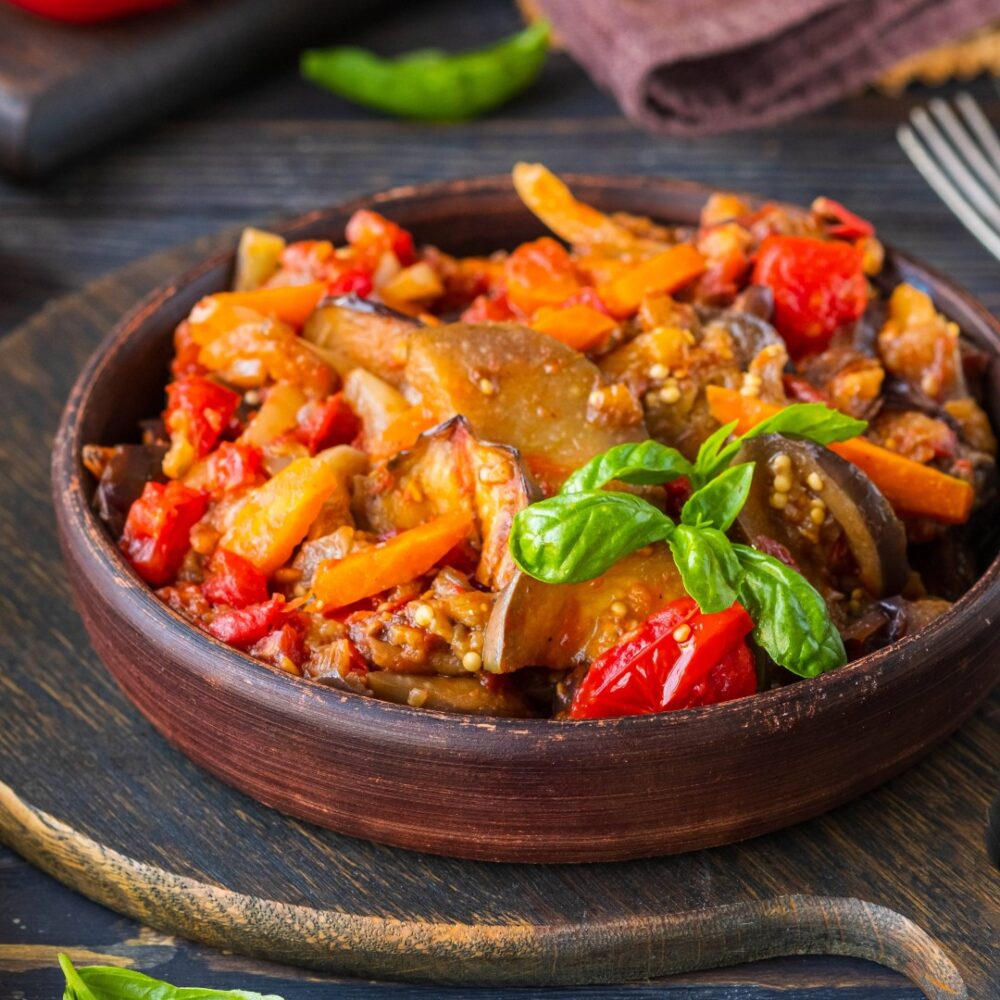
AJAPSANDALI – vegetarian summer stew with tomatoes, eggplants, bell peppers, onions, garlic, basil, cilantro and parsley. Sometimes potato, chili peppers and carrots are added. Typically served cold.

Pickled jonjoli

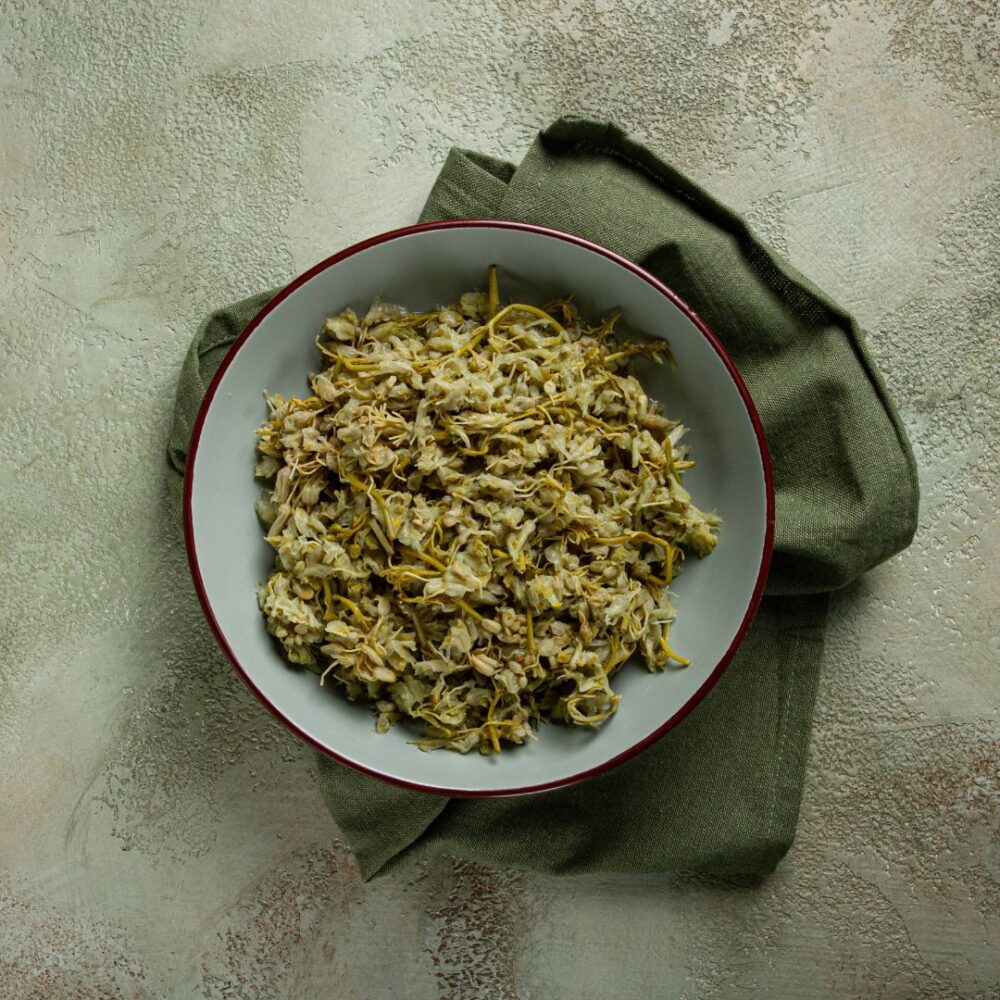
PICKLED JONJOLI (BLADDERNUT) – appetizer made with pickled sprouts from a Georgian native shrub of the same name, seasoned with salt, oil, and onions.

Tomato cucumber salad

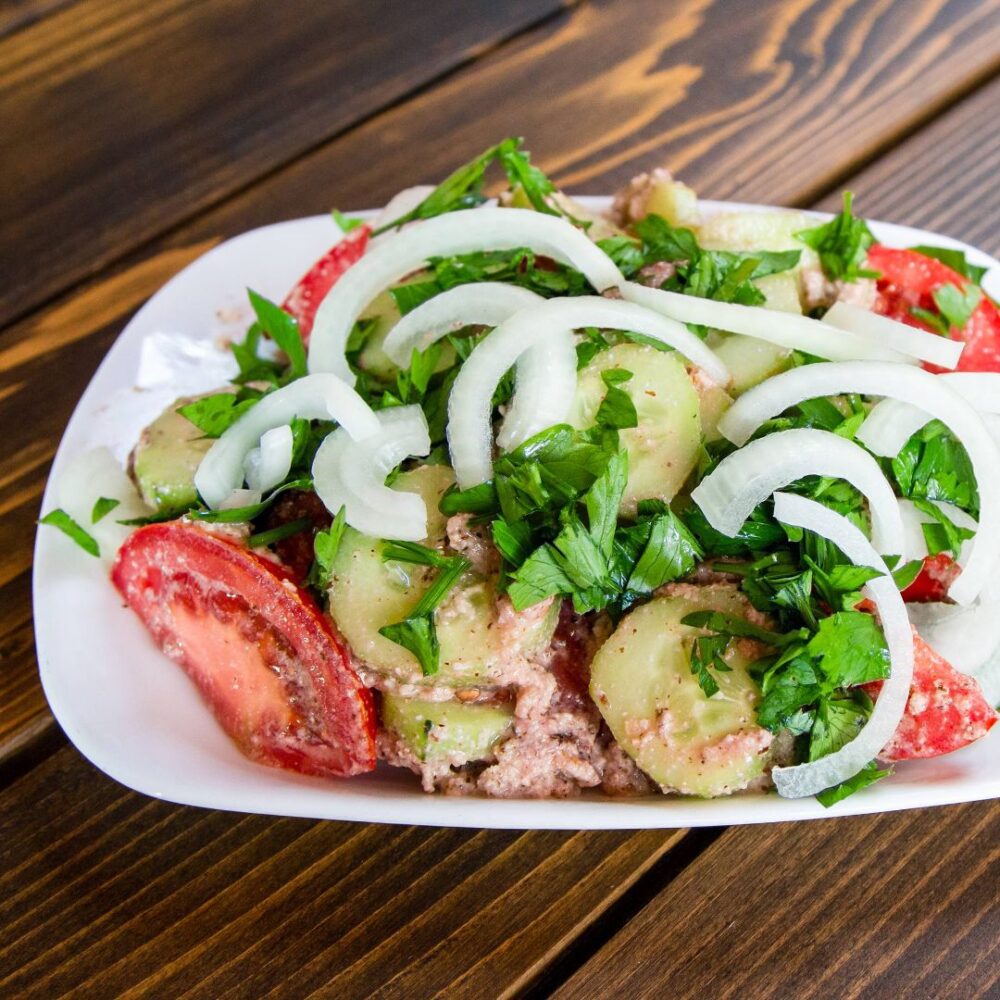
TOMATO-CUCUMBER SALAD – large chunks of tomatoes and cucumbers, onions rings, some parsley, optionally- some walnut paste.

Chrianteli

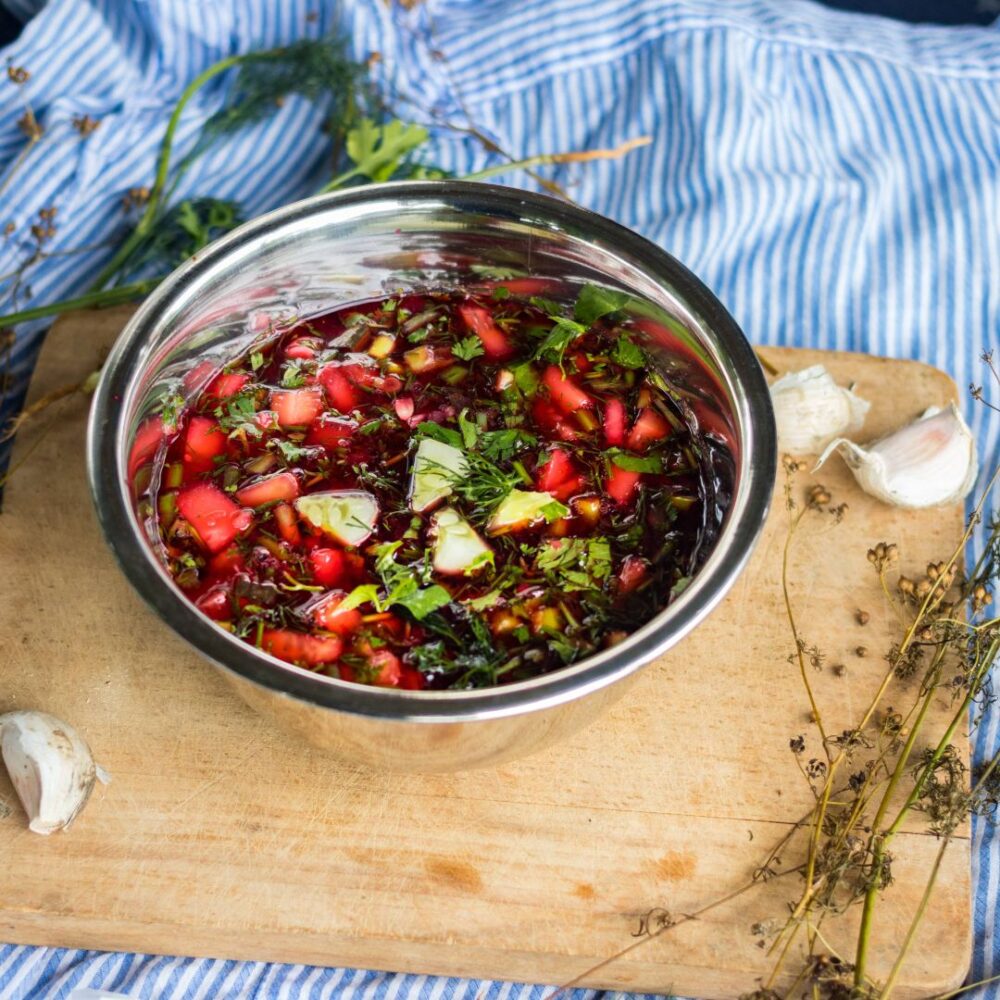
CHRIANTELI – cold soup made from fresh, ripe cherries, apples, pears, peaches, and other fruits.

Chiri

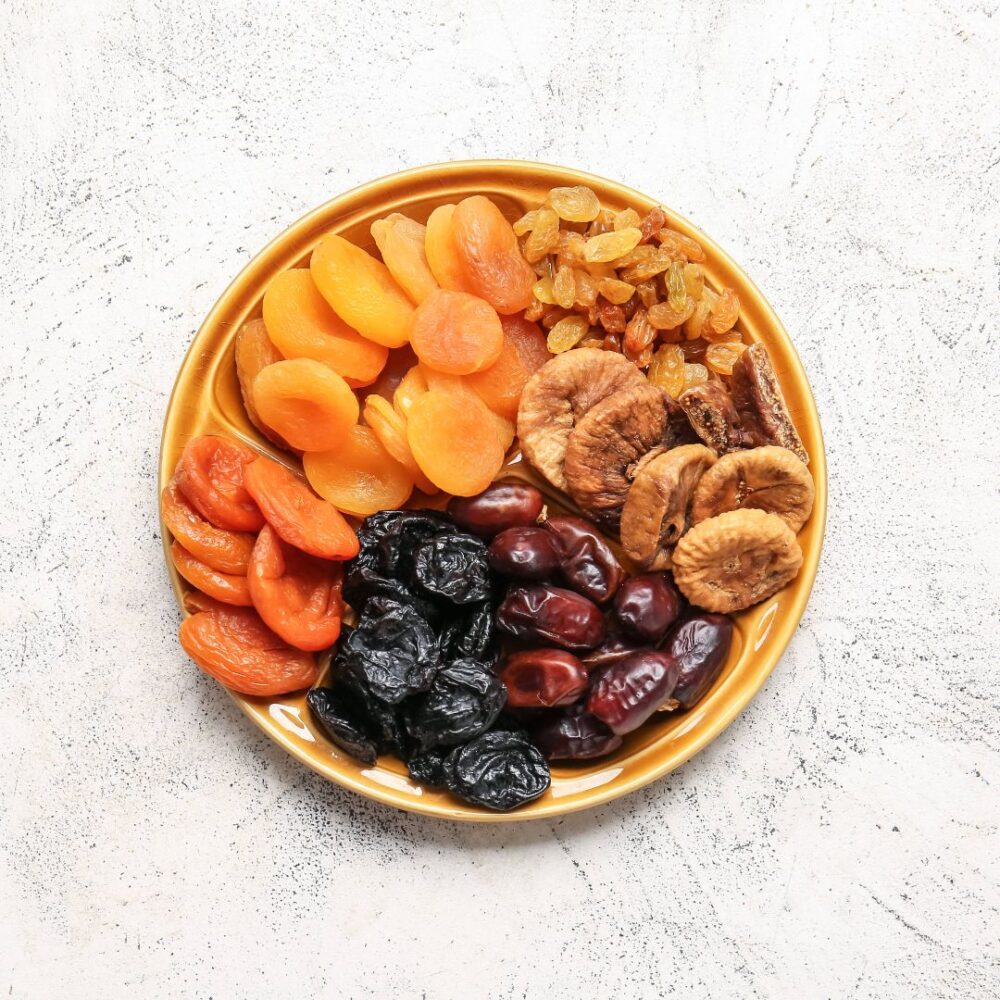
CHIRI – dried fruits, mostly apricots, grapes, dates and figs.

Muraba Georgia About, CC BY 3.0, via Wikimedia Commons

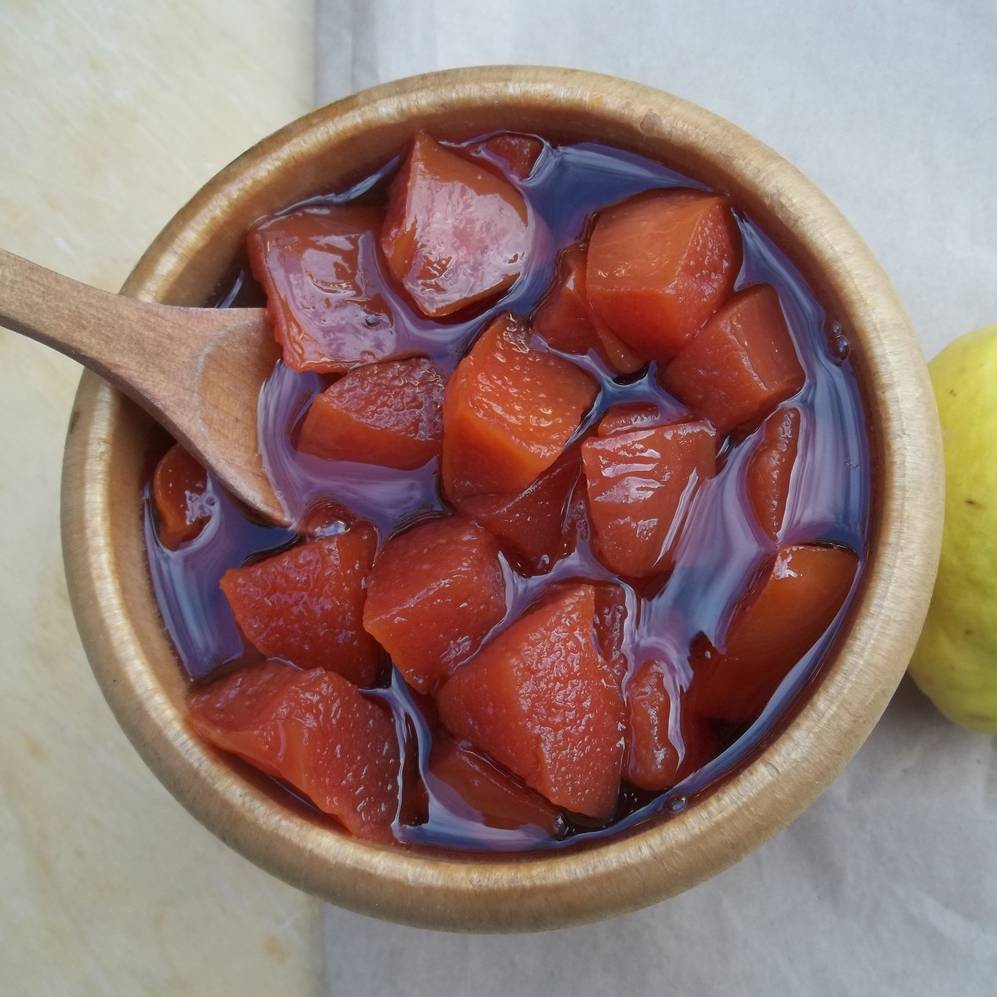
MURABA – jam made mostly from watermelon, quince, fig, berries, walnuts, and flowers, like wild rose.

Tklapi

TKLAPI – is a type of fruit leather made with fruit purée – a thin sheet that can be sweet or sour and used for ioups, stews, or desserts.

Icon

Eggs and dairy

Sulguni

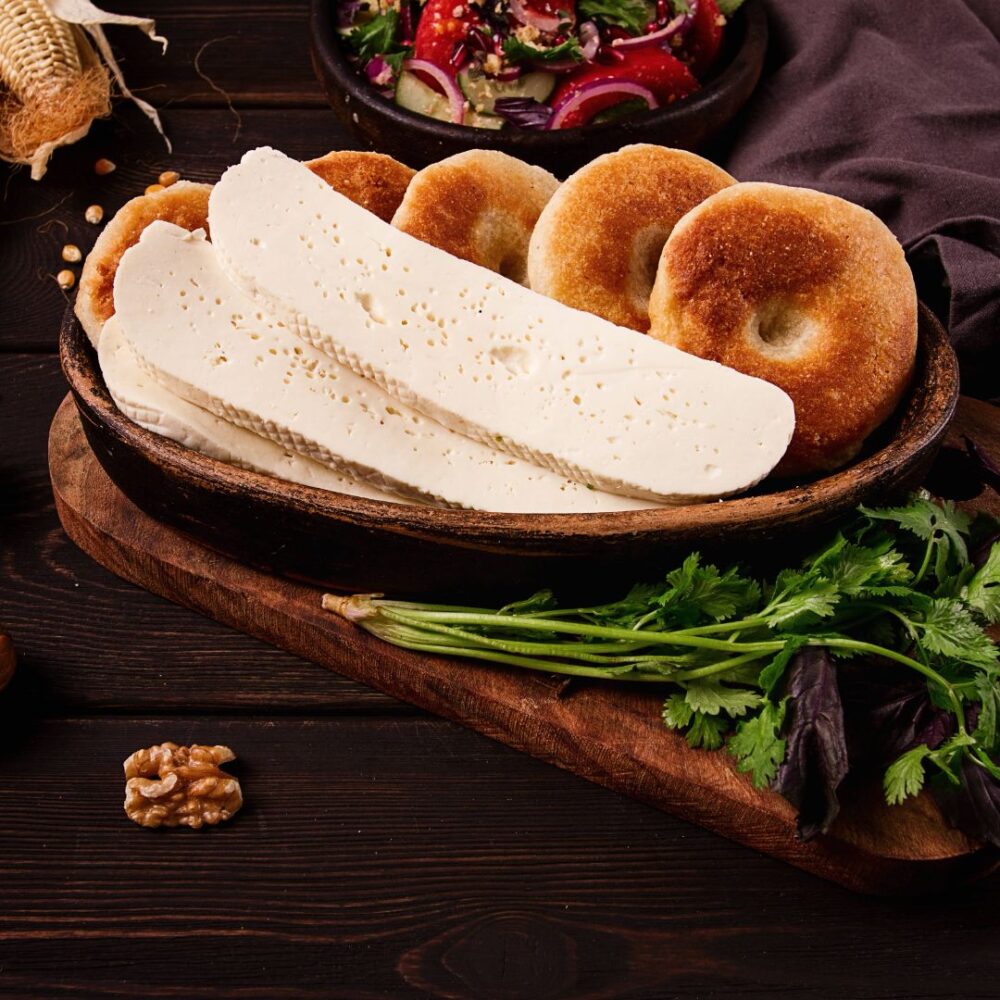
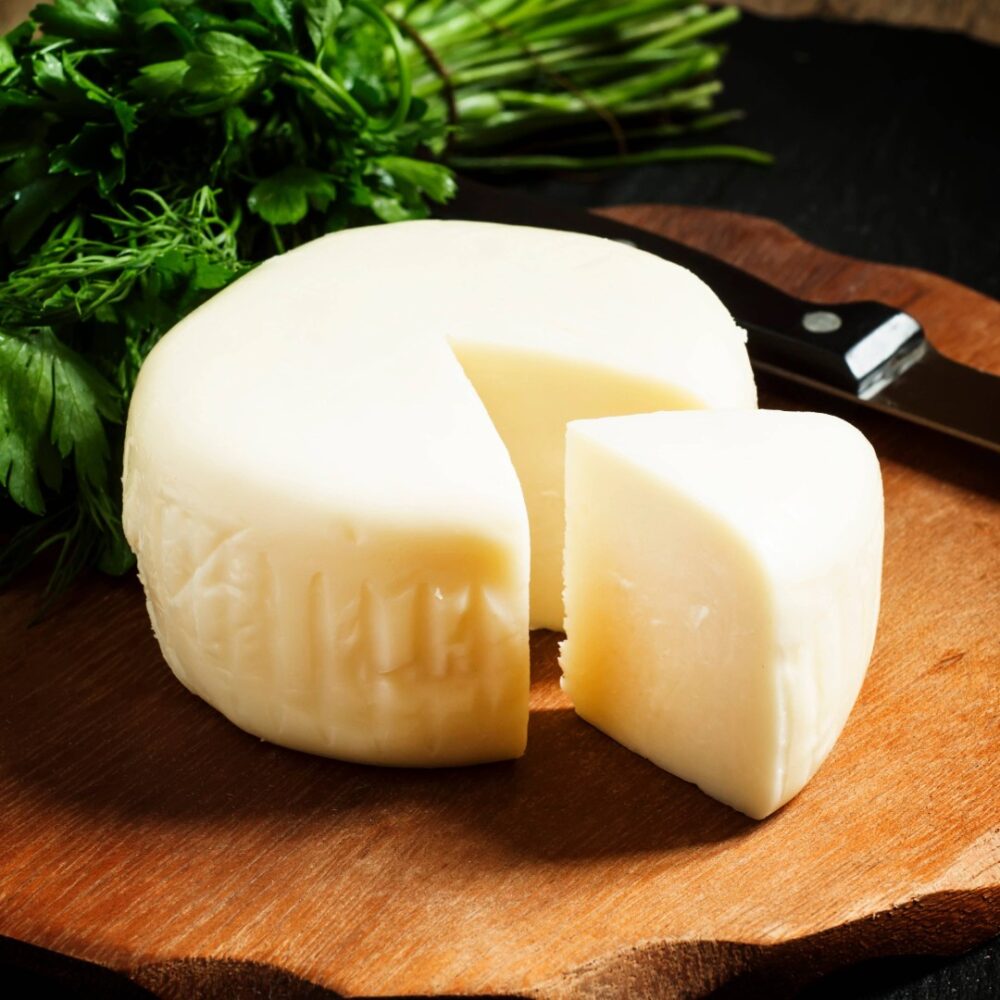
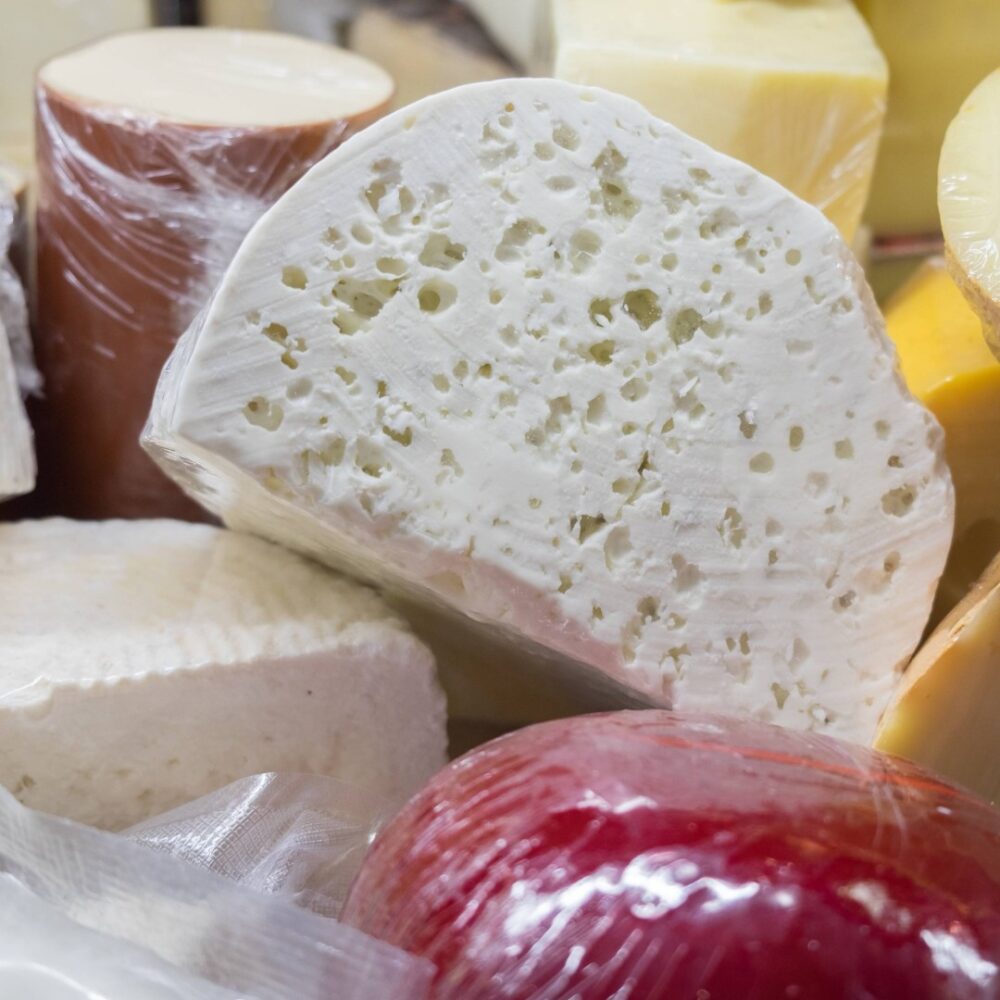
SULGUNI cheese – sour, moderately salty brined cheese of a dimpled texture and elastic consistency, made from cow’s milk. Often deep-fried or served in wedges.
Imeruli

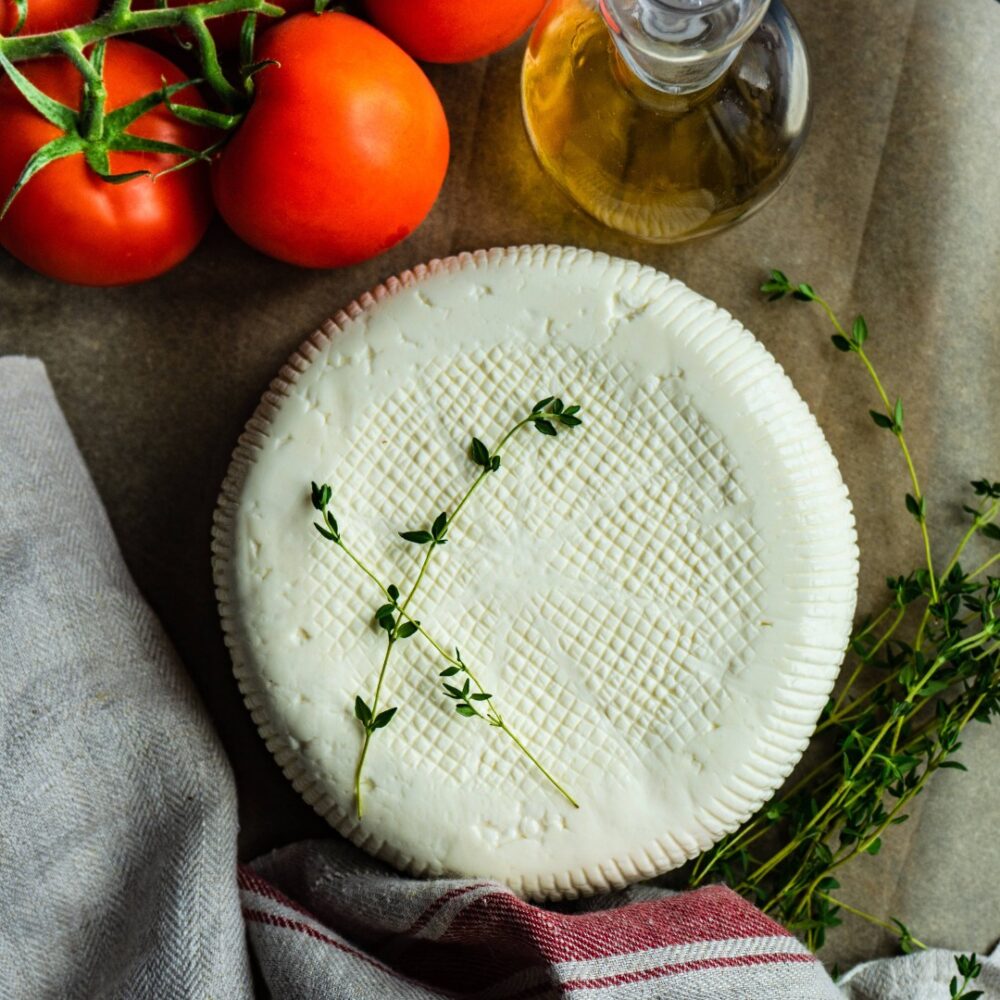
IMERETIAN / IMERULI cheese – curd cheese from cow milk, soft and springy texture and slightly sour, salty taste.

GUDA

GUDA – cheese from the mountainous East, made from fresh, whole milk from either sheep or a mixture of sheep and cow’s milk, which is then ripened in a sheepskin bag.

Tenili cheese

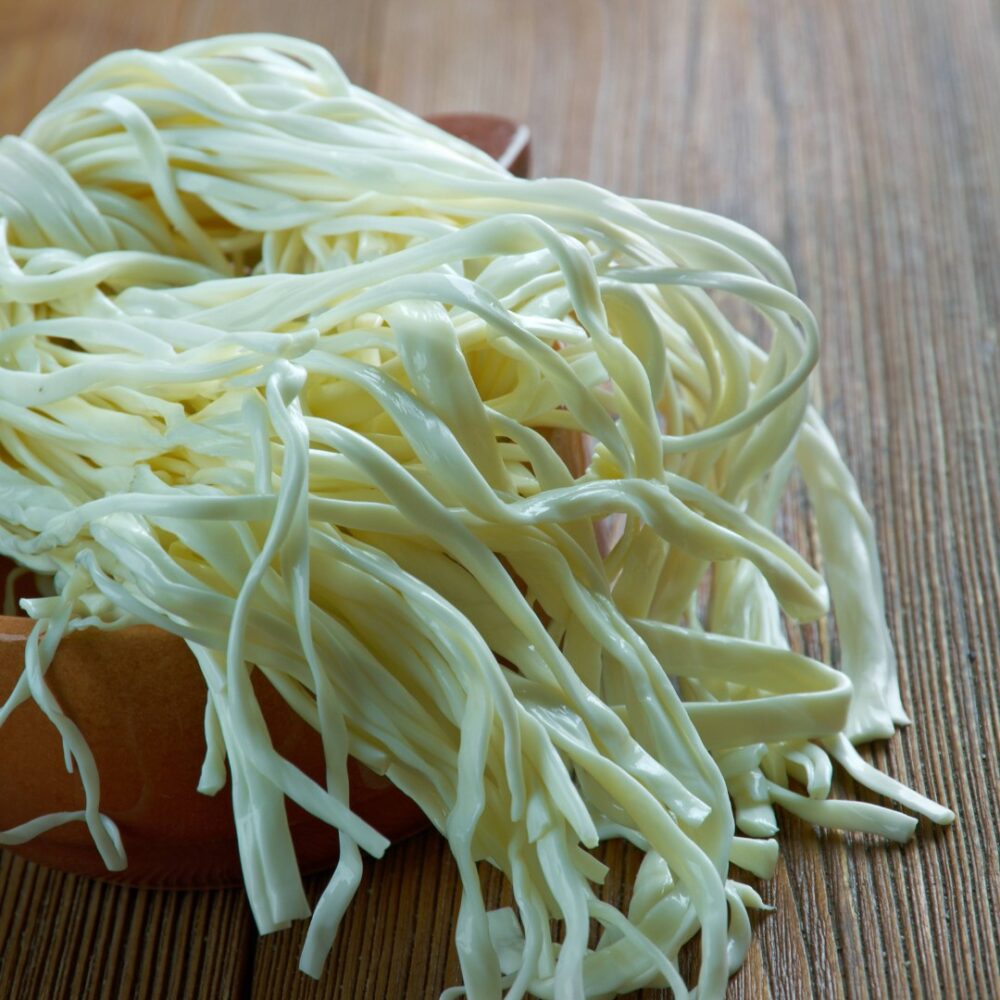
TENILI CHEESE – string cheese made of cow’s or sheep’s milk, it has a mild flavor and a springy texture.

Nadughi

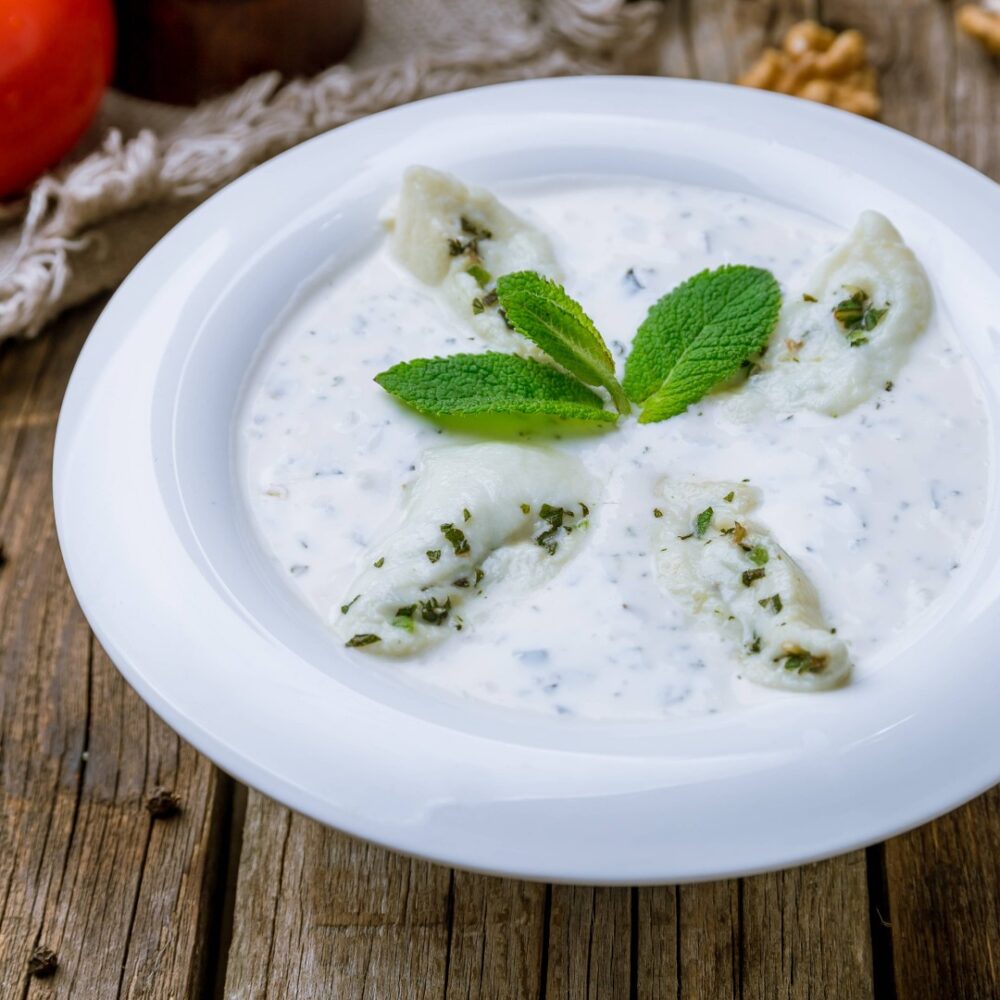
NADUGHI – a product received after souring sheep or goat milk – dressed in mint and wrapped in Sulguni plates.

Gebjalia

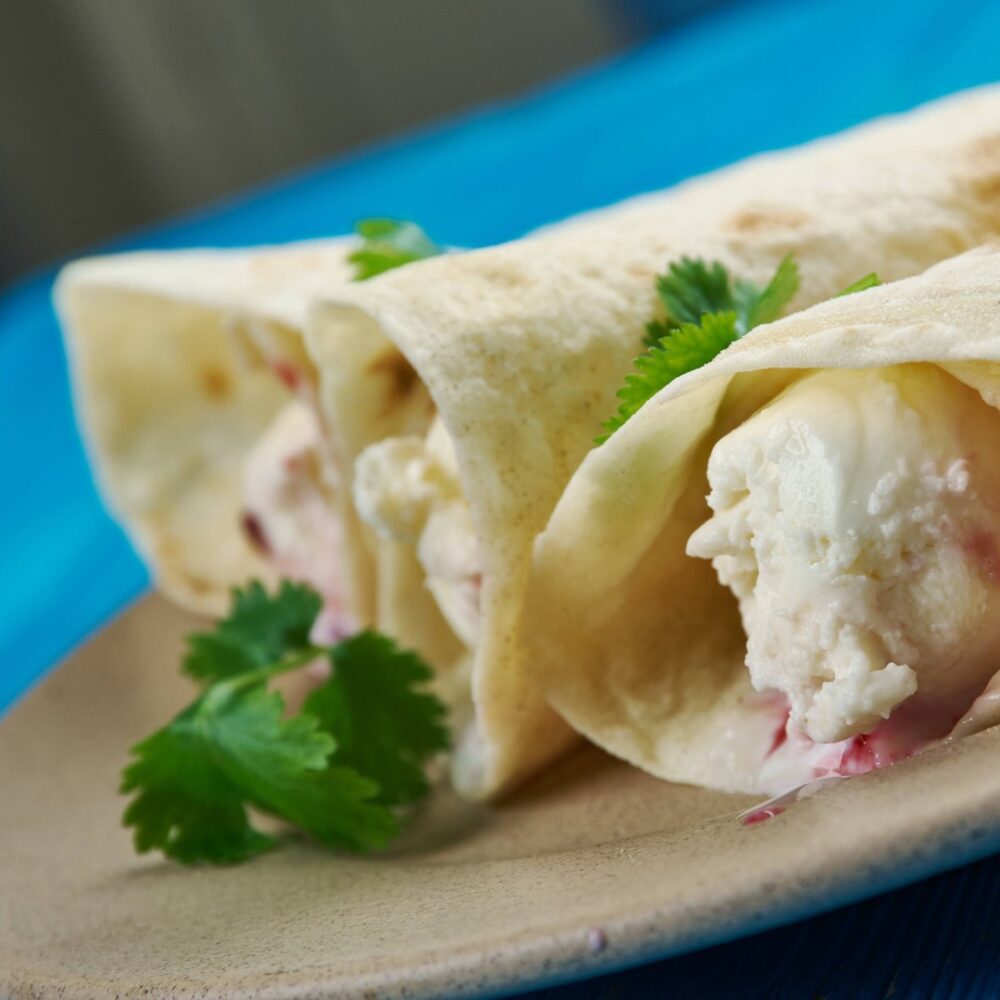
GEBJALIA – soft, creamy cheese rolls filled with mint and green ajika. Coming from the Samegrelo region where it was regarded as a meal of the Gods (source)

Matsoni

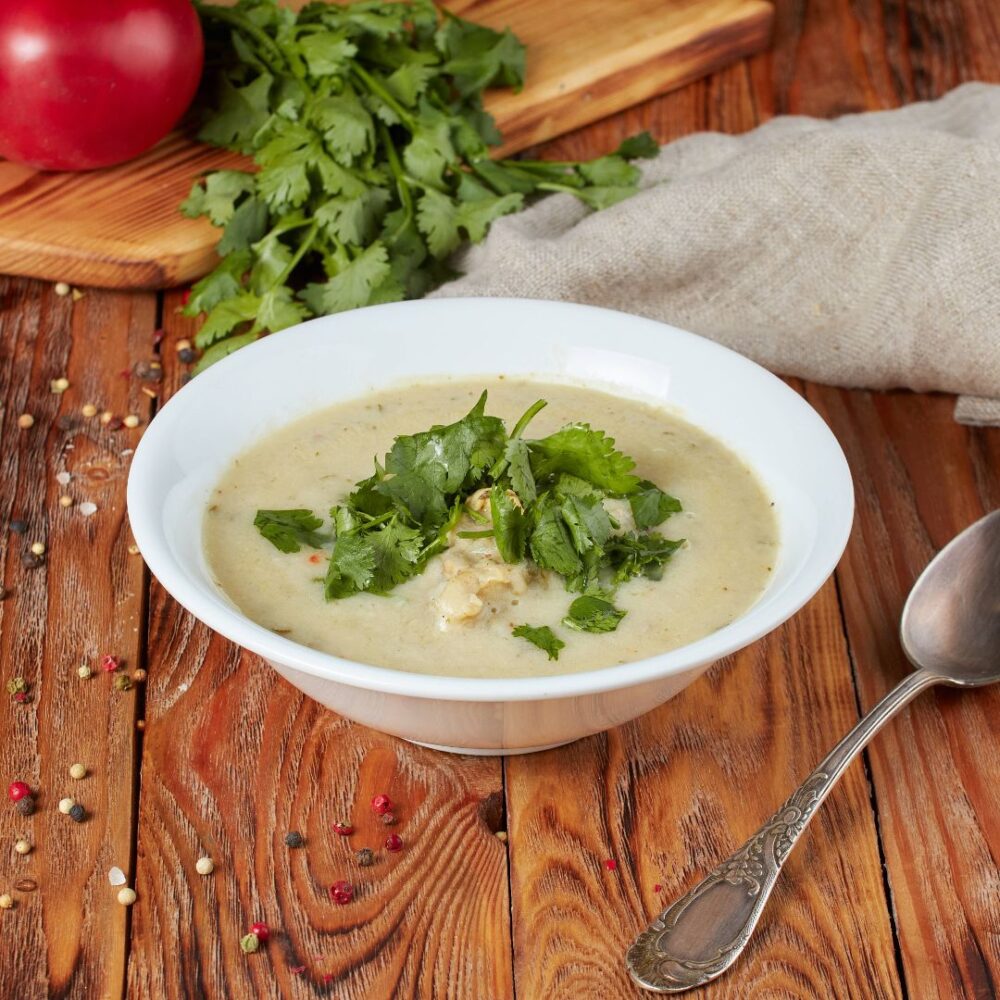
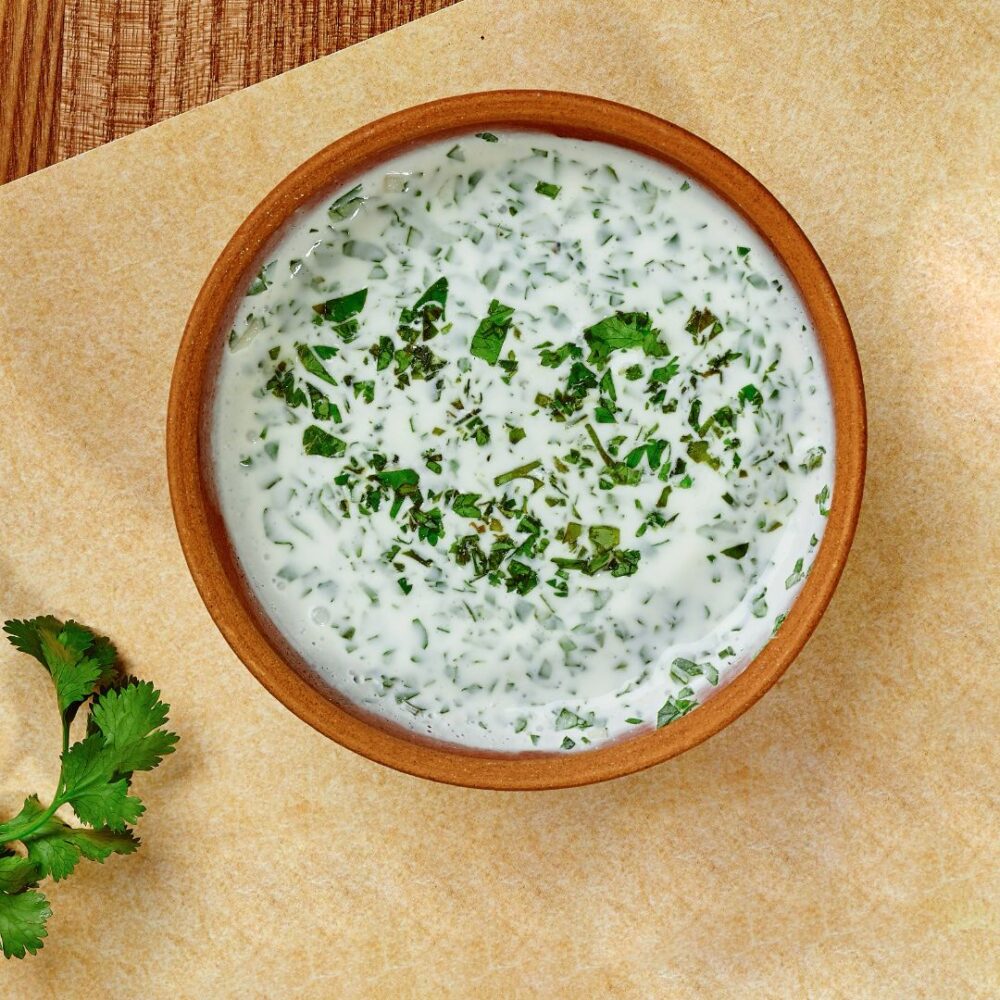
MATSONI – refreshing and tart yogurt soup, made from matsoni yogurt, broth, fresh dill, mint and cilantro, garlic, onions, and eggs.

Icon

Sugar, fats and nuts

Churchkhela

CHURCHKHELA – a traditional Georgian pea-pod-shaped candy made from grape skin, walnuts, and flour.

Janjunkha

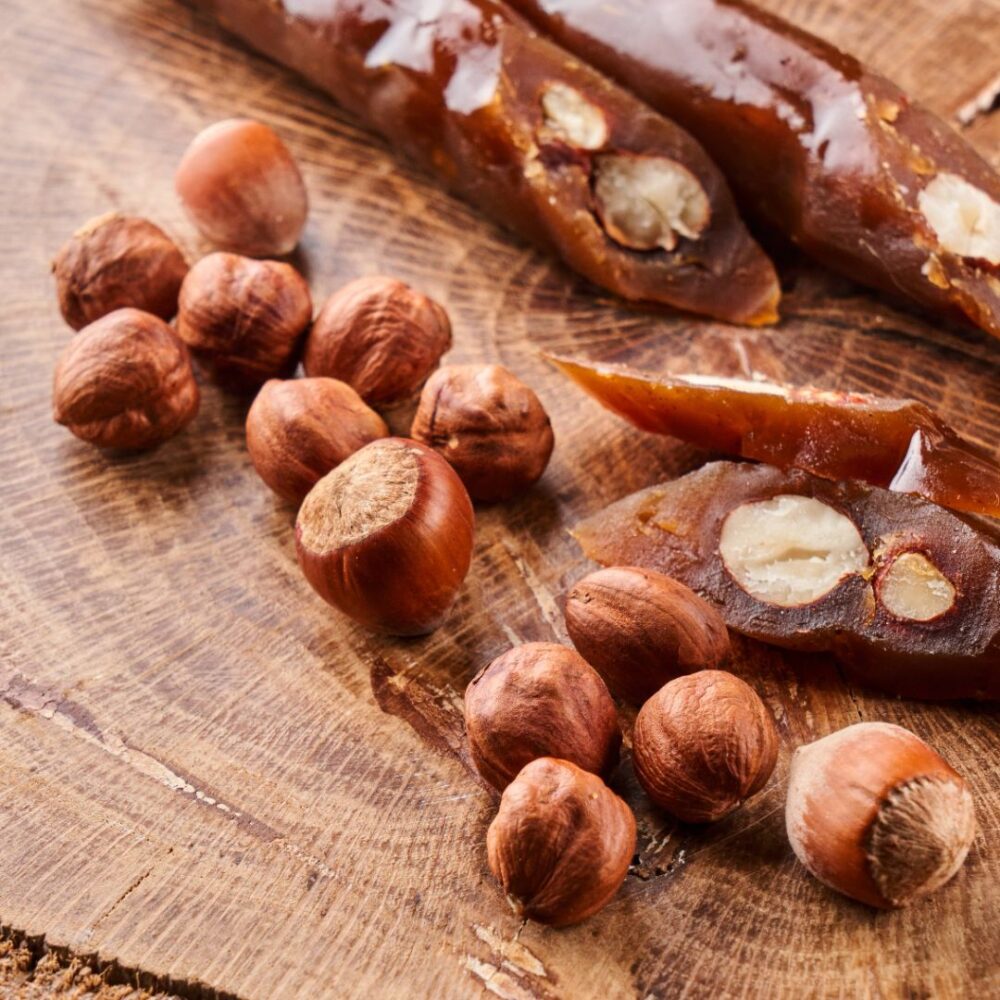
JANJUNKHA – Same as churchkhela, but chopped hazelnuts are used instead of walnuts.

Gozinaki

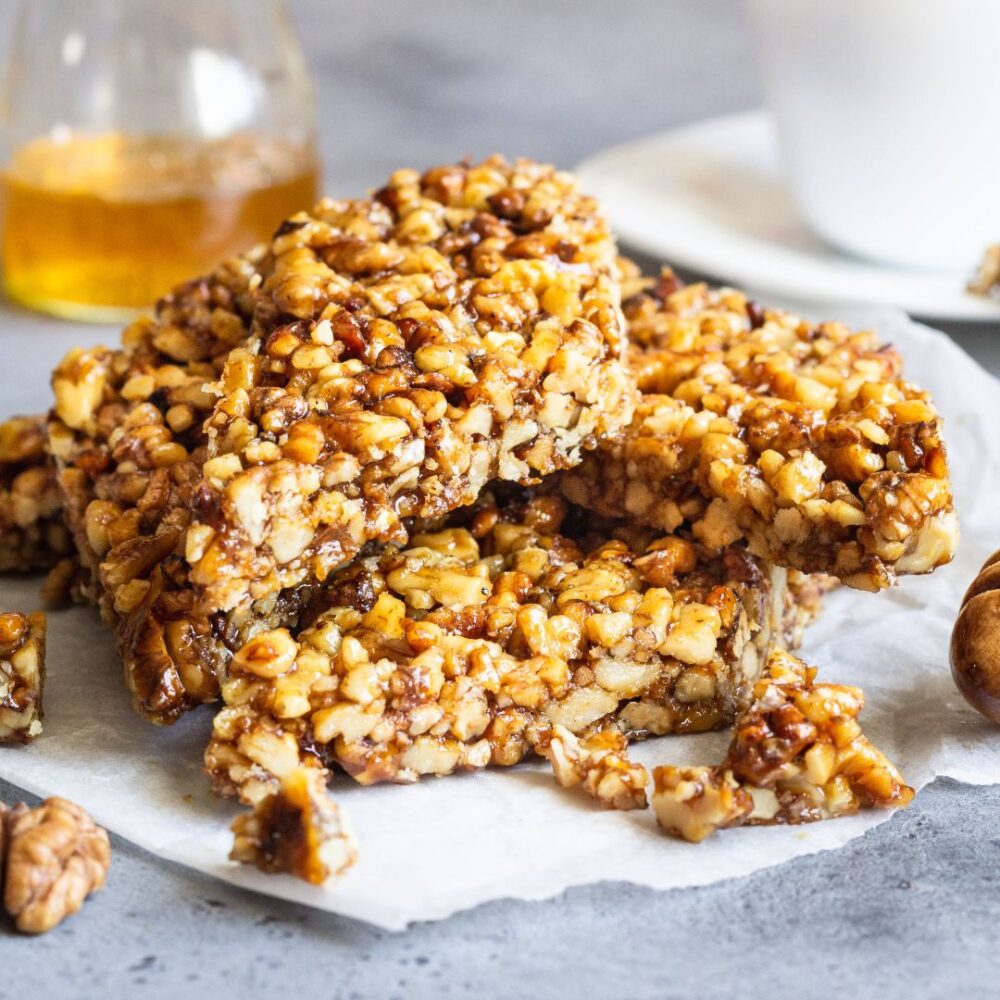
GOZINAKI – crunchy honey and walnuts bar.

Pelamushi

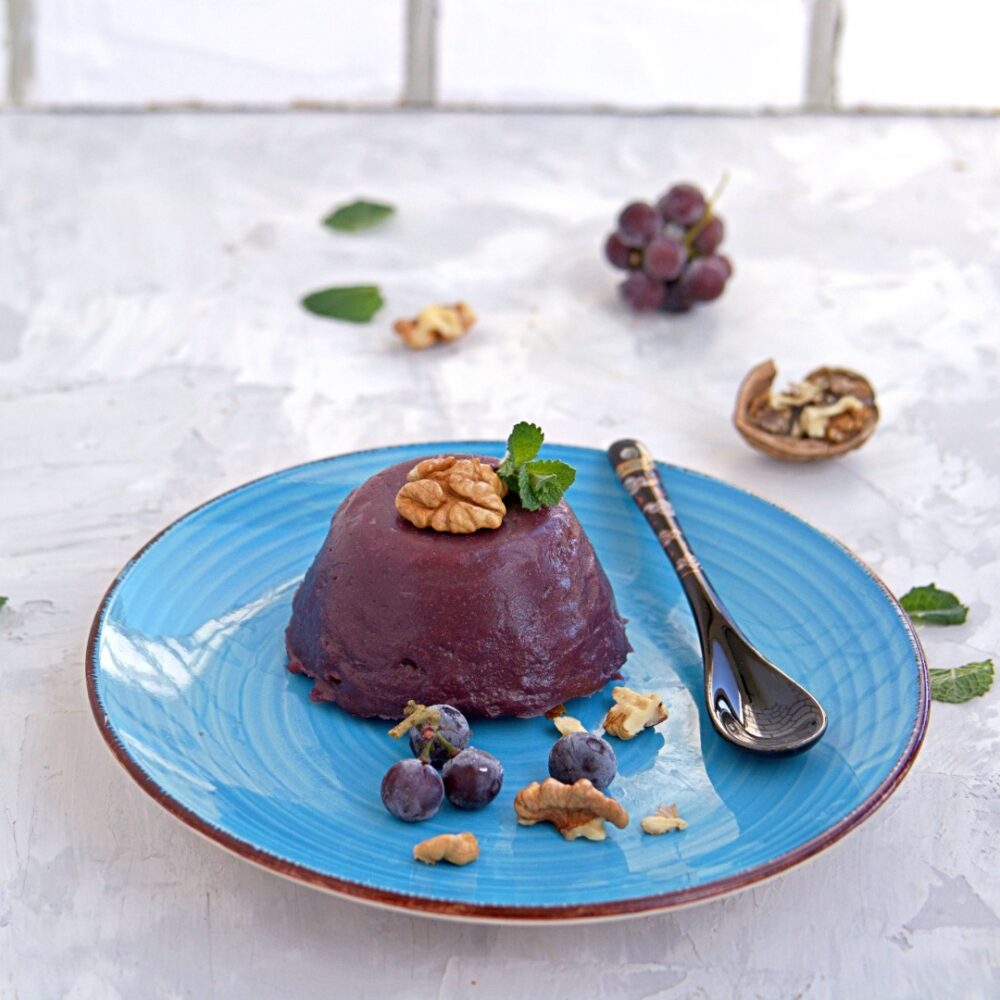
PELAMUSHI – thick chilled porridge-like jelly from grape juice and flour, served with walnuts.

Nazuki

NAZUKI – sweet bread with spices.

Back to Top